


Saudi Arabia Urges Collective Action to Boost Mineral Supplies, Future Jobs

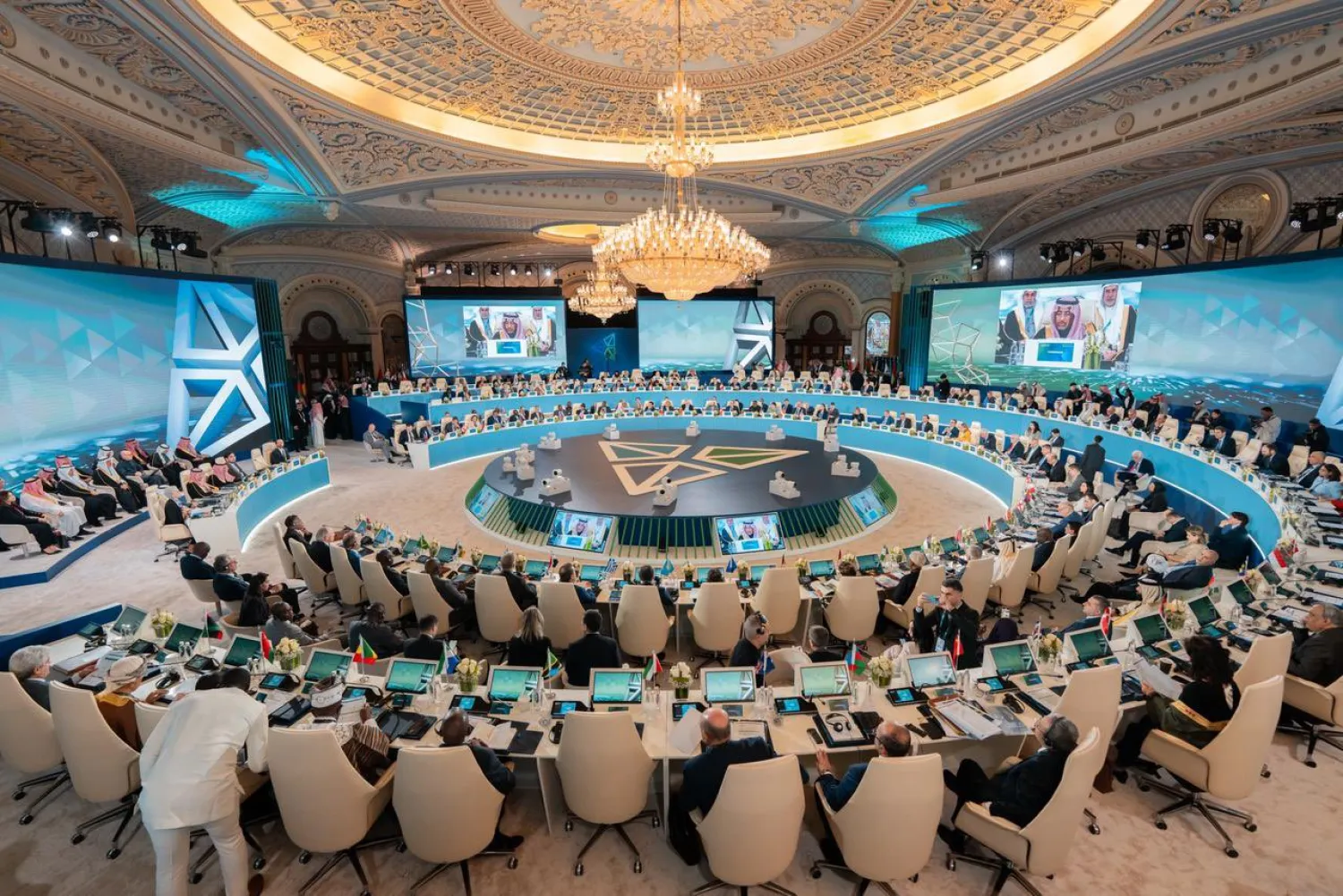
Representatives from 100 governments and 70 international organizations gathered on Tuesday to develop a roadmap for securing the flow of critical minerals the world needs to achieve its digital and green transitions. (Saudi Minister of Industry and Mineral Resources Bandar Alkhorayef on X)
TT

Saudi Arabia Urges Collective Action to Boost Mineral Supplies, Future Jobs

Representatives from 100 governments and 70 international organizations gathered on Tuesday to develop a roadmap for securing the flow of critical minerals the world needs to achieve its digital and green transitions. (Saudi Minister of Industry and Mineral Resources Bandar Alkhorayef on X)

Under the patronage of Custodian of the Two Holy Mosques King Salman bin Abdulaziz, Riyadh has emerged as the “global capital of mining” by hosting the fifth ministerial roundtable of the Future Minerals Forum 2026.

The meeting was not merely a forum for discussion, but a platform to launch a new phase of international cooperation under the theme “Minerals: Meeting the Challenges of a New Era of Development.”

Representatives from 100 governments and 70 international organizations gathered on Tuesday to develop a roadmap for securing the flow of critical minerals the world needs to achieve its digital and green transitions.

The gathering marked a significant shift in collective action, reviewing progress since the launch of three initiatives in 2023 and urging governments to join the Future Minerals Framework.

The framework is not simply an agreement but a vital mechanism to strengthen partnerships between supplier and consumer countries, and to build an investment ecosystem capable of attracting public and private financing.

This momentum culminated in an announcement by Saudi Minister of Industry and Mineral Resources Bandar Alkhorayef of the appointment of a permanent ministerial steering committee of 17 founding member states, selected to ensure geographic balance and representation of both supplier and consumer countries.

The committee will provide strategic guidance, oversee implementation of initiatives, and ensure the continuity of dialogue between major producing and consuming powers.

Ministerial guidance

Alkhorayef stated that achieving countries’ economic, industrial, and energy ambitions depends on the availability of secure and resilient mineral supplies, stressing that such supplies cannot be guaranteed without substantial investments and the adoption of innovative technologies, which require significant financing.

He said mineral resources are at the core of technologies driving electrification and digitalization, and form the foundation of industrial development and future jobs in both producing and consuming countries, making them a key driver of global growth.

Alkhorayef noted that joint work over the past five years had delivered progress beyond expectations, adding that details of these achievements were documented in a booklet provided to participants.

He cited cooperation with the World Bank to address the financing gap in mineral exploration and the elevation of infrastructure financing on the global agenda.

He said efforts also included leading a new dialogue focused on transparency and supply chain traceability, developing standards that reflect current realities, and establishing a network of centers of excellence to build capabilities in talent, sustainability, and technological empowerment.

These initiatives, he said, embody the roundtable’s goal of finding common ground on difficult issues, aligning supplier and consumer countries, and bringing governments, industry, and multilateral organizations under one roof.

The minister praised the participation of a large number of ministers and representatives, whether attending for the first time or regular participants, saying the turnout reflected the importance of joint international action.

He recalled that the first Future Minerals ministerial roundtable, hosted in 2022, brought together 32 countries and focused on what was then known as the “greater region,” encompassing Africa, West, and Central Asia.

Today, senior representatives from over 100 countries and 70 international organizations are participating.

Global development
The expanded participation came in response to requests from countries in other regions, such as Latin America, reflecting the global importance of the dialogue and participants’ ability to shape solutions, Alkhorayef added.

He pointed to growing interest from consuming countries in engaging in the discussion, noting that the table today brings together representation from all G20 countries alongside producers and consumers, underscoring that the right dialogue is taking place with the right parties at the right time and place.

This presence reflects a shared responsibility to shape a new era of global development, prosperity, and stability through the use of minerals, he remarked, emphasizing that minerals are the cornerstone of global development.

At the same time, the minister acknowledged challenges including slow project development, fragmented global policies, infrastructure gaps, financing constraints, and a lack of trust in the sector.

None of these challenges can be addressed individually, he explained, adding that genuine, well-designed cooperation among the countries gathered can make a difference.

Alkhorayef urged participants to use their shared time wisely, adopt a long-term mindset, and engage in frank, practical discussions that lead to a vital action agenda for the planet’s future, emphasizing that collective action is the foundation for securing the mineral supplies the world needs.

Supply chains

Saudi Vice Minister of Industry and Mineral Resources for Mining Affairs Khalid Al-Mudaifer reviewed progress made in 2025 across the three ministerial roundtable initiatives: developing an international framework to scale up infrastructure financing and align enabling government policies, building capabilities in emerging supply regions through a network of centers of excellence, and enhancing transparency of mineral supply chains through traceability.

He stated that the world requires more than $5 trillion to meet its energy needs by 2035, encompassing both electricity and infrastructure, noting that this capital requirement applies to over 20 mining companies amid significant financing challenges.

Al-Mudaifer spoke about developing the Global Mining Framework announced by Saudi Arabia last year to maximize value creation in supplier countries, stressing the importance of cooperation at the meeting to confront this major challenge and agree on key enablers to seize opportunities.

He outlined policies that support supply chain development, value creation for the sector, enabling infrastructure, responsible mining practices, skills development for a qualified workforce, the technology needed to make operations safer and more productive, and easier access to reliable geological data to attract investors and accelerate exploration.

Future minerals framework

He presented for discussion a draft of the Future Minerals Framework, which outlines principles and objectives and initiates a process to enhance cooperation between supplier and consumer countries to develop mineral supplies.

The framework aims to boost cooperation between producing and consuming countries by creating an inclusive, multi-stakeholder space that brings together decision-makers to discuss complex challenges and identify solutions to secure the minerals needed for development.

It seeks to attract investment to develop mineral value chains and infrastructure in the “super region” spanning Africa, West and Central Asia, and other supply regions, maximize regional mineral value chains, and drive local value creation through infrastructure financing and cross-border partnerships.

It aims to establish an attractive investment ecosystem for public and private financing, promote responsible supply through transparency and traceability, integrate sustainability priorities across all stages of mineral value chains, build capacities and policy frameworks, and empower emerging supplier countries to maximize the benefits of their mineral wealth.

The framework is based on voluntary participation, consensus-based decision-making, transparency, accountability, and fair benefit sharing, as well as adherence to international responsible sourcing frameworks and cooperation with industry, multilateral partners, and civil society.

The framework represents the culmination of work carried out by the Future Minerals Forum since 2023, with initiatives reaching a level of maturity that requires active state participation in implementation through an agreed structure and mechanism overseen by the steering committee.

It also allows for the integration of new initiatives adopted by the ministerial roundtable.

The World Bank Group presented a new minerals strategy focused on supporting countries in strengthening mineral development and value chains, from extraction and processing to regional manufacturing, to create greater local value and jobs.

The strategy is built on three pillars: policies, governance and institutions, core infrastructure, and private sector mobilization and innovation.

Participants welcomed the strategy and stressed the importance of the forum’s partnerships with multilateral organizations, including the World Bank Group, in developing innovative mechanisms to finance infrastructure that supports the resilience of global supply chains.

Voluntary standard

The voluntary standard will complement existing standards and draw on the forum’s sustainability framework, which is built on four priorities identified by countries: development, cooperation, capacity building, and performance.

The development of the voluntary standard is expected to take approximately two years, enabling countries to design legal, policy, and regulatory frameworks that enhance supply chain transparency and boost investor confidence.

The work will be coordinated through a sustainability center being established at Mohammed VI Polytechnic University in Morocco.

The sustainability center is one of the outcomes of the forum’s initiative to create a network of centers of excellence for capacity building in supply regions.

Participants praised the achievement and underscored its role in delivering tangible benefits to enhance mineral supply transparency, pledging to encourage national standards bodies in their countries to take part in the process.

Alkhorayef to Asharq Al-Awsat: Saudi Efforts Drive Mining Investment

Saudi Minister of Industry and Mineral Resources Bandar Alkhorayef speaks at a press conference in response to a question from Asharq Al-Awsat. (Asharq Al-Awsat)
TT

Alkhorayef to Asharq Al-Awsat: Saudi Efforts Drive Mining Investment

Saudi Minister of Industry and Mineral Resources Bandar Alkhorayef speaks at a press conference in response to a question from Asharq Al-Awsat. (Asharq Al-Awsat)

Saudi Minister of Industry and Mineral Resources Bandar Alkhorayef said on Tuesday the Kingdom is intensifying its efforts, through the Future Minerals Forum and by reshaping long-standing negative perceptions of the sector, to encourage investors worldwide to reassess the value of mining investments, particularly in Africa.

Speaking to Asharq Al-Awsat on the sidelines of the Riyadh forum, held under the patronage of Custodian of the Two Holy Mosques King Salman bin Abdulaziz, Alkhorayef said that one of the biggest challenges facing the mining sector was the flow of investment.

This issue had been raised since the launch of the Future Minerals Forum and the roundtable initiative, he added.

The World Bank's participation in the Future Minerals Forum signaled the importance of finding solutions capable of supporting investment in the sector, he stressed.

Alkhorayef revealed that there were other initiatives aimed at supporting sectors complementary to mining, particularly logistics services, through government partnerships and support provided by international organizations, alongside banks and development funds.

The international ministerial meeting of ministers responsible for mining affairs was held on Tuesday as part of the Future Minerals Forum.

It is regarded as the world’s largest and most prominent government platform for discussing the future of the mining and minerals sector, with participation from over 100 countries, more than 70 international and non-governmental organizations, as well as business federations and leading global industry executives.

The meeting is following up on progress in the three ministerial initiatives, identifying upcoming work milestones, and cooperating on capacity building with international partners and skills development.

It will also launch the Future Minerals Framework as a scientific pathway to align visions and boost cooperation worldwide.


Trump Set to Lead Largest-Ever US Delegation to World Economic Forum in Davos Next Week

This photograph shows a sign of the World Economic Forum (WEF) at the Congress center, during the WEF annual meeting in Davos on January 20, 2025. (AFP)
TT

Trump Set to Lead Largest-Ever US Delegation to World Economic Forum in Davos Next Week

This photograph shows a sign of the World Economic Forum (WEF) at the Congress center, during the WEF annual meeting in Davos on January 20, 2025. (AFP)

US President Donald Trump will return to the World Economic Forum's annual meeting of business, political and cultural elites in Davos, Switzerland next week, leading a record-large US delegation, organizers said Tuesday.

The Geneva-based think tank says Trump, whose assertive foreign policy on issues as diverse as Venezuela and Greenland in recent months has stirred concerns among US friends and foes alike, will be accompanied by five Cabinet secretaries and other top officials for the event running from Monday through Jan. 23.

A total of 850 CEOs and chairs of the world's top companies will be among the 3,000 participants from 130 countries expected in the Alpine resort this year, the forum says.

Forum President Borge Brende says six of seven G7 leaders — including Trump — will attend, as well as presidents Volodymyr Zelenskky of Ukraine, Ahmed al-Sharaa of Syria and others. A total of 64 heads of state or government are expected so far — also a record — though that number could increase before the start of the event, he said.

China's delegation will be headed by Vice Premier He Lifeng, Beijing's top trade official, Brende said.

The forum, which held its first annual meeting in 1971, has long been a hub of dialogue, debate and deal-making. Trump has already attended twice while president and was beamed in by video last year just days after being inaugurated for his second term.

Critics call it a venue for the world’s elites to hobnob and do business that sometimes comes at the expense of workers, the impoverished or people on the margins of society. The forum counters that its stated goal is “improving the state of the world” and insists many advocacy groups, academics and cultural leaders have an important role too.


World Bank: Global Economy Shows Resilience Amid Historic Trade, Policy Uncertainty

A woman places coins inside a red wallet in Germany. (dpa)
TT

World Bank: Global Economy Shows Resilience Amid Historic Trade, Policy Uncertainty

A woman places coins inside a red wallet in Germany. (dpa)

The global economy is proving more resilient than anticipated despite persistent trade tensions and policy uncertainty, according to the World Bank’s latest Global Economic Prospects report. Global growth is projected to remain broadly steady over the next two years, easing to 2.6% in 2026 before rising to 2.7% in 2027, an upward revision from the June forecast.

The resilience reflects better-than-expected growth, especially in the United States, which accounts for about two-thirds of the upward revision to the forecast in 2026. Even so, if these forecasts hold, the 2020s are on track to be the weakest decade for global growth since the 1960s. The sluggish pace is widening the gap in living standards across the world, the report finds: at the end of 2025, nearly all advanced economies enjoyed per capita incomes exceeding their 2019 levels, but about one in four developing economies had lower per capita incomes.

In 2025, growth was supported by a surge in trade ahead of policy changes and swift readjustments in global supply chains. These boosts are expected to fade in 2026 as trade and domestic demand soften. However, the easing global financial conditions and fiscal expansion in several large economies should help cushion the slowdown, according to the report. Global inflation is projected to edge down to 2.6% in 2026, reflecting softer labor markets and lower energy prices. Growth is expected to pick up in 2027 as trade flows adjust and policy uncertainty diminishes.

“With each passing year, the global economy has become less capable of generating growth and seemingly more resilient to policy uncertainty,” said Indermit Gill, the World Bank Group’s Chief Economist and Senior Vice President for Development Economics. “But economic dynamism and resilience cannot diverge for long without fracturing public finance and credit markets.”

“Over the coming years, the world economy is set to grow slower than it did in the troubled 1990s, while carrying record levels of public and private debt. To avert stagnation and joblessness, governments in emerging and advanced economies must aggressively liberalize private investment and trade, rein in public consumption, and invest in new technologies and education.”

In 2026, growth in developing economies is expected to slow to 4% from 4.2% in 2025 before edging up to 4.1% in 2027 as trade tensions ease, commodity prices stabilize, financial conditions improve, and investment flows strengthen. Growth is projected to be higher in low-income countries, reaching an average of 5.6% over 2026-27, buoyed by firming domestic demand, recovering exports, and moderating inflation. However, this will not be sufficient to narrow the income gap between developing and advanced economies.

Per capita income growth in developing economies is projected to be 3% in 2026 - about a percentage point below its 2000-2019 average. At this pace, per capita income in developing economies is expected to be only 12% of the level in advanced economies.

These trends could intensify the job-creation challenge confronting developing economies, where 1.2 billion young people will reach working age over the next decade. Overcoming the jobs challenge will require a comprehensive policy effort centered on three pillars.

The first is strengthening physical, digital, and human capital to raise productivity and employability. The second is improving the business environment by enhancing policy credibility and regulatory certainty so firms can expand. The third is mobilizing private capital at scale to support investment. Together, these measures can help shift job creation toward more productive and formal employment, supporting income growth and poverty alleviation.

In addition, developing economies need to bolster their fiscal sustainability, which has been eroded in recent years by overlapping shocks, growing development needs, and rising debt-servicing costs. A special-focus chapter of the report provides a comprehensive analysis of the use of fiscal rules by developing economies, which set clear limits on government borrowing and spending to help manage public finances. These rules are generally linked to stronger growth, higher private investment, more stable financial sectors, and a greater capacity to cope with external shocks.

“With public debt in emerging and developing economies at its highest level in more than half a century, restoring fiscal credibility has become an urgent priority,” said M. Ayhan Kose, the World Bank Group’s Deputy Chief Economist and Director of the Prospects Group.

“Well-designed fiscal rules can help governments stabilize debt, rebuild policy buffers, and respond more effectively to shocks. But rules alone are not enough: credibility, enforcement, and political commitment ultimately determine whether fiscal rules deliver stability and growth.”

More than half of developing economies now have at least one fiscal rule in place. These can include limits on fiscal deficits, public debt, government expenditures, or revenue collection. Developing economies that adopt fiscal rules typically see their budget balance improve by 1.4 percentage points of GDP after five years, once interest payments and the ups and downs of the business cycle are accounted for.

Use of fiscal rules also increases by 9 percentage points the likelihood of a multi-year improvement in budget balances. However, the medium- and long-term benefits of fiscal rules depend heavily on the strength of institutions, the economic context in which the rules are introduced, and how the rules are designed, the report finds.
