



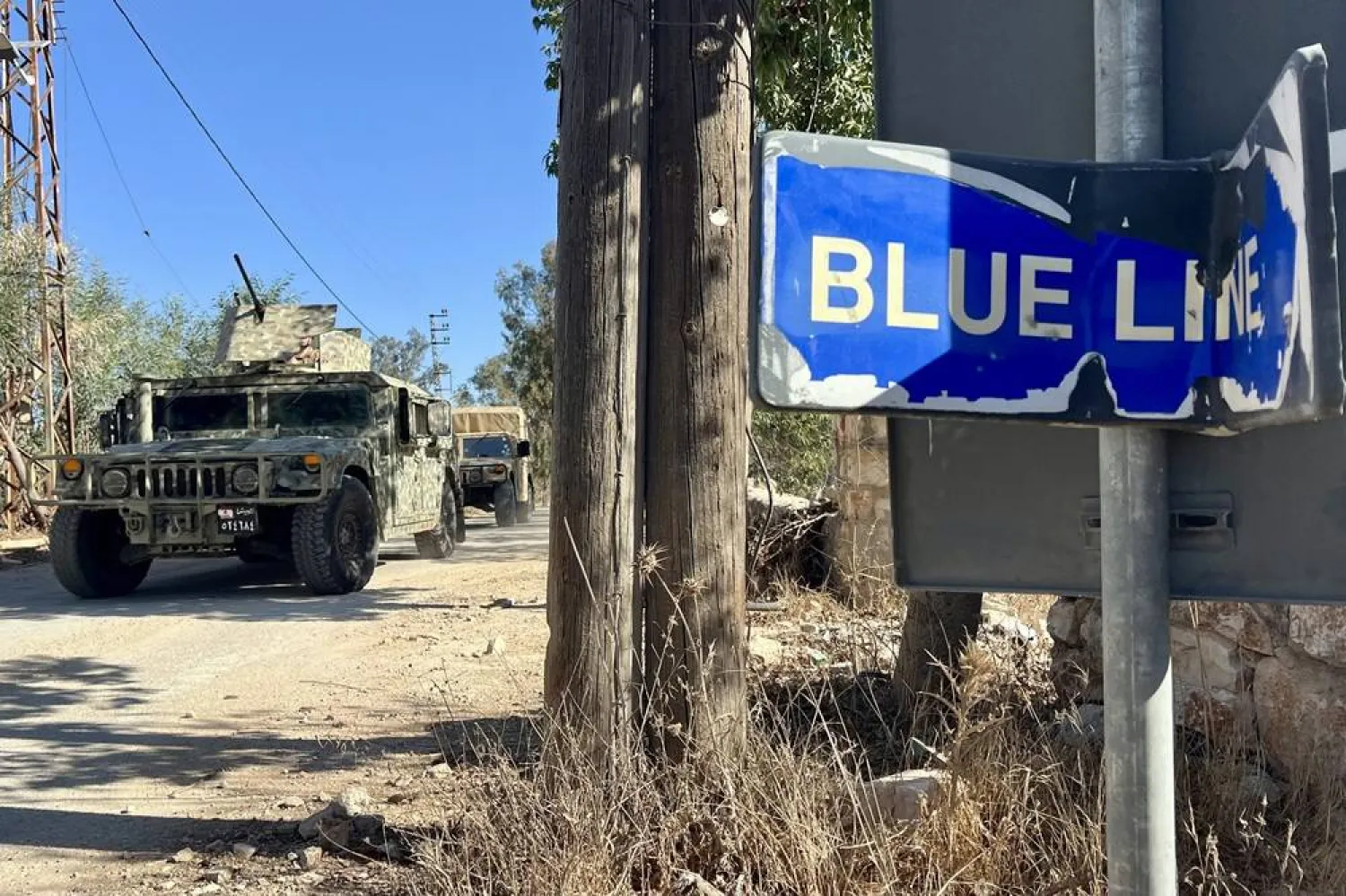

The Lebanese army established on Friday a military position in the southern border town of Blida after Israeli forces killed a municipal worker there during an incursion.
Lebanese President Joseph Aoun had this week tasked the army with confronting Israeli incursions in the South.
The military has since stepped up its field measures, with army vehicles seen in the Ghasouniye area east of Blida. It has also brought in more reinforcements to the outskirts of the towns of Aitaroun and al-Khiam.
A local security source told Asharq Al-Awsat that the majority of the army’s latest military measures in the South are part of its efforts to control the situation on the ground.
They are part of its regular duties, it said. However, establishing the position in Blida was a new development aimed at countering Israel’s incursion.
Undeterred, Israel kept up its violations of the November 2024 ceasefire, carrying out on Friday a strike on the town of Kounin in the Bint Jbeil district killing one person. Another strike targeted a house in al-Nabatieh. No casualties were reported.
The Israeli army said the Kounin strike targeted Ibrahim Mohammed Raslan, a Hezbollah maintenance operator who was trying to rebuild the Iran-backed party’s “terrorist infrastructure” in the South.
Since 2006, the situation in the South was bound to a balance between the army and Hezbollah. The military would be deployed in the area, while the party alone would have the final say on field action.
The latest war between Israel and Hezbollah and the ensuing ceasefire altered the equation, with the government earlier this year demanding that the state have monopoly over arms, effectively calling on Hezbollah to lay down its weapons. The party has refused and Israel has kept up its strikes against its members.
The strikes have grown in intensity in recent days, raising fears that a new war is imminent.
Former MP Fares Soaid told Asharq Al-Awsat that Aoun’s tasking of the military to confront any Israeli violation was a political step aimed at saying that the state is responsible of protecting Lebanon’s sovereignty.
Moreover, the move counters Hezbollah’s claim that it has the right to defend Lebanon because the state has allegedly abandoned its sovereignty. By tasking the army to defend the country, Aoun is refuting Hezbollah’s allegation, Soaid said.
At any rate, Aoun’s announcement is so far just a political move and hasn’t really been translated into actual work on the ground even though the military has boosted its deployment in the South, he remarked.
The problem doesn’t lie in how to respond to the Israeli violations, but in the lack of political decision to hold negotiations, he stressed.
“If the Lebanese state itself does not step in and negotiate with Israel over pending files, then Hezbollah will fill the void and try to score political points at a time when it can no longer achieve military victories,” he explained.
“The president and government need to take the reins and initiative in negotiating through the current international mechanisms, including the ceasefire committee [mechanism], to prevent Hezbollah from taking over the file that it may exploit against the state,” he urged.
On whether the Lebanese army is at risk of becoming embroiled in a clash with Israel, Soaid said a “dramatic escalation is unlikely”.
“The army has the right to defend Lebanese territory and the state has the right to negotiate in Lebanon’s name,” he added.
Furthermore, the state has the exclusive right over decisions of war and peace. The president needs to forge ahead with negotiations to prevent any party from replacing the state, he said.


