

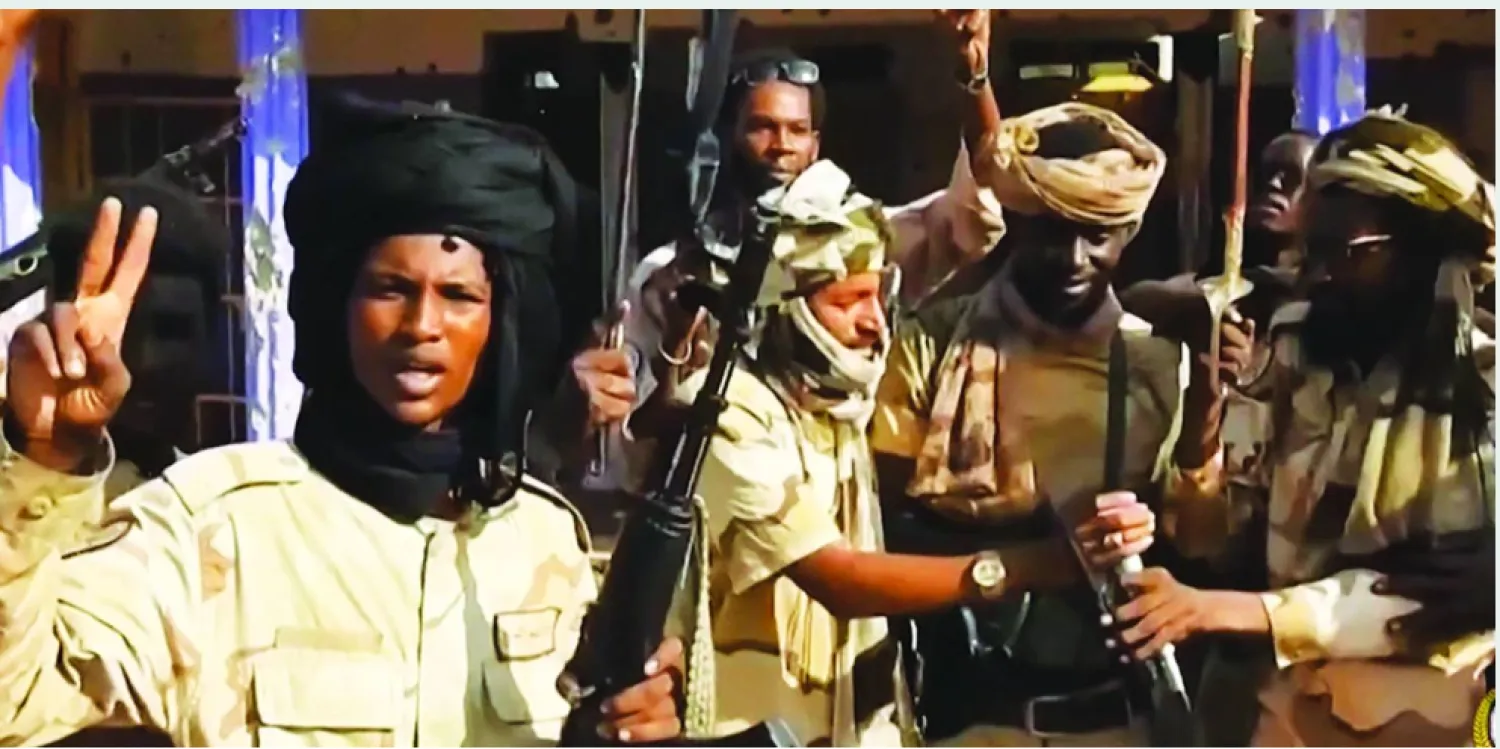

UN Probe: RSF Actions in Sudan's el-Fasher Point to Genocide

Forces affiliated with the Rapid Support Forces in the city of el-Fasher, Darfur region (AFP)
TT

UN Probe: RSF Actions in Sudan's el-Fasher Point to Genocide

Forces affiliated with the Rapid Support Forces in the city of el-Fasher, Darfur region (AFP)

Mass killings of non-Arab communities when the Rapid Support Forces captured the Sudanese city of el-Fasher bears hallmarks that point to genocide, an independent UN probe said in a new report on Thursday.

At the end of October last year, the RSF took over the city - which had been the last remaining stronghold of the Sudanese Armed Forces (SAF) in the Darfur region in the west of the country - with thousands of people killed and raped during three days of horror, the UN Independent International Fact-Finding Mission for Sudan said.

It followed an 18-month siege where the RSF imposed conditions of life calculated to bring about the physical destruction of non-Arab communities, in particular the Zaghawa and the Fur, ‌the report stated.

The ‌UN mission said it found evidence that the RSF carried out a pattern ‌of ⁠coordinated and repeated ⁠targeting of individuals based on ethnicity, gender and perceived political affiliation, including mass killings, rape and torture, as well as inflicting conditions of life calculated to bring about the group’s physical destruction - core elements of the crime of genocide under international law.

The final draft of the report was shared with the Government of Sudan but no response was received, while the RSF did not respond to the UN mission's request to meet with its leadership, the report stated. The RSF and SAF did not immediately respond to requests from Reuters for comment.

In the past, the RSF has ⁠denied such abuses - saying the accounts have been manufactured by its enemies and ‌making counter-accusations against them.

"The scale, coordination, and public endorsement of the operation ‌by senior RSF leadership demonstrate that the crimes committed in and around el-Fasher were not random excesses of war" said Mohamad ‌Chande Othman, Chair of the Fact-Finding Mission on Sudan.

"They formed part of a planned and organized operation ‌that bears the defining characteristics of genocide," he added.

Before its takeover el-Fasher's population mainly consisted of the Zaghawa, a non-Arab community, while displacement camps around the area were comprised of the Fur community, as well as Berti, Masalit and Tama, the report said.

"Survivors describe explicit threats to 'clean' the city," the report stated. Alongside attacking displacement camps, communal kitchens and medical centers ‌with drones and heavy weapons, the RSF also carried out killings, looting, beatings and sexual violence in el-Fasher, the report stated.

The RSF's "exterminatory rhetoric" and other violations indicated ⁠its intent to destroy ⁠the Zaghawa and Fur communities in whole or in part, the report said.

"Witnesses heard the Rapid Support Forces saying, 'Is there anyone Zaghawa among you? If we find Zaghawa, we will kill them all'," the report said.

Survivors recounted point-blank executions of civilians, as well as bodies of men, women and children filling roads, the report stated.

Women and girls aged 7 to 70 years old from non-Arab communities, particularly the Zaghawa were raped and subject to other acts of sexual violence, including whipping and forced nudity, the report stated.

British Foreign Secretary Yvette Cooper said the international response to the report and the situation in Sudan had to be emphatic and urged for a ceasefire.

"The findings of this UN report are truly horrific - atrocities including systematic starvation, torture, killings, rape and deliberate ethnic targeting used on the most horrendous scale during the Rapid Support Forces siege of el-Fasher," she said in a statement.

The UN mission was mandated by members of the Human Rights Council, following backing from countries that included Britain, to urgently investigate violations and abuses under international law in and around el-Fasher.



Indonesia Lays to Rest Peacekeepers Killed in Lebanon

The coffin containing the body of Indonesian soldier Farizal Rhomadhon is carried by soldiers at his home in Kulon Progo, Yogyakarta, on April 4, 2026, after being killed while serving with the United Nations Interim Force in Lebanon (UNIFIL) in southern Lebanon. (AFP)
TT

Indonesia Lays to Rest Peacekeepers Killed in Lebanon

The coffin containing the body of Indonesian soldier Farizal Rhomadhon is carried by soldiers at his home in Kulon Progo, Yogyakarta, on April 4, 2026, after being killed while serving with the United Nations Interim Force in Lebanon (UNIFIL) in southern Lebanon. (AFP)

Three Indonesian peacekeepers killed in two separate explosions in southern Lebanon last week were laid to rest in their hometowns on Sunday.

Peacekeeper Farizal Rhomadhon, 28, died when a projectile exploded on March 29 in southern Lebanon, where Israel and Hezbollah have been fighting since Lebanon was drawn into the Middle East war.

Two other blue helmets, Zulmi Aditya Iskandar, 33, and Muhammad Nur Ichwan, 26, died a day later when an explosion struck a logistics convoy of the UN Interim Force in Lebanon (UNIFIL), also in southern Lebanon.

The deadly incidents sparked calls from Indonesian authorities for an investigation and security guarantees for peacekeeping forces.

The soldiers were buried on Sunday in coffins draped in the Indonesian flag during military funerals with gun salutes.

Weeping family members scattered flower petals on their graves.

Zulmi was buried in a military cemetery in his hometown in Bandung, West Java, while Ichwan and Farizal were laid to rest in their respective hometowns in Central Java and Yogyakarta.

"I'm letting him go proudly. I accept it sincerely, even though it is not what I had hoped as a parent," Zulmi's father Iskandarudin told reporters after the funeral.

"I am certain that he's waiting for me in heaven."

Agus Subiyanto, the commander of the Indonesian National Armed Forces, told reporters that every fallen soldier will receive compensation in recognition of their service.

"We have prepared all the rights and entitlements that must be given to the fallen soldiers. Among these is compensation from the United Nations," Agus said after attending Zulmi's funeral.

The bodies of the three peacekeepers arrived in Jakarta on Saturday, received with honors in a ceremony attended by President Prabowo Subianto.

Prabowo said on Instagram that Indonesians "strongly condemn every heinous act that undermines peace and causes the deaths of our nation's soldiers".

Less than a week after the explosions that killed the three peacekeepers, another blast took place at a UN facility near Adeisseh on Friday, injuring three more Indonesian blue helmets.

Indonesia's Foreign Ministry called the attacks "unacceptable" and urged the UN Security Council "to immediately convene a meeting of troop-contributing countries to UNIFIL to conduct a review and take measures to enhance the protection of personnel serving with UNIFIL".

Foreign Minister Sugiono, who like many Indonesians only has one name, told reporters on Saturday that Indonesia wanted a thorough UN investigation, and demanded better security guarantees for peacekeeping soldiers.


Israel Says Will Strike Lebanon-Syria Border Crossing

Vehicles are seen at Masnaa border crossing between Lebanon and Syria, Lebanon November 1, 2018. (Reuters)
TT

Israel Says Will Strike Lebanon-Syria Border Crossing

Vehicles are seen at Masnaa border crossing between Lebanon and Syria, Lebanon November 1, 2018. (Reuters)

The Israeli military said on Saturday it would strike an area near the main crossing between Syria and Lebanon, urging residents to evacuate immediately as it continued its attacks across Lebanon.

Israel has carried out strikes across Lebanon and launched a ground invasion in the south since March 2, when Hezbollah entered the war in the Middle East on the side of its backer Iran.

"Due to Hezbollah's use of the Masnaa crossing for military purposes and smuggling of combat equipment, the (Israeli army) intends to carry out strikes on the crossing in the near future," said the military's Arabic-language spokesman, Avichay Adraee, urging people to leave the area.

A Lebanese security source at the Masnaa border crossing told AFP they were "currently evacuating the crossing following the Israeli threat".

In Syria, the General Authority for Borders and Customs public relations director, Mazen Aloush, said the crossing, known as Jdeidet Yabous on the Syrian side, was "exclusively for civilian use and is not used for any military purposes".

Aloush added that "in light of the circulating warnings and out of concern for the safety of travelers, traffic through the crossing will be temporarily suspended until any potential risks subside".

An AFP journalist on the Syrian side of the crossing said early Sunday it was empty, with only a few guards remaining.

Masnaa is the main crossing between Lebanon and Syria, making it a vital trade route for both countries and a key land gateway for Lebanon to the rest of the region.

Israel struck the crossing in October 2024, during its previous war with Hezbollah.

The crossing remained closed until Lebanese and Syrian authorities began repair works after a ceasefire the following month.


French Boats Set Sail to Join Gaza Aid Flotilla

Activists gather in l'Estaque, part of Marseille's harbor, southern France, on April 4, 2026, during a rally in support of a flotilla carrying activists from “Thousand Madleens to Gaza” movement as they prepare to set sail. (AFP)
TT

French Boats Set Sail to Join Gaza Aid Flotilla

Activists gather in l'Estaque, part of Marseille's harbor, southern France, on April 4, 2026, during a rally in support of a flotilla carrying activists from “Thousand Madleens to Gaza” movement as they prepare to set sail. (AFP)

Some 20 French boats set sail from Marseille on Saturday to join up with an international flotilla making a renewed effort to break an Israeli blockade and deliver aid to Gaza, AFP reporters saw.

"Gaza, Marseille is with you" shouted around a thousand people who had come to the docks to support the initiative.

The ships, mostly sailboats, set off to a round of applause and songs shortly after 5:00 pm (1500 GMT) to join the "Global Sumud Flotilla", named after a Gazan fisherman.

The international flotilla of some 100 boats, mostly setting sail from Barcelona on April 12, will head towards Gaza around April 20, according to the organizers. A week-long stopover is planned in southern Italy for "non-violence training."

"The goal is to give Palestine more visibility. We're not talking about it much right now, because of the international context," said Manon, a crew member who declined to give her full name.

In late 2025, an initial flotilla of about 50 boats, composed of political figures and activists such as Sweden's Greta Thunberg, was boarded by the Israeli navy -- illegally according to the organizers and Amnesty International.

The crew members were arrested and expelled by Israel.

The Gaza Strip, governed by Hamas, has been under an Israeli blockade since 2007. Israel and the Palestinian movement accuse each other of violating a ceasefire that came into effect on October 10, 2025, after two years of war.