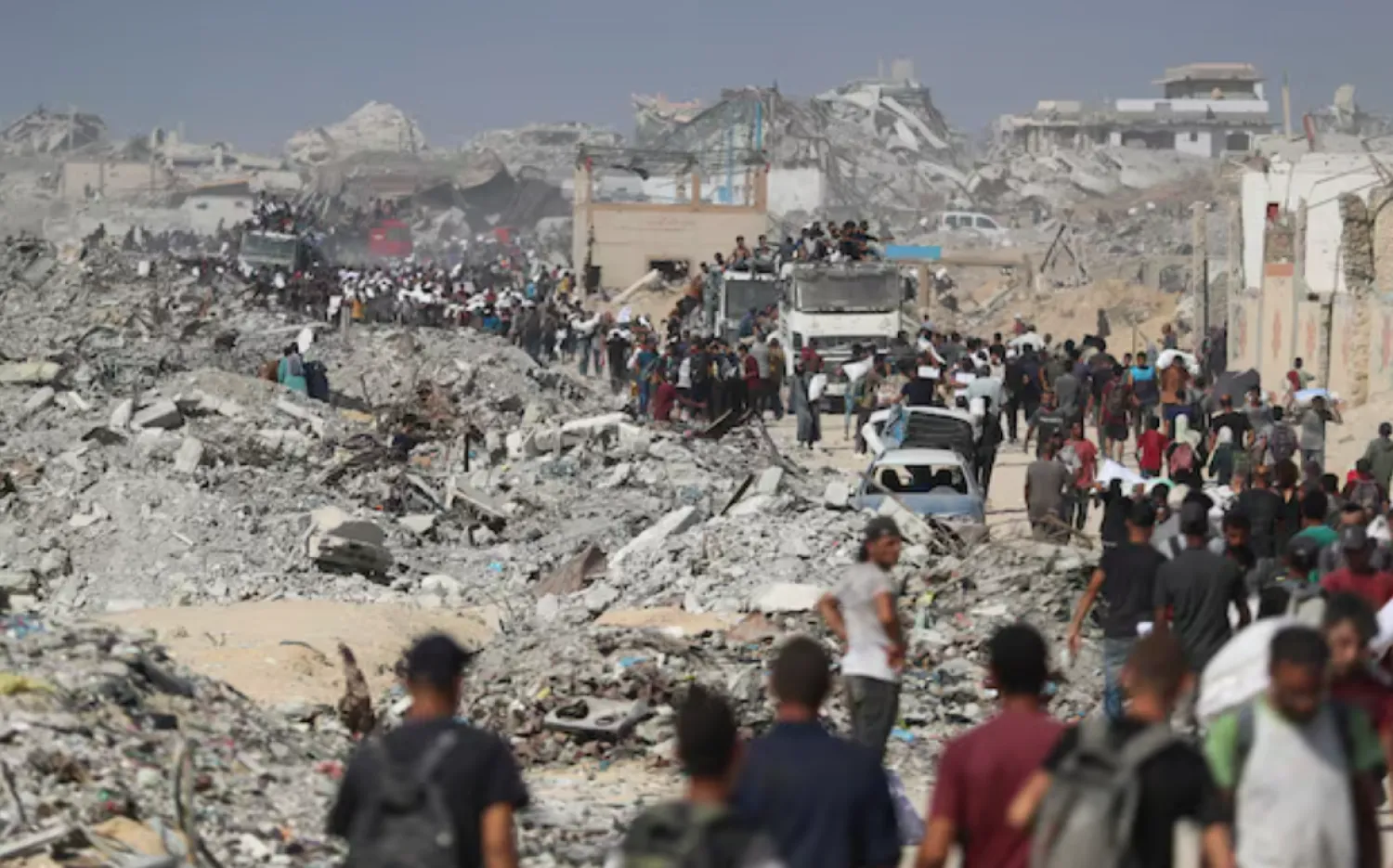

New developments have emerged in UN Security Council consultations on deploying a “stabilization force in the Gaza Strip,” after Arab and Islamic states signaled support for a US draft resolution, a day after Moscow circulated a similar proposal, amid fears that the effort could collapse under a Russian or Chinese veto.
Experts told Asharq Al-Awsat that the Arab-Islamic backing, which followed Egyptian talks with Palestine, Pakistan and the United States over the text expected to be put to a vote on Monday, is likely to remain suspended between a potential breakthrough driven by Arab-Islamic alignment with Washington’s proposal and the chance of winning Russian support, and a possible collapse if Moscow rejects any US influence and seeks to use the issue as a bargaining chip in the Russia–Ukraine crisis.
The second phase of the Gaza ceasefire agreement, which has yet to begin, includes establishing an international security force in Gaza, disarming Hamas, an additional Israeli withdrawal from the Strip and the appointment of an administration to run the territory.
A source familiar with the talks told Asharq Al-Awsat that the Arab-Islamic group “leaned toward supporting the US draft because Washington is the only party capable of enforcing its resolution on the ground and pressuring Israel to implement it.”
The source said there is “firm American intent to deploy forces soon, even if that requires sending a multinational force should Moscow use its veto.”
Egyptian Foreign Minister Badr Abdelatty discussed the draft resolution on Saturday in separate phone calls with his Pakistani counterpart Ishaq Dar and Palestinian Vice President Hussein al-Sheikh, according to two statements from the Egyptian Foreign Ministry.
The United States, Saudi Arabia, Qatar, Egypt, the United Arab Emirates, Indonesia, Pakistan, Jordan and Türkiye said in a joint statement on Friday that they “jointly support” the US resolution, which would authorize the creation of an international stabilization force, among other provisions. They expressed hope it would be adopted “swiftly.”
The diplomatic activity comes ahead of Monday’s Security Council vote on the draft, which has been under discussion for about a week, diplomatic sources told Agence France Presse on Friday.
The resolution would allow member states to form a “temporary international stabilization force” working with Israel, Egypt and newly trained Palestinian police to help secure border areas and remove weapons from Gaza. Unlike earlier drafts, it also refers to the possibility of a future Palestinian state, according to the AFP report.
Ambassador Mohamed Orabi, former Egyptian foreign minister and head of the Egyptian Council for Foreign Affairs, said the draft “faces difficulties,” adding that he hoped it would not “cement the division of the Strip.”
He noted that Arab support grew after US amendments that included moving toward a political track for the establishment of a Palestinian state.
Palestinian political analyst Dr. Ayman al-Raqab said the Arab-Islamic group’s support for the US draft, despite a competing Russian proposal, suggests the possibility of understandings and amendments, including references to future talks on a Palestinian state. He described the development as a cautious opening, given the continued risk of a Russian veto.
The US proposal challenges a rival Russian draft circulated to Council members on Thursday.
According to the text seen by AFP on Friday, the Russian draft does not call for establishing a peace council or for the immediate deployment of an international force in Gaza. It welcomes the initiative that led to the ceasefire.
The Russian resolution calls on the UN secretary-general to “identify options for implementing the provisions” of the peace plan and to report immediately, including on the feasibility of deploying an international stabilization force in Gaza.
US Ambassador to the United Nations Mike Waltz wrote in The Washington Post that any refusal to support this resolution is a vote to continue Hamas rule or to return to war with Israel, condemning the region and its people to perpetual conflict.
He added that any deviation from this path, whether by those seeking to play political games or revive the past, will come at a real human cost.
Obstacles may not come from a Russian veto alone.
According to Yedioth Ahronoth on Friday, key elements alarming Israel in the latest draft include language paving the way toward “Palestinian self-determination,” an expanded UN role in overseeing aid distribution and broader powers for the proposed “transitional governing authority” for Gaza.
Security Council resolutions require at least nine votes in favor and no veto from Russia, China, the United States, Britain or France.
Orabi said the Russian draft is more aligned with Palestinian aspirations but ultimately cannot compel Israel to implement anything.
He predicted that despite efforts to secure a UN mandate, Russia may veto the US text and China may abstain as part of broader tensions with Washington, prompting the United States to move toward deploying a multinational force.
Such an approach, he said, aligns with Israel’s preference to avoid implementing UN resolutions.
Al-Raqab said that if Moscow insists on using its veto to block any US influence or to employ the proposal as leverage in the Ukraine crisis, Washington would move immediately to create a multinational force without Security Council authorization.