


Panel of Experts Confirm Growing Houthi Threats in Yemen and Across Region

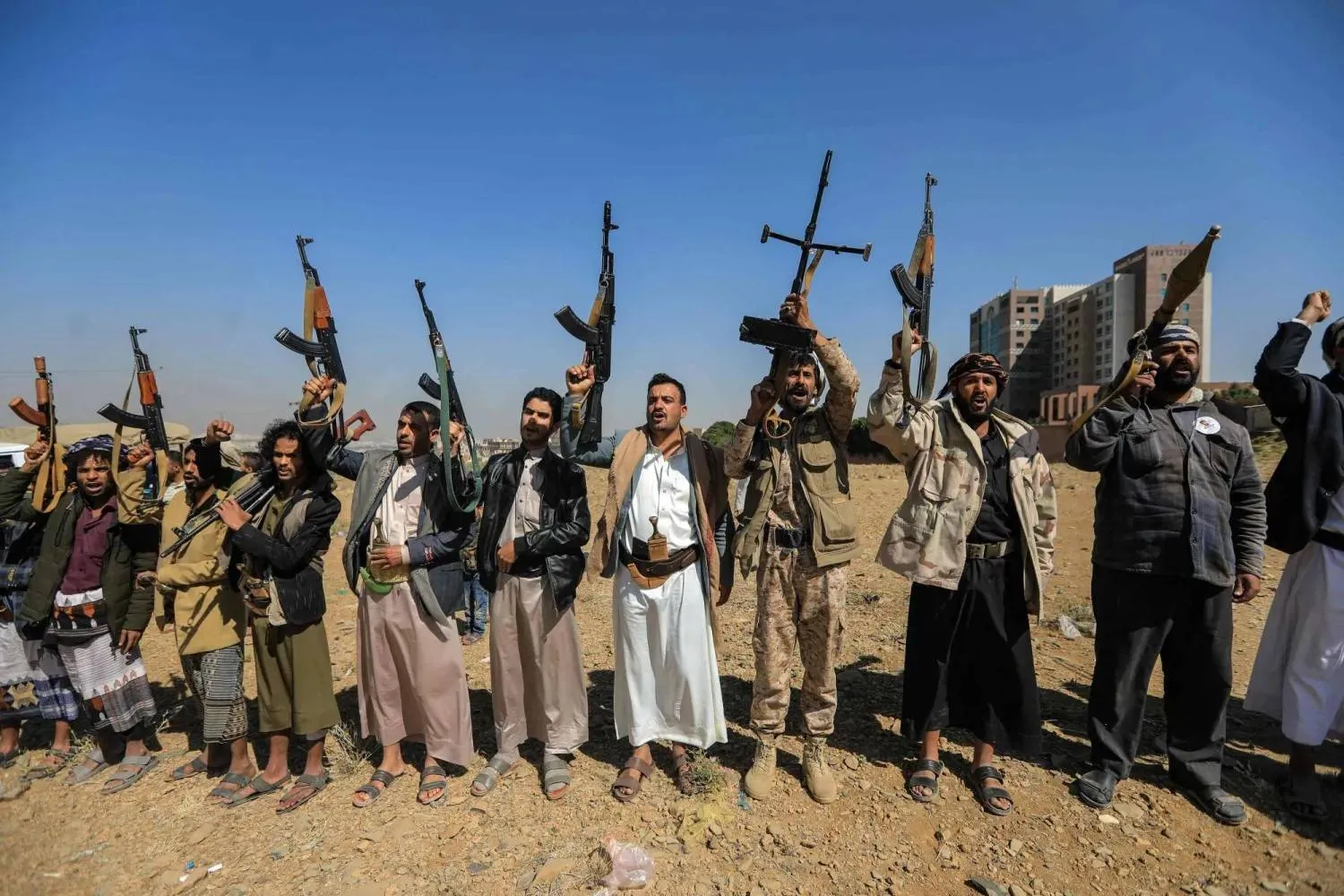
Houthis continue to exploit the conflict in Gaza and their proclaimed solidarity with the Palestinians to justify their attacks on foreign ships (AFP) 
TT

Panel of Experts Confirm Growing Houthi Threats in Yemen and Across Region

Houthis continue to exploit the conflict in Gaza and their proclaimed solidarity with the Palestinians to justify their attacks on foreign ships (AFP) 

The situation in Yemen remains a protracted crisis characterized by political and military complexity, a stalled peace process, and severe humanitarian deterioration, leaving two-thirds of the population in need of assistance, according to a final report presented by the Panel of Experts on Yemen to the Security Council.

The report noted that despite the issuance of several UN resolutions, particularly Resolution 2216 (2015), the implementation of the financial sanctions against Houthis has been limited.

It said asset freezes and travel bans have a limited or constrained effect on the militia group, which actively and successfully circumvents restrictions through sophisticated networks of intermediaries and front companies in the region.

Therefore, the Panel called for the strengthening of the United Nations Verification and Inspection Mechanism (UNVIM), which inspects ships travelling to Houthi-controlled ports to promote compliance with the arms embargo on the group.

Also, it said, the Houthis continue to pose a significant threat to peace, security and stability in Yemen and across the region.

Their deadly attacks against vessels in the Red Sea and the Gulf of Aden undermined maritime security and the freedom of international trade.

The Panel said the Houthis continue to exploit the conflict in Gaza and their proclaimed solidarity with the Palestinians to justify their attacks on foreign ships as part of “the axis of resistance.

It warned that in the absence of a decisive deterrence, “grave consequences threaten regional stability and international navigation.” The Panel called on the Security Council to take stronger action, and support diplomatic efforts to revive the comprehensive Yemeni dialogue under the auspices of the United Nations.

Maritime Attacks

The Houthis have conducted at least 25 verified attacks against commercial vessels in the Red Sea and the Gulf of Aden, using missiles, drones and rocket-propelled grenades with increasing frequency and sophistication, the Panel said in its report. The attacks were carried out between 1 August 2024 and 31 July 2025.

It said the sinking of two vessels, the killing of seafarers and the environmental hazards caused were major concerns.

The report noted that the United States and Israel carried out military operations against Houthi positions in Sana'a, Hodeidah, and Saada, targeting weapons storage facilities and missile launchers.

However, according to the report, the militia group “maintained a high operational capability” and continues to develop its military arsenal with funding and logistical support from regional parties, in a reference to Iran.

Foreign Support and Economy of War

The Panel said analysis of Houthi smuggling trends revealed continued violation of the arms embargo, including through concealment or misdeclarations.

Detections have increased owing to the diversion of vessels to Aden port after air strikes affected the infrastructure and capacity of Hodeidah port.

It said the June 2025 seizure of 750 tons of illicit materiel and weapons by the government proves that violations of the arms embargo continue to occur.

The seizure included several advanced cruise, anti-ship and anti-aircraft missiles that displayed characteristics similar to those of weapons produced in Iran, such as the Ghadir anti-ship cruise missile, Shahed uncrewed aerial vehicle, AM-50 Sayyad anti-materiel rifle and the Misagh series man-portable air defense system.

The Panel noted that the knowledge and ability to manufacture weapons systems domestically remains in place, making it challenging to eliminate the Houthis’ capabilities.

In addition, the availability of financial resources plays a major role in maintaining supply lines and manufacturing capabilities, taking into account the Panel’s assessment that the asset freeze has had limited effect.

According to the Panel, the main source of revenue for the Houthis are taxes, including on the income of both individuals and companies, real estate, a sales tax on fuel and cigarettes and on all imports.

Those taxes are in addition to customs duties. The Houthis, as the de facto authority, collect a major share of surplus profits from all sectors, mainly from the financial and banking sector.

Widespread Violations

The Panel showed that widespread and systematic violations of international humanitarian and human rights law continue in Yemen, including indiscriminate attacks on civilians and civilian objects, arbitrary killings and detentions, conflict-related sexual violence, child recruitment and obstruction of humanitarian assistance.

The Houthis also continued to detain personnel of the United Nations, national and international NGOs, civil society organizations and diplomatic missions.

In addition, the Houthis used a range of repressive measures and heightened surveillance of people to prevent any opposition.

The Houthi practices therefore aim to establish a closed society with absolute loyalty to the group's leadership.

Coordination with Other Armed Groups

The Panel said it continued its investigations into the evolving relationship between the Houthis and Somali Harakat Al-Shabaab.

“That cooperation involves weapons smuggling, technical training, including in relation to operational tactics, and exchange of logistical support,” it wrote.

The Panel then proved the ability of the Houthis to conduct intricate operations inside and outside Yemen and establish a web of relations with armed groups in other countries.

It then noted that the strengthening of ties between the Houthis and Al-Shabaab could pose a growing threat to peace, security and stability not only in Yemen, but in the region as a whole.


Hospital Officials in Gaza Receive Bodies of 15 Palestinians Returned from Israel

A Palestinian man sits on the rubble of a destroyed building in Jabalia, in the northern Gaza Strip, on November 7, 2025. (Photo by Omar AL-QATTAA / AFP)
TT

Hospital Officials in Gaza Receive Bodies of 15 Palestinians Returned from Israel

A Palestinian man sits on the rubble of a destroyed building in Jabalia, in the northern Gaza Strip, on November 7, 2025. (Photo by Omar AL-QATTAA / AFP)

Hospital officials in Gaza said on Saturday that they have received the bodies of 15 Palestinians returned from Israel under the terms of the US-brokered ceasefire agreement.

The bodies arrived at Nasser Hospital in Khan Younis, the officials said.

It followed the return by Palestinian militants of a body of an Israeli hostage the previous day.

Israel identified the latest body returned from Gaza by Hamas and Islamic Jihad as Israeli-Argentinian hostage Lior Rudaeff, the Israeli army said Saturday.

As part of the deal, Israel has returned the remains of 15 Palestinians for each Israeli hostage.

Under the October ceasefire deal Hamas turned over all 20 living hostages still held in Gaza since the group's 2023 attack on Israel, in return for nearly 2,000 Palestinian convicts and wartime detainees held in Israel.

The ceasefire agreement also included the return of remains of 28 deceased hostages in exchange for remains of 360 militants.


Israel Identifies Latest Returned Body as Israeli-Argentinian Hostage

This undated photo provided by the Hostages and Missing Families Forum shows Israeli hostage Lior Rudaeff, whose body was returned to Israel after being held in Gaza by Palestinian militants. (Hostage's Family Forum via AP)
TT

Israel Identifies Latest Returned Body as Israeli-Argentinian Hostage

This undated photo provided by the Hostages and Missing Families Forum shows Israeli hostage Lior Rudaeff, whose body was returned to Israel after being held in Gaza by Palestinian militants. (Hostage's Family Forum via AP)

Israel has identified the latest body returned from Gaza by Hamas and Islamic Jihad as Israeli-Argentinian hostage Lior Rudaeff, the Israeli army said Saturday.

"Following the completion of the identification process by the National Institute of Forensic Medicine... IDF (military) representatives informed the family of Lior Rudaeff that he had been returned for burial," the military said in a statement.

Rudaeff, 61, was killed in Nir Yitzhak kibbutz while trying to protect his community with four other residents on October 7, 2023 during the Hamas attack on Israel that triggered the Gaza war, and his body was taken to the Palestinian territory that day.

Under the October ceasefire deal Hamas turned over all 20 living hostages still held in Gaza since the group's 2023 attack on Israel, in return for nearly 2,000 Palestinian convicts and wartime detainees held in Israel.

The ceasefire agreement also included the return of remains of 28 deceased hostages in exchange for remains of 360 militants.

Including Rudaeff, 23 hostage bodies have been returned in exchange for 285 bodies of Palestinians, though not all have been identified, according to Gaza's health authorities.


Lebanon Reaffirms Negotiations as Path to Resolve Dispute with Israel

President Joseph Aoun between Prime Minister Nawaf Salam and Speaker Nabih Berri (Lebanese Presidency file photo)
TT

Lebanon Reaffirms Negotiations as Path to Resolve Dispute with Israel

President Joseph Aoun between Prime Minister Nawaf Salam and Speaker Nabih Berri (Lebanese Presidency file photo)

Senior Lebanese officials reaffirmed their commitment to negotiations with Israel through the international committee tasked with overseeing the November 2024 ceasefire agreement, known as the ceasefire monitoring mechanism, following Hezbollah’s statement on Thursday in which the group told them it rejects any form of political negotiation.

Communication between Lebanon and Israel is limited to a United Nations-backed monitoring mechanism involving France and the US. The two sides meet separately under UN auspices but do not engage in direct talks.

Berri: No to normalization

While President Joseph Aoun underscored Lebanon’s adherence to this mechanism, Parliament Speaker Nabih Berri said there is no alternative to it. Prime Minister Nawaf Salam responded to Hezbollah by saying that decisions of war and peace rest solely with the state.

Berri told Asharq Al Awsat that normalization with Israel is out of the question.

“Anyone calling for normalization should know it is impossible,” he said.

“I remain firm in my position on the mechanism, which brings together all parties, Lebanon, Israel, the United States, France and the United Nations. There is no objection to bringing in civilian specialists when needed, as happened during the demarcation of the Blue Line in 2000, when geological and mapping experts were involved.”

Berri added that Israel’s threats and airstrikes will not alter Lebanon’s stance.

On the electoral law, Berri said he has not yet received the draft. Once it reaches him, he will decide his position. The government had approved a draft law scrapping the six seats allocated to expatriates and allowing overseas voters to cast ballots in their place of residence, according to their electoral registration. Berri and Hezbollah oppose the changes.

Berri has insisted on implementing the current parliamentary election law, saying it remains technically and legally viable. He also questioned why some political actors are backtracking on previous positions “for maneuvers we all know are futile.” He said: “This law was once described by George Adwan (Lebanese Forces deputy leader) as his own. So what was valid in past elections is suddenly not valid today?”

Aoun: We are committed to the November agreement

The President reaffirmed “Lebanon’s commitment to the cessation of hostilities agreement reached in November 2024 under US and French sponsorship.”

Speaking during a meeting with a World Bank delegation, he said Israel had not complied.

“According to this deal, Israel was supposed to withdraw completely and fully from the South sixty days after the agreement, but it still occupies five hills and is escalating its attacks on Lebanon amidst increasing daily threats against the country and its people,” said Aoun.

Salam: Decisions of war and peace rest with the government

The Prime Minister said Lebanon is moving steadily toward reclaiming its natural role within the Arab region.

He voiced satisfaction at “Lebanon’s return to the Arabs and the Arabs’ return to Lebanon,” saying this renewed relationship forms “a foundation for national recovery in technology, the economy and security.”

Speaking at an event dedicated to technology and artificial intelligence, Salam recalled that the government has made a “clear decision” regarding the state’s monopoly over arms, stressing that the Lebanese Army’s plan to achieve this “is progressing according to well-defined stages.”

This plan is still in its first phase, Salam noted, alluding to the disarmament of Hezbollah south of the Litani River.

Responding to Hezbollah’s statement, Salam said that decisions of war and peace lie exclusively with the Lebanese government, which alone is responsible for protecting sovereignty and maintaining stability.

He described Israeli escalation as dangerous and a threat to regional security, saying the government is seeking Arab and international support to stop Israeli attacks on Lebanese territory and strengthen the state’s ability to assert full authority across its land.

On Lebanese-Syrian relations, Salam said the era of interference in Syria’s affairs has ended. Lebanon is committed to a policy of self-distancing and to mutual respect with all Arab states, he reaffirmed.
