


Lebanon Agrees to Release Hannibal Gaddafi after 10 Years in Jail 

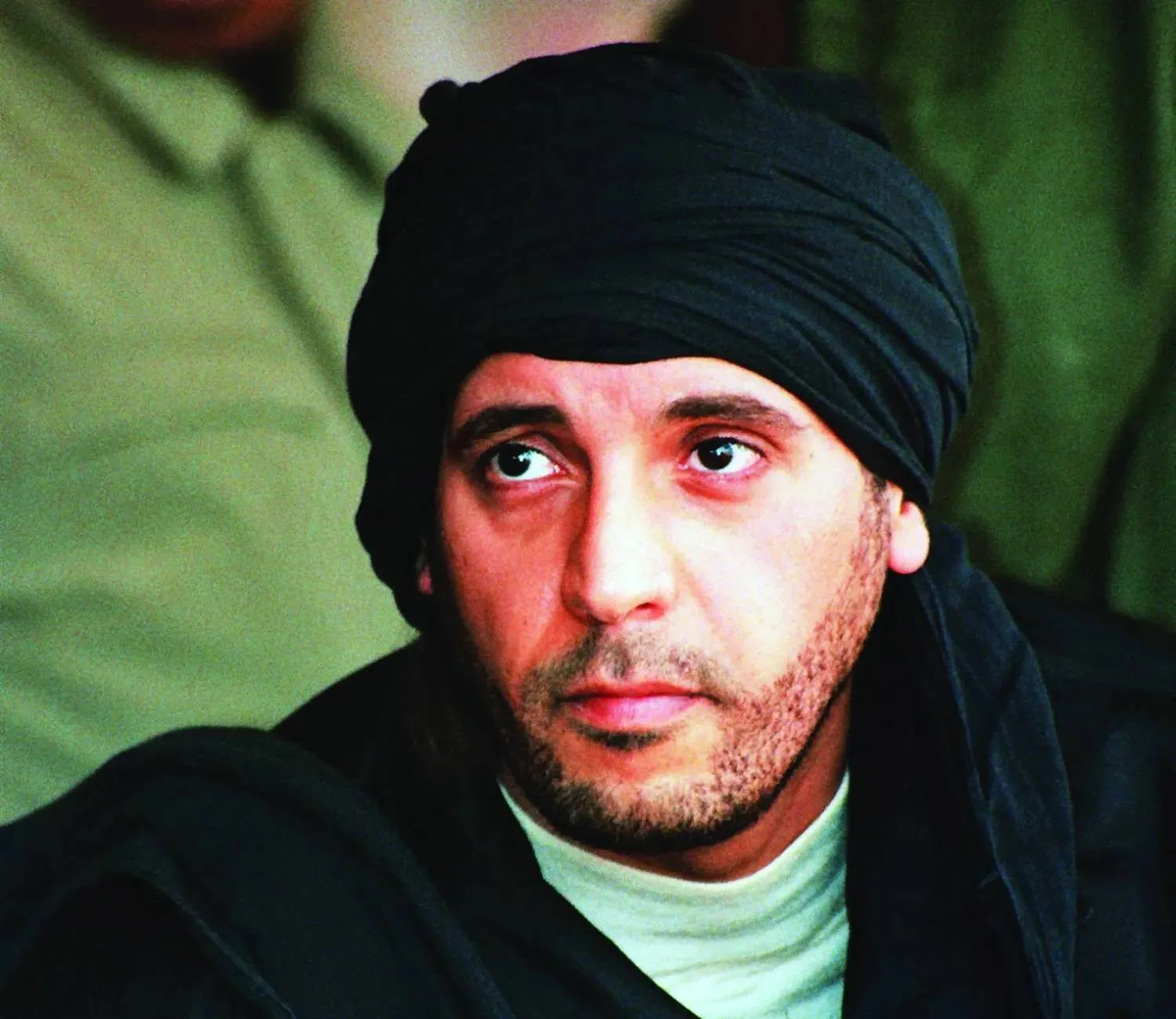
Hannibal al-Gaddafi in 2011. (AP)
TT

Lebanon Agrees to Release Hannibal Gaddafi after 10 Years in Jail 

Hannibal al-Gaddafi in 2011. (AP)

The investigator in the case of the disappearance of cleric Imam Moussa al-Sadr and his companions Judge Zaher Hamadeh agreed on Thursday to lower the bail in the release of Hannibal al-Gaddafi, the son of late Libyan leader Moammar al-Gaddafi, paving the way for his release from jail after ten years.

The bail of 11 million dollars will be reduced to 900,000 dollars, and the travel ban against him will be lifted once it is paid.

Hannibal’s release was announced some two weeks ago. Hamadeh decided to reduce the bail after interrogating Hannibal for two hours at the Justice Palace in Beirut in the presence of his lawyers and representatives from Sadr, Abbas Badreddine and Mohammed Yacoub’s families.

This was the first time Hannibal had been reinterrogated since 2017.

His lawyer Nassib Chedid told Asharq Al-Awsat that Sadr’s family had requested it and that it did not offer any new evidence in the case against him.

The Lebanese judiciary had come under international pressure, especially human rights groups, to release Hannibal, who was seen as a “political prisoner”. He was being held for allegedly withholding information in Sadr’s disappearance.

The groups refuted the claims, arguing that Hannibal was only three years old when the cleric went missing and that years later, he never assumed any political, military or security position when his father was in power.

A judicial source told Asharq Al-Awsat that the decision to release Hannibal “was taken after the investigator had exhausted all legal measures, whether in communicating with Libyan authorities or during his last interrogation.”

The investigator concluded that his continued detention was no longer justified after ten years, and that Hamadeh had gathered all possible information in the case, it added.

A Libyan delegation, including government and judicial representatives, had visited Lebanon in recent days to follow up on the case. It met with the official committee on Sadr’s disappearance and Hamadeh.

The ten million dollars removed from Hannibal’s bail were going to be a form of partial compensation for the families of the three missing people in the case.

Sadr’s family eventually demanded compensation of one Lebanese pound, Badreddine’s family did not demand compensation and the Yaacoub family objected to the hefty bail.

Sadr and his two companions went missing during a trip to Libya in 1978.

Gaddafi had been living in exile in Syria with his Lebanese wife, Aline Skaf, and children until he was abducted in 2015 and brought to Lebanon by Lebanese militants who were demanding information about Sadr.

Lebanese police later announced they had seized Hannibal from the northeastern Lebanese city of Baalbek where he was being held, and he has been held ever since in a Beirut jail, where he was faced questioning over Sadr's disappearance.

Libya formally requested Hannibal’s release in 2023, citing his deteriorating health after he went on a hunger strike to protest his detention without trial.

The case has been a long-standing sore point in Lebanon. The cleric’s family believes he may still be alive in a Libyan prison, though most Lebanese presume he is dead. He would be 96 years old.


Israel Arrests 175 Activists from Gaza Flotilla Far from its Waters

Global Sumud Flotilla vessels prepare to depart for Gaza at the port of Barcelona, northeastern Spain, 12 April 2026. EPA/MARTA PEREZ
TT

Israel Arrests 175 Activists from Gaza Flotilla Far from its Waters

Global Sumud Flotilla vessels prepare to depart for Gaza at the port of Barcelona, northeastern Spain, 12 April 2026. EPA/MARTA PEREZ

Israel's army arrested around 175 activists from a Gaza-bound aid flotilla in international waters off Greece, the Israeli foreign ministry and the flotilla's organizers said Thursday.

"Approximately 175 activists from more than 20 boats of the condom flotilla are now making their way peacefully to Israel," the ministry said in a statement, using its latest epithet to poke fun at the flotilla after prophylactics were found in a previous convoy.

The statement included a video of the activists aboard an Israeli navy ship.

The organizers of the latest flotilla of pro-Palestinian activists seeking to break Israel's blockade on Gaza had announced shortly beforehand that their boats were surrounded by Israeli military ships while off the coast of the Greek island of Crete.

"At the time of publishing this statement (06:30 Paris time, 04:30 GMT), at least 22 of the flotilla's 58 boats have been stormed by Israeli forces in complete violation of international law," AFP quoted the Global Sumud Flotilla as saying in a statement.

The flotilla set sail in recent weeks from Marseille in France, Barcelona in Spain and Syracuse in Italy.

Overnight from Wednesday to Thursday, the flotilla said its boats had been "illegally surrounded" by Israeli vessels.

The remaining boats in the flotilla are currently near Crete, according to the organization’s live tracking on its website.

"Our boats were approached by military speedboats, self-identified as 'Israel', pointing lasers and semi-automatic assault weapons ordering participants to the front of the boats and to get on their hands and knees," the organization had said.

"Boat communications are being jammed and a SOS was issued."

In the summer and autumn of 2025, a first voyage by the Global Sumud Flotilla across the Mediterranean towards Gaza drew worldwide attention.

The boats in that flotilla were intercepted by Israel off the coasts of Egypt and the Gaza Strip in early October.

The Israeli operation, described as illegal by the organizers and by Amnesty International, drew international condemnation.

Crew members, including Swedish activist Greta Thunberg, were arrested and then expelled by Israel.

Israel controls all entry points to Gaza, and has been accused by the United Nations and foreign NGOs of strangling the flow of goods into the territory, causing shortages since the start of the war in October 2023.

The Gaza Strip, governed by Hamas, has been under an Israeli blockade since 2007, and the war triggered by the Palestinian movement's attack on Israel has led to severe shortages of food, water, medicine and fuel.

A fragile ceasefire was reached last October after two years of devastating conflict.


Saudi Arabia Stresses Importance of Strengthening Lebanon’s Stability

Patriarch al-Rahi receives Ambassador Bukhari in Bkerke (NNA)
TT

Saudi Arabia Stresses Importance of Strengthening Lebanon’s Stability

Patriarch al-Rahi receives Ambassador Bukhari in Bkerke (NNA)

A meeting between Maronite Patriarch Beshara Boutros al-Rahi and Saudi Ambassador to Lebanon Walid Bukhari in Bkerke underscored the priority of consolidating stability in Lebanon by supporting the state and its institutions and fostering a climate of national unity.

A statement from the Maronite Patriarchate said the talks focused on “ways to strengthen stability in Lebanon and support the path of the state and its institutions.”

Bukhari conveyed greetings from the Saudi leadership and praised the patriarch’s “national and spiritual role,” stressing that the current phase requires wise leadership capable of reinforcing stability and supporting Lebanon’s constitutional authorities as they confront ongoing challenges.

He added that “building people comes before building infrastructure, and that fostering loyalty to the nation remains the fundamental pillar of any future recovery.”

The discussion also addressed Lebanon’s situation from a historical and intellectual perspective, drawing on the works of historians such as Philippe Hitti, Kamal Salibi and Asad Rustom.

The meeting’s participants raised the notion that Lebanon’s various communities may have reached a stage of “symbolic exhaustion” from recurring crises, potentially opening the door to renewed emphasis on shared national ground rather than division.

They stressed that Lebanon’s history, marked by repeated cycles, calls for drawing lessons to avoid future crises and move toward a new phase centered on national cohesion.

The meeting also highlighted the importance of supporting dialogue initiatives, particularly interfaith and national gatherings, given their role in reinforcing stability and promoting unity among Lebanon’s diverse communities.

Rahi stressed the importance of upholding national principles and safeguarding the dignity and future of the Lebanese people.

He expressed appreciation for efforts to support Lebanon and its stability, saying the current phase “requires collective awareness and national responsibility to protect the country and rebuild it on solid foundations.”


Lebanon: Disagreements Over Israel Talks Strain Aoun-Berri Ties

Israeli soldiers operate in southern Lebanon, as seen from northern Israel, Wednesday, April 29, 2026. (AP Photo/Ariel Schalit)
TT

Lebanon: Disagreements Over Israel Talks Strain Aoun-Berri Ties

Israeli soldiers operate in southern Lebanon, as seen from northern Israel, Wednesday, April 29, 2026. (AP Photo/Ariel Schalit)

Disagreements between Lebanese President Joseph Aoun and Parliament Speaker Nabih Berri over negotiations with Israel have come to the surface as violence has continued despite a recently extended ceasefire between Israel and Hezbollah.

Aoun said Wednesday that he had coordinated all steps with Berri and Prime Minister Nawaf Salam. But Berri responded sharply, saying the president’s remarks were “inaccurate, if not otherwise.”

Aoun had said Israel must “understand that it must first fully implement the ceasefire before moving on to negotiations,” stressing that every step he had taken regarding talks “was coordinated and consulted on with Speaker Nabih Berri and Prime Minister Nawaf Salam, contrary to what is being reported in the media.”

Berri quickly pushed back in a statement: “With all due respect to the presidency and to what His Excellency the president is saying, the remarks attributed to him ... are inaccurate, if not otherwise - particularly regarding the November 2024 arrangement and the issue of negotiations.”

Aoun also said he was “making every possible effort to reach a solution far from violence and the bloodshed in the South,” adding that such a solution could be achieved through negotiations, “which are war without bloodshed.”

Amid mounting criticism over the decision to pursue direct negotiations with Israel, Aoun reiterated: “In every step I have taken, I was in coordination and consultation with Speaker Nabih Berri and Prime Minister Nawaf Salam, contrary to what is being reported in the media.”

He added: “As for the criticism that Lebanon, through the US statement issued after the trilateral talks in Washington, agreed to grant Israel the freedom to continue its attacks on Lebanon, I say that this wording appeared in a statement issued by the US State Department. It is the same text adopted in November 2024 and approved by all parties. It is a statement, not an agreement, because an agreement comes after negotiations are concluded.”

The Lebanese president stressed that if Israel believes it can achieve security through violations and the destruction of border villages, it is mistaken, noting that it has tried this approach before without success.

“The only thing that can protect the borders is when the Lebanese state, in full strength, is present throughout the entire south, up to the international border,” he underlined.

“Israel must definitively understand that the only path to security is through negotiations, but it must first fully implement the ceasefire before moving to negotiations.”

Aoun acknowledged “many difficulties” facing efforts to reach that goal, saying Lebanon is working to mitigate the consequences of Israeli attacks through intensive diplomatic contacts.

“It is unacceptable for Israeli attacks to continue after the ceasefire has been declared,” he said. “We are now awaiting the United States to set a date to begin negotiations. All European Union countries, along with Arab states, have supported our choice of negotiations. There is also broad consensus among the Lebanese people, especially in the south, on the need to end the war,” he added.

The president highlighted a positive development, saying that the Lebanon file is now on the desk of US President Donald Trump. “He holds a special regard for Lebanon and spoke highly, in a very moving way, about Lebanon and its people during our phone call. This is an opportunity we must seize to guide our country toward safety and peace,” Aoun said.

Hezbollah drew Lebanon into the Middle East war on March 2, and Israeli and Lebanese representatives have since met twice in Washington, the first such meetings in decades, for discussions that Hezbollah has categorically rejected.

After the first talks, Trump announced a 10-day ceasefire that began on April 17, and a three-week extension after the second round.

Israel has repeatedly bombed Lebanon, particularly the south, despite the truce, and has carried out demolitions of border villages inside a "Yellow Line" it established in southern Lebanon.

It said on Wednesday that it struck "approximately 20 command centers and military structures used by Hezbollah.”
