


Piles of Garbage and Seeping Sewage Pollute Devastated Gaza

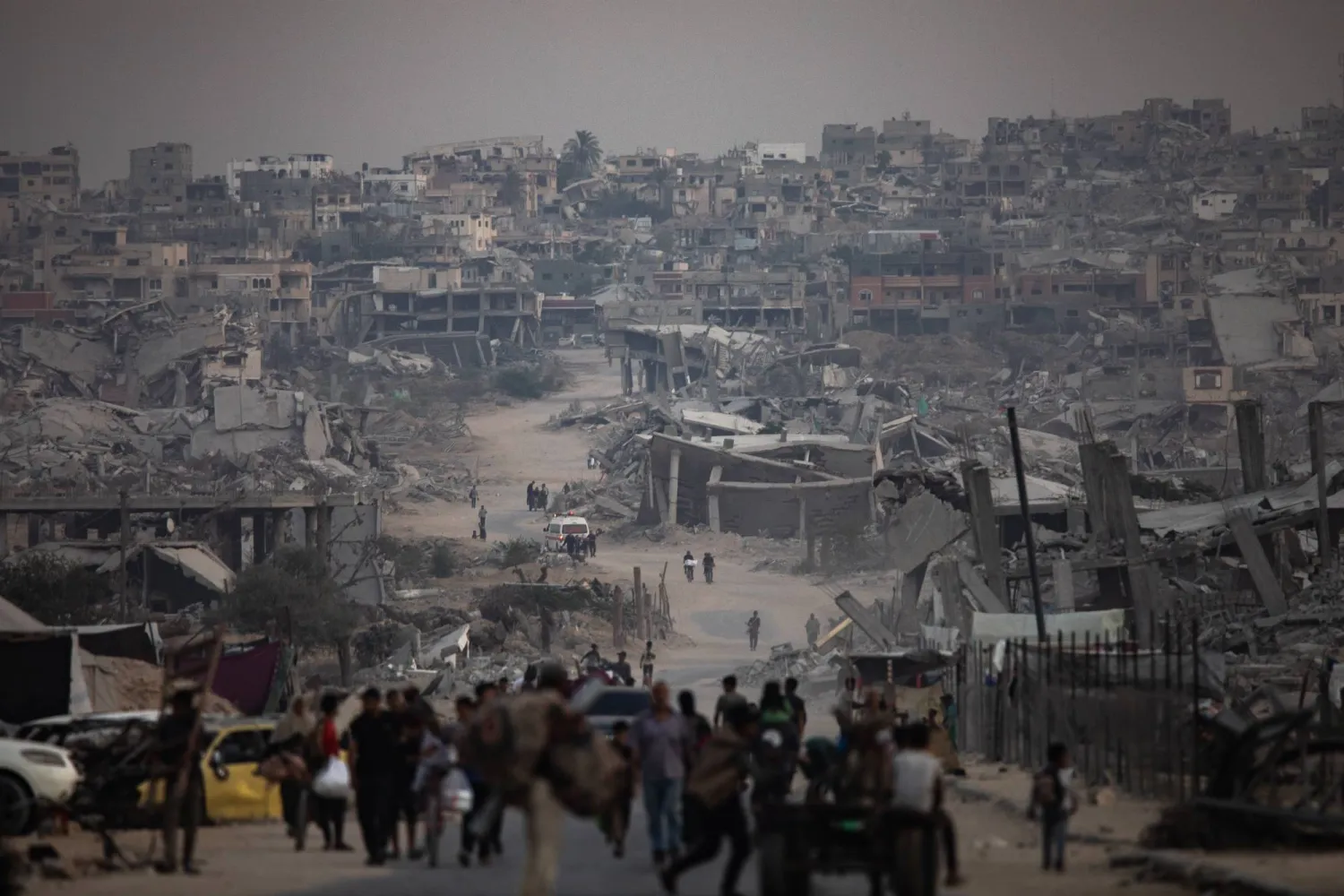
Displaced Palestinians sit next to their destroyed homes in Khan Yunis camp in the southern Gaza Strip, 05 November 2025. EPA/HAITHAM IMAD
TT

Piles of Garbage and Seeping Sewage Pollute Devastated Gaza

Displaced Palestinians sit next to their destroyed homes in Khan Yunis camp in the southern Gaza Strip, 05 November 2025. EPA/HAITHAM IMAD

Stinking mounds of fly-covered garbage lie strewn throughout Gaza amid the rubble from Israel's devastating military campaign, spilling out along roadsides and between the tents where most of the shattered enclave's people live. Government services such as rubbish collection ceased as soon as the war began and although they are partially returning since the truce last month, the massive extent of destruction means any more thorough cleanup lies far in the future, said Reuters.

"I don't smell any fresh air. I smell a foul odor in my tent. I can't sleep. My children wake up in the morning coughing," said Mahmoud Abu Reida, gesturing at the dumpster by the tent he shares with his wife and four children in Khan Younis.

Rotting garbage, sewage-filled pools, hazardous waste from bomb sites and noxious smoke from burning cloth and plastic have birthed a fetid environment for Gazans.

"The scale of the waste problem in Gaza is huge," said Alessandro Mrakic, head of the Gaza office of the UN development agency UNDP.

Waste landfill sites were already full before the start of the war and three major dump sites were located along the border with Israel in areas that are now off limits to Palestinians, he said. "We're talking about 2 million tons of waste - untreated - all across Gaza," Mrakic said, adding that the risks to the environment, to the aquifer that much of Gaza's water comes from, and to the population's health were "immense".

Many people complain of gastric diseases and skin complaints from diarrhea to rashes, sores, lice and scabies, and doctors in the tiny, crowded Palestinian territory say pollution is to blame.

"Skin diseases have spread a lot because of overcrowding in tents and the tents are next to garbage dumps," said Sami Abu Taha, a dermatologist at the Kuwaiti field hospital in Khan Younis, lamenting the lack of medicine to treat such ailments.

One of Abu Reida's children has been repeatedly to the hospital, he said, where doctors had told him the boy was suffering from a bacterial infection that likely came from the rubbish container by the tent.

BOMBARDMENTS SMASH INFRASTRUCTURE

In another part of Khan Younis, Mahmoud Helles was sitting in his tent with his children - a sewage-filled pond standing nearby.

"We find nowhere to stay but in such places," he said, showing a rash of red spots on his arm and hand.

"This place is very, very difficult - it is full of diseases and epidemics because of war remnants, piles of garbage, and the lack of sewage treatment," he said.

Much of Gaza's wastewater and sewage infrastructure was badly damaged by Israel's bombardment and ground operations, leaving people to use open latrines that flood when it rains.

The United Nations is developing plans to deal with the waste problem, including considering options for processing plants that can generate electricity from waste, Mrakic said.

"Immediate action is needed, mainly through access of machinery, equipment, that will allow us to properly perform the job on the ground," he added.


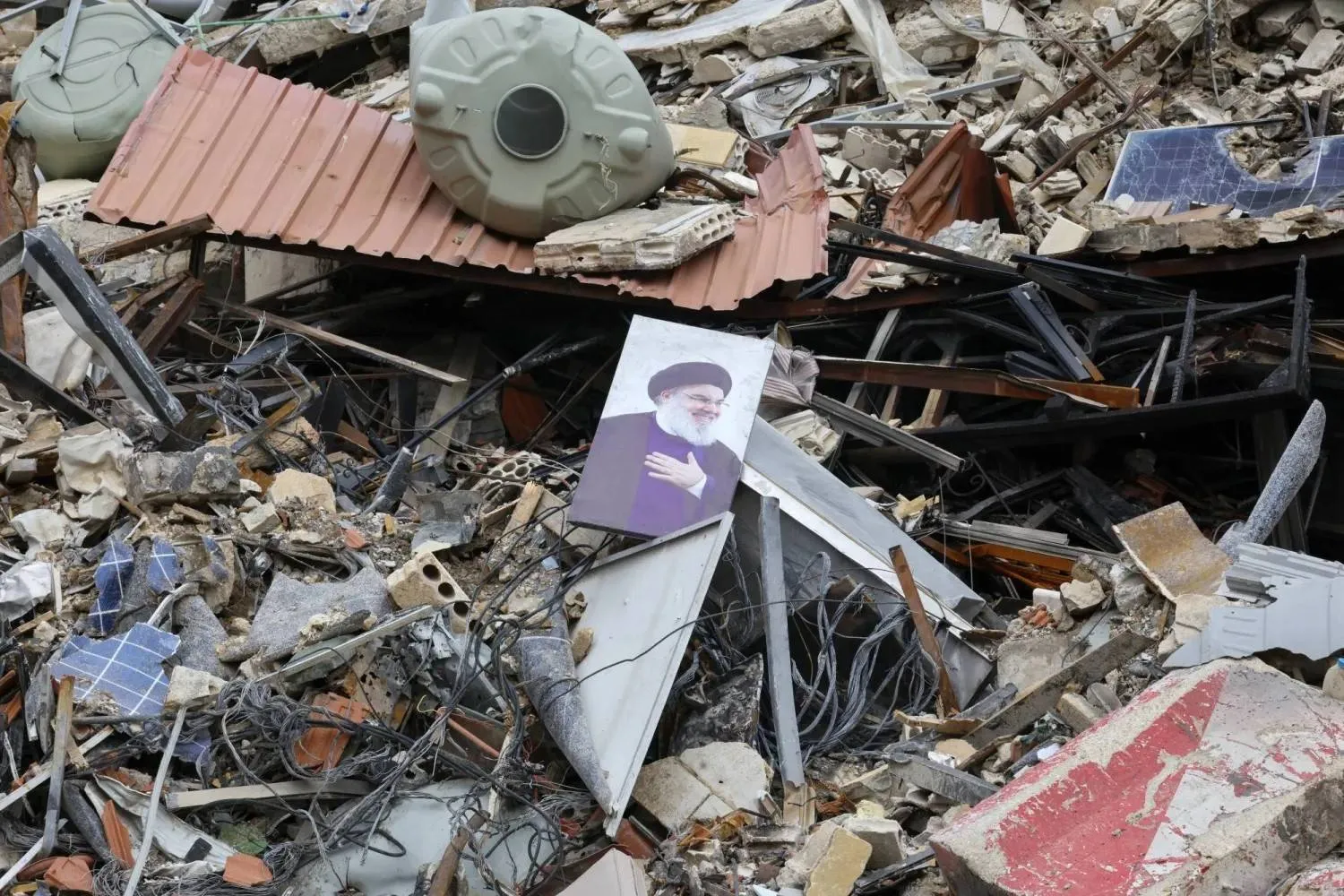

Israel Army Issues Evacuation Warning for Lebanon Village ahead of Strikes

 Smoke rises after Israeli strikes following Israeli military's evacuation orders, in Chehour, southern Lebanon November 19, 2025. REUTERS/Ali Hankir
Smoke rises after Israeli strikes following Israeli military's evacuation orders, in Chehour, southern Lebanon November 19, 2025. REUTERS/Ali Hankir
TT

Israel Army Issues Evacuation Warning for Lebanon Village ahead of Strikes

 Smoke rises after Israeli strikes following Israeli military's evacuation orders, in Chehour, southern Lebanon November 19, 2025. REUTERS/Ali Hankir
Smoke rises after Israeli strikes following Israeli military's evacuation orders, in Chehour, southern Lebanon November 19, 2025. REUTERS/Ali Hankir

The Israeli army issued an evacuation warning on Sunday for the village of Kafr Hatta in southern Lebanon ahead of air strikes on Hezbollah targets in the area, AFP reported.

"The Israeli (army) will soon, and once again, strike terrorist Hezbollah military infrastructure in the village, in order to address the prohibited attempts it is making to rebuild its activities there," Arabic-language spokesman Colonel Avichay Adraee wrote on X, posting a map of the expected target.

The Lebanese army said Thursday that it had completed disarming Hezbollah south of the Litani river, the first phase of a nationwide plan. Kafr Hatta is located north of the river.


Sudan PM Announces Govt Return to Khartoum from Wartime Capital

File Photo: Some shops reopen despite extensive damage (Asharq Al-Awsat)
TT

Sudan PM Announces Govt Return to Khartoum from Wartime Capital

File Photo: Some shops reopen despite extensive damage (Asharq Al-Awsat)

Sudan's Prime Minister Kamil Idris announced on Sunday the government's return to Khartoum, after nearly three years of operating from wartime capital of Port Sudan, AFP reported.

"Today, we return, and the Government of Hope returns to the national capital," Idris told reporters in Khartoum, ravaged by the war between the army and the Rapid Support Forces.

"We promise you better services, better healthcare and the reconstruction of hospitals, the development of educational services... and to improve electricity, water and sanitation services," he said.


Iran Protest Death Toll Rises as Alarm Grows over Crackdown 'Massacre'

Smoke rises as protesters gather amid evolving anti-government unrest at Vakilabad highway in Mashhad, Razavi Khorasan province, Iran, released on January 10, 2026, in this screen grab obtained from a social media video. SOCIAL MEDIA/via REUTERS
TT

Iran Protest Death Toll Rises as Alarm Grows over Crackdown 'Massacre'

Smoke rises as protesters gather amid evolving anti-government unrest at Vakilabad highway in Mashhad, Razavi Khorasan province, Iran, released on January 10, 2026, in this screen grab obtained from a social media video. SOCIAL MEDIA/via REUTERS

At least 192 protesters have been killed in Iran's biggest movement against the Islamic republic in more than three years, a rights group said Sunday, as warnings grew that authorities were committing a "massacre" to quell the demonstrations.

The protests, initially sparked by anger over the rising cost of living, have now become a movement against the theocratic system in place in Iran since the 1979 revolution and have already lasted two weeks.

The mass rallies are one of the biggest challenges to the rule of supreme leader Ali Khamenei, 86, coming in the wake of Israel's 12-day war against the Islamic republic in June, which was backed by the United States.

Protests have swelled in recent days despite an internet blackout that has lasted more than 60 hours, according to monitor Netblocks, with activists warning the shutdown was limiting the flow of information and the actual toll risks being far higher.

"Since the start of the protests, Iran Human Rights has confirmed the killing of at least 192 protesters," the Norway-based non-governmental organization said, warning that the deaths "may be even more extensive than we currently imagine".

Videos of large demonstrations in the capital Tehran and other cities over the past three nights have filtered out despite the internet cut that has rendered impossible normal communication with the outside world via messaging apps or even phone lines.

Video verified by AFP showed large crowds taking to the streets in new protests on Saturday night in several Iranian cities including Tehran and Mashhad in the east, where images showed vehicles set on fire.

Several circulating videos, which have not been verified by AFP, allegedly showed relatives in a Tehran morgue identifying bodies of protesters killed in the crackdown.

The US-based Center for Human Rights in Iran (CHRI) said it had received "eyewitness accounts and credible reports indicating that hundreds of protesters have been killed across Iran during the current internet shutdown".

"A massacre is unfolding in Iran. The world must act now to prevent further loss of life," it said.

It said hospitals were "overwhelmed", blood supplies were running low and that many protesters had been shot in the eyes in a deliberate tactic.


- 'Significant arrests' -


The US-based Human Rights Activists News Agency said it had confirmed the deaths of 116 people in connection with the protests, including 37 members of the security forces or other officials.

State TV on Sunday broadcast images of funeral processions for security forces killed in recent days, as authorities condemned "riots" and "vandalism".

National police chief Ahmad-Reza Radan said authorities made "significant" arrests of protest figures on Saturday night, without giving details on the number or identities of those arrested, according to state TV.

Iran's security chief Ali Larijani drew a line between protests over economic hardship, which he called "completely understandable", and "riots", accusing them of actions "very similar to the methods of terrorist groups", Tasnim news agency reported.

Iran's President Masoud Pezeshkian said "rioters" must not distrupt Iranian society.

"The people (of Iran) should not allow rioters to disrupt society. The people should believe that we (the government) want to establish justice," he told state broadcaster IRIB.

In Tehran, an AFP journalist described a city in a state of near paralysis.

The price of meat has nearly doubled since the start of the protests, and while some shops are open, many others are not.

Those that do open must close at around 4:00 or 5:00 pm, when security forces deploy in force.


- 'Legitimate targets' -


Reza Pahlavi, the exiled son of the ousted shah, who has played a prominent role in calling for the protests, called for new actions later Sunday.

"Do not abandon the streets. My heart is with you. I know that I will soon be by your side," he said.

US President Donald Trump has spoken out in support of the protests and threatened military action against Iranian authorities "if they start killing people".

Israel's Foreign Minister Gideon Saar urged the European Union on Sunday to designate Iran's Revolutionary Guards Corps as a "terrorist organization" over the suspected violence against protesters.

He also said Israel supports the Iranian people's "struggle for freedom".

Iran's parliament speaker Mohammad Bagher Ghalibaf said Iran would hit back if the US launched military action.

"In the event of a military attack by the United States, both the occupied territory and centers of the US military and shipping will be our legitimate targets," he said in comments broadcast by state TV.

He was apparently also referring to Israel, which the Islamic republic does not recognize and considers occupied Palestinian territory.