


Lebanon: Israel Changes ‘Rules of Engagement’, Drops ‘Civilian Immunity’ Principle

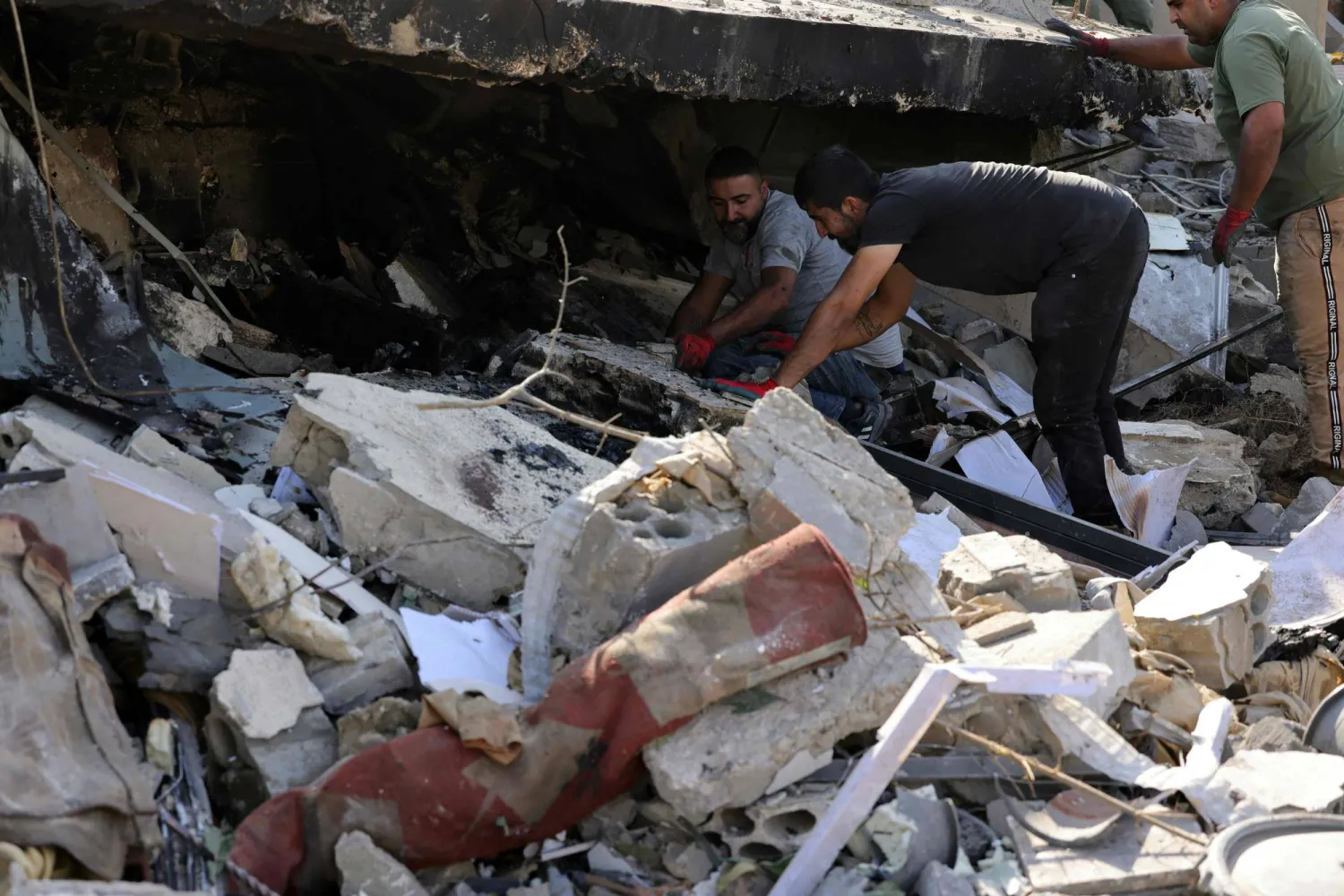
Workers remove the rubble from a site targeted overnight by an Israeli airstrike in the southern Lebanese village of Et Taybeh, on November 7, 2025. (Photo by Rabih DAHER / AFP)
TT

Lebanon: Israel Changes ‘Rules of Engagement’, Drops ‘Civilian Immunity’ Principle

Workers remove the rubble from a site targeted overnight by an Israeli airstrike in the southern Lebanese village of Et Taybeh, on November 7, 2025. (Photo by Rabih DAHER / AFP)

Israeli strikes in southern Lebanese towns and villages are intensifying at an unprecedented pace, signaling a shift in the established ‘rules of engagement’.

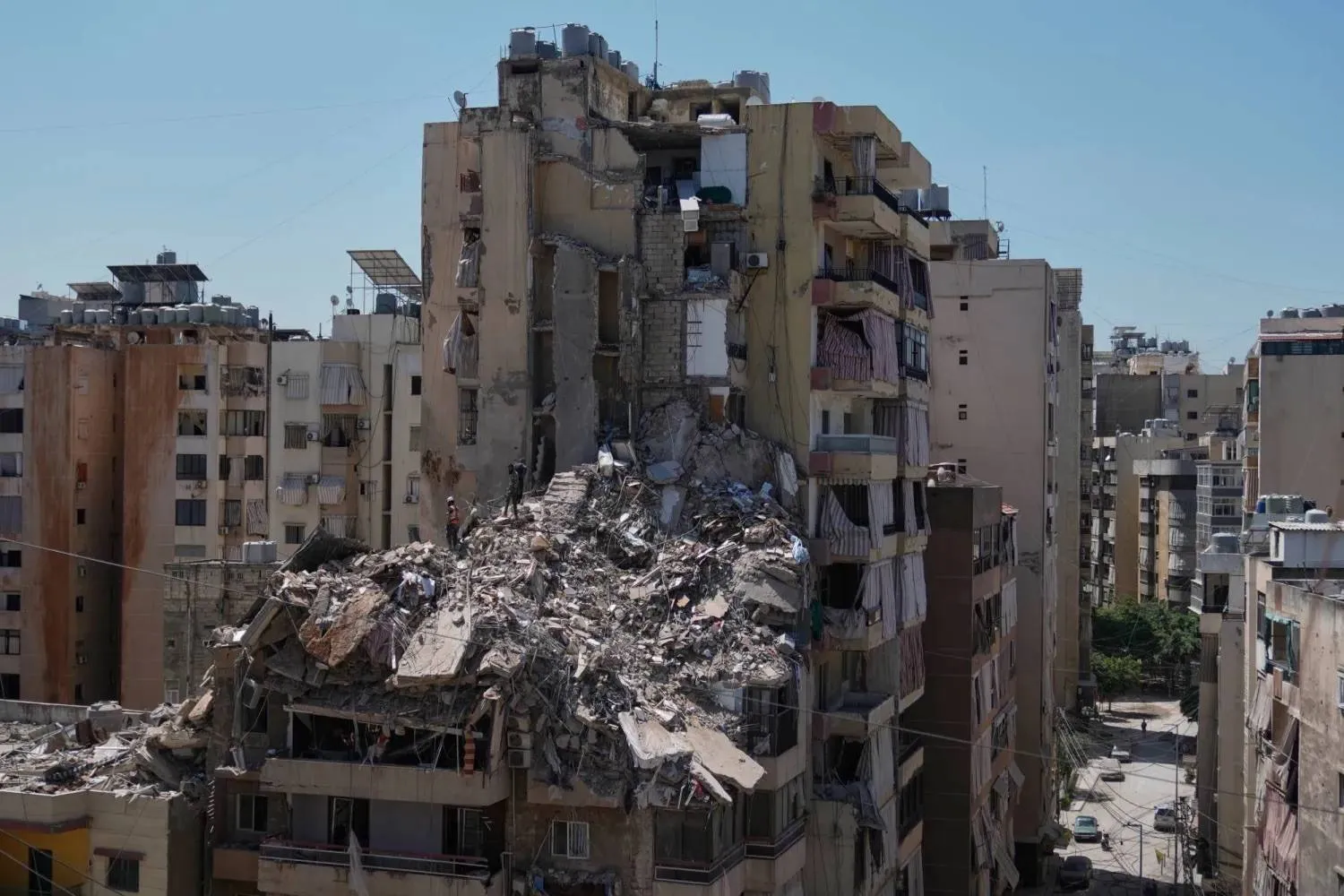
After previously focusing on open areas, Israeli air raids have now moved deep into residential zones in Lebanon, reviving scenes of evacuation warnings and mass displacement.

On Thursday, thousands of residents fled their homes following evacuation orders, soon followed by airstrikes that hit populated neighborhoods, vehicles and residential areas in Lebanon’s south.

On Friday, tense calm was witnessed in but the Israeli strikes resumed midday on Saturday, killing two brothers, from the town of Shebaa, in a strike that targeted their vehicle in Rachaya al-Wadi.

Seven other people were wounded when two guided missiles struck a car near Salah Ghandour Hospital in the city of Bint Jbeil, followed by a third airstrike that hit another vehicle in the town of Baraashit in the Nabatieh region.

These incidents mark Israel’s escalating pattern of attacks, which in recent months have increasingly penetrated populated areas.

A Shift in the Rules of Engagement

In the past, Israel tended to target military locations only when they were clearly separated from civilian areas, to minimize collateral damage.

Today, that principle appears to be collapsing with strikes hitting cars inside neighborhoods, homes being destroyed at dawn, and civilian gatherings coming under fire. This shift reflects a strategic decision by Tel Aviv aimed at increasing the social and human cost of popular support for Hezbollah and undermining the social cohesion of communities along the front lines.

Objectives Behind the Escalation

In remarks to Asharq Al-Awsat, retired Brigadier General Saeed Qazzah said Israel’s overall strategy has not changed, stressing that its constant goal remains “to subdue Hezbollah and the Axis of Resistance - from Iran to Iraq, Yemen, Palestine, and finally Lebanon.”

He said that Israel’s foremost priority is to ensure the security of its settlers in northern Israel, relying on a tactic of concentrated strikes against what it deems military targets - including fighters, combat equipment, and weapons depots -“even if these are located in populated areas, and regardless of civilian presence or casualties, which it considers collateral damage.”

Qazzah added that “this behavior is nothing new; we saw it clearly in Gaza, where Israel showed little regard for civilian lives.”

He affirmed that Israel is working to intensify its strikes in the coming two months, predicting “an increase in assassinations and targeted attacks against Hezbollah members and facilities - even within civilian gatherings.”

He added that Israel’s goal is “to weaken support for Hezbollah and prompt segments of its base to question the value of continuing down this path.”

“Israel does not concern itself with civilian casualties, and no one holds it accountable,” underscored Qazzah, noting that it will continue striking what it considers military targets anywhere in Lebanon as long as Hezbollah has not clearly committed to the government decision issued on August 5 regarding the state’s monopoly on arms.

Escalatory Israeli Rhetoric and Intelligence Warnings

This military development is accompanied by a hardline discourse in Israel. Hebrew media have reported growing concern over Hezbollah’s expanding capabilities in northern Lebanon, noting that “the Israeli army’s restraint so far from striking Beirut may not last if reinforcement operations continue.”

Israeli Haaretz newspaper cited intelligence reports warning that “Hezbollah is working to restore its capabilities, which could prompt the Israeli army to expand its operations to prevent future risks.”

Other reports indicated that “Western assessments observe a partial recovery of Hezbollah’s supply networks via Syria and Iraq, while the Lebanese army faces challenges in preventing the group from rebuilding its combat infrastructure.”



UN Palestinian Aid Agency Says Israeli Police ‘Forcibly Entered’ Compound in Jerusalem 

Offices of the United Nations agency for Palestinian refugees, known as UNRWA, are seen in the Shuafat refugee camp in Jerusalem, Monday, Jan. 27, 2025. (AP)
TT

UN Palestinian Aid Agency Says Israeli Police ‘Forcibly Entered’ Compound in Jerusalem 

Offices of the United Nations agency for Palestinian refugees, known as UNRWA, are seen in the Shuafat refugee camp in Jerusalem, Monday, Jan. 27, 2025. (AP)

Israeli police forcibly entered the compound of the United Nations agency for Palestinian refugees in East Jerusalem early Monday, escalating a campaign against an organization that has been banned from operating on Israeli territory.

The UN Relief and Works Agency for Palestinian Refugees in the Near East, or UNRWA, said in a statement that “sizeable numbers” of Israeli forces including police on motorcycles, trucks and forklifts entered the compound in the Palestinian neighborhood of Sheikh Jarrah and cut communications to the compound.

“The unauthorized and forceful entry by Israeli security forces is an unacceptable violation of UNRWA’s privileges and immunities as a UN agency,” the agency said.

Photos taken by an Associated Press photographer show police cars on the street and an Israeli flag planted on the compound's roof. Photos provided by UNRWA staff show a group of Israeli police officers inside the compound.

Police said in a statement they entered for a “debt-collection procedure” spearheaded by Jerusalem's municipal government, which did not immediately respond to a request for comment.

The raid was the latest action in Israel's campaign against the agency, which provides aid and services to some 2.5 million Palestinian refugees in Gaza, the occupied West Bank and east Jerusalem, as well as 3 million more refugees in Syria, Jordan and Lebanon.

The agency was established to help the estimated 700,000 Palestinians who fled or were driven out of what is now Israel during the 1948 war surrounding Israel’s creation. UNRWA supporters say Israel hopes to erase the Palestinian refugee issue by dismantling the agency. Israel says the refugees should be permanently resettled outside its borders.

For more than a year of the Israel-Hamas war that began Oct. 7, 2023, UNRWA was the main lifeline for Gaza's population, which was largely reliant on aid because of humanitarian crisis unleashed by heavy Israeli bombardment and restrictions on the entry of goods.

Throughout the war, Israel has accused the agency of being infiltrated by Hamas, allegations the UN has denied. After months of mounting attacks from Prime Minister Benjamin Netanyahu and his far-right allies, Israel formally banned it from operating on its territory in January.

The US, formerly the largest donor to UNRWA, halted funding to the agency in early 2024.

UNRWA receives assistance from other agencies UNRWA has since struggled to continue its work in Gaza, with other UN agencies including WFP and UNICEF stepping in to help compensate for a gap UNRWA says is unfillable.

“If you squeeze UNRWA out, what other agency can fill that void?” said Tamara Alrifai, UNRWA’s director of external relations and communications, on the sidelines of the Doha Forum on Saturday.

The agency has been excluded from US-led talks on Phase 2 of the ceasefire, she added.

UNRWA shut down its Jerusalem compound in May after far-right protesters, including at least one member of Israeli Parliament, overran its gate in view of the police. Israel’s far-right has pushed to turn the compound into a settlement and the country's housing minister said last year he had instructed the ministry to “examine how to return the area to the state of Israel and utilize it for housing.”


WHO Says over 100 Killed in Attacks on Sudan Kindergarten and Hospital

Sudanese people who fled El-Fasher rest upon their arrival at the Al-Afad camp for displaced people in the town of Al-Dabba, northern Sudan, on November 19, 2025. (Photo by Ebrahim Hamid / AFP)
TT

WHO Says over 100 Killed in Attacks on Sudan Kindergarten and Hospital

Sudanese people who fled El-Fasher rest upon their arrival at the Al-Afad camp for displaced people in the town of Al-Dabba, northern Sudan, on November 19, 2025. (Photo by Ebrahim Hamid / AFP)

More than 100 people, including dozens of children, were killed in attacks on a kindergarten in Sudan that continued even as parents and caretakers rushed the wounded to a nearby hospital, the World Health Organization said on Monday.

Health facilities in Sudan have repeatedly come under attack near the frontlines of the country's 2-1/2-year civil war. A massacre also occurred in October in the city of El-Fasher, Reuters reported.

The latest attacks on December 4 began with repeated strikes on a kindergarten in South Kordofan state, WHO chief Tedros Adhanom Ghebreyesus said on X. "Disturbingly, paramedics and responders came under attack as they tried to move the injured from the kindergarten to the hospital," he said.

Sudan's Foreign Ministry condemned the attacks that it said were carried out by the Rapid Support Forces using drones.

The WHO database said heavy weapons were used and that 114 people, including 63 children, were killed and 35 wounded.

A WHO spokesperson said the toll combines casualties from the kindergarten strikes, the transfer of patients to the adjacent rural hospital, and attacks at the facility itself. Most children were killed in the initial strike, while parents and medics were later among the victims, he added.

The RSF did not immediately respond to requests for comment. It has previously denied harming civilians and said that it will hold its forces to account for any violations.

Survivors have since been moved to another hospital, and urgent appeals are being made for medical support and blood donations, Tedros said.


Syria’s Sharaa Calls for United Efforts to Rebuild a Year After Assad’s Ouster 

People celebrate and wave Syrian flags as they wait for a parade by the new Syrian army marking the first anniversary of the ousting of the Bashar al-Assad regime in Damascus, Syria, Monday, Dec. 8, 2025. (AP)
TT

Syria’s Sharaa Calls for United Efforts to Rebuild a Year After Assad’s Ouster 

People celebrate and wave Syrian flags as they wait for a parade by the new Syrian army marking the first anniversary of the ousting of the Bashar al-Assad regime in Damascus, Syria, Monday, Dec. 8, 2025. (AP)

President Ahmed al-Sharaa on Monday urged Syrians to work together to rebuild their country, still marred by insecurity and divisions, as they marked a year since the ousting of longtime ruler Bashar al-Assad.  

The atmosphere in Damascus was jubilant as thousands of people took to the streets of the capital, AFP correspondents said, after mosques in the Old City began the day broadcasting celebratory prayers at dawn.  

"What happened over the past year seems like a miracle," said Iyad Burghol, 44, a doctor, citing developments including a warm welcome in Washington by President Donald Trump for Sharaa. 

"People are demanding electricity, lower prices and higher salaries" after years of war and economic crisis, Burghol said. 

"But the most important thing to me is civil peace, security and safety," he added, taking a photo of people carrying a huge Syrian flag and sending it to his friends abroad.  

Sharaa's opposition alliance launched a lightning offensive in late November last year, taking the capital Damascus on December 8 after nearly 14 years of war and putting an end to more than five decades of the Assad family's iron-fisted rule.  

Since then, Sharaa has managed to restore Syria's international standing and has won sanctions relief, but he faces major challenges in guaranteeing security, rebuilding crumbling institutions, regaining Syrians' trust and keeping his fractured country united.  

"The current phase requires the unification of efforts by all citizens to build a strong Syria, consolidate its stability, safeguard its sovereignty, and achieve a future befitting the sacrifices of its people," Sharaa said following dawn prayers at Damascus's famous Umayyad Mosque.  

He was wearing military garb as he did when he entered the capital a year ago.  

- 'Heal deep divisions' -  

As part of the celebrations in Damascus, hundreds of military personnel marched down a major thoroughfare as helicopters flew overhead and people lined the streets to watch.  

Sharaa and several ministers were in attendance, state media reported.  

Monday's events, including an expected speech by Sharaa, are the culmination of celebrations that began last month as Syrians began marking the start of last year's lightning offensive.  

Multi-confessional Syria's fragile transition has been shaken this year by sectarian bloodshed in the country's Alawite and Druze minority heartlands, alongside ongoing Israeli military operations.  

In a statement, United Nations Secretary-General Antonio Guterres said that "what lies ahead is far more than a political transition; it is the chance to rebuild shattered communities and heal deep divisions".  

"It is an opportunity to forge a nation where every Syrian -- regardless of ethnicity, religion, gender or political affiliation -- can live securely, equally, and with dignity," he said in the statement, urging international support.  

On Sunday, the UN Independent International Commission of Inquiry on Syria, which investigates international human rights law violations since the start of the war, warned the country's transition was fragile and said that "cycles of vengeance and reprisal must be brought to an end".  

The US-backed Kurdish-led Syrian Democratic Forces that control swathes of northeast Syria said Monday that "the next phase requires launching a real, inclusive dialogue... and establishing a new social contract that guarantees rights, freedoms and equality".  

The Kurdish administration in the northeast has announced a ban on public gatherings on Monday, citing security concerns, while also banning gunfire and fireworks.  

Under a March deal, the Kurdish administration was to integrate its institutions into the central government by year-end, but progress has stalled.  

On Saturday, a prominent Alawite spiritual leader in Syria urged members of his religious minority, to which the Assad family also belongs, to boycott the celebrations, in protest against the new authorities.