




Despite a softer tone, US Secretary of State Marco Rubio’s recent criticism of deadly settler attacks on Palestinians in the West Bank has raised concerns within Israeli government circles, where officials described it as “worrying and requiring careful handling to prevent it from hardening into an anti-settlement stance.”
A political source told Israel’s Channel 12 on Thursday that “Rubio’s linking of extremist settler attacks to President Donald Trump’s plan for Gaza, and his expressed concern that these attacks may be a deliberate attempt to sabotage our work in Gaza, indicates that Washington does not intend to allow any obstacles to the plan’s implementation.”
The source added that “Israel should stop its current approach, which focuses on minutiae in Gaza, and instead concentrate on core issues and coordination with the US administration so that, in the end, the plan aligns with Israeli policy and does not lead to the establishment of a Palestinian state as the Arabs hope.”
Notable tone after sanctions were lifted
Rubio struck a notable tone when expressing US concern over attacks by armed settler militias of around 100 people on several Palestinian villages on the night of Tuesday to Wednesday.
The assailants burned cars and homes, opened fire, and later set fire to a military vehicle and attacked some soldiers.
Speaking on Wednesday evening at a meeting of G7 foreign ministers in Canada, Rubio said that Washington did not expect sabotage of the Gaza plan to happen and that it was working to ensure it does not.
Rubio’s statement marked the first time a Trump administration official had openly condemned settlers, prompting Israeli officials to link it to his previous remarks in October before his visit to Israel.
At that time, he warned against Knesset legislation expanding Israeli sovereignty in the West Bank, saying it could threaten the existing ceasefire in Gaza.
The Trump administration began its term by lifting, in January, US Treasury Department sanctions on dozens of extremist Israeli settlers in the West Bank under an executive order signed by Trump, reversing predecessor Joe Biden’s measures targeting those involved in violence against Palestinians in the occupied territories.
Mosque vandalized in the West Bank
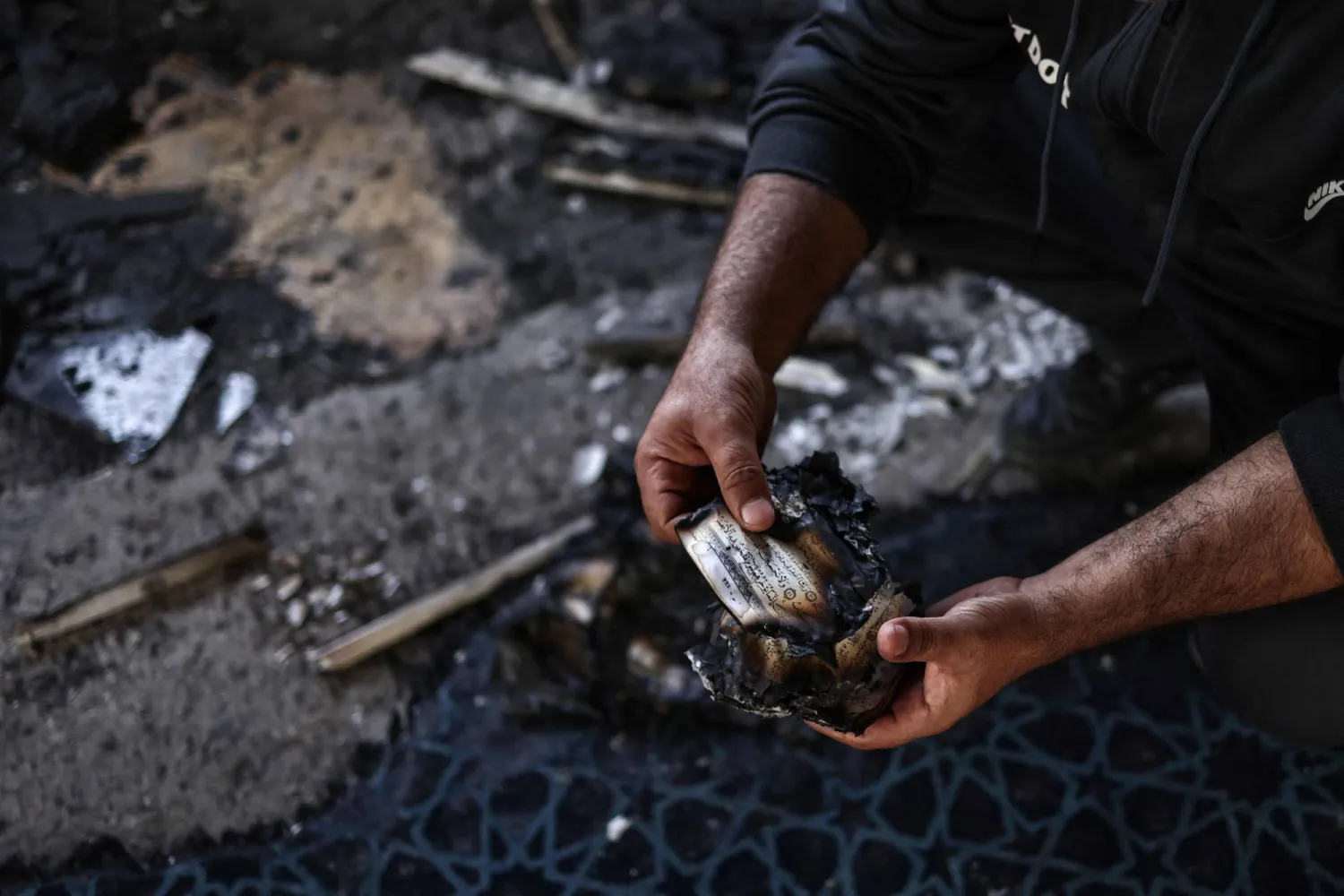
Settler attacks continued on Thursday, when they vandalized the Hajjah Hamidah Mosque located between the towns of Deir Istiya and Kifl Haris west of Salfit in northern West Bank. Parts of the mosque were set on fire, and racist and aggressive slogans were scrawled on its walls.
Official settler bodies attempted to distance themselves from the attacks, claiming the perpetrators were “a group of rogue anarchists who do not represent the settlements but tarnish their reputation.”
This narrative appeared to gain traction in Israel, adopted by military leaders and several ministers, though Prime Minister Benjamin Netanyahu remained silent as of Thursday evening.
Armed settler militias number over 2,000, supported by settlement leaders and enjoying strong protection from the Israeli army, along with substantial political backing from ministers including Finance Minister Bezalel Smotrich, who also serves as a deputy defense minister overseeing settlers and settlements.
These armed groups serve as a support force for settlement leadership, establishing new outposts that Smotrich then retroactively legalizes under Israel’s expansionist laws.
According to the Colonization and Wall Resistance Commission, Palestinians in the West Bank faced more than 2,350 attacks in October alone, including over 1,500 carried out directly by the Israeli army and around 850 by settler militias.
Such attacks threaten to undermine political efforts to resolve the Israeli-Palestinian conflict, including Trump’s plan, as settlers, not only militias, strongly oppose the creation of a Palestinian state.
The extremists have voiced clear reservations about Trump’s plan but refrain from attacking it, hoping Palestinians will reject or sabotage it. They view the Trump era as a historic opportunity to annex the West Bank, or at least significant portions of it, to Israel.


