


Israel Steps Up Brutal Reprisals Against Oct. 7 Hostage-Takers, Their Families

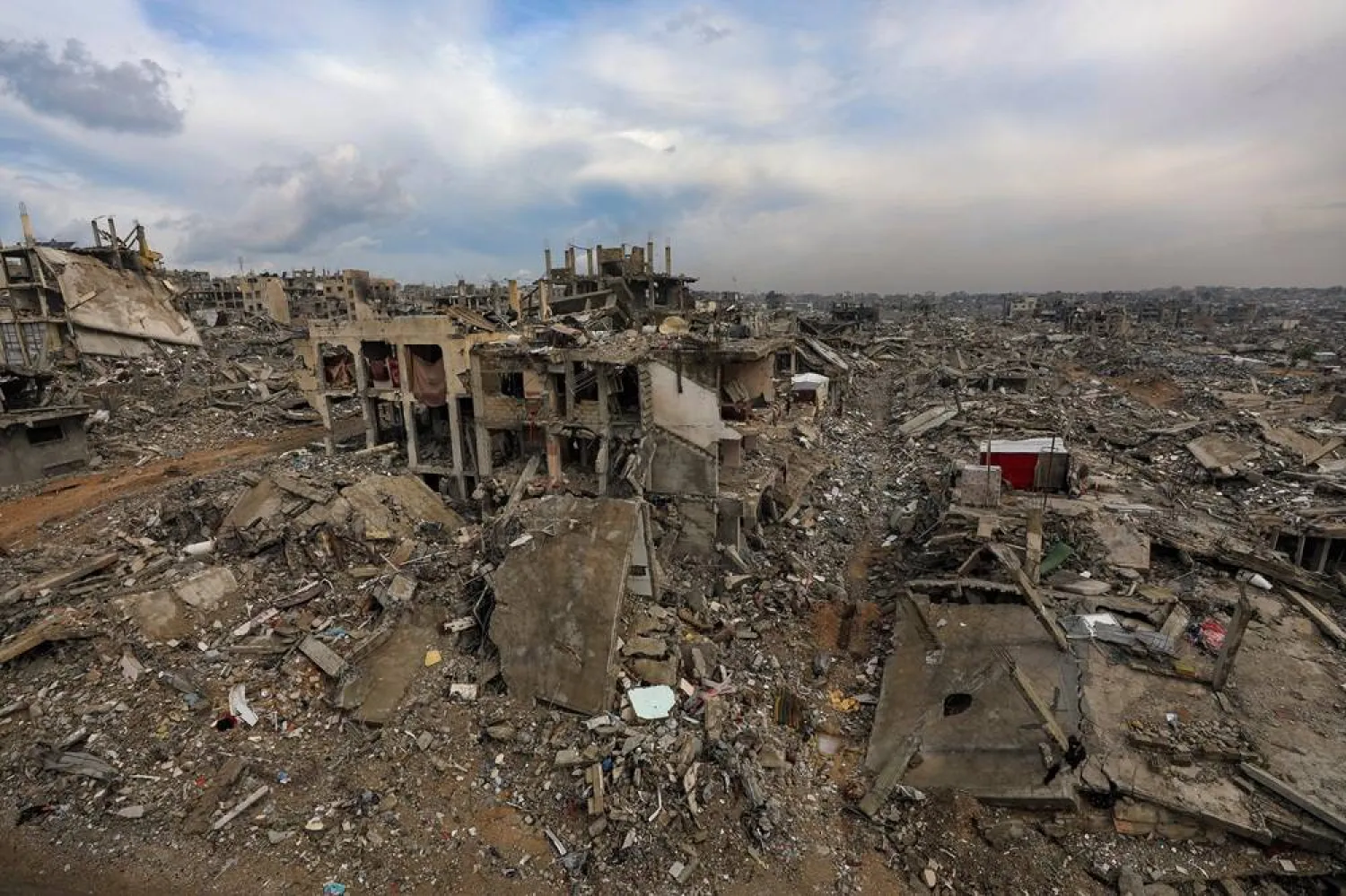
 The ruins of destroyed buildings in the Sheikh Radwan neighborhood of Gaza City, Gaza Strip, 14 November 2025, amid a ceasefire between Israel and Hamas. (EPA)
The ruins of destroyed buildings in the Sheikh Radwan neighborhood of Gaza City, Gaza Strip, 14 November 2025, amid a ceasefire between Israel and Hamas. (EPA)
TT

Israel Steps Up Brutal Reprisals Against Oct. 7 Hostage-Takers, Their Families

 The ruins of destroyed buildings in the Sheikh Radwan neighborhood of Gaza City, Gaza Strip, 14 November 2025, amid a ceasefire between Israel and Hamas. (EPA)
The ruins of destroyed buildings in the Sheikh Radwan neighborhood of Gaza City, Gaza Strip, 14 November 2025, amid a ceasefire between Israel and Hamas. (EPA)

Two unidentified gunmen on a motorcycle shot dead an Islamic preacher, Mohammed Abu Mustafa, in the Mawasi area of Khan Younis in southern Gaza on the evening of November 2, then fled toward areas under Israeli control south of the city.

The attack stirred suspicion because it followed similar incidents carried out by unknown assailants, including the kidnapping of a doctor and, a month later, his daughter.

Abu Mustafa was active in the Mujahideen Brigades, a Palestinian faction that operates mainly in Gaza. Investigators said he was deliberately assassinated after one gunman fired several shots with a pistol while the second drove the motorcycle.

Findings reviewed by Asharq Al-Awsat indicate that Israel has recently led a targeted campaign against senior and prominent members of the Mujahideen Brigades, which seized the Bibas family from Kibbutz Nir Oz in the Eshkol region east of Khan Younis during the October 7, 2023 attack.

The Mujahideen Brigades was formed in 2003 after splitting from the Al-Aqsa Martyrs Brigades, the armed wing of Fatah, and became more prominent in 2006.

The group has hundreds of fighters across Gaza, most of them from the Abu Sharia clan in Gaza City’s Sabra neighborhood. Influential members of the clan founded the faction, which for years received significant support from Iran, Hezbollah and Islamic Jihad.

Sources familiar with the events told Asharq Al-Awsat that Abu Mustafa had ties to the abduction of the Bibas family.

They said Israeli special forces likely targeted him because of the security precautions he took, adding that the killing took place after the ceasefire came into effect and appeared to be a new attempt by Israel to reinforce its security control inside the enclave through varied methods.

The sources said senior, field level and other operatives involved in the abduction of the Bibas family have been subjected to a series of systematic assassinations, particularly after Israel received the bodies of the mother, Shiri, and her two children, Kfir and Ariel, on February 21.

Six operatives and eight commanders from various levels of the Mujahideen Brigades were killed in Gaza City and Khan Younis. They included the group’s secretary general, Asaad Abu Sharia, who was killed on June 7 along with more than 30 members of his family in a house in the Sabra neighborhood.

Ibrahim Abu Sharia was killed with his wife and children, while Israeli aircraft also killed his daughter and her husband in what the sources described as a revenge strike. Other relatives of slain commanders were also killed in separate attacks with their spouses.

These included field commander Mohammed Awad, who was assassinated in April, and Mahmoud Kaheel, killed in June.

Israel accused Asaad Abu Sharia of personally taking part in the kidnapping and killing of Shiri, Ariel and Kfir Bibas, as well as participating in the abduction of couples Gadi Hajaj and Judy Lynn Feinstein, and Nataphon Binta along with another foreign national.

According to the sources, Shiri Bibas and her children were killed in an airstrike that hit a house they were in in Khan Younis in November 2023, early in the war. They said Shiri told interrogators briefly during her captivity that she worked at the Israeli army’s Southern Command headquarters in Unit 8200, the intelligence unit. Israel has not confirmed this.

After receiving the three bodies, Israel said the Bibas family members had been killed by fighters from the Mujahideen Brigades, either beaten or strangled, not by an airstrike or gunfire. The Mujahideen Brigades denied the claim, as did the Ezzedine al-Qassam Brigades, Hamas’s armed wing.

Sources said that because of fears that the family could be killed in airstrikes, as happened with some other captives, the Qassam Brigades had asked the Mujahideen Brigades to transfer them for protection. But by then it was too late and they were already dead.

The father, Yarden Bibas, had been held separately by Qassam since Oct. 7 under different circumstances. He was freed alive in February in a prisoner exchange.

Israel used its allegations in global media campaigns, circulating images of the Bibas children and their mother on posters placed in European capitals to accuse Hamas of killing Israeli children.

The Bibas case was not the only instance in which Israel retaliated against Palestinian fighters who had captured Israelis, particularly women, or cases that drew heightened sympathy inside Israel and abroad.

One such case was that of Arbel Yahud, whose release Israel insisted upon in exchange for allowing displaced residents of southern Gaza to return to the north in January 2025.

Israeli sources at the time claimed she had been tortured and assaulted by her captors, a claim Palestinian factions denied.

Sources in the Nasser Salah al-Din Brigades, the armed wing of the Popular Resistance Committees, told Asharq Al-Awsat that Israeli intelligence pursued many of its operatives who were involved in the capture of Arbel Yahud and Ariel Cunio. Israel had spent two years of the war trying to determine their fate.

After Yahud’s release, the search intensified for Cunio until he was recently handed over in the latest exchange deal.

On May 19, Israeli special forces assassinated Ahmed Sarhan, a commander in the brigades who had helped seize and hold the two captives. The forces abducted his wife and child after failing to take him alive into Israel. They were later released under the most recent exchange agreement after insistence from the Palestinian negotiating team.

The sources said interrogators questioned Sarhan’s wife about Cunio’s location and about those who had been with her husband during the period of captivity. She did not know, and investigators gained no information about Cunio or any of the fighters.

Israel also killed, in what sources described as retaliatory operations, numerous relatives of fighters who had taken part in abducting Israelis and holding them.



Syrian Army Orders Evacuations as Heavy Fighting Grips Aleppo's Kurdish Areas

Civilians carry their bags and belongings as they flee following renewed clashes between the Syrian army and the Syrian Democratic Forces, in Aleppo, Syria, January 8, 2026. REUTERS/Mahmoud Hassano
TT

Syrian Army Orders Evacuations as Heavy Fighting Grips Aleppo's Kurdish Areas

Civilians carry their bags and belongings as they flee following renewed clashes between the Syrian army and the Syrian Democratic Forces, in Aleppo, Syria, January 8, 2026. REUTERS/Mahmoud Hassano

The Syrian army clashed with fighters from the Kurdish-led Syrian Democratic Forces (SDF) ​in parts of Aleppo on Thursday and ordered residents to evacuate, accusing the SDF of using Kurdish-majority areas to launch attacks, according to Syrian state media.

The army released more than seven maps identifying areas it said would be targeted in strikes, urging residents to leave immediately for their safety. Its operations command announced a curfew in the neighborhoods of Sheikh Maqsoud and Ashrafieh from 3 p.m. (1200 GMT).

The fighting, which erupted on Tuesday, has driven thousands of civilians ‌from their homes ‌and killed and wounded several people, state media ‌reported, Reuters reported.

SDF ⁠said ​their fighters ‌were engaged in intense clashes with Damascus-aligned factions and auxiliaries near Aleppo's Syriac neighbourhood, adding that they had inflicted what they described as heavy losses.

The violence and competing claims over responsibility highlight a deepening and increasingly deadly standoff between Damascus and Kurdish authorities who have resisted integrating into the central government.

ACCUSATIONS OF ETHNIC CLEANSING

The Kurdistan Regional Government's Prime Minister Masrour Barzani said he was deeply concerned by attacks on ⁠Kurdish neighborhoods in Aleppo, warning that targeting civilians and attempts to alter the area's demography amounted to ‌what he described as ethnic cleansing.

Barzani called on all ‍sides to exercise restraint, protect civilians ‍and pursue dialogue.

The SDF accused Damascus-aligned factions of threatening unlawful attacks on ‍civilian areas, saying public warnings of shelling could amount to forced displacement and war crimes under international humanitarian law.

More residents were seen leaving Sheikh Maqsoud and Ashrafieh through designated safe corridors.

The SDF are a U.S.-backed alliance that controls much of northeastern Syria and ​has been Washington's main local partner in the fight against Islamic State.

Kurdish-led authorities established a semi-autonomous administration in those areas and parts ⁠of Aleppo during Syria's 14-year war and have resisted fully integrating into the Islamist-led government that took power after former President Bashar al-Assad was ousted in late 2024.

Damascus reached a deal with the SDF last year that envisaged full integration by the end of 2025, but progress has been limited, with both sides accusing the other of stalling.

The United States has sought to mediate, holding meetings as recently as Sunday, though those talks ended without tangible results.

Diplomats warn that failure to integrate the SDF into Syria's army risks further violence and could draw in Türkiye, which has threatened military action against Kurdish fighters it regards as terrorists.

Türkiye said ‌on Thursday it is ready to help Syria if asked after the Syrian army independently launched what it called a "counter-terrorism" operation in Aleppo.


Lebanese Military Moves to New Phase of Disarming Non-state Groups like Hezbollah

Lebanese soldiers stand in front of a building targeted by an Israeli airstrike in the village of Deir Kifa in south Lebanon last month. (AFP file)
TT

Lebanese Military Moves to New Phase of Disarming Non-state Groups like Hezbollah

Lebanese soldiers stand in front of a building targeted by an Israeli airstrike in the village of Deir Kifa in south Lebanon last month. (AFP file)

The Lebanese military said Thursday it had concluded the first phase of their plan to fully deploy across southern Lebanon and disarm non-state groups, notably Hezbollah. Israel said it is encouraging but “far from sufficient.”

The effort to disarm Hezbollah comes after a Washington-brokered ceasefire ended a war between the group and Israel in 2024.

The military's statement didn't name Hezbollah or other armed groups in particular, but it comes before President Joseph Aoun is set to meet with Prime Minister Nawaf Salam and his government to discuss the deployment and disarmament plans. Both said disarming non-state groups was a priority upon beginning their terms not long after the ceasefire went into effect, according to The AP news.

Lebanon's top officials have endorsed the military announcement.

A statement by Aoun’s office ahead of the meeting called on Israel to stop its attacks, withdraw from areas it occupies, and release Lebanese prisoners. He called on friendly countries not to send weapons to Lebanon unless it's to state institutions — an apparent reference to Iran which for decades has sent weapons and munitions to Hezbollah.

Speaker Nabih Berri, a key ally of Hezbollah who played a leading role in ceasefire talks, issued a statement saying the people of southern Lebanon are “thirsty for the army's presence and protection."

Israel maintains that despite Lebanon’s efforts, Hezbollah is still attempting to rearm itself in southern Lebanon.

“The ceasefire agreement brokered by the United States between Israel and Lebanon states clearly, Hezbollah must be fully disarmed," a statement from Israeli Prime Minister Benjamin Netanyahu’s office read. “This is imperative for Israel’s security and Lebanon’s future.”

Military says disarmament plan in ‘advanced stage’ The text of the ceasefire agreement is vague as to how Hezbollah’s weapons and military facilities north of the Litani river should be treated, saying Lebanese authorities should dismantle unauthorized facilities starting with the area south of the river.

Hezbollah insists that the agreement only applies south of the Litani, while Israel maintains that it applies to the whole country. The Lebanese government has said it will eventually remove non-state weapons throughout the country.

The Lebanese military has been clearing tunnels, rocket-launching positions, and other structures since its disarmament proposal was approved by the government and went into effect in September.

The government had set a deadline of the end of 2025 to clear the area south of the Litani River of non-state weapons.

“The army confirms that its plan to restrict weapons has entered an advanced stage, after achieving the goals of the first phase effectively and tangibly on the ground,” the military statement read.

“Work in the sector is ongoing until the unexploded ordnance and tunnels are cleared ... with the aim of preventing armed groups from irreversibly rebuilding their capabilities,” it said.

Hezbollah did not immediately comment on the Lebanese military’s announcement.

Officials have said the next stage of the disarmament plan is in segments of southern Lebanon between the Litani and the Awali River, which include Lebanon’s port city of Sidon, but they have not set a timeline for that phase.

Israeli strikes continue Israel still strikes Lebanon near daily and occupies five strategic hilltop points along the border, the only areas south of the Litani where the military said it has yet to control.

Regular meetings have taken place between the Lebanese and the Israelis alongside the United States, France, and the UN peacekeeping forces in southern Lebanon, known as UNIFIL, to monitor developments after the ceasefire.

Lebanon’s cash-strapped military has since been gradually dispersing across wide areas of southern Lebanon between the Litani River and the UN-demarcated “Blue Line” that separates the tiny country from Israel. The military has also been slowly confiscating weapons from armed Palestinian factions in refugee camps.

Israel accuses Hezbollah of trying to rebuild its battered military capacity and has said that the Lebanese military’s efforts are not sufficient, raising fears of a new escalation. Lebanon, meanwhile, said Israel's strikes and control of the hilltops were an obstacle to the efforts.

Lebanon also hopes that disarming Hezbollah and other non-state groups will help to bring in money needed for reconstruction after the 2024 war.

Hezbollah says it has been cooperative with the army in the south but will not discuss disarming elsewhere before Israel stops its strikes and withdraws from Lebanese territory.


Israel Strikes Gaza Rocket Launch Site, Ceasefire Deal under Strain

Rockets are fired by Palestinian militants into Israel, amid Israeli-Palestinian fighting, in Gaza City August 5, 2022. REUTERS/Mohammed Salem
TT

Israel Strikes Gaza Rocket Launch Site, Ceasefire Deal under Strain

Rockets are fired by Palestinian militants into Israel, amid Israeli-Palestinian fighting, in Gaza City August 5, 2022. REUTERS/Mohammed Salem

Israel's military said on Thursday it had carried out a targeted strike on a rocket launch site near Gaza City after identifying a failed launch, as questions mount over when the next phase of the Gaza ceasefire will begin.

The military said the projectile did not cross into Israeli territory and that the launch site was struck shortly after the attempt was detected.

It accused Hamas of violating the ceasefire twice in the past ‌24 hours. A ‌source from the Palestinian militant group told Reuters it ‌was ⁠checking ​the ‌allegation.

Further highlighting the fragility of the ceasefire deal, local Palestinian health authorities said two people, a woman and a boy, had been injured on Thursday in two separate shooting incidents by Israeli forces in southern and northern Gaza.

There was no immediate Israeli comment on the report.

Israel is awaiting the handover of the final body due under the current stage of the truce. An Israeli official close to Prime Minister Benjamin Netanyahu has said Israel ⁠will not move to the next phase of the ceasefire until Hamas returns the remains of the last Israeli ‌hostage still held in Gaza.

Israel has yet to open ‍the Rafah crossing between Gaza and Egypt, ‍which is another condition of the US-backed plan, saying it will only do ‍so once the remains are returned.

CEASEFIRE LOOKING FRAGILE

Israel and Hamas have accused each other of major breaches of the ceasefire deal and remain far apart on the more difficult steps envisaged for the next phase.

Israel has continued to carry out air strikes and targeted operations across Gaza. ​The Israeli military said it views "with utmost severity" any attempts by militant groups in Gaza to attack Israel.

A Hamas official told Reuters on ⁠Thursday the group had documented more than 1,100 Israeli violations of the ceasefire since October and had urged mediators to intervene.

The violations include killings, injuries, artillery and aerial strikes, home demolitions and detention of people, he said.

Hamas has refused to disarm and has been reasserting its control as Israeli troops remain entrenched in about half the Gaza Strip. Israel has said it will resume military action if Hamas is not disarmed peacefully.

More than 400 Palestinians, mostly civilians, have been killed since the truce, according to Gaza health officials, as well as three Israeli soldiers.

Hamas-led militants killed some 1,200 people and abducted 251 others in an assault on Israel on October 7, 2023, according to Israeli figures. More than 71,000 Palestinians ‌have been killed in Israel's offensive in Gaza since then, according to the territory's health ministry.