


Azerbaijan Promotes Caucasus Corridors to Link Saudi Logistics With Central Asia

Azerbaijan's ambassador in Riyadh told Asharq Al-Awsat that new agreements are being developed and praised ACWA Power's projects in his country.

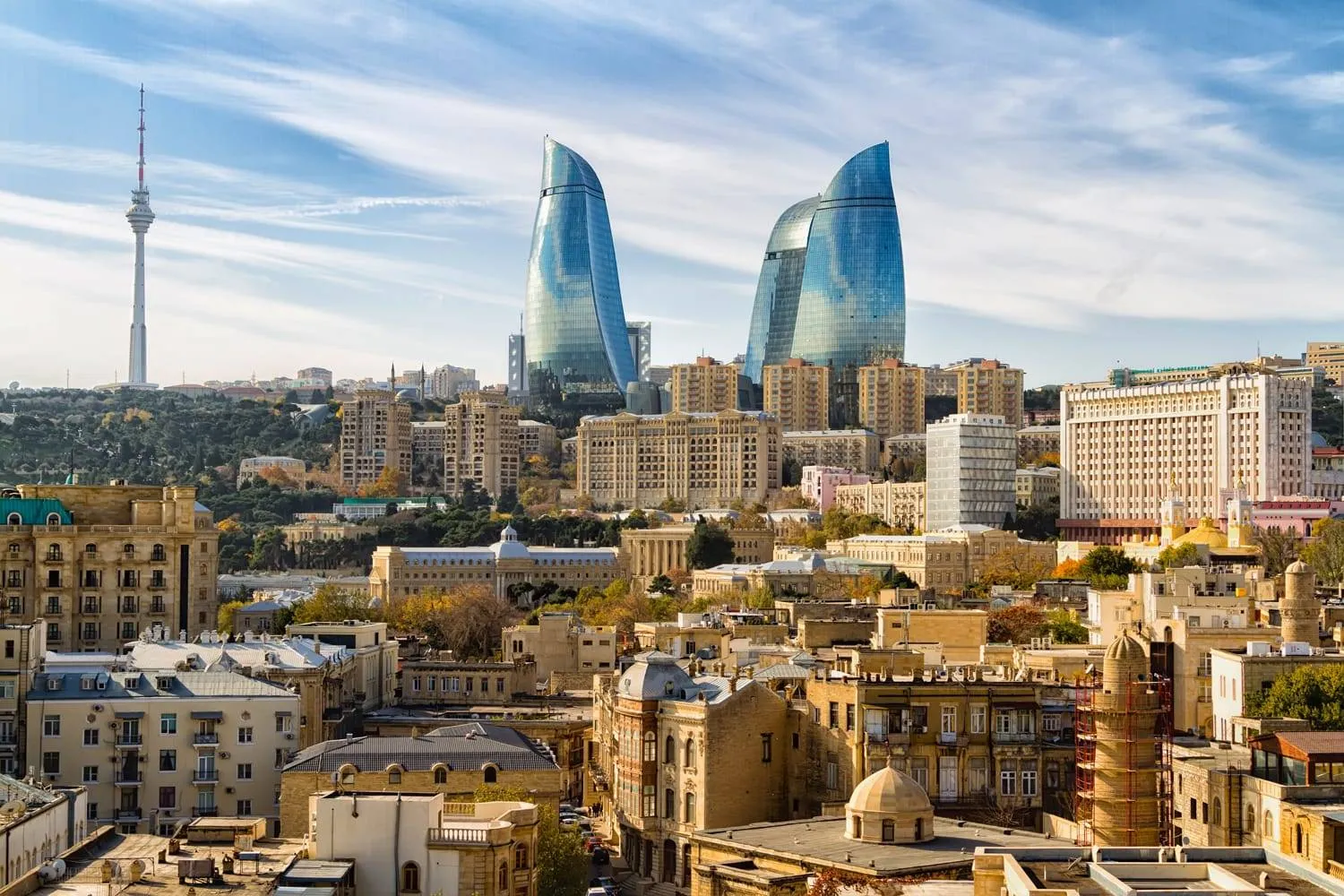
Azerbaijan's capital Baku with the city's famous architectural landmarks in the background (X)
TT

Azerbaijan Promotes Caucasus Corridors to Link Saudi Logistics With Central Asia

Azerbaijan's capital Baku with the city's famous architectural landmarks in the background (X)

As global markets search for logistical lifelines to secure supply chains and energy flows amid ongoing geopolitical disruptions, Azerbaijan is promoting major transport and logistics projects, foremost among them overland freight routes through the Caucasus and across the Caspian Sea, as a strategic safeguard for the future. These initiatives aim to create faster and more efficient shipping links while integrating the Gulf Cooperation Council states, particularly Saudi Arabia's logistics strategy, into a vital connectivity network stretching across the South Caucasus and deep into Central Asia.

Ahead of his country's Independence Day on May 28, Azerbaijan's Ambassador to Saudi Arabia Mutallim Mirzayev told Asharq Al-Awsat that Baku is leveraging its unique position as a strategic bridge to strengthen investment flows and trade, driven by a strong desire to deepen its comprehensive partnership with Riyadh and translate existing understandings into concrete projects on the ground. These include nearly 30 official agreements and important contracts covering the economy, trade, investment, and agriculture, in addition to a proposed joint investment fund. Mirzayev stressed that Azerbaijan is "uniquely positioned as a strategic bridge connecting Central Asia, the South Caucasus, and the Gulf region."

These logistics ambitions come at a time when Saudi-Azerbaijani relations are experiencing a peak in investment activity, with the two countries pursuing major strategic partnerships in both conventional and renewable energy sectors. In this regard, the ambassador praised the leading role played by Saudi companies in Azerbaijan, particularly ACWA Power, which he described as a vital partner driving the country's green energy transition, water management projects, and sustainable infrastructure development. He noted that cooperation is expanding rapidly, reflecting the peak level of investment activity between the two nations.

A key example is the Khizi-Absheron Wind Power Plant, officially inaugurated by Saudi Arabia's ACWA Power earlier this year. The project has a generation capacity of 240 megawatts and an investment value of $300 million. It is the first and largest fully foreign-funded renewable energy project in Azerbaijan and is expected to contribute significantly to the country's energy security.

In conventional energy, Saudi investments also maintain a significant presence through the participation of companies affiliated with the Kingdom's sovereign and development institutions in strategic oil and gas projects in Azerbaijan. These include contributions to the development of the giant Azeri-Chirag-Gunashli oil field, reinforcing the role of both countries in regional and international energy security.
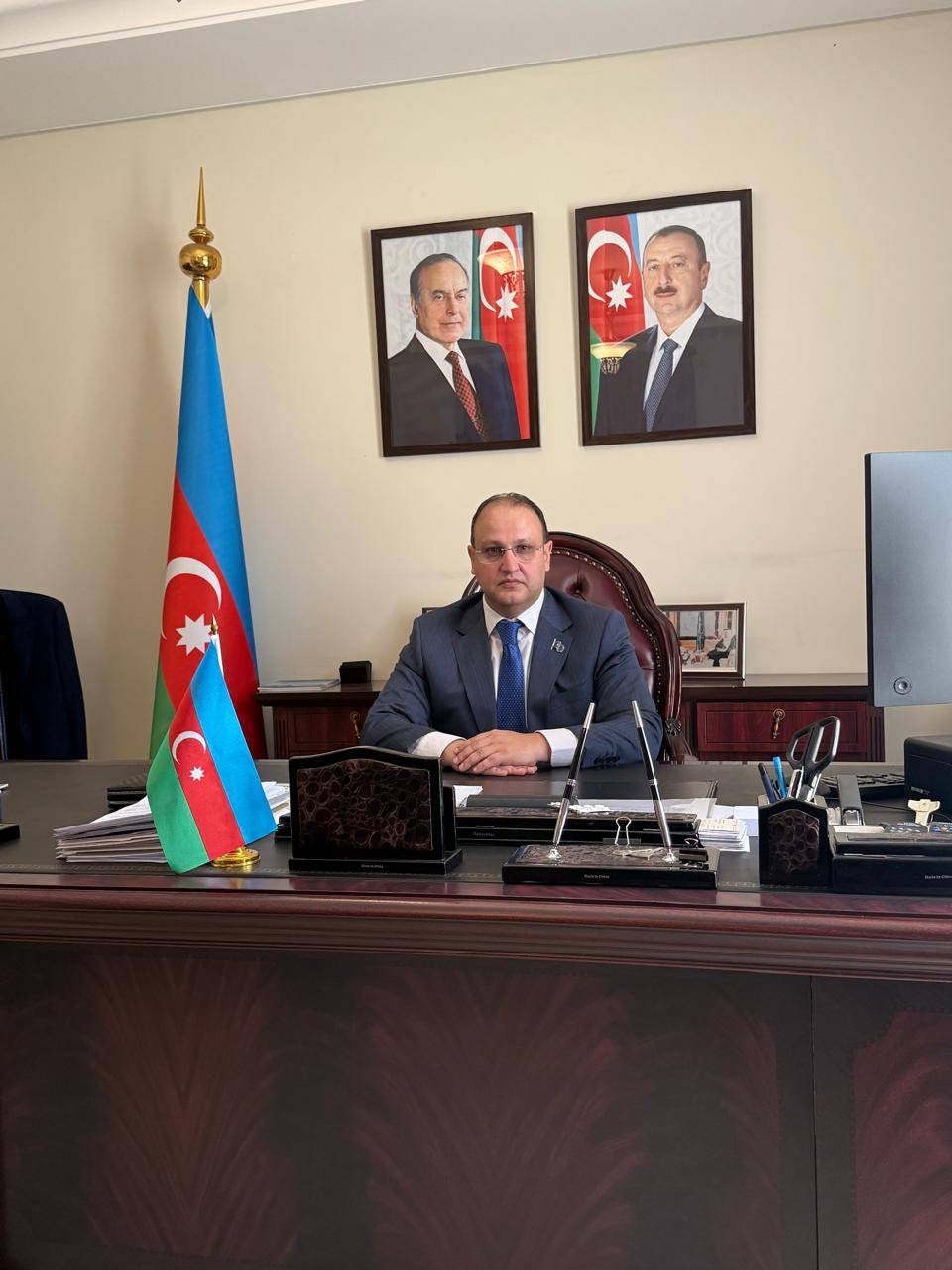
Mutallim Mirzayev, Azerbaijan's ambassador to Saudi Arabia. (Asharq Al-Awsat)

Urban Momentum and the Joint Fund

Mirzayev praised Saudi Arabia's active, high-level participation in the 13th session of the World Urban Forum (WUF13), hosted recently in Baku. The forum featured leading Saudi initiatives and projects in urban development and sustainable housing, reflecting the growing depth of bilateral coordination.

The Azerbaijani ambassador noted that the forum successfully transformed Baku into a global platform for dialogue on the future of smart cities, modern urban planning, and climate resilience. He said these strategic principles are fully embedded in Azerbaijan's ongoing reconstruction and redevelopment plans, under which entire cities and villages are being rebuilt in the liberated territories.

Trade Momentum and the Joint Fund

Turning to economic cooperation, Mirzayev said efforts are advancing steadily to activate the proposal for a joint investment fund aimed at pooling capital and directing it toward priority sectors and shared economic objectives, including agriculture, food security, tourism, advanced technologies, and infrastructure, as well as strengthening trade in industry and advanced logistics services.

On people-to-people ties, he said tourism has become a key pillar of growth amid increasing visitor flows and growing interest among Saudi tourists in Azerbaijan as a distinctive cultural and tourism destination.
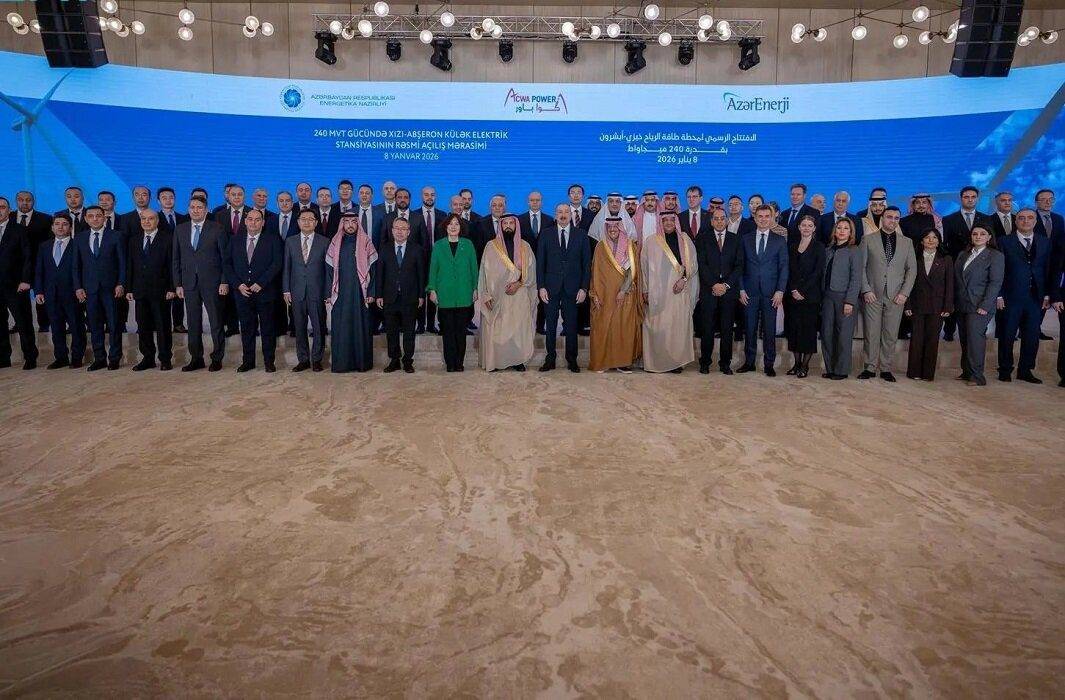
The official inauguration of the Khizi-Absheron Wind Power Plant, developed by ACWA Power, in January 2026. (X)

Vision 2030 and the Organization of Islamic Cooperation

"On the occasion of our Independence Day, I would like to express my sincere appreciation for the friendship, solidarity, and close cooperation between our two countries," Mirzayev said. He also praised the remarkable achievements and transformation witnessed in the Kingdom, noting that "the ambitious reforms and development initiatives implemented within the framework of Saudi Vision 2030 are making significant contributions to sustainable development, economic diversification, regional stability, and prosperity."

He added that Azerbaijan "highly values the Kingdom's principled support for Azerbaijan's sovereignty," while emphasizing that Baku attaches great importance to its relations with Saudi Arabia as one of the leading countries in the region. He reiterated Azerbaijan's future-oriented vision, highlighting the country's ongoing large-scale reconstruction and redevelopment efforts in the liberated territories, where entire cities and villages are being rebuilt in accordance with modern urban planning principles, smart city concepts, green energy, and sustainable development.

In the multilateral arena, Mirzayev revealed that Azerbaijan's upcoming chairmanship of the Organization of Islamic Cooperation summit will focus heavily on strengthening economic cooperation among member states, supporting climate action, science and innovation, youth empowerment, and sustainable development, all in the service of global stability.

He also reiterated that tourism has become an increasingly important pillar of bilateral relations, driven by the growing number of Saudi visitors traveling to Azerbaijan.
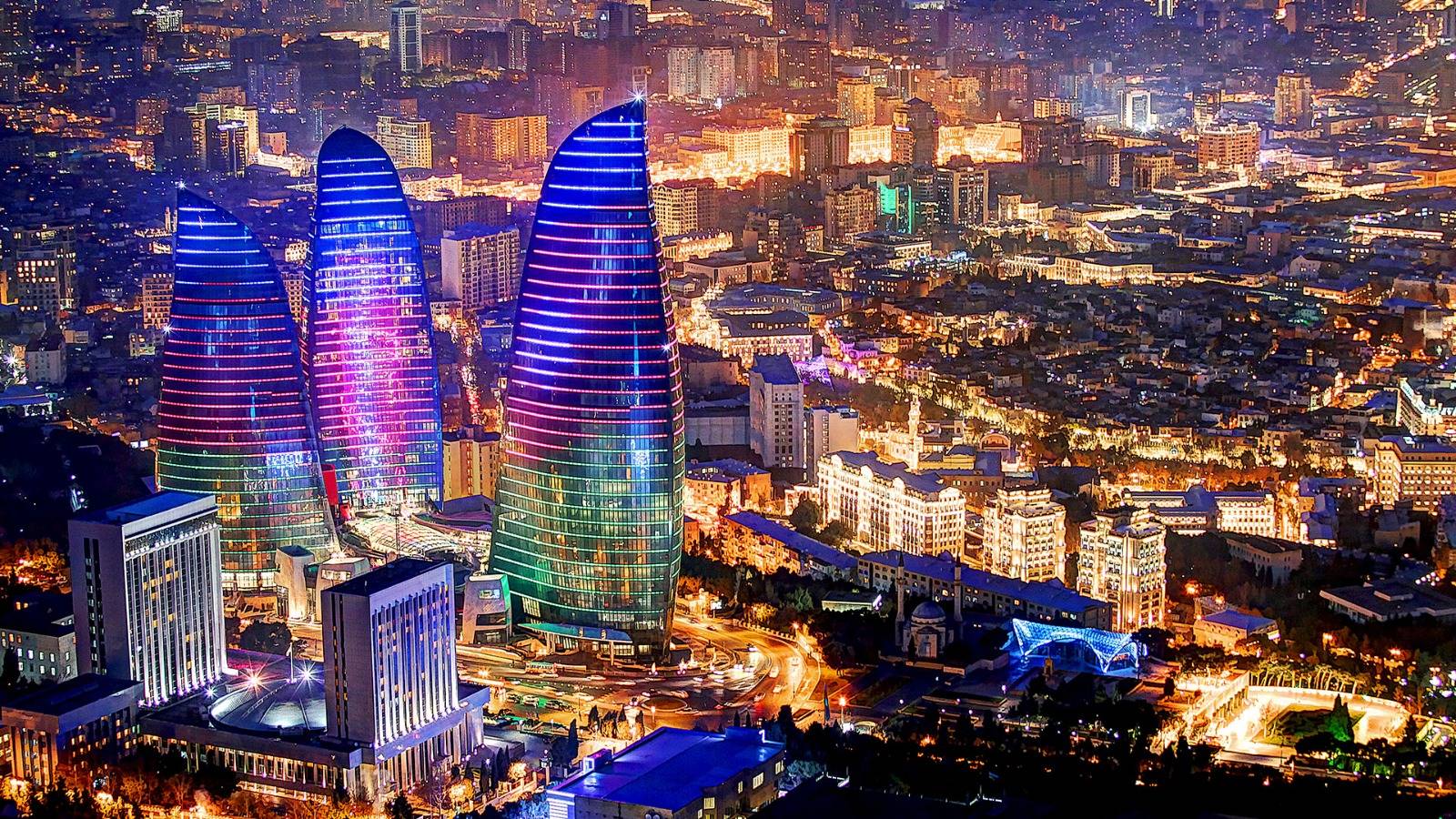
A view of Baku illuminated at night. (X)

The Geopolitics of the Middle Corridor and Shipping Alternatives

Azerbaijan's transport and logistics proposals are gaining strategic significance in economic circles. At the center of these plans is the Middle Corridor, officially known as the Trans-Caspian International Transport Route, which serves as a secure land-and-sea alternative connecting China with Central Asia, the Caucasus, Türkiye, and ultimately Europe. The corridor is particularly attractive because it can reduce cargo transit times to approximately 12 to 15 days, bypassing the constraints of traditional maritime shipping and the geopolitical complications associated with northern transport routes.

In the same logistics framework, the planned Zangazur Corridor, which would connect mainland Azerbaijan with the Nakhchivan Autonomous Republic and onward to Türkiye, represents a vital artery for regional economic integration. The corridor would establish direct and rapid road and rail connectivity and intersect with the Middle Corridor, creating an extensive logistics network stretching from the Turkic world and Central Asia to the ambitious transport systems being developed by the Gulf Cooperation Council states.

Shaping the Logistics Map

Regarding regional integration between the Gulf and Central Asia, Mirzayev emphasized that Azerbaijan's strategic location makes it a vital link connecting Central Asia, the South Caucasus, and the Gulf region. This geographical advantage is reinforced by modern transport infrastructure that enables Azerbaijan to facilitate trade, investment, and energy flows between the two regions in the face of global economic challenges.

The ambassador stressed that regional cooperation mechanisms are becoming increasingly important in addressing current global economic and geopolitical challenges, adding that Azerbaijan actively supports all initiatives aimed at strengthening integration, connectivity, and economic partnership between Central Asia and the Gulf region.

In this context, Mirzayev said major transport projects, particularly the Middle Corridor and the Zangazur Corridor, carry exceptional strategic weight for regional transportation, logistics services, international trade, and cross-border economic integration. Their ability to create faster, safer, and more efficient land and rail shipping links connecting Central Asia, the South Caucasus, and Türkiye with the Gulf region can strengthen global supply-chain security and open promising investment opportunities for all parties, including Saudi Arabia's logistics strategy as it seeks to diversify its gateways to the world.



Energy Sector Clears ‘Hormuz’ After US-Iran Deal, Risk Premium in Focus

Ships wait to transit the Strait of Hormuz on June 15. REUTERS
TT

Energy Sector Clears ‘Hormuz’ After US-Iran Deal, Risk Premium in Focus

Ships wait to transit the Strait of Hormuz on June 15. REUTERS

The energy sector and the global economy have avoided the worst-case scenario: oil at $150 a barrel.

That was the level many financial institutions and international companies had used in shaping their investment assumptions. International officials and governments also expected it and aligned with those forecasts.

For the global economy, $150 oil would have meant an energy sector slipping out of control, with damaging consequences for other industries. That did not happen. Brent crude is now trading at about $80 a barrel, roughly $70 below that feared level and above its pre-war price of $70.

With shipping through the Strait of Hormuz resuming after a preliminary peace agreement reached by the United States and Iran, expected to take effect next Friday, energy is again moving to the center of the global economic picture. For years, the sector has supported global growth, development and market stability, helping shield international markets from sudden shocks.

What comes after the agreement?

Since the preliminary US-Iran agreement was announced, oil prices have fallen by nearly $20 a barrel. That is a major cost relief for countries that import crude, and one that is likely to feed through to many other goods, given oil’s role as a basic input in finished products.

Stock markets rose in parallel, lifted by optimism over the reopening of the Strait of Hormuz and the return of shipping to normal. The prospect of commodity prices easing back toward pre-war levels could support corporate earnings and the wider global economy.

But Mamdouh Salameh, an international energy expert, said prices would not return to pre-war levels so easily.

“The current situation indicates that Iran controls 20% of global oil and gas supplies as a result of its closure of the Strait of Hormuz. Therefore, oil prices after the agreement must take into account a permanent price premium because of Iran’s control of the Strait of Hormuz,” Salameh told Asharq Al-Awsat.

Speaking from London, Salameh said that even after the strait reopens, “the volume of oil flowing through it will fall to half its pre-war level because of the damage sustained by oil production facilities in the Arabian Gulf.”

He expected repairs to some facilities to take about eight to 12 months. “For this reason, Brent crude will not return to its pre-war level of $60 to $65 a barrel, but will range between $85 and $90 for many years to come,” he said.

Spot premiums for crude oil and some refined products in Asian markets fell on Tuesday, settling at pre-war levels after the announcement of the preliminary agreement between Washington and Tehran. Still, caution over the timeline for restoring normal navigation has so far placed a floor under energy prices, preventing a sharper decline.

Supply and demand

Saudi Aramco President Amin Nasser estimated that the oil market loses about 100 million additional barrels for every week the Strait of Hormuz remains closed, after the crisis had already removed about 1 billion barrels from supply.

Nasser said in remarks in mid-May that the gap was being covered through withdrawals from strategic and commercial inventories.

About 20% of global oil supplies pass through the Strait of Hormuz. Its closure has tested the depth of strategic inventories worldwide and posed a major challenge to the global energy sector. That was clear in moves by the International Energy Agency and its members to draw from strategic reserves.

Estimates of global demand growth this year range from 700,000 to 900,000 barrels per day. That suggests demand will remain strong long after Hormuz reopens, driven by daily oil needs for power generation and normal consumption, as well as the need to rebuild inventories.

Asia is the most exposed. The US Energy Information Administration estimates that 84% of the crude oil and condensates that passed through Hormuz in 2024 went to Asian markets, led by China, India, Japan and South Korea.

Against this backdrop, Aramco, the Saudi oil giant, said its maximum production capacity remains intact and that the company can, if requested by the government and within allocated quotas, return to maximum sustained capacity in less than three weeks.

QatarEnergy, among the hardest hit, said it expects to raise natural gas production to about 50% of capacity one month after safe passage through the Strait of Hormuz is restored.

The world is now waiting for the terms of the preliminary agreement between the United States and Iran to be disclosed, so implementation can begin. Only then can a timeline be set for ships to reach “zero waiting,” followed by the return of Gulf production capacity.

Haitham El-Gendy, an international markets expert, said, “The matter depends on how quickly navigation through the Strait of Hormuz returns to pre-war levels, and how quickly supplies from the Gulf region resume. Both issues depend primarily on hostilities not resuming during the 60-day negotiation period.”

“If we assume that things will proceed well, a return to normal will require weeks, given the scale of tanker congestion around the strait and the need to remove mines,” El-Gendy told Asharq Al-Awsat. “As for Gulf supplies, this will also require varying periods depending on the extent of the damage to each country’s energy facilities.”

According to Wood Mackenzie, halted crude production fields in the region will return to 70% of their previous output within three months and about 90% within six months. For liquefied natural gas, of which Qatar produces one-fifth of global supply, a return to full production capacity will take several months and could stretch into years after damage to the Ras Laffan facility.

On crude prices, El-Gendy said that if tensions do not flare again, oil could move in the $80-a-barrel range, with room to rise, as countries replenish inventories and strategic reserves depleted in recent months and Chinese demand recovers to pre-war levels.


Syria Signs Gas Sector Contract with US Energy Giant

A screen displays the logo for ConocoPhillips on the floor of the New York Stock Exchange (NYSE) in New York City, US, April 6, 2022. REUTERS/Brendan McDermid
TT

Syria Signs Gas Sector Contract with US Energy Giant

A screen displays the logo for ConocoPhillips on the floor of the New York Stock Exchange (NYSE) in New York City, US, April 6, 2022. REUTERS/Brendan McDermid

Syria on Tuesday signed a contract involving US oil giant ConocoPhillips to develop the country's gas sector, state media reported, as Damascus seeks to attract international energy investment.

Damascus previously signed memoranda of understanding on energy with international companies including Chevron as well as HKN Energy, which has begun managing and operating oil fields recently handed over to the government by Syrian Kurdish authorities.

State news agency SANA reported that the state-owned Syrian Petroleum Company signed "a contract with US companies ConocoPhillips and Novaterra with the aim of developing a number of gas fields in Syria and increasing production from existing fields".

The move seeks to "contribute to supporting the energy system and strengthening gas supplies required for the electricity sector and other vital sectors," it said.

In Washington last week, Syrian Petroleum Company CEO Youssef Qablawi said it would be "the biggest contract" to be signed since the new authorities took power after the December 2024 ouster of longtime ruler Bashar al-Assad.

At the signing ceremony in Damascus, Qablawi said the move was "an important step in the process of developing the gas sector in Syria".

"Through this cooperation, we look forward to increasing production, improving operational capabilities and supporting the energy system," he added.

A Syrian delegation headed by Energy Minister Mohammad al-Bashir held talks in Washington last week on investment prospects in energy and infrastructure in Syria and possible partnerships with the US private sector.

After years of civil war that fractured the country and ravaged its industries and infrastructure, Syria is seeking to modernize its energy infrastructure, attract investment and boost development as it pushes on a path of economic recovery, particularly after the lifting of Assad-era sanctions.

Syria aims to produce one million barrels of oil per day by 2030 and is seeking to broaden international cooperation on exploration and production.

Last month, Syria signed a memorandum of understanding with ConocoPhillips, France's TotalEnergies and Qatar's QatarEnergy, on offshore oil and gas exploration.

In February, it also signed a preliminary deal with US energy giant Chevron and Qatari firm Power International for offshore energy exploration.

Damascus now controls all the country's oil and gas fields, after taking over areas previously under Kurdish control in the north and northeast this year.

The deputy governor of the northeastern Hasakah province, Ahmed al-Hilali, on Monday said HKN Energy had begun managing and operating those fields.


Oil Drops About 4% to Three-month Low as Markets Weigh US-Iran Deal

AUSTIN, TEXAS - JUNE 15: In an aerial view, oil storage tanks are seen at the Sunoco LP Fuel Supply Terminal on June 15, 2026 in Austin, Texas.  Brandon Bell/Getty Images/AFP
AUSTIN, TEXAS - JUNE 15: In an aerial view, oil storage tanks are seen at the Sunoco LP Fuel Supply Terminal on June 15, 2026 in Austin, Texas. Brandon Bell/Getty Images/AFP
TT

Oil Drops About 4% to Three-month Low as Markets Weigh US-Iran Deal

AUSTIN, TEXAS - JUNE 15: In an aerial view, oil storage tanks are seen at the Sunoco LP Fuel Supply Terminal on June 15, 2026 in Austin, Texas.  Brandon Bell/Getty Images/AFP
AUSTIN, TEXAS - JUNE 15: In an aerial view, oil storage tanks are seen at the Sunoco LP Fuel Supply Terminal on June 15, 2026 in Austin, Texas. Brandon Bell/Getty Images/AFP

Oil prices fell about 4% on Tuesday to fresh three-month lows as markets weighed prospects for a resumption of supplies through the Strait of Hormuz alongside weaker physical demand and scant details on a preliminary deal to end the Iran war.

Brent crude futures were down $3.20, or 3.85%, at $79.97 a barrel at 1253 GMT. They earlier touched $79.61, the lowest since March 3, and the first time they have fallen below $80 since that day.

US West Texas Intermediate was down $3.52, or 4.36%, at $77.23 a barrel. WTI's intra-day nadir of $76.88 was the lowest since March 10.

Before the war started on February 28, Brent and WTI futures were trading around $65-70 per barrel.

Oil prices sank nearly 5% on Monday after US President Donald Trump announced an interim deal to end the US-Israeli war with Iran, though full details have not been released.

Iranian Foreign Minister Abbas Araqchi said on Tuesday that Iran and the US would start a new round of talks in Switzerland on Friday to reach a final agreement.

"Near-term downside risks remain as the market prices a faster reopening of the Strait and a return of stranded barrels," Saxo Bank analyst Ole Hansen said.

However, depleted inventories, seasonal demand, strategic stock rebuilding and lingering geopolitical uncertainty suggest the path back to pre-war prices may be far less straightforward than current market optimism implies, Hansen said.