Oil Climbs as Fading US-Iran Peace Hopes Raise Supply Risks

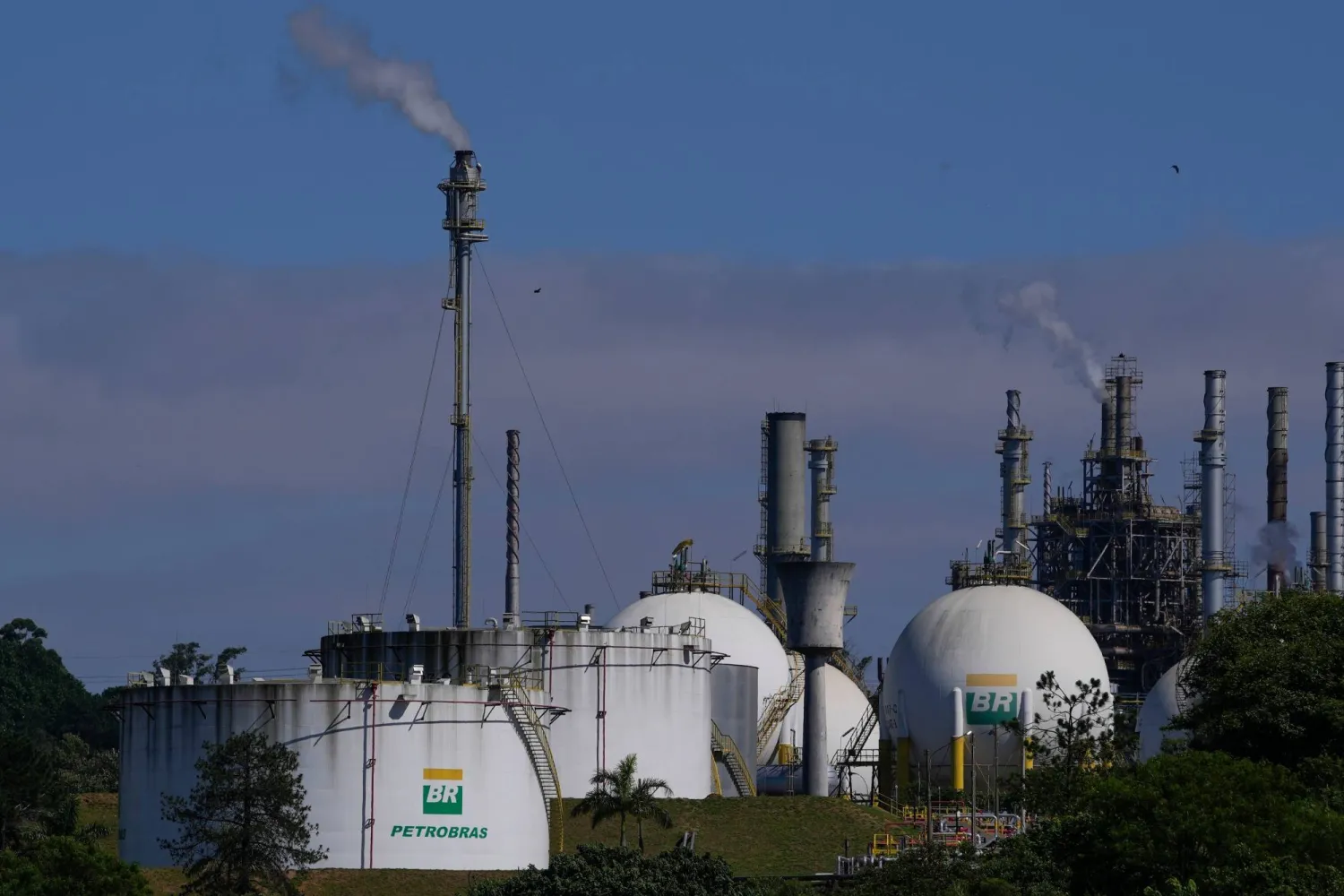
Capuava oil refinery owned by Petrobras sits in Maui, on the outskirts of Sao Paulo, Brazil, Nov. 6, 2023. (AP)
TT

Oil Climbs as Fading US-Iran Peace Hopes Raise Supply Risks

Capuava oil refinery owned by Petrobras sits in Maui, on the outskirts of Sao Paulo, Brazil, Nov. 6, 2023. (AP)

Oil prices rose on Tuesday as prospects receded for a deal to end the Middle East war, with Iran saying it would adopt a more offensive stance and the United States ruling out extension of a ceasefire deal, heightening worries about energy supply.

Iran will shift to a "fully offensive" military posture as efforts have stalled towards a permanent end to the war, a senior Iranian official told Reuters on Monday, as Washington ruled out extending their temporary ‌ceasefire pact.

Brent crude ‌futures climbed 62 cents, or 0.7%, to $91.49 a ‌barrel ⁠by 0408 GMT, ⁠after rising on Monday to their highest since July 30.

US West Texas Intermediate crude futures were up 75 cents at $85.25 a barrel, but off an earlier session gain of more than 1% to reach $85.37, their highest since July 31.

Outward progress on peace talks and resumption of oil tanker traffic through the strategic Strait of Hormuz has halted, threatening to extend the conflict the United States and ⁠Israel launched with attacks on Iran on February 28.

"Oil ‌has jumped to start the week as ‌US-Iran relations look increasingly shaky," said Tim Waterer, chief market analyst at KCM.

"A deal to ‌reopen the Strait of Hormuz still does not appear to be in ‌sight, and shipping numbers remain at a trickle."

A projectile struck a vessel transiting out of the Strait of Hormuz on Tuesday in the latest of the attacks that have kept crossings to the single digits, despite a slight rise from the weekend, ‌tracking data showed.

"The lack of any kind of deal will have an impact on oil price expectations further out in 4Q and even in 2027," said DBS Bank's head of energy research Suvro Sarkar.

While the deal-related uncertainty lasts, he expected oil prices to range within $80 and $100 a barrel in the near term.

Iran has separately been negotiating with Oman an agreement on managing the Strait of Hormuz and says they are close to a deal.

US crude oil stockpiles were expected to have fallen last week alongside product inventories, a preliminary Reuters poll showed on Monday.


China’s Fuel Exports Edge Back Towards Levels Before Iran War as Beijing Eases Curbs

People cross a street past highrise buildings in Beijing, China, 17 August 2026. (EPA)
TT

China’s Fuel Exports Edge Back Towards Levels Before Iran War as Beijing Eases Curbs

People cross a street past highrise buildings in Beijing, China, 17 August 2026. (EPA)

China's exports of ‌refined oil products in July fell 12.9% year-on-year but rose 6.7% from the previous month, customs data showed on Tuesday, as the easing of export curbs allowed refiners under pressure to ship more fuel overseas.

The key fuel supplier to Asia curbed exports sharply in March to protect its domestic market from the oil shock caused by the closure of the Strait of Hormuz in the Iran war. Beijing eased those controls ‌in July ‌and again in August, when officials approved ‌enough ⁠exports to exceed ⁠pre-war levels.

In July, the latest month for which data is available, refined oil exports, which include diesel, gasoline, aviation fuel and marine fuel, totaled 4.65 million metric tons, up from 4.36 million in June, when exports jumped 29% from May.

Diesel exports are ⁠roughly back to the level of last ‌July after rising 88% ‌month-on-month to 810,000 tons, or about 50% higher than the monthly ‌average last year.

Rising exports are a boon ‌for customers in a tight market. They are also a precondition for the normalization of China's oil imports, which remain well below pre-war levels.

By allowing refiners to export more ‌product overseas, where prices are higher, the sector receives greater incentive to increase output ⁠and, in ⁠time, oil imports.

Exports of other fuels remain below pre-war levels, although rising. Gasoline exports stood at 420,000 tons in July, down 55.3% year-on-year but up 320% from June.

China's aviation fuel exports rose 42% from June to 1.32 million tons in July, but were down 33% from the same period last year.

The data also showed LNG imports rose 2.4% year-on-year to 5.5 million tons in July.

China's LNG imports in the first seven months dropped 4.6% from the same period last year.


PIF Delivers Strong Revenue and Profit Growth in 2025

(PIF)
(PIF)
TT

PIF Delivers Strong Revenue and Profit Growth in 2025

(PIF)
(PIF)

The Public Investment Fund (PIF) published its 2025 Annual Report, demonstrating strong financial performance and continued progress against its long-term objectives. As a long-term investor with a unique mandate to drive the economic transformation of Saudi Arabia and deliver sustainable financial returns, PIF maintained a diversified portfolio in 2025, balancing returns with national impact and long-term resilience.

In 2025, revenue rose 9% year on year to $120 billion, while net profit more than doubled to $17 billion, supported by stronger contributions from maturing portfolio companies. PIF retained over $900 billion in assets under management and achieved an annualized total shareholder return of 5.8% since 2017, SPA reported.

Total shareholder return in 2025 was positively driven by increased dividends from portfolio companies and returns from financial investments. It was also impacted by downward movements in the valuations of some assets, driven by broader market conditions, while PIF continued to make long-term local investments to drive economic transformation.

PIF demonstrated its access to diversified and efficient sources of funding throughout the year, including issuance of a debut euro-denominated green bond and the establishment of a commercial paper program to provide flexible short-term finance.

PIF continued to hold strong long-term ratings with Moody’s (Aa3, stable outlook) and Fitch (A+, stable outlook) while securing an inaugural A-1 short-term rating from S&P, reflecting PIF’s strong credit profile and reinforcing investor confidence.

PIF launched major new companies in 2025, including HUMAIN, marking a major step in advancing AI capabilities, and Expo 2030 Riyadh Company, to build and operate Riyadh’s Expo 2030 facilities as Saudi Arabia prepares to welcome the world.

PIF also continued to develop priority sectors and ecosystems and deepen private sector participation. From 2021 to 2025, PIF invested more than $199 billion in Saudi Arabia, as it continued to drive the country’s economic transformation.

Chief of Staff and Secretary General to the Board at PIF Maram Aljohani said: “Throughout 2025, PIF continued to drive Saudi Arabia’s economic development and diversification through long-term investments and the launch of strategic companies. PIF contributed 11% of Saudi Arabia’s total non-oil GDP in 2025 and contributed more than $342 billion cumulatively from 2021-2025.

“PIF also expanded its international presence in 2025 through the opening of new subsidiary company offices in Europe and Asia and through targeted investments across key markets, resulting in a 12% growth in its international investments. This progress was underpinned by continued institutional excellence and robust governance frameworks, as PIF accelerated its evolution into a fully digital-native, AI-enabled investment institution and reinforced its position among the world’s leading sovereign wealth funds in Global SWF’s 2025 governance, sustainability, and resilience (GSR) rankings.

“Over the next strategic phase, PIF is evolving towards six interconnected domestic ecosystems to drive sustainable value, while investing internationally in high-conviction opportunities in long-term global trends.”

Chief Financial Officer and Acting Head of Global Capital Finance Division at PIF Yasir Alsalman said: “Building on a sustained period of growth and disciplined investment, 2025 marked another defining year for PIF. In 2025, PIF more than doubled net profit year on year and maintained its strong financial position with over $900 billion in assets under management.

“PIF continued to deploy capital across priority sectors, with cumulative domestic deployment reaching more than $199 billion between 2021 and 2025, while deepening strategic international partnerships, including signing multiple agreements with the world’s leading asset managers, in 2025.

“As we enter the next five-year phase of our investment strategy, PIF will continue to drive sustained value creation, portfolio maturity and stronger financial performance through the six ecosystems of its Vision portfolio, as well as its Strategic and Financial portfolios.”

PIF continued to deploy capital internationally across strategic sectors, including infrastructure, technology, advanced manufacturing, and financial services, while bringing capital, knowledge, and expertise to Saudi Arabia.

In 2025, PIF signed agreements with Goldman Sachs Asset Management, Macquarie Asset Management and SACE, among others, driving capital mobilization and inward investment into Saudi Arabia and expanding PIF’s strong strategic relationships with leading global financial institutions.

To deepen engagement in priority markets, PIF expanded its global presence by opening new subsidiary offices in Paris, Beijing and Shanghai, adding to its existing footprint in London, New York and Hong Kong.

According to SPA, throughout 2025, PIF continued to drive institutional development, embedding advanced data, analytics and AI across its operating model. Throughout the year, PIF launched 100 new digital applications and activated 43 high-impact AI-enabled solutions, while strengthening secure infrastructure and expanding centralized digital platforms that enhance investment insight, operational efficiency, and institutional agility.

Brand Finance, the world’s leading independent brand valuation company, ranked PIF as the most valuable and fastest-growing brand in the world among all sovereign wealth funds, with an A+ rating, for the second consecutive year.

2025 marked the last year of PIF’s 2021-2025 strategy. PIF has now moved into the next phase of its long-term strategy - PIF’s 2026-2030 strategy - focused on delivering competitive ecosystems, unlocking the full potential of strategic assets and maximizing long-term returns.

In this next phase, PIF will continue to deploy capital strategically and at scale to drive long-term value realization, including in domestic ecosystems and high-conviction international opportunities across global themes such as AI, energy transition, advanced manufacturing, and sports and entertainment.


Saudi Arabia Opens Education Sector to Private and Non-Profit Investment

Ministry of Education building in Riyadh (SPA)
TT

Saudi Arabia Opens Education Sector to Private and Non-Profit Investment

Ministry of Education building in Riyadh (SPA)

Saudi Arabia is moving to reshape the public education market by creating greater scope for participation by the private and non-profit sectors under a new system that establishes a clearer regulatory framework for sector governance and service delivery. The move is expected to expand investment opportunities and improve the efficiency of the education system.

The system comes as Saudi Arabia’s education sector gradually expands its investor and listed-company base, alongside growing interest in commercial opportunities in education, training and support services, in line with the objectives of Vision 2030.

A royal decree approving the General Education System was issued last month. The system aims to strengthen the governance framework for public education, provide the necessary enablers to achieve its objectives, improve the quality of the educational environment and its outcomes, and regulate the role of the private and non-profit sectors in line with the goals of Vision 2030.

The system defines the roles of the Ministry of Education, the General Education Affairs Council and relevant entities, supporting the alignment of education policies, plans and programmes, improving decision-making efficiency, and enabling the ministry to develop regulatory, monitoring and supervisory tools for the public education sector.

It also seeks to support investment in education by regulating the participation of the private and non-profit sectors in providing educational services and enhancing the attractiveness of investment and partnerships under clear rules. The aim is to improve service quality, expand educational options and support the sustainable development of public and private educational institutions.

Experts say the significance of the system extends beyond increasing investment volumes, arguing that it could change the nature of the market itself by clarifying regulatory roles, expanding public-private partnership models and strengthening governance. These factors could help reduce risks for both domestic and foreign investors.

In this context, Dr Abdullah Al-Salloum, professor of finance and investment at Imam Muhammad ibn Saud Islamic University, said Saudi Arabia’s public budgets have traditionally placed education among the government’s largest expenditure items. He noted that around 200 billion riyals ($53.3 billion) was allocated to education in the latest budget, representing roughly 18 percent of total government spending.

He added that education spending is estimated at between 5 and 7 percent of gross domestic product, a level that puts Saudi Arabia above the global average for education spending and among the highest in the G20.

Foreign Investment Expands

On investment, Al-Salloum said foreign direct investment stocks in the education sector reached 3.43 billion riyals ($914.7 million) at the end of 2024, more than 13 times their level a decade earlier.

He said the figure remains limited compared with some other economic sectors, but the compound annual growth rate of foreign direct investment, according to the data he cited, was close to 130 percent. This reflects a significant increase in the sector’s attractiveness to foreign investors over the past decade.

From this perspective, Al-Salloum expects the new system to help strengthen this trend by expanding investment options and providing a clearer and more flexible regulatory framework for private-sector and foreign-investor participation.

He noted that the scale of the impact will remain dependent on the effectiveness of implementing regulations and the extent to which investors respond to the opportunities.

8 Listed Companies

Al-Salloum also pointed to the recent listing of education companies on the Saudi market, saying the trend has become increasingly notable. He said the Saudi stock market currently has eight listed companies operating in education and training.

According to Al-Salloum, these companies generated revenues of about 3.4 billion riyals ($906.7 million) in 2025, representing annual growth of around 12 percent.

He said the figures show that the sector is not only one of the largest in terms of government spending, but also has a gradually expanding investment and commercial base. This could support continued growth in the coming years as the new regulatory framework is completed.

Sharing Roles and Improving Market Efficiency

Al-Salloum does not expect the system’s impact to be limited to increasing investment volumes. Rather, he sees its more important effect as changing the nature of the market. Clear regulations, expanded public-private partnership models and stronger governance could all contribute to reducing investment risks.

He stressed that reducing investment risk is “the most important factor for both domestic and foreign investors when deciding to enter any market.”

The system also affirms the protection of human rights in education and the rights of students and teachers, while providing a safe and stimulating educational environment to support the quality of the education process and improve the experience of male and female students. It also reinforces the role of families in supporting students’ educational journeys.

It supports the quality of care and education in early childhood, reflecting the importance of the early years in developing children’s personalities and skills. It also contributes to providing educational and support services better suited to the needs of students with disabilities within educational institutions, while supporting the care and development of gifted students.

During the next phase, the Ministry of Education, in coordination with relevant entities, will complete the implementing and regulatory provisions to ensure that the system is applied through a clear methodology and supports the objectives of developing public education and improving its outcomes.

The General Education System includes a number of provisions governing education stages, the General Education Affairs Council, educational institutions, education pathways, e-learning, continuing education, the educational environment, and the rights of students and teachers.