



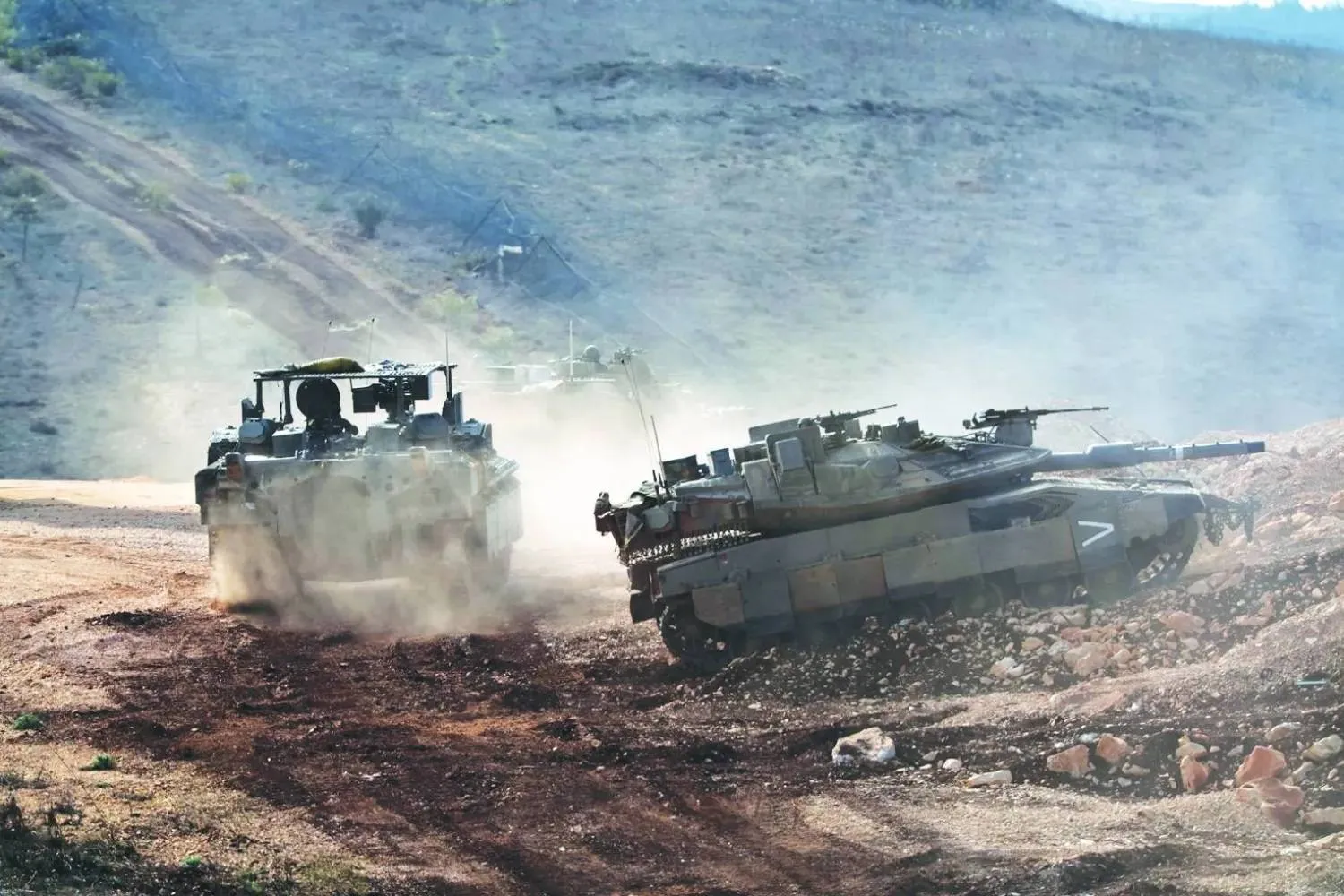

Israel “marked” the first anniversary of its ceasefire agreement with Lebanon on Thursday by launching a new wave of airstrikes, bringing the number of violations to nearly ten thousand, according to testimony collected by UNIFIL, the United Nations Interim Force in Lebanon.
The strikes were widely viewed as a sign of what Israel is preparing for the next phase, with assessments in Tel Aviv indicating that it is laying the groundwork for a new round of fighting aimed at destroying Hezbollah’s missile capabilities.
Hebrew media outlets said on Thursday that military operations were inevitable, arguing that Hezbollah does not intend to disarm and that Israel believes the only way to pressure it is through force.
They added that the administration of President Donald Trump has reached the same conclusion.
Israeli actions inside Lebanon, which include daily airstrikes, limited ground incursions and threats of a wider war, align with what they described as Washington’s pressure campaign on Beirut to drive political change and push for Hezbollah’s disarmament.
According to the Alma Research Center, which studies what Israel calls the northern front, Israel carried out at least 669 attacks on Lebanon between November 27, 2024 and today, averaging nearly 51 strikes a month, or close to two a day. More than half of those attacks were conducted north of the Litani River, in the south, the Bekaa and Beirut, while 47 percent were carried out to the south of the river.
The center said the concentration of strikes north of the Litani reflects Hezbollah’s shift over the past year to move its assets and command centers further north to rebuild capabilities away from the areas Israel monitors most closely and that became exposed during the latest war.
The center said the Israeli army killed 218 Hezbollah members in the past year since the ceasefire took effect, in addition to 182 civilians. It said 49 percent of the assassinations occurred south of the Litani and the same proportion north of it, in Bekaa and Beirut.
The real figure is higher, it added, noting that 218 represents only the names and photographs confirmed in open sources. Israeli officials say the real number is about 350, while Lebanese sources speak of at least 400.
The center said 46 of those killed were members of the elite Radwan force, nearly one fifth of the total. Israeli forces also killed 28 fighters from other factions, claiming that 18 of them belonged to Hamas and the rest to Amal, the Islamic Group and other organizations.
Israeli military statistics cited by army spokesmen tell a different story. According to those figures, the Galilee Division, which leads ground operations in Lebanon, carried out about 1,200 cross-border incursions over the past year, beginning after the ceasefire took effect.
That amounts to between three and five incursions a day, reaching up to five kilometers inside Lebanese territory and sometimes approaching the second line of villages, according to Yedioth Ahronoth.
The newspaper described the scale of operations as unprecedented along the 140-kilometer border from Rosh Hanikra to the Shebaa Farms area.
The report said the Israeli military is preparing a short operation aimed at deterring Hezbollah and disrupting its efforts to rearm, after the security establishment concluded that daily airstrikes had failed to achieve deterrence and that the group continues to strengthen its capabilities, particularly in areas far from the border.
UNIFIL, meanwhile, has collected testimony showing that Israel violated the ceasefire at least 7,500 times from the air and 2,500 times on land.
Israeli officials say openly that their activities in Lebanon enjoy American support and even French backing.
According to Haaretz, despite recognition in Washington that the current escalation could intensify and become dangerous, US officials see what they call an optimistic scenario in which the strikes could force Lebanese President Joseph Aoun to choose between war and entering political negotiations with Israel that could lead to normalization and accession to the Abraham Accords.
Eitan Ishai, head of the Middle East program at the Mitvim Institute for Foreign Policy, said the situation ultimately “comes back to a dead end.”
Israel says Hezbollah must disarm before it withdraws, he said, while the Lebanese government insists that Israel must withdraw before any disarmament can take place.
Hezbollah says it will not give up its weapons under any circumstances. “If you want any dialogue or a political settlement, Israel must withdraw first,” Ishai quoted the group as saying.
He added that the United States and the wider international community continue to tell Lebanon that it must disarm Hezbollah before they commit financial support.
“No side has yet found a way to break this circle,” Ishai said, adding that Israel and the United States appear to be betting on weakening Hezbollah and presenting President Aoun with an offer he cannot refuse.
“The question is whether he can accept it.”


