


New Hamas Security Measures amid Fears of Overseas Assassinations

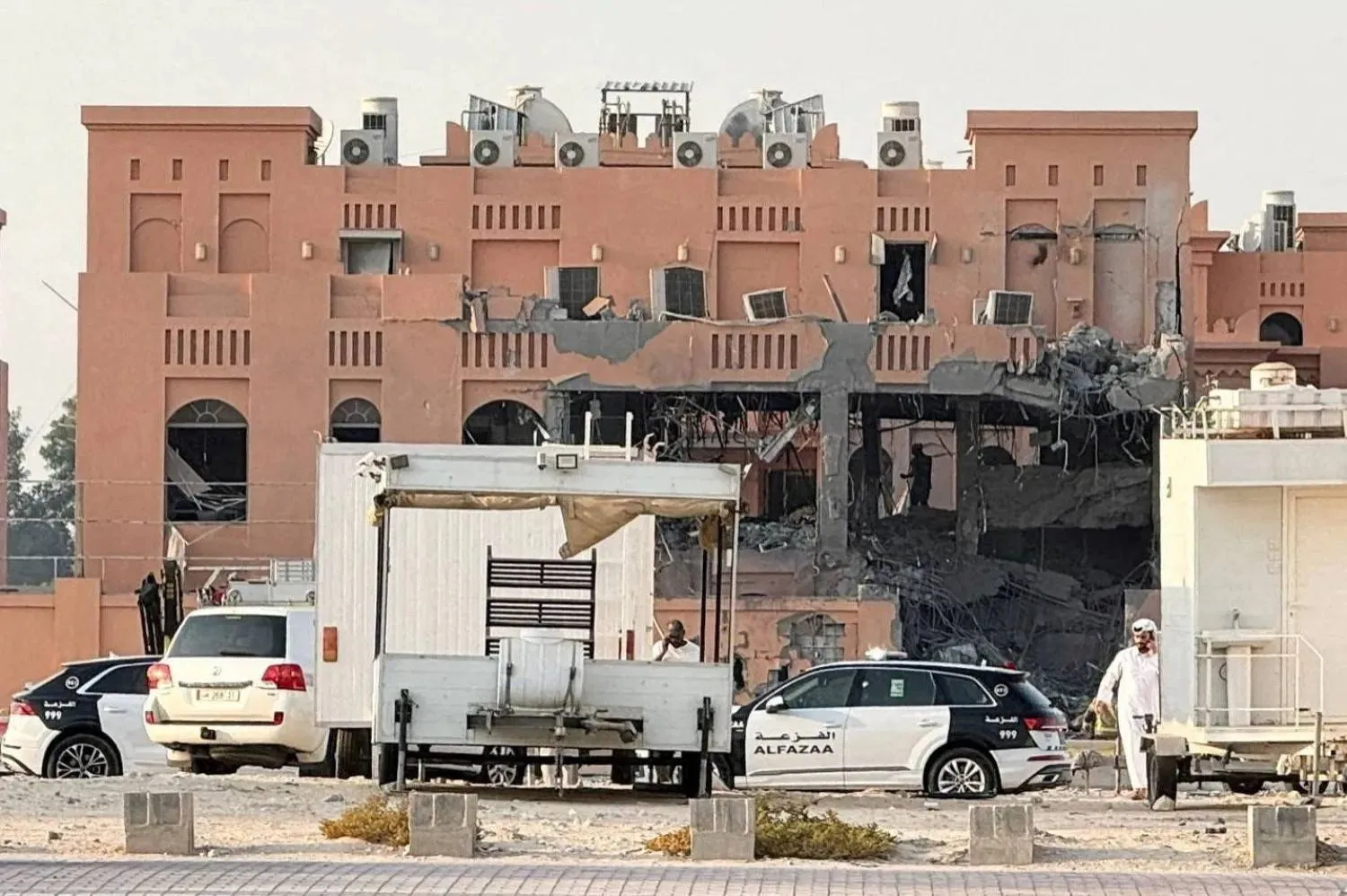
The building damaged in the Israeli strike on Hamas leaders in Doha last September (Reuters)
TT

New Hamas Security Measures amid Fears of Overseas Assassinations

The building damaged in the Israeli strike on Hamas leaders in Doha last September (Reuters)

Hamas is increasingly bracing for what it sees as a looming Israeli assassination attempt against senior figures operating outside Palestinian territory.

Senior officials in the movement told Asharq Al-Awsat that concern has been mounting over a potential strike targeting Hamas’s top echelon, particularly after the killing of senior Lebanese Hezbollah official Haitham Tabtabai.

The sources said that despite “reassurance messages” conveyed by the United States to several parties, including mediators in Türkiye, Qatar and Egypt, that last September’s Doha operation will not be repeated, the movement’s leadership “does not trust Israel”.

One source linked “expectations of a new assassination attempt with the Israeli government’s efforts to obstruct the second phase of the ceasefire agreement and its claim that the movement has no intention of advancing toward a deal”.

According to the sources, Hamas’s leadership has tightened security measures since the attempted assassination in Doha, convinced that “Israel will continue tracking the leadership and locating them through different methods, foremost of which are advanced technologies”.

A “non-Arab state”

A Hamas source said “there are assessments that the movement’s leaders may be targeted in a non-Arab state”, declining to identify it.

Since the start of the war on Gaza in October 2023, Israel has threatened and carried out overseas assassinations against Hamas leaders. It first killed Saleh al-Arouri, the movement’s deputy leader, in Beirut in January 2024, then killed the head of its political bureau, Ismail Haniyeh, in Tehran in July 2024.

Israel then attempted to eliminate the movement’s leadership council in the Doha operation.

Israeli Prime Minister Benjamin Netanyahu later apologized to Qatar after pressure from US President Donald Trump.

US envoys Steve Witkoff and Jared Kushner subsequently met Khalil al-Hayya, head of the Hamas delegation for ceasefire talks, who had been a primary target in the Doha operation.

“New security instructions”

Asharq Al-Awsat reviewed an internal directive distributed to Hamas leaders abroad regarding personal security and precautionary measures to prevent possible assassinations or at least reduce their impact.

The new instructions, which appear to have been drafted by security experts, say all fixed meetings in a single location must be canceled, and that leaders should resort to irregular meetings in rotating locations.

The instructions also require leaders to “keep mobile phones completely away from meeting sites by no less than 70 meters, and to ban the entry of any medical or electronic devices including watches into meeting venues. There must be no air conditioners, internet routers, television screens or even home intercom systems.”

The guidelines stress the need to “constantly inspect meeting venues in case miniature cameras have been planted anywhere through human agents, particularly since Israeli security services resort to installing cameras and spying devices during maintenance work inside buildings that they identify as future targets”.

The document warns leaders that “Israel relies on a chain of elements to monitor and track its targets, including human factors such as cleaning staff or others, or even individuals in the first circle around the wanted person, as well as mobile phones and other tools that can be used for surveillance such as screens, air conditioners and more”.

It adds that “switching off phones alone does not prevent tracking, especially since there is the ability to hack any device operating through Wi-Fi. Smart watches and similar devices can be used to determine the number of people in any room. Several types of missiles can also penetrate any wall or building and reach their target in a very short period”.

Gaza commander survives

Meanwhile, Israel on Wednesday attempted to assassinate a commander in the Rafah Brigade of the Qassam Brigades, the Hamas military wing, after bombing a tent sheltering his family in the Mawasi area of Khan Younis in southern Gaza.

The strike came hours after four Israeli soldiers were wounded in a firefight with Qassam gunmen in Rafah as the troops emerged from tunnels.

Sources told Asharq Al-Awsat that the targeted figure survived. He is the intelligence chief of the Rafah Brigade.

Israel had previously said it succeeded in dismantling the Rafah Brigade completely and eliminating it, but successive operations carried out by armed cells from the brigade inside the city, which is under Israeli control, have fueled significant doubt about Israel’s narrative.



Israeli Reservist Rams Vehicle into Palestinian Man Praying in West Bank

Israeli security forces secure a street as they leave the Palestinian village of Bizariya, in the occupied West Bank, where Israeli authorities demolished the house of a Palestinian man killed in July after he and another man reportedly killed an Israeli settler on the same day, on December 24, 2025. (AFP)
TT

Israeli Reservist Rams Vehicle into Palestinian Man Praying in West Bank

Israeli security forces secure a street as they leave the Palestinian village of Bizariya, in the occupied West Bank, where Israeli authorities demolished the house of a Palestinian man killed in July after he and another man reportedly killed an Israeli settler on the same day, on December 24, 2025. (AFP)

An Israeli reservist soldier rammed his vehicle into a Palestinian man as he prayed on a roadside in ​the occupied West Bank on Thursday, after earlier firing shots in the area, the Israeli military said.

"Footage was received of an armed individual running over a Palestinian individual," it said in a statement, adding the individual was a reservist ‌and his ‌military service had ‌been terminated.

The ⁠reservist ​acted "in severe ‌violation of his authority" and his weapon had been confiscated, the military said.

Israeli media reported that he was being held under house arrest.

The Israeli police did not immediately respond to a Reuters request for comment.

The ⁠Palestinian man went to hospital for checks after ‌the attack, but was unhurt ‍and is now ‍at home.

Video which aired on Palestinian ‍TV shows a man in civilian clothing with a gun slung over his shoulder driving an off-road vehicle into a man praying on ​the side of the road.

This year ​was one of the most violent on ⁠record for Israeli civilian attacks against Palestinians in the West Bank, according to United Nations data that shows more than 750 injuries.

More than a thousand Palestinians were killed in the West Bank between October 7, 2023 and October 17, 2025, mostly in operations by security forces and some by settler violence, according to the UN In ‌the same period, 57 Israelis were killed in Palestinian attacks.


Deadly Blast Hits Mosque in Syria’s Homs, Saraya Ansar al-Sunna Claims Responsibility

Syrian security forces stand inside a damaged mosque after several people were killed in an explosion at a mosque as the Syrian Arab News Agency (SANA) said, in Homs, Syria December 26, 2025. REUTERS/Ali Ahmed al-Najjar
TT

Deadly Blast Hits Mosque in Syria’s Homs, Saraya Ansar al-Sunna Claims Responsibility

Syrian security forces stand inside a damaged mosque after several people were killed in an explosion at a mosque as the Syrian Arab News Agency (SANA) said, in Homs, Syria December 26, 2025. REUTERS/Ali Ahmed al-Najjar

A bombing at a mosque in Syria during Friday prayers killed at least eight people and wounded 18 others, authorities said.

Images released by Syria’s state-run Arab News Agency showed blood on the mosque’s carpets, holes in the walls, shattered windows and fire damage. The Imam Ali bin Abi Talib Mosque is located in Homs, Syria's third-largest city.

SANA, citing a security source, said that preliminary investigations indicate that explosive devices were planted inside the mosque. Authorities were searching for the perpetrators, who have not yet been identified, and a security cordon was placed around the building, Syria’s Interior Ministry said in a statement.

In a statement on Telegram, the Saraya Ansar al-Sunna said its fighters "detonated a number of explosive devices" in the mosque.

The same group had previously claimed a suicide attack in June in which a gunman opened fire and then detonated an explosive vest inside a Greek Orthodox church in Dweil’a, on the outskirts of Damascus, killing 25 people as worshippers prayed on a Sunday.

Several countries, including Saudi Arabia, Jordan and Lebanon, condemned the attack. 


Fuel Shortage Forces Gaza Hospital to Suspend Most Services

The sun sets behind a makeshift tent camp for displaced Palestinians set up in an area of al-Bureij camp, in the central Gaza Strip, Wednesday, Dec. 24, 2025. (AP)
TT

Fuel Shortage Forces Gaza Hospital to Suspend Most Services

The sun sets behind a makeshift tent camp for displaced Palestinians set up in an area of al-Bureij camp, in the central Gaza Strip, Wednesday, Dec. 24, 2025. (AP)

A major Gaza hospital has suspended several services because of a critical fuel shortage in the devastated Palestinian territory, which continues to face a severe humanitarian crisis, it said.

Devastated by more than two years of war, the Al-Awda Hospital in the central Gaza district of Nuseirat cares for around 60 in-patients and receives nearly 1,000 people seeking medical treatment each day.

"Most services have been temporarily stopped due to a shortage of the fuel needed for the generators," said Ahmed Mehanna, a senior official involved in managing the hospital.

"Only essential departments remain operational: the emergency unit, maternity ward and pediatrics."

To keep these services running, the hospital has been forced to rent a small generator, he added.

Under normal conditions, Al-Awda Hospital consumes between 1,000 and 1,200 liters of diesel per day. At present, however, it has only 800 liters available.

"We stress that this shutdown is temporary and linked to the availability of fuel," Mehanna said, warning that a prolonged fuel shortage "would pose a direct threat to the hospital's ability to deliver basic services".

He urged local and international organizations to intervene swiftly to ensure a steady supply of fuel.

Despite a fragile truce observed since October 10, the Gaza Strip remains engulfed in a severe humanitarian crisis.

While the ceasefire agreement stipulated the entry of 600 aid trucks per day into Gaza, only 100 to 300 carrying humanitarian assistance can currently enter, according to the United Nations and non-governmental organizations.

The remaining convoys largely transport commercial goods that remain inaccessible to most of Gaza's 2.2 million people.

- Health hard hit -

On a daily basis, the vast majority of Gaza's residents rely on aid from UN agencies and international NGOs for survival.

Gaza's health sector has been among the hardest hit by the war.

During the fighting, the Israeli miliary repeatedly struck hospitals and medical centers across Gaza, accusing Hamas of operating command centers there, an allegation the group denied.

International medical charity Doctors Without Borders now manages roughly one-third of Gaza's 2,300 hospital beds, while all five stabilization centers for children suffering from severe malnutrition are supported by international NGOs.

The war in Gaza was sparked on October 7, 2023, following an unprecedented Hamas attack on Israel that resulted in the deaths of 1,221 people, most of them civilians, according to an AFP tally based on official Israeli figures.

In Israel's ensuing military campaign in Gaza, at least 70,942 people - also mostly civilians - have been killed, according to the health ministry in the Hamas-run territory.