
Algeria’s Kabylie Unites against MAK Separatist Project

Activists rally in Bejaia against separatist project, private accounts
TT

Algeria’s Kabylie Unites against MAK Separatist Project

Activists rally in Bejaia against separatist project, private accounts

Algeria’s Kabylie region is witnessing unusual momentum and activity, marked by initiatives opposing a separatist group’s plan to proclaim an “Independent State of Kabylie” on Sunday in France.

The move is one chapter in ongoing tensions with Algeria, which accuses Paris of “harboring enemies of its territorial unity.”

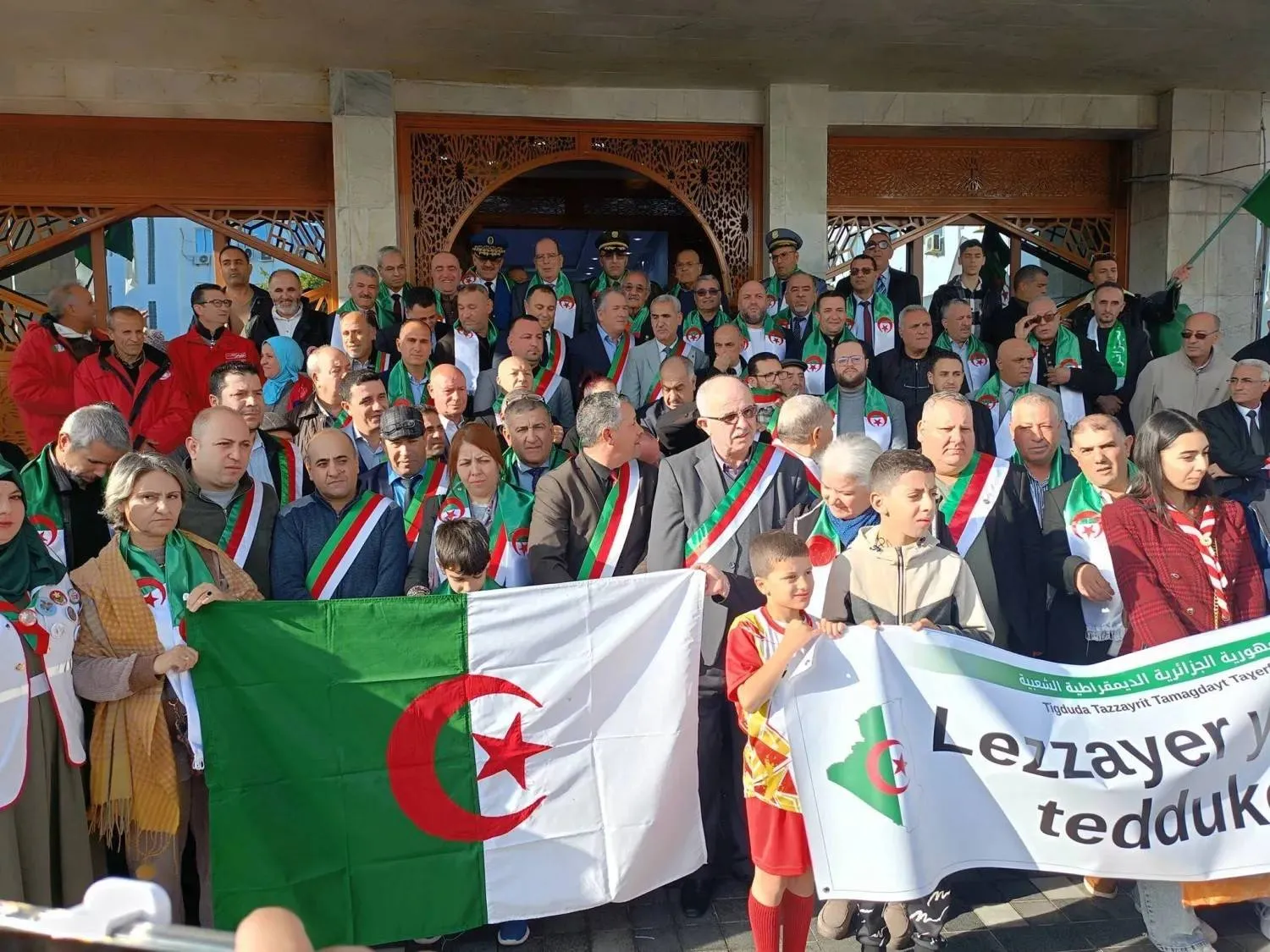
In Bejaia province, about 250 km east of Algiers and the largest city in Kabylie, residents and local groups have launched a series of initiatives in recent days to express their rejection of any proposal that undermines national unity.

The national flag has been widely hung from the facades of homes and shops, while taxis and public and private transport vehicles have also been decorated with the flag, creating a scene dominated by national colors across the city’s streets and neighborhoods.

Rejecting any threat to national unity

Coinciding with the anniversary of demonstrations held in 1960 during Algeria’s war of independence from France from 1954 to 1962, the Bejaia Directorate of Youth and Sports organized a convoy of cars adorned with national flags on Thursday.

The convoy set off from the city center and passed through several streets and villages under the slogan “Algeria is one and united,” under the supervision of local authorities.

In the same context, a real estate developer raised the national flag on the main facade of one of the city’s largest residential complexes, a 28-story building, in a move that drew positive reactions from residents and was seen as another expression of attachment to national symbols.

Bejaia’s neighborhoods have also witnessed a form of symbolic competition through the display of flags of varying sizes.

A large flag was raised in November 1, 1954 Square, with announcements of further initiatives to unfurl a massive flag atop Mount Gouraya, the city’s most prominent tourist landmark, with the participation of several local associations.

Bejaia University students issued a statement rejecting the separatist project carried by the Movement for the Self Determination of Kabylie, known by its French acronym MAK.

They reaffirmed their commitment to “the unity and sovereignty of Algeria” and called for confronting what they described as “narratives that undermine national cohesion,” referring to the planned declaration of an “Independent State of Kabylie,” which MAK says it will announce on Sunday in Paris under the leadership of its head, Ferhat Mehenni, who is wanted in Algeria on terrorism charges.

In the same vein, a number of intellectuals and activists in Bejaia expressed similar positions through statements and comments, while a popular gathering is expected to be held near the House of Culture on Sunday to voice opposition to the move.

The local journalists’ organization in Bejaia also announced its rejection of “any plan targeting the country’s unity,” stressing in a statement that “preserving a unified Algeria is a collective responsibility that is not open to compromise.”

Calls to confront MAK

Abdelkader Bengrina, head of the pro-government National Construction Movement party, said on Saturday during a meeting with party officials that “what this terrorist movement is attempting today is a desperate effort to turn back the clock and revive colonial ambitions that were buried decades ago.”

He added that “their determination to declare the independence of Kabylie from Algeria is nothing more than a new chapter in a farcical play aimed at testing the pulse of the Algerian nation and dragging the country into chaos.”

“We are fully confident that our security forces will strike with an iron fist against the plans of this movement and its operational cells wherever they exist, within the framework of the law,” he said.

Bengrina implicitly accused France of hosting separatists and their project, saying that “some European capitals are crying foul these days when one of their agents is exposed while posing as a tourist, even though his mission was to promote separatist discourse and encourage chaos.”

He was referring to French journalist Christophe Gleizes, who was sentenced by a court in Tizi Ouzou to seven years in prison on charges of “maintaining links with a leader of the Movement for the Self Determination of Kabylie.”

By contrast, Mehenni said in comments to the media in France, where he lives as a political refugee, that “there is no turning back,” arguing that “the policies pursued by Algeria in Kabylie since 1963 make independence the only solution.”

The movement was founded in 2001 following deadly clashes between security forces and segments of the Kabylie population that left 160 people dead.

Initially advocating autonomy, it later shifted toward full secession.

In May 2021, Algerian authorities designated the group a “terrorist organization,” accusing its members of planning violent acts and receiving foreign funding.

The movement relies heavily on emigrants originating from Kabylie, particularly in France and North America, but has little presence inside Algeria.

Authorities have arrested many of its members in the three Kabylie provinces of Tizi Ouzou, Bejaia and Bouira, all east of the capital, including MAK’s representative in the region, Bouaziz Ait Chebib.

Deep rooted political forces in the region have strongly rejected the separatist step, led by the Socialist Forces Front, which condemned what it described as “a separatist project that undermines Algeria’s national unity.”


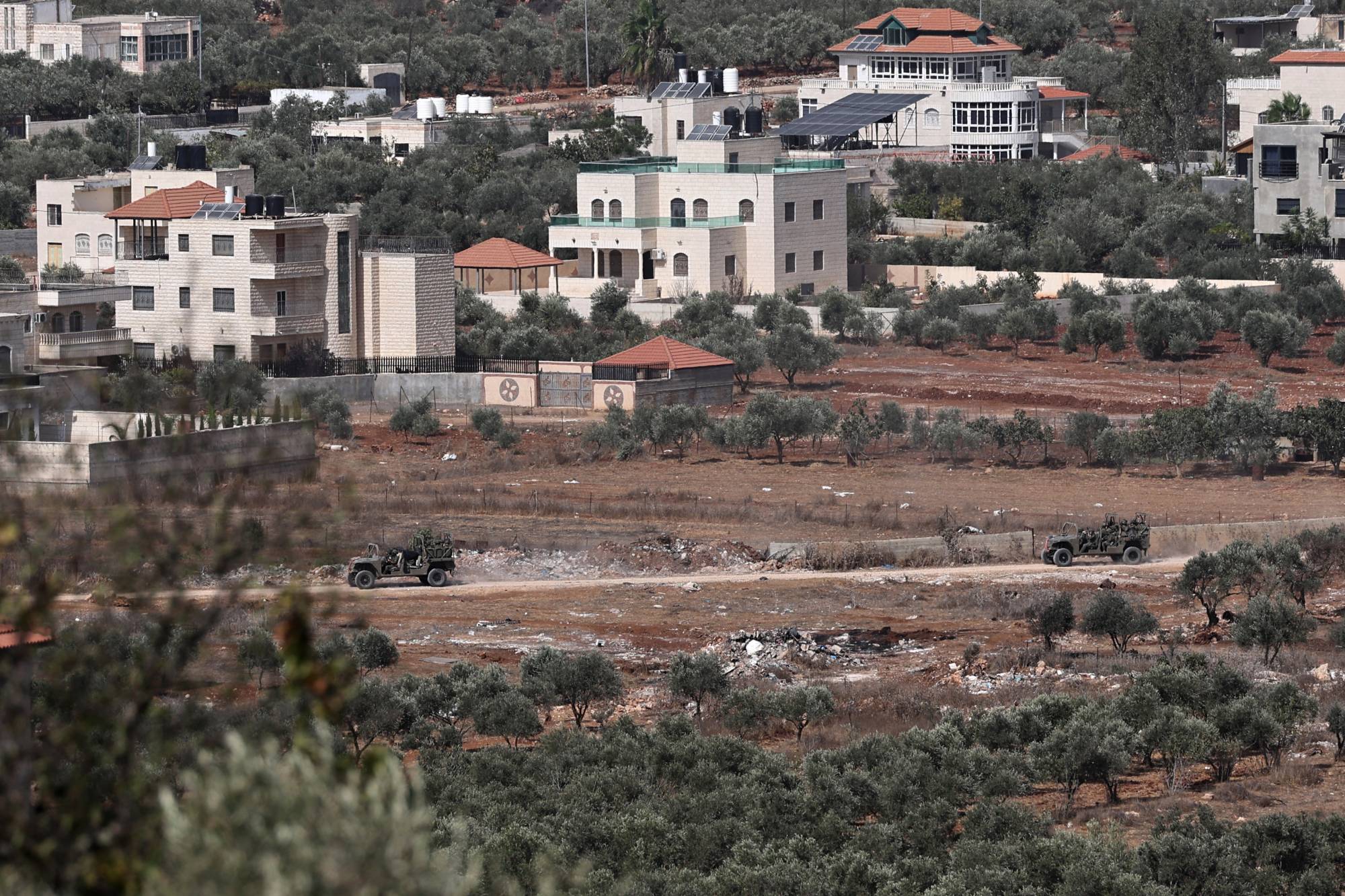
Israel Permits 10,000 West Bank Palestinians for Friday Prayers at Al Aqsa

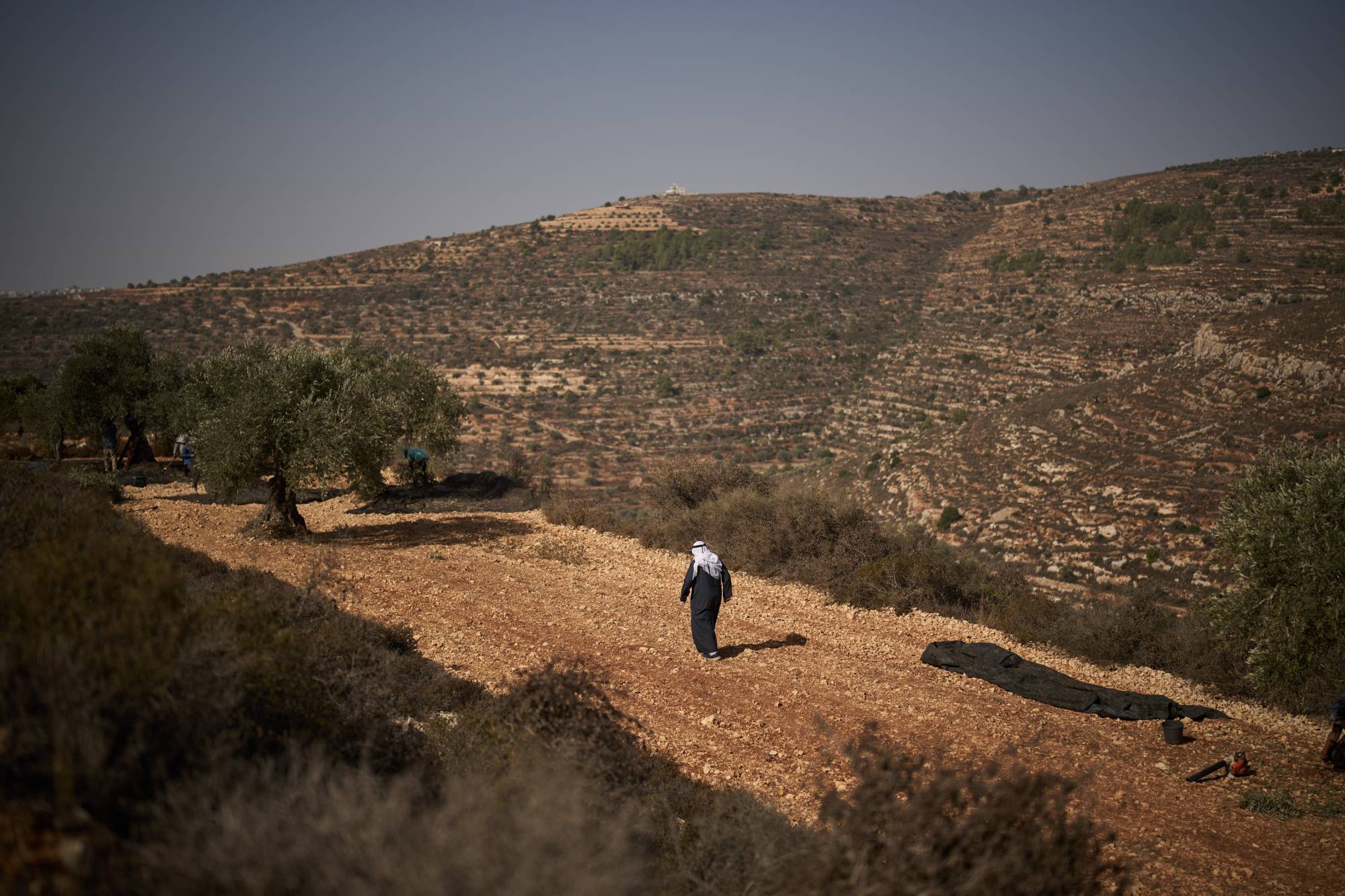
Palestinians attend Friday prayers in a mosque following an attack that local Palestinians said was carried out by Israeli settlers, in the village of Deir Istiya near Salfit in the Israeli-occupied West Bank November 14, 2025. REUTERS/Sinan Abu Mayzer
TT

Israel Permits 10,000 West Bank Palestinians for Friday Prayers at Al Aqsa

Palestinians attend Friday prayers in a mosque following an attack that local Palestinians said was carried out by Israeli settlers, in the village of Deir Istiya near Salfit in the Israeli-occupied West Bank November 14, 2025. REUTERS/Sinan Abu Mayzer

Israel announced that it will cap the number of Palestinian worshippers from the occupied West Bank attending weekly Friday prayers at the Al-Aqsa Mosque in east Jerusalem at 10,000 during the holy month of Ramadan, which began Wednesday.

Israeli authorities also imposed age restrictions on West Bank Palestinians, permitting entry only to men aged 55 and older, women aged 50 and older, and children up to age 12.

"Ten thousand Palestinian worshippers will be permitted to enter the Temple Mount for Friday prayers throughout the month of Ramadan, subject to obtaining a dedicated daily permit in advance," COGAT, the Israeli defense ministry agency in charge of civilian matters in the Palestinian territories, said in a statement, AFP reported.

"Entry for men will be permitted from age 55, for women from age 50, and for children up to age 12 when accompanied by a first-degree relative."

COGAT told AFP that the restrictions apply only to Palestinians travelling from the West Bank, which Israel has occupied since the 1967 Arab-Israeli war.

"It is emphasised that all permits are conditional upon prior security approval by the relevant security authorities," COGAT said.

"In addition, residents travelling to prayers at the Temple Mount will be required to undergo digital documentation at the crossings upon their return to the areas of Judea and Samaria at the conclusion of the prayer day," it said, using the Biblical term for the West Bank.

During Ramadan, hundreds of thousands of Palestinians traditionally attend prayers at Al-Aqsa, Islam's third holiest site, located in east Jerusalem, which Israel captured in 1967 and later annexed in a move that is not internationally recognized.

Since the war in Gaza broke out in October 2023, the attendance of worshippers has declined due to security concerns and Israeli restrictions.

The Palestinian Jerusalem Governorate said this week that Israeli authorities had prevented the Islamic Waqf -- the Jordanian-run body that administers the site -- from carrying out routine preparations ahead of Ramadan, including installing shade structures and setting up temporary medical clinics.

A senior imam of the Al-Aqsa Mosque, Sheikh Muhammad al-Abbasi, told AFP that he, too, had been barred from entering the compound.

"I have been barred from the mosque for a week, and the order can be renewed," he said.

Abbasi said he was not informed of the reason for the ban, which came into effect on Monday.

Under longstanding arrangements, Jews may visit the Al-Aqsa compound -- which they revere as the site of the first and second Jewish temples -- but they are not permitted to pray there.

Israel says it is committed to upholding this status quo, though Palestinians fear it is being eroded.

In recent years, a growing number of Jewish ultranationalists have challenged the prayer ban, including far-right politician Itamar Ben Gvir, who prayed at the site while serving as national security minister in 2024 and 2025.


EU Exploring Support for New Gaza Administration Committee, Document Says

Palestinians push a cart past the rubble of residential buildings destroyed during the two-year Israeli offensives, in Gaza City, February 17, 2026. REUTERS/Mahmoud Issa
TT

EU Exploring Support for New Gaza Administration Committee, Document Says

Palestinians push a cart past the rubble of residential buildings destroyed during the two-year Israeli offensives, in Gaza City, February 17, 2026. REUTERS/Mahmoud Issa

The European Union is exploring possible support for a new committee established to take over the civil administration of Gaza, according to a document produced by the bloc's diplomatic arm and seen by Reuters.

"The EU is engaging with the newly established transitional governance structures for Gaza," the European External Action Service wrote in a document circulated to member states on Tuesday.

"The EU is also exploring possible support to the National Committee for the Administration of Gaza," it added.

European foreign ministers will discuss the situation in Gaza during a meeting in Brussels on February 23.


Israel Military Says Soldier Killed in Gaza 

A drone view shows the destruction in a residential neighborhood, after the withdrawal of the Israeli forces from the area, amid a ceasefire between Israel and Hamas in Gaza, in Gaza City, October 21, 2025. (Reuters)
TT

Israel Military Says Soldier Killed in Gaza 

A drone view shows the destruction in a residential neighborhood, after the withdrawal of the Israeli forces from the area, amid a ceasefire between Israel and Hamas in Gaza, in Gaza City, October 21, 2025. (Reuters)

The Israeli military announced that one of its soldiers had been killed in combat in southern Gaza on Wednesday, but a security source said the death appeared to have been caused by "friendly fire".

"Staff Sergeant Ofri Yafe, aged 21, from HaYogev, a soldier in the Paratroopers Reconnaissance Unit, fell during combat in the southern Gaza Strip," the military said in a statement.

A security source, however, told AFP that the soldier appeared to have been "killed by friendly fire", without providing further details.

"The incident is still under investigation," the source added.

The death brings to five the number of Israeli soldiers killed in Gaza since a ceasefire took effect on October 10.