

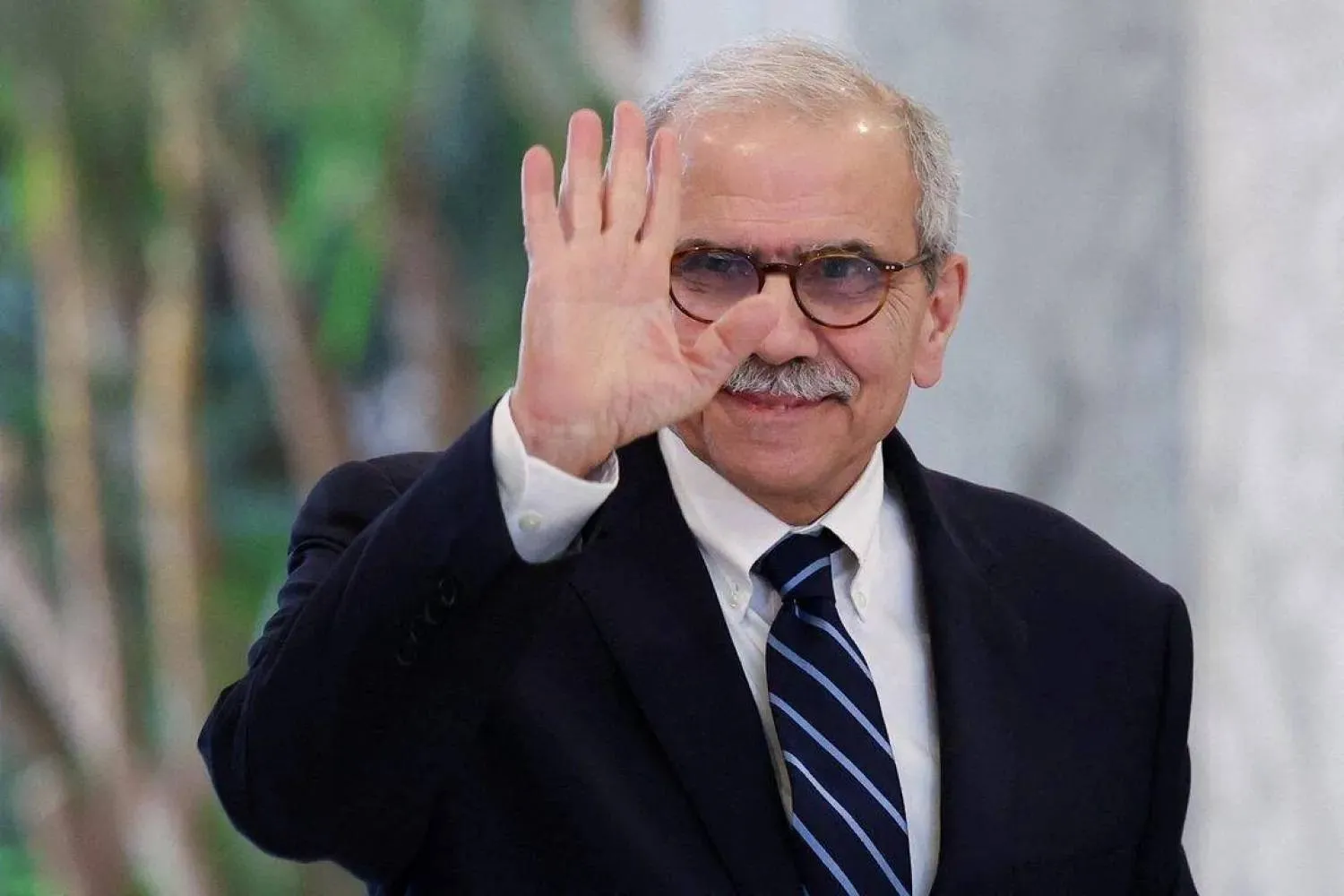

Asharq Al-Awsat Publishes Outline of Lebanon’s Deposit Repayment Plan

Lebanese Prime Minister Nawaf Salam. (Reuters)
TT

Asharq Al-Awsat Publishes Outline of Lebanon’s Deposit Repayment Plan

Lebanese Prime Minister Nawaf Salam. (Reuters)

Lebanon’s Prime Minister Nawaf Salam is pushing to secure approval for a draft law aimed at resolving the fate of bank deposits frozen since the country’s financial collapse in 2019, proposing full repayment of deposits below $100,000 over four years and the conversion of larger sums into long term, asset backed debt instruments, a senior government source told Asharq Al-Awsat.

Under the proposal, depositors with balances exceeding that threshold would receive annual cash payments equal to 2% of the value of their holdings, with the remainder repaid over maturities of up to 15 years, the source said.

Lebanese government sources said Salam hopes the draft law can be approved next week, before the country enters the year end holiday period, after broad political agreement was secured on its main outlines and some objections within the government itself were addressed.

This would allow the state’s negotiating team to defend the plan in parliament and against opposition from bankers and some depositors.

While the plan is “not ideal” from the perspective of Salam and other officials, the sources said it is viewed as “the best possible option,” especially as Salam believes that every day of delay worsens the crisis.

According to the sources, he has said that had such a law been passed at the start of the crisis in 2019, the situation would be far better than it is today.

Asharq Al-Awsat reviewed the plan, formally titled the financial gap draft law, which was circulated to ministers on Friday afternoon. The government has completed the draft, which is intended to determine the scale of losses resulting from the crisis and how they would be distributed among the Lebanese state, the central bank, commercial banks and depositors.

The bill is expected to be approved and then sent to parliament for debate and ratification, as a core component of the financial reforms required by the International Monetary Fund.

The source said that “every day the law’s approval is delayed, deposits will erode further,” pledging to hold accountable those responsible for preventing Lebanese citizens from withdrawing their savings and enticing them with higher interest rates in exchange for transferring their personal funds.

“This file can no longer tolerate postponement,” the source said. “Every time we delay a decision, we are effectively widening the gap instead of narrowing it.”

Weapons and financial reform

The government is pressing ahead with financial reforms alongside the implementation of its decision to impose state monopoly over weapons.

The source said that “weapons and reforms are linked,” adding, “We have taken our decision to restrict weapons, and we are ready to provide development and security. This is what the Lebanese state will deliver.”

They also said Lebanon could not wait for regional political developments to resolve its internal problems.

“The foundation is the implementation of the constitution and the Taif Agreement,” the source said, adding that the government needs to understand Hezbollah’s vision for the post weapons phase and how it intends to integrate into the state building project.

The government views the financial gap law as “the main gateway to safeguarding people’s deposits,” stressing the need to complete it quickly while creating the best possible conditions for restoring depositors’ funds.

The source said some large depositors must bear responsibility because they “were not innocent of many violations and abuses,” while a third core principle is that the state itself will shoulder its share of responsibility.

Mechanism for repaying deposits

The approach is based on a set of fundamental principles. “Whether we agree on them immediately or the discussion takes longer, they remain the basis for implementation, and we operate within the available means,” the source said.

“These principles are not slogans, but executive rules, and any solution that does not start from them cannot be fair or sustainable.”

They also said that it was impossible to repay all deposits at once because of the size of the financial gap.

The source explained that deposits were divided into two categories, those below $100,000 and those above that threshold. Deposits would be repaid in installments over four years on the grounds that small depositors were the most harmed by the crisis.

“They are not beneficiaries of financial engineering schemes or excessive interest rates,” the source said.

“Their money is a lifetime’s savings and should not be touched.”

The source added that the standard applied would be the individual depositor, not the number of accounts.

“If a person has an account worth $40,000 at one bank and another worth $40,000 at a different bank, the two accounts are combined and treated as a single deposit of $80,000,” they explained, calling this principle essential to prevent circumvention and ensure fairness among depositors.

Asset backed bonds

For deposits exceeding $100,000, the source said they would be handled through bonds backed by real assets.

“We are not talking about fictitious bonds,” the source affirmed. “These are bonds backed by actual assets owned by the state or the central bank, including land, facilities and productive institutions.”

They said the Central Bank holds assets valued at tens of billions of dollars, ranging from the casino to land holdings and various institutions, providing a real base for such bonds.

The bonds would be long term, with maturities of between 10 and 15 years, with 2% of their value paid in cash annually.

By way of example, the source said that a depositor holding a bond worth $2 million would receive $40,000 a year in cash. Over time, the principal would decline, and by the end of the term the full original deposit would be recovered.

The importance of asset backed bonds, he said, lies in the guarantees provided by Central Bank assets and state property, allowing depositors to sell the bonds on local or international markets to other investors if they wish to recover their funds immediately.

Review of the previous period

The plan also includes an assessment of profits made in previous years. The source pointed to the period before the crisis, saying that since 2016, during what were known as financial engineering operations, abnormally high interest rates were offered, benefiting large depositors and major investors.

“Some made profits of tens of millions of dollars,” the source said, adding that they could not be treated the same as small depositors who did not benefit from any exceptional returns.

They stressed that original deposits would not be touched, but that gains generated by inflated interest rates would be corrected.

The source said that those who repaid their loans at the 1,500 Lebanese pound per dollar rate included low income borrowers who took loans to buy a home or a car, and that their cases were normal.

However, borrowers who took loans for large projects, investments or contracting would have their files reviewed based on the exchange rate at the time their debts were repaid.

Those who made profits by converting funds from Lebanese pounds to dollars would be fined, with the proceeds directed to a fund to recover depositors’ money.

The source stressed that losses could not be borne by depositors alone.

“There is a clear hierarchy,” they stressed.

“First bank shareholders, then the banks themselves, then the Central Bank, and after that the state. This is the standard applied globally, and it cannot be bypassed or reversed.”

Bank recapitalization

The source said the plan gives banks five years to recapitalize themselves, while the state would assume responsibility for increasing the capital of the central bank.

Bank restructuring is unavoidable, they clarified, adding that raising capital is first and foremost the responsibility of shareholders.

“It is not possible to maintain a banking system without holding those who benefited from profits accountable for losses,” the source said.

“This is not an attack on banks, but a basic condition for rebuilding a sound banking system.”

They acknowledged that the decision would face objections from financial and political forces, but said that failing to act would be even more difficult.

“If we do not do this now, we will not do it later,” the source said, adding that “every additional delay means greater losses.”



Detainee Imad Amhaz Case Highlights Hezbollah’s Maritime Activities

Detainee Imad Amhaz Case Highlights Hezbollah’s Maritime Activities
TT

Detainee Imad Amhaz Case Highlights Hezbollah’s Maritime Activities

Detainee Imad Amhaz Case Highlights Hezbollah’s Maritime Activities

Israel’s disclosure of a naval commando operation in the northern Lebanese town of Batroun has thrust back into focus a case that straddles security, political, and legal fault lines.

The announcement, accompanied by Israeli claims surrounding Imad Amhaz, comes at a delicate moment, coinciding with ceasefire arrangements, meetings of the monitoring mechanism committee, and ongoing efforts to resolve the files of detainees and missing persons.

The Israeli announcement and security narrative

Israeli army spokesman Avichay Adraee said Israeli forces carried out an operation around a year ago in Batroun, far from the Lebanese Israeli border, during which Imad Amhaz was transferred to Israel for interrogation.

According to the Israeli account, Amhaz is linked to Hezbollah’s secret maritime file and its coastal missile unit, received military training inside and outside Lebanon, and acquired maritime expertise related to operational missions.

Adraee said the interrogation of Amhaz enabled, according to his statement, the acquisition of information related to organized maritime activities run under a secret framework and using civilian fronts.

He said this information helped obstruct the progress of this file at what he described as a sensitive stage, adding that Iran provided support for these activities.

A broader political and security context

In an analytical reading, security and defense researcher Riad Kahwaji told Asharq Al-Awsat that the case of Imad Amhaz and the timing of its disclosure could not be separated from the broader political and security context, particularly the meeting of the ceasefire monitoring mechanism committee and the ongoing negotiations.

He said Israel was trying through this timing to justify its refusal to withdraw from five points by arguing that Hezbollah remained present and continued to conduct military activity.

Kahwaji said the Israeli messages also aimed to show that Hezbollah’s role was far greater than perceived inside Lebanon, arguing that the group was no longer merely a local organization but part of a broad regional project led by Iran.

He said the issue was not related to a trench or one or two military positions, but rather to an integrated structure that included maritime capabilities, infrastructure, and strategic preparations.

He added that Iran had invested tens of millions of dollars in this project, saying Israel was seeking to highlight the scale of military investment in a country whose population was suffering severe internal pressures.

Kahwaji said the file went beyond the area south of the Litani River, noting that the issue was not limited to that region but included the maritime dimension and other areas, particularly since Amhaz was in Batroun in northern Lebanon at the time of the operation.

He said Israel was speaking about tunnels, weapons depots, and equipment in an attempt to show a contradiction between what the Lebanese state declared regarding the disarmament track and what Israel considered a continuation of Hezbollah’s military activity and armament.

He said attempts to strip Imad Amhaz of his civilian status fell within this context, explaining that Israel had from the outset sought to present him as linked to what it called Hezbollah’s naval weapons.

He added that the Lebanese state, in contrast, said the core problem lay in Israel’s continued occupation of the five points, while Israel responded that the main reason was that Hezbollah had not stopped arming itself and that the threat remained.

The Lebanese position and legal dimension

For his part, Nabih Awada, a member of the committee representing detainees and former prisoners in Israeli jails, told Asharq Al-Awsat that the case of Imad Amhaz was, from a legal perspective, that of a civilian abducted from a Lebanese area far from the border. He said his detention did not fall under military arrest.

Awada said this also applied to other documented cases, stressing that the file was being followed up with official Lebanese authorities and with the International Committee of the Red Cross.

He said the Lebanese state was dealing with Imad Amhaz on the basis that he was a civilian and considered that the location of his detention, its circumstances, and its nature did not fall within any military engagement or combat activity. He said this description was what the state relied on in addressing the file before international bodies.

Presidential stance regarding the detainees

Awada said the full details of the file were raised during a meeting with the president of the republic, who he said was fully convinced that the priority of the current stage was the release of Lebanese detainees.

He said the president stressed the need to start at least with civilians detained after the war, given that hostilities had stopped and there was no longer any legal justification for holding them.

He said the president had acted on this basis by communicating with the International Committee of the Red Cross, as well as international and US parties.

The Amhaz family’s stance

Alongside official positions, sources close to the family of Imad Amhaz told Asharq Al-Awsat they denied any knowledge of military activity attributed to him, saying Amhaz had been leading a normal civilian life and that the family had never been informed of any link between him and any military or security activity.

They said the information published did not reflect the family’s account.

Detainees and missing persons figures

On figures, Awada said the file submitted to the president included 20 Lebanese detainees whose presence in Israeli prisons had been confirmed, half of whom were arrested during the war and half afterward.

He said among those detained during the war were seven fighters and three civilians, including Imad Amhaz, who was considered a civilian.

Those detained after the ceasefire were all civilians, in addition to three people missing before the war and around 40 missing since it began.


Baghdad Pushes for Deeper Partnership with Washington against ISIS

Iraqi security says it carried out raid in Syria, arrested ISIS leaders (Government Media)
TT

Baghdad Pushes for Deeper Partnership with Washington against ISIS

Iraqi security says it carried out raid in Syria, arrested ISIS leaders (Government Media)

An Iraqi official said security cooperation with the United States is intensifying in the fight against terrorism, following a rare joint helicopter raid by Iraqi special forces inside Syrian territory.

An Iraqi intelligence unit, coordinating with Syrian security forces and the US-led international coalition, arrested two high value targets wanted by the Iraqi judiciary in a helicopter raid in northeastern Syria, according to a statement from the Security Media Cell.

A new phase

Hussein Allawi, adviser to the Iraqi prime minister, told Asharq Al-Awsat that Iraq is entering a new phase of strategic commitment to the Strategic Framework Agreement with the United States, which is moving toward broader political, economic, security and military dimensions, as well as technology transfer and infrastructure development.

He said recent operations in Syria and elsewhere reflect efforts to build a stronger partnership.

Allawi added that developing the relationship includes cooperation on building the capacities of the armed forces, sustaining counterterrorism efforts, enhancing cooperation to track and dry up financial assets, combating online propaganda by terrorist organizations including al-Qaeda and ISIS, and addressing the issue of al Hol camp.

He said both sides are serious about raising the level of security and intelligence cooperation in counterterrorism, in light of the completion of the first phase of ending the international coalition’s presence in Iraq under an agreement reached in September 2024, as well as targeting terrorist cells in Syria through cooperation between Iraq, the coalition and its member states.

The military operation came a day after the US Congress voted to repeal the authorization for the use of military force against Iraq. Iraq’s foreign ministry described the decision as historic and said it reinforces respect for sovereignty, while a government adviser said relations between the two countries have shifted from conflict to partnership.

State monopoly on arms

Politically, Ammar al-Hakim, leader of the National Wisdom Movement (Hikma) Movement, stressed that weapons should be held exclusively by the state, calling for an expedited formation of the Iraqi government.

In a speech on Friday, al-Hakim said weapons must be in the hands of the state in line with the constitution and the calls of the religious authority, so that the law stands above all by the will of Iraqis and their national political forces, not through external dictates.

In this context, Fahd al-Jabouri, a senior figure in the Hikma Movement, said the United States had raised concerns related to armed factions and individuals subject to sanctions or terrorism lists, and had conveyed these concerns clearly.

He said the Coordination Framework understood these messages and balanced them against the domestic reality, agreeing that some sovereign ministries would be assigned to figures not affiliated with any armed groups.

Al-Jabouri said dialogue is the best option and that the framework is always seeking to balance its external relations with internal requirements, correct misinformation reaching abroad, and strengthen the role of the state as the most powerful authority.

Kataib al-Imam Ali, a Shiite armed faction that recently won several seats in the new parliament, called for confining weapons to the state and strengthening the Popular Mobilization Forces.

In a statement, its secretary general Shibl al-Zaydi said ratifying the election results and the strong showing by factions aligned with the PMF placed these forces before an important national test.

He said the test lies in improving economic, security and service conditions, consolidating the authority and sovereignty of the state, and strictly confining weapons to the state in line with the constitution and the law, while reinforcing the Popular Mobilization Forces.

Diplomats and political observers say US pressure, particularly calls to limit weapons to the state, could complicate efforts to reach a settlement within the Coordination Framework over the next government lineup, as some forces remain committed to a political role for armed factions and their influence over the choice of prime minister.


Miami Talks Aim to Bridge Gaps in Gaza Deal’s Second Phase

Displaced Palestinians gather to receive food rations at a charity kitchen in Khan Younis, southern Gaza (AFP)
TT

Miami Talks Aim to Bridge Gaps in Gaza Deal’s Second Phase

Displaced Palestinians gather to receive food rations at a charity kitchen in Khan Younis, southern Gaza (AFP)

Mediators are convening for fresh talks in Miami, Florida, as efforts to advance the second phase of the Gaza ceasefire agreement remain stalled, months after the truce came into effect on Oct. 10.

The meeting, which mediators say will focus on outlining a framework for the next phase, comes amid attempts to narrow gaps over key issues, including how Israel’s withdrawal would be carried out, how stabilization forces would be deployed, and the question of Hamas’ disarmament.

An analyst said the momentum could translate into concrete steps as early as next month.

Miami is hosting a meeting between US President’s Special Envoy Steve Witkoff and senior officials from the mediating countries, Qatar, Egypt and Türkiye, aimed at pushing forward the second phase of the ceasefire agreement, a White House official told AFP on Thursday.

Qatari Prime Minister Sheikh Mohammed bin Abdulrahman Al Thani said during a visit to Washington on Wednesday that preparations were under way for a mediators’ meeting on Friday to discuss a framework for advancing the second phase of the Gaza agreement.

Ahead of the Miami talks, Hamas political bureau member Bassem Naim said in remarks that Palestinians expected the talks to result in an agreement to halt all Israeli violations and breaches, and to compel Israel to comply with the provisions of the Sharm el-Sheikh agreement.

Palestinian political analyst Ayman Al-Raqab said the Miami meeting fell within efforts to bridge gaps related to the implementation of Israel’s withdrawal, the deployment of stabilization forces and Hamas’ disarmament. If the momentum continued, he said, concrete steps could be seen next month.

He told Asharq Al-Awsat that Washington’s approach at the Miami meeting should focus on implementing the agreement rather than rebuilding Rafah in a new form or dividing the Gaza Strip.

He said the gaps in the second phase were linked to Israel’s withdrawal, the deployment of stabilization forces and Hamas’ disarmament, adding that discussions should center on practical implementation solutions, not US proposals that serve Israeli ideas.

Egyptian Foreign Minister Badr Abdelatty stressed on Friday, during talks with his Russian counterpart Sergei Lavrov in Cairo, the need to implement UN Security Council Resolution 2803 on the Gaza agreement and to operate the Rafah crossing from both directions.

Lavrov said diplomatic efforts must continue to ensure the sustainability of the Gaza ceasefire.

Abdelatty also discussed the situation with Algerian Foreign Minister Ahmed Attaf in Cairo on Friday, reviewing ongoing Egyptian efforts to solidify and sustain the ceasefire and to implement the requirements of the second phase.

They stressed the need for unimpeded humanitarian aid access, preparing conditions for early recovery and reconstruction, and rejecting any measures that could undermine the unity of Palestinian territory or liquidate the Palestinian cause, according to a statement by Egypt’s Foreign Ministry.

The European Council welcomed, at the conclusion of a summit of leaders from the European Union’s 27 member states in Brussels, UN Security Council Resolution 2803, which calls for the establishment of a Board of Peace and a temporary international stabilization force as part of a plan to end the conflict in Gaza.

European leaders stressed the need to fully implement the resolution and ensure lasting security stability in Gaza, reiterating the EU’s commitment to a two-state solution and international law.

Al-Raqab said Egyptian efforts were banking on achieving a breakthrough alongside Qatar and Türkiye, reaching concrete mechanisms to implement the agreement amid European support for this path.

He added that any arrangements were awaiting a meeting between Israeli Prime Minister Benjamin Netanyahu and US President Donald Trump later this month, describing it as decisive.