
The committee overseeing the ceasefire between Israel and Lebanon, known as the “mechanism,” convened its 15th meeting in Naqoura, the second to include civilian representatives, with renewed focus on the return of residents to their homes on both sides of the border.
The statement issued after the meeting highlighted the importance of the return of residents on both sides of the border to their homes, and said Lebanese and Israeli representatives reaffirmed their commitment to continue efforts to support stability and work toward a permanent halt to hostilities, according to the US Embassy in Beirut.
Earlier this month, two civilian representatives, one Lebanese and one Israeli, joined the committee’s meetings in the first direct talks between the two countries in decades. The committee is led by the United States and includes representatives from France and the United Nations Interim Force in Lebanon (UNIFIL).
Aoun: Return of residents is the entry point for further talks
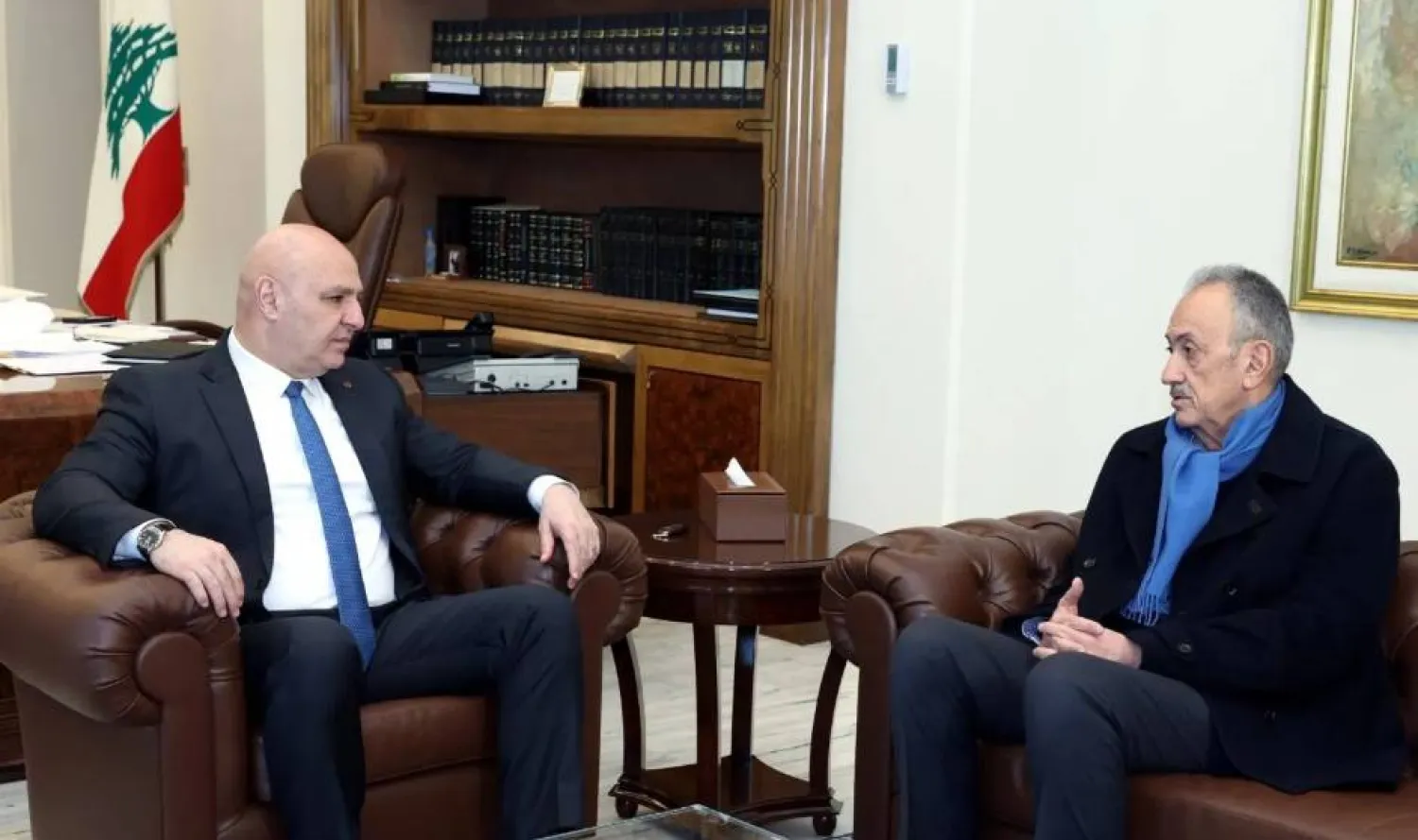
Lebanese President Joseph Aoun met with the head of the Lebanese delegation, Simon Karam, after he took part in the meeting in Naqoura.
Aoun stressed that “the priority is the return of residents of the border villages to their towns, homes and land as an entry point to discussing all other details.”
He added that the meeting included a detailed presentation of what the Lebanese army has achieved, supported by documentation. It was agreed that Jan. 7, 2026, would be the date of the next meeting.
Netanyahu’s office: Discussion on boosting economic projects
While the US Embassy said participants focused on strengthening military cooperation between the two sides, the office of Israeli Prime Minister Benjamin Netanyahu said the deputy head of the National Security Council represented Israel at the Naqoura meeting to discuss the disarmament of Hezbollah.
It added that talks also covered ways to boost economic projects to demonstrate the shared interest in removing the Hezbollah threat and ensuring lasting security for residents on both sides of the border.
US Embassy: Political and economic progress is essential
In its statement, the US Embassy in Beirut said military participants in the mechanism meeting “offered operational updates and remained focused on deepening the cooperation” between the two sides “by finding ways to increase coordination.”
“All agreed a strengthened Lebanese Armed Force, the guarantors of security in the South Litani Sector, is critical to success.”
“Civilian participants, in parallel, focused on setting conditions for residents to return safely to their homes, advancing reconstruction, and addressing economic priorities. They underscored that durable political and economic progress is essential to reinforcing security gains and sustaining lasting peace,” the statement added.
The embassy also said “participants reaffirmed that progress on security and political tracks remain mutually reinforcing and essential to ensuring long-term stability and prosperity for both parties. They look forward to the next round of regularly scheduled meetings in 2026.”
Lebanese authorities had approved earlier this month the appointment of former ambassador Simon Karam as a civilian representative to the committee’s meetings, in a move aimed at “warding off the specter of a second war” on Lebanon amid Israeli threats and continued airstrikes that Israel says target Hezbollah positions.
The authorities stressed the technical nature of the talks with Israel, aimed at halting its attacks and securing the withdrawal of its forces from areas they advanced into during the latest war.
Hezbollah described the appointment of a civilian delegate at the time as a “misstep” added to what it called the government’s “sin” of deciding to disarm the group under the ceasefire agreement.
Lebanon is facing mounting pressure from the United States and Israel to accelerate the disarmament of Hezbollah under a plan approved by the government as part of implementing the ceasefire agreement.
The Lebanese army is expected to complete the first phase of the plan in the border area south of the Litani River by the end of the year.