
Senior sources in Hamas have played down what they described as an Israeli “scare tactic” over the group’s weapons, rejecting Israeli demands to disarm as a condition for moving to the second phase of a ceasefire in the Gaza Strip.
The sources told Asharq Al-Awsat that Hamas possesses only light weapons in Gaza that have no real impact and pose no genuine threat to Israel, and are barely sufficient to confront Israeli forces. They said such arms could not be used to carry out large-scale attacks, such as the Oct. 7, 2023, assault.
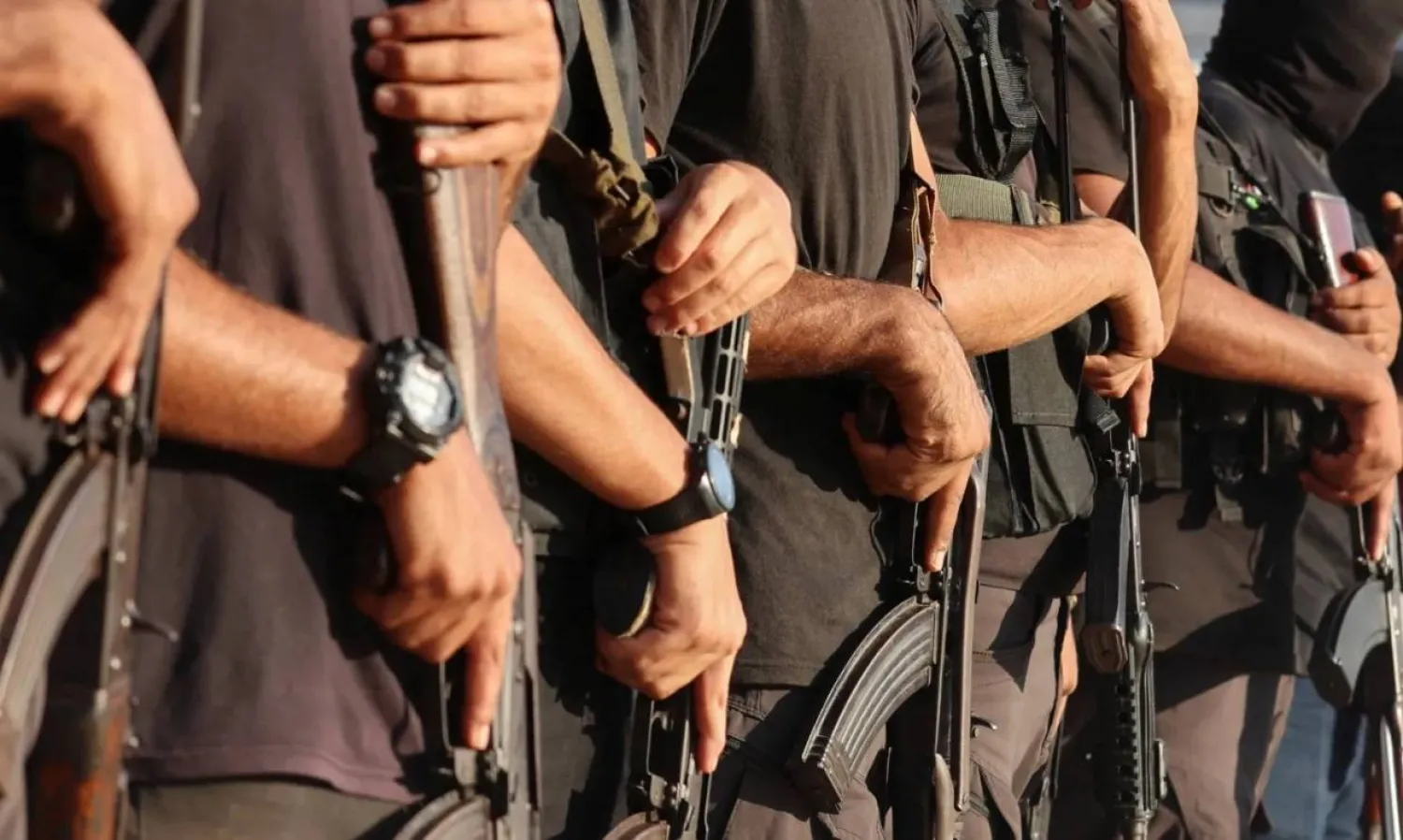
They said fighters from armed factions mainly have Kalashnikov and M16 rifles and similar light weapons, along with a very limited number of anti-armor rounds and improvised explosive devices, most of them individual and small in size.
The sources added that the group has lost almost all of its rockets, mortars and similar weapons after the vast majority were used during two years of fighting, while Israeli forces destroyed stockpiles they uncovered.
The sources said Israel was using the weapons issue to avoid complying with the ceasefire agreement and moving to the second phase, in order to preserve long-term strategic security goals, including keeping its forces inside Gaza, particularly east of the so-called yellow line designated as a withdrawal line in the first phase.
Israeli Prime Minister Benjamin Netanyahu said in an interview with Fox News that there were currently 20,000 Hamas fighters in Gaza armed with Kalashnikov rifles and holding around 60,000 weapons. He said they also used them against civilians in Gaza who opposed their rule.
Disarmament means taking all their weapons and getting rid of them, and dismantling hundreds of kilometers of terror tunnels, Netanyahu said, adding that Hamas refused to do so.
According to Israel’s Channel 13, Netanyahu conveyed those figures to US President Donald Trump, who was said to be shocked by the numbers and stressed the need to dismantle the entire arsenal before any next steps.
Commenting on Netanyahu’s remarks, the Hamas sources said he was trying to influence US thinking on the second phase by making various claims, including about light weapons, in an effort to broaden the concept of disarmament in Gaza and force the resistance to hand over everything it has, even personal arms.
They said Israel’s insistence on stripping Palestinian factions of all weapons aimed to turn Gaza into a pacified area, raising a white flag and stripping it of the means of resilience and resistance that have long defined the enclave under occupation.
“Netanyahu will achieve nothing of the sort,” the sources said. “As he failed before, he and many Israeli leaders will fail again.”
Asked whether that meant Hamas rejected disarmament, the sources said discussions were ongoing with mediators and that a number of ideas were still being developed toward an agreement on weapons within the framework of a broad Palestinian national consensus.
On what remains of Hamas’ tunnel network, the sources said the issue was also under discussion and negotiation, adding that the movement was not seeking to obstruct the transition to the second phase or any of its provisions, but not at the expense of core Palestinian principles.
Israel’s Yedioth Ahronoth reported on Friday that Israeli military chief of staff Eyal Zamir expressed doubts in a security discussion held before Netanyahu’s trip to the United States about the ability of an international stabilization force to disarm Hamas.
Zamir said Israeli forces were operationally ready to carry out the task themselves through another military operation in Gaza, a view Netanyahu reportedly shares as the US administration seeks to exhaust all options for such a step.
The report came as Israel continues to discover more tunnels in Gaza despite the end of the two-year war. One discovery surprised officials due to its proximity to the border with the Kissufim area, east of central Gaza.
Yedioth Ahronoth said the tunnel was about 800 meters from the settlements, within the buffer zone between Gaza and Israel that Israel intends to keep under its control in any future scenario.
The Israeli army has opened an investigation into when it was dug and why it was not detected earlier, given the presence of permanent Israeli military sites on both sides of the border. The tunnel was exposed after heavy rainfall, the paper said.