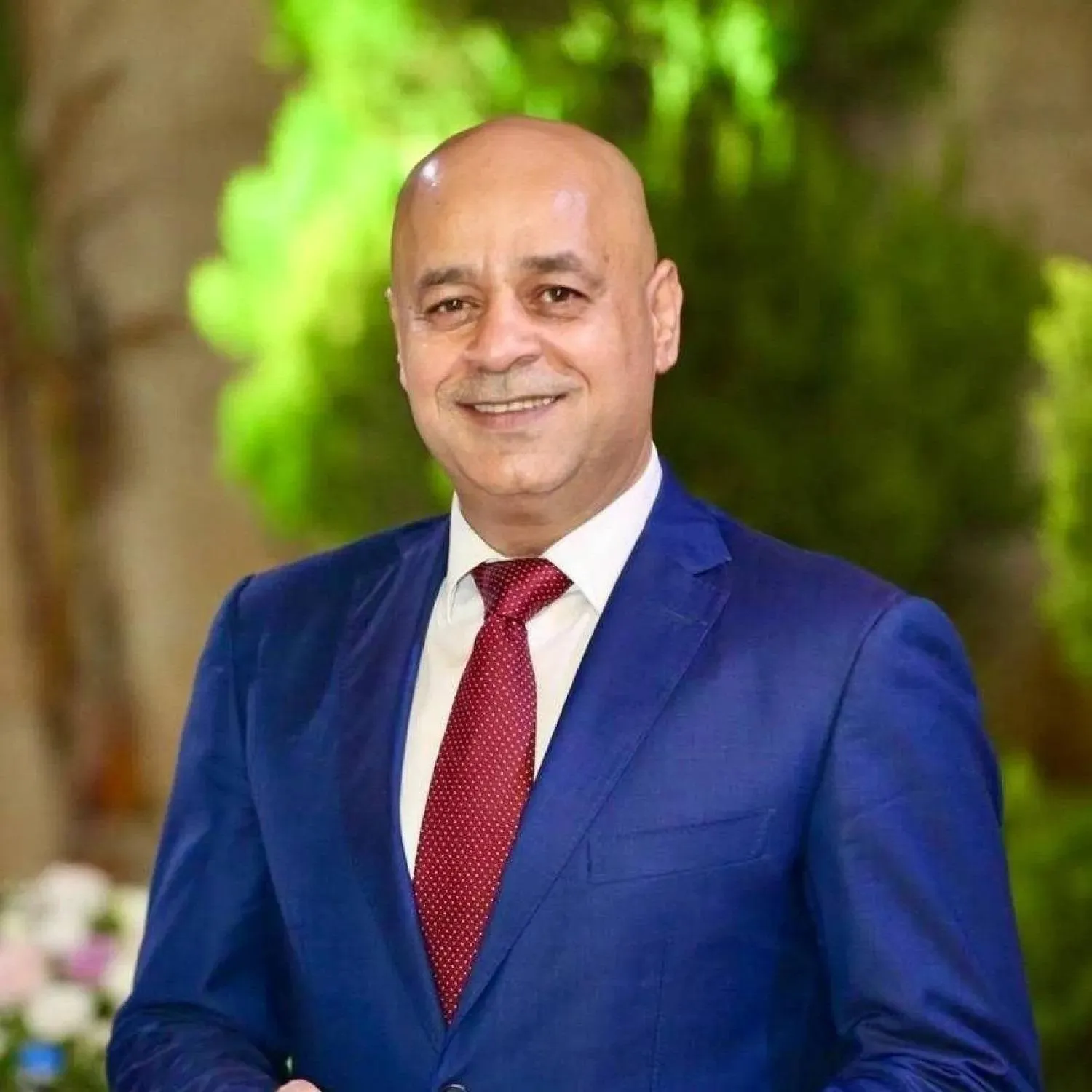

Sami Nasman, a Hamas Foe, Returns to Run Gaza Security

Sami Nasman (X)
Sami Nasman (X)
TT

Sami Nasman, a Hamas Foe, Returns to Run Gaza Security

Sami Nasman (X)
Sami Nasman (X)

Even the most optimistic advocates of change in Gaza’s system of governance did not expect the list for the proposed Gaza Administration Committee to include figures long described as among Hamas’s fiercest opponents.

Many Palestinians, across factional and popular lines, were surprised by the emergence of Sami Nasman, one of the most prominent officers in the Palestinian General Intelligence Service since its establishment, as the figure selected to oversee the security file in Gaza.

Nasman has a long record of what has been described as hostility toward, and pursuit by, Hamas, which appeared to have little room to reject the names chosen to join the committee.

Who is Sami Nasman?

Sami Nasman was born in 1967 in the Beach refugee camp west of Gaza City and spent most of his life in the Sheikh Radwan neighborhood in the city’s north.

During his secondary and university studies, he joined the Fatah Youth Movement and was active in the first Palestinian uprising that erupted in 1987.

He also took part in armed activities that made him a target for Israeli forces after he formed a cell that targeted those accused of collaborating with Israel’s Shin Bet security agency. That forced him, along with several Fatah activists, to flee the Gaza Strip in 1988.

Nasman experienced a brief period of what was described as limited hostility with Hamas activists during the group’s early formation in 1987, a phase that quickly faded after his departure from Gaza.

While in exile, Nasman moved between Cairo, Tunis, and other capitals, where he met the late Palestinian president Yasser Arafat, according to sources close to him cited by Asharq Al-Awsat.

Return to Gaza, return to hostility

In 1994, as the Palestinian Authority began deploying in Gaza and parts of the West Bank under the 1993 Oslo Accords, Nasman returned to the enclave with others and later settled again in Sheikh Radwan.

He became a senior officer in the Palestinian General Intelligence Service and was considered the right hand of Amin al-Hindi, the agency’s first chief.

Nasman wielded significant influence within the intelligence service, across the broader Palestinian security apparatus, and within Fatah’s institutional circles. He was often described as a “hard man to reckon with,” the sources said.

They added that he held several key posts, including serving as the intelligence chief’s private office chief, leading the counterintelligence department, overseeing investigations into foreigners permitted to enter Gaza, and handling other sensitive assignments.

After his return, and amid Palestinian security activity targeting Hamas and Palestinian Islamic Jihad members, Nasman was accused of leading arrest campaigns against them between 1996 and 2000.

In February 1996, Islamic Jihad accused him of responsibility for the killing of two of its senior field operatives who had carried out an attack in Beit Lid inside Israel that killed more than 20 Israelis.

The two men were surrounded in a house in the Beach camp, just tens of meters from the intelligence service’s Mushtal compound and were killed during an attempted arrest after refusing to surrender.

Sources close to Nasman denied his involvement, saying another officer was responsible. That account could not be independently confirmed, although some testimonies at the time placed him at the scene.

The second intifada

Hostility between Nasman and Hamas deepened with the outbreak of the second Palestinian uprising in late 2000 and the escape of Hamas and Islamic Jihad members from Palestinian Authority prisons.

Tensions escalated further after Hamas won the 2006 legislative elections, a year that also saw an assassination attempt on the intelligence service’s second chief, Ahmed Shaniora, known as Tariq Abu Rajab.

That was followed by an attempt on the life of Maj. Gen. Baha Balousha, which killed his wife and children.

The confrontation between Nasman, his security apparatus, and Hamas reached its peak after Hamas seized control of Gaza in 2006, forcing him, like dozens of other officers, to flee for fear of his life amid accusations that he had overseen the arrest and pursuit of Hamas members.

Nasman exited Gaza via Israeli land crossings to Ramallah, where he later became responsible for the Gaza file within the intelligence service and then an adviser to the agency’s chief for the southern governorates.

Accusations and convictions in absentia

The hostility did not end with his departure. In 2015, Hamas accused Nasman of running networks inside Gaza from Ramallah to stir unrest and carry out assassination attempts against its leaders and officials.

In August 2015, Hamas gave him 10 days to turn himself in.

In March 2016, it sentenced him in absentia to 15 years in prison, along with others who received varying terms, after publishing confessions by Palestinian security operatives who said Nasman had recruited them to carry out the alleged plots.

Sources close to Nasman dismissed the accusations as unfounded, describing them as part of the political infighting that accompanied the Palestinian split.

During the most recent war in Gaza, Hamas again accused him of overseeing an intelligence network that monitored the entry of international and Arab aid convoys into the enclave for espionage purposes, an allegation neither Fatah nor the Palestinian Authority commented on.

In recent months, Nasman joined the ranks of officers who were “forcibly retired and marginalized,” according to sources close to him. He subsequently developed new ties with associates working with the camp of exiled Fatah leader Mohammed Dahlan, meeting them frequently in Cairo.

Other sources said he was nominated by the Dahlan-aligned camp to lead the public security file within the new committee.

Hamas’s position

Nasman’s appointment to the security portfolio has sparked widespread debate in Palestinian circles, raising questions about Hamas’s stance, particularly among its grassroots and organizational ranks, given the well-known hostility toward him.

Officially, Hamas welcomed the formation of the technocratic committee in a joint statement with other Palestinian factions, without voicing objections.

However, Hamas sources told Asharq Al-Awsat that the movement was “compelled at this critical stage to set aside differences, as it has done with other Palestinian Authority and Fatah figures, for the sake of Palestinians in the Gaza Strip.”

Another senior Hamas source said the movement “has little room to maneuver, as it seeks to secure a ceasefire agreement that implements its terms and moves Palestinians into a new political and national phase.”


Egypt’s Prime Minister and FM Head to Washington for Trump Peace Council Meeting

Egyptian Foreign Minister Badr Abdelatty speaks during a joint press conference with Kenyan Prime Cabinet Secretary/Cabinet Secretary for Foreign Diaspora Affairs Musalia Mudavadi in Nairobi, Kenya, Monday, Feb. 16, 2026. (AP)
TT

Egypt’s Prime Minister and FM Head to Washington for Trump Peace Council Meeting

Egyptian Foreign Minister Badr Abdelatty speaks during a joint press conference with Kenyan Prime Cabinet Secretary/Cabinet Secretary for Foreign Diaspora Affairs Musalia Mudavadi in Nairobi, Kenya, Monday, Feb. 16, 2026. (AP)

Egypt's Prime Minister Mostafa Madbouly headed to Washington on Tuesday ‌to ‌participate in ‌the inaugural ⁠meeting of a "Board of Peace" established by US President Donald ⁠Trump, the ‌cabinet ‌said.

Madbouly is ‌attending ‌on behalf of President Abdel ‌Fattah al-Sisi and is accompanied by ⁠Foreign ⁠Minister Badr Abdelatty.

Foreign Minister Gideon Saar will represent Israel at the inaugural meeting, his office said on Tuesday.

Hamas, meanwhile, called on the newly-formed board to pressure Israel to halt what it described as ongoing violations of the ceasefire in Gaza.

The Board of Peace, of which Trump is the chairman, was initially designed to oversee the Gaza truce and the territory's reconstruction after the war between Hamas and Israel.

But its purpose has since morphed into resolving all sorts of international conflicts, triggering fears the US president wants to create a rival to the United Nations.

Saar will first attend a ministerial level UN Security Council meeting in New York on Wednesday, and on Thursday he "will represent Israel at the inaugural session of the board, chaired by Trump in Washington DC, where he will present Israel's position", his office said in a statement.

It was initially reported that Prime Minister Benjamin Netanyahu might attend the gathering, but his office said last week that he would not.

Ahead of the meeting, Hamas spokesman Hazem Qassem told AFP that the Palestinian movement urged the board's members "to take serious action to compel the Israeli occupation to stop its violations in Gaza".

"The war of genocide against the Strip is still ongoing -- through killing, displacement, siege, and starvation -- which have not stopped until this very moment," he added.

He also called for the board to work to support the newly formed Palestinian technocratic committee meant to oversee the day-to-day governance of post-war Gaza "so that relief and reconstruction efforts in Gaza can commence".

Announcing the creation of the board in January, Trump also unveiled plans to establish a "Gaza Executive Board" operating under the body.

The executive board would include Turkish Foreign Minister Hakan Fidan and Qatari diplomat Ali Al-Thawadi.

Netanyahu has strongly objected to their inclusion.

Since Trump launched his "Board of Peace" at the World Economic Forum in Davos in January, at least 19 countries have signed its founding charter.


Palestinian Child Dies After Stepping on Mine in West Bank

Israeli troops conduct a military raid in the village of Al-Yamoun, west of Jenin, West Bank, 17 February 2026. (EPA)
TT

Palestinian Child Dies After Stepping on Mine in West Bank

Israeli troops conduct a military raid in the village of Al-Yamoun, west of Jenin, West Bank, 17 February 2026. (EPA)

A Palestinian child died after stepping on a mine near an Israeli military camp in the occupied West Bank on Tuesday, the Palestinian Red Crescent said, with an Israeli defense ministry source confirming the death.

"Our crews received the body of a 13-year-old child who was killed after a mine exploded in one of the old camps in Jiftlik in the northern Jordan Valley," the Red Crescent said in a statement.

A source at COGAT, the Israeli defense ministry's agency in charge of civilian matters in the Palestinian territories, confirmed the death to AFP and identified the boy as Mohammed Abu Dalah, from the village of Jiftlik.

Israel's military had previously said in a statement that three Palestinians were injured "as a result of playing with unexploded ordnance", without specifying their ages.

It added that the area of the incident, Tirzah, is "a military camp in the area of the Jordan Valley", near Jiftlik and close to the Jordanian border.

"This area is a live-fire zone and entry into it is prohibited," the military said.

Jiftlik village council head Ahmad Ghawanmeh told AFP that three children, the oldest of whom was 16, were collecting herbs near the military base when they detonated a mine.

Jiftlik as well as the nearby Tirzah base are located in the Palestinian territory's Area C, which falls under direct Israeli control.

Israel has occupied the West Bank since 1967.

Much of the area near the border with Jordan -- which Israel signed a peace deal with in 1994 -- remains mined.

In January, Israel's defense ministry said it had begun demining the border area as part of construction works for a new barrier it says aims to stem weapons smuggling.


Hezbollah Rejects Disarmament Plan and Government’s Four-Month Timeline

29 July 2024, Iran, Tehran: Then Hezbollah deputy leader Sheikh Naim Qassem is pictured during a meeting in Tehran. (Iranian Presidency/dpa)
TT

Hezbollah Rejects Disarmament Plan and Government’s Four-Month Timeline

29 July 2024, Iran, Tehran: Then Hezbollah deputy leader Sheikh Naim Qassem is pictured during a meeting in Tehran. (Iranian Presidency/dpa)

Hezbollah rejected on Tuesday the Lebanese government's decision to grant the army at least four months to advance the second phase of a nationwide disarmament plan, saying it would not accept what it sees as a move serving Israel.

Lebanon's cabinet tasked the army in August 2025 with drawing up and beginning to implement a plan to bring all armed groups' weapons under state control, a bid aimed primarily at disarming Hezbollah after its devastating ‌war with ‌Israel in 2024.

In September 2025 the cabinet formally ‌welcomed ⁠the army's plan to ⁠disarm the Iran-backed Shiite party, although it did not set a clear timeframe and cautioned that the military's limited capabilities and ongoing Israeli strikes could hinder progress.

Hezbollah Secretary-General Sheikh Naim Qassem said in a speech on Monday that "what the Lebanese government is doing by focusing on disarmament is a major mistake because this issue serves the goals of Israeli ⁠aggression".

Lebanon's Information Minister Paul Morcos said during a press ‌conference late on Monday after ‌a cabinet meeting that the government had taken note of the army's monthly ‌report on its arms control plan that includes restricting weapons in ‌areas north of the Litani River up to the Awali River in Sidon, and granted it four months.

"The required time frame is four months, renewable depending on available capabilities, Israeli attacks and field obstacles,” he said.

Hezbollah lawmaker Hassan ‌Fadlallah said, "we cannot be lenient," signaling the group's rejection of the timeline and the broader approach to ⁠the issue of ⁠its weapons.

Hezbollah has rejected the disarmament effort as a misstep while Israel continues to target Lebanon, and Shiite ministers walked out of the cabinet session in protest.

Israel has said Hezbollah's disarmament is a security priority, arguing that the group's weapons outside Lebanese state control pose a direct threat to its security.

Israeli officials say any disarmament plan must be fully and effectively implemented, especially in areas close to the border, and that continued Hezbollah military activity constitutes a violation of relevant international resolutions.

Israel has also said it will continue what it describes as action to prevent the entrenchment or arming of hostile actors in Lebanon until cross-border threats are eliminated.