US Transfers ISIS Detainees from Syria to Iraq

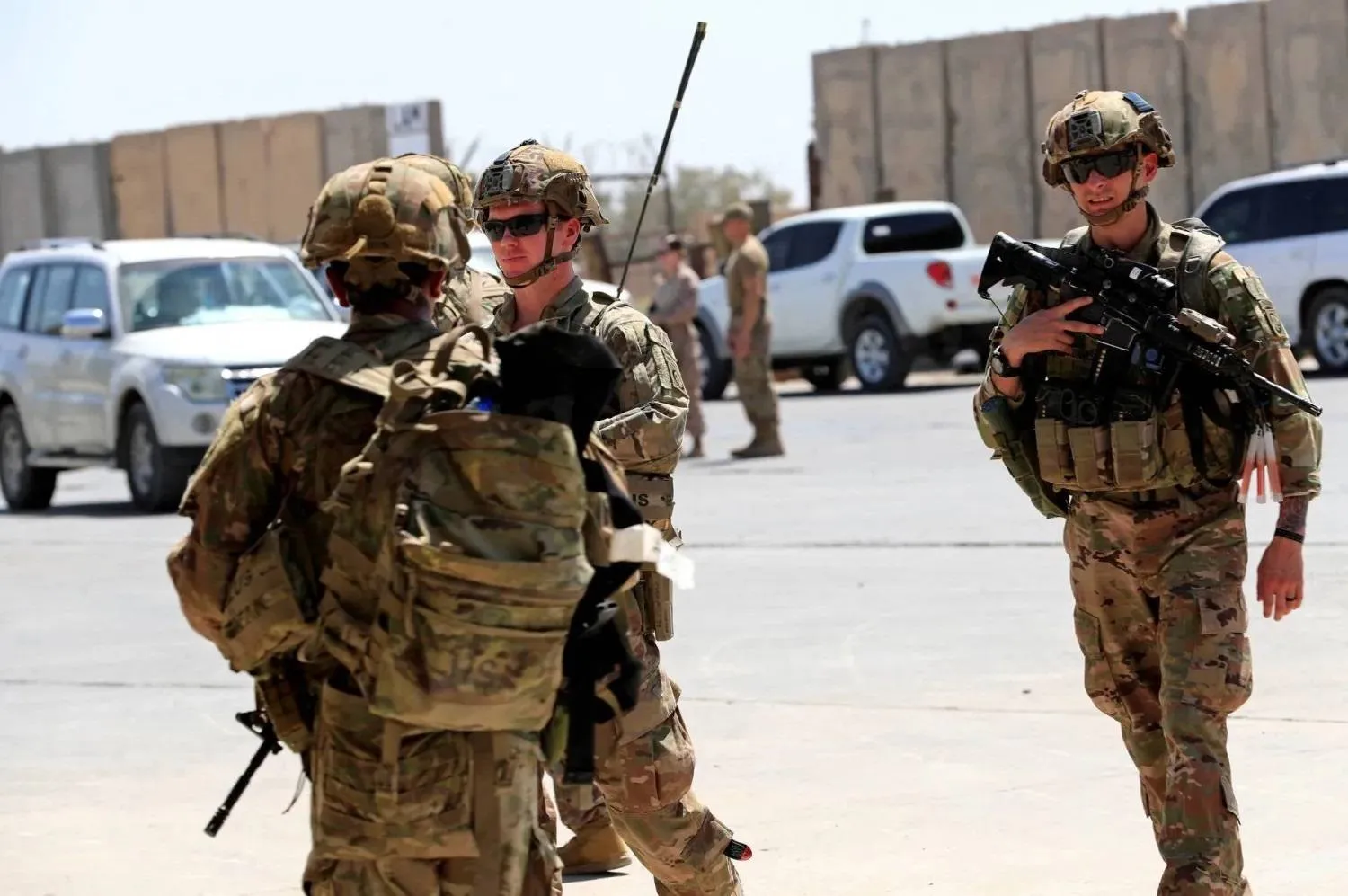
 US soldiers at a military base north of Baghdad (Reuters – archive photo) 
 US soldiers at a military base north of Baghdad (Reuters – archive photo) 
TT

US Transfers ISIS Detainees from Syria to Iraq

 US soldiers at a military base north of Baghdad (Reuters – archive photo) 
 US soldiers at a military base north of Baghdad (Reuters – archive photo) 

US Central Command has launched a new operation to transfer ISIS detainees from northeastern Syria to Iraq, aiming to ensure that they remain in secure detention facilities and to reduce the risk of instability.

The operation began with the transfer of 150 ISIS militants from a detention facility in Hasakah, Syria, to a secure site in Iraq. US officials say the number of detainees moved from Syria to Iraqi-controlled prisons could eventually reach about 7,000.

Admiral Brad Cooper, the head of US Central Command, said: “We are closely coordinating with regional partners, including the Iraqi government, and we sincerely appreciate their role in ensuring the enduring defeat of ISIS.

“Facilitating the orderly and secure transfer of ISIS detainees is critical to preventing a breakout that would pose a direct threat to the United States and regional security.”

According to Reuters, the move follows the rapid collapse of the Kurdish-led Syrian Democratic Forces in northeastern Syria, which raised doubts about the security of roughly a dozen prisons and detention camps previously guarded by the group.

US officials also discussed the situation with Syrian President Ahmed al-Sharaa, focusing on ongoing tensions in Syria, the need for government forces to respect ceasefire arrangements with the Syrian Democratic Forces, and support for the coordinated transfer of ISIS detainees to Iraq.

The US side outlined plans to relocate thousands of detainees in a controlled manner and urged all parties to avoid actions that could disrupt the process.

An Iraqi official told Asharq Al-Awsat that the transfer would help ease growing concerns about possible escapes. He added that holding the detainees in prisons supervised by the Iraqi government, in direct coordination with the United States, would significantly reduce the chances of ISIS rebuilding its capabilities.

Syrian media reported that security forces recently arrested 90 group members who had escaped from al-Shaddadi prison south of Hasakah. The Syrian army later announced it had taken control of the city, imposed a curfew, and launched operations to secure the area and capture fugitives.

Recent government advances, combined with what appears to be a reduction in US support for the SDF, mark the most significant shift in territorial control since the fall of Bashar al-Assad 13 months ago.

The United States said this week that the main objectives of its partnership with the SDF have largely been achieved after years of fighting ISIS.


Iraqi Judiciary Signals Action Against Factions Over Embassy Attacks

Members of Kataeb Hezbollah attend the funeral in Baghdad of comrades killed in a strike on the Syrian border (file photo – Reuters)
TT

Iraqi Judiciary Signals Action Against Factions Over Embassy Attacks

Members of Kataeb Hezbollah attend the funeral in Baghdad of comrades killed in a strike on the Syrian border (file photo – Reuters)

Pro-Iran factions are facing possible prosecution and conviction by Iraq’s Supreme Judicial Council, as US strikes continue to target their positions in areas suspected of launching attacks on diplomatic missions and American interests in the Kurdistan region.

On Monday evening, an attack targeted the United Arab Emirates consulate and Erbil airport near a US base, according to videos and eyewitnesses, while the Iraqi government is moving toward announcing the names of those responsible after attempts to halt the attacks, which have continued for about a week, failed.

A drone struck the UAE consulate in the Mass City area on the road linking Erbil with the Salahaddin district, without causing any reported damage.

Condemnations

Iraq’s foreign ministry on Tuesday condemned attacks targeting diplomatic missions and consulates in Baghdad and the Kurdistan region, reaffirming its rejection of any assault on diplomatic missions and saying the competent authorities would take legal action against those involved.

In a statement, the ministry said Iraq’s position was firm in rejecting any attacks against diplomatic and consular missions and stressed its commitment to providing full protection to ensure they can continue operating and carrying out their duties in a safe environment, in line with relevant international obligations.

The ministry added that Iraqi authorities were closely monitoring any incidents affecting diplomatic missions and would take the necessary legal measures against those responsible to safeguard their security and prevent such attacks from recurring.

The UAE also condemned the drone attack on its consulate in the Kurdistan region, saying the targeting of diplomatic missions and premises constituted a violation of international norms and laws.

It called on the governments in Baghdad and Erbil to reveal the circumstances of the attack and hold those responsible accountable.

Saudi Arabia’s foreign ministry on Tuesday expressed solidarity with the UAE and likewise condemned the targeting of the Emirati consulate general in the Kurdistan region, saying the attack violated international norms and laws and stressing the need to respect the sanctity of diplomatic mission buildings.

Judicial measures

In a later development, Iraqi Foreign Minister Fuad Hussein met on Tuesday with Faiq Zaidan, head of Iraq’s Supreme Judicial Council, to discuss “judicial and legal measures taken against the perpetrators of terrorist crimes represented by attacks on diplomatic missions, institutions and citizens in Iraq,” according to a statement.

It is one of the rare occasions in Iraq when firm positions are voiced against the conduct of the factions, while observers note that the targeting of diplomatic missions could turn into a judicial case leading to trials of members and leaders of these Iran-aligned groups.

However, observers doubt the government’s ability to confront the Iran-backed armed factions that continue launching rockets and drones at various sites across Iraq. Many of the attacks have focused on the Kurdistan region, which has been hit by more than 200 strikes targeting various locations, infrastructure and foreign consulates.

The group known as the Islamic Resistance in Iraq said on Tuesday it had carried out 37 military operations within the past 24 hours inside Iraq and elsewhere in the region.

As the attacks persist, reliable sources say the failure of attempts to curb the factions may push the Iraqi government to “expose the groups involved in the attacks by name,” according to Iraqi officials cited by sources.

The government of Prime Minister Mohammed Shia al-Sudani, whose term is ending, is facing local, regional and international pressure to rein in the armed groups. Authorities have shown little capacity to act effectively and often limit their responses to mere condemnations, placing the government in an embarrassing position before citizens and the international community.

On Sunday, Bafel Talabani, leader of the Patriotic Union of Kurdistan party, presented Baghdad with what he said was a list of names of some of the armed groups attacking the region, though federal authorities have yet to take serious action.

The US Consulate General in Erbil confirmed on Tuesday that US Secretary of State Marco Rubio spoke by phone with al-Sudani.

It said Rubio strongly condemned the terrorist attacks carried out by Iran and terrorist militias allied with it in Iraq, including the Kurdistan region, referring to attacks targeting US diplomatic missions and facilities in Iraq and the Kurdistan region.

Both sides stressed the importance of the Iraqi government taking all necessary measures to protect US personnel and diplomatic facilities.

“Deep state”

Kifah Mahmoud, media adviser to Masoud Barzani, leader of the Kurdistan Democratic Party, said he doubted the federal government’s ability to confront the armed factions.

“What is strange about these attacks is that the government forms investigation committees involving parliament and security agencies — most of them from influential Shiite forces — then they investigate and identify those responsible, but they do not announce the results or take any action against them,” Mahmoud told Asharq Al-Awsat.

Mahmoud said Iraqi actors may be deliberately covering up the results of investigations or are too weak to hold the perpetrators accountable.

“It is difficult to hold these groups accountable because they form a deep state that possesses all the means necessary to practice its terrorism against the state and its legitimate institutions,” he said.

Kidnapping risk

Meanwhile, the US embassy in Baghdad warned American citizens in Iraq on Tuesday of rising security risks, saying they face threats including kidnapping and attacks targeting US citizens and their interests, and urging them to leave the country when conditions permit.

In a security alert, the embassy said Iran and armed groups loyal to it continue to pose a serious threat to public security, urging US citizens to exercise caution, avoid drawing attention to themselves and stay away from locations associated with the US or where Americans gather.

The alert said previous attacks had targeted American citizens and interests in Iraq, warning that US nationals face kidnapping risks. US companies, hotels frequented by foreigners and other facilities linked to the United States have also been attacked in the past.

The embassy added that citizens who choose to remain in Iraq should be prepared to shelter in place for extended periods and ensure they have food, water, medicines and other essential supplies.


Israel Strikes Apartment Building in Central Beirut

Emergency services inspect the damage after an Israeli strike targeted an apartment at a building in the Aisha Bakkar neighborhood, Beirut, Lebanon, 11 March 2026. (EPA)
TT

Israel Strikes Apartment Building in Central Beirut

Emergency services inspect the damage after an Israeli strike targeted an apartment at a building in the Aisha Bakkar neighborhood, Beirut, Lebanon, 11 March 2026. (EPA)

An Israeli strike hit an apartment in central Beirut on Wednesday, state media reported, the second targeting of the heart of the Lebanese capital since the latest war with Iran-backed group Hezbollah broke out. 

Israeli media said the strike targeted an office used by the Jamaa Islamiya group that has ties with Hezbollah. They said four people were killed and four others wounded. 

Lebanon was drawn into the Middle East war last week when Hezbollah attacked Israel in response to the killing of Iranian supreme leader Ali Khamenei in US-Israeli strikes. 

Israel, which kept up strikes targeting Hezbollah despite a 2024 ceasefire, has since launched attacks across Lebanon and sent ground troops into border areas. 

Lebanon's state-run National News Agency (NNA) said that "the enemy targeted an apartment in the Aisha Bakkar area" in central Beirut, a densely populated neighborhood close to one of the city's biggest shopping malls. 

AFPTV's live broadcast showed the sound of an airstrike followed by a fireball erupting in an apartment within a multi-story residential building in Beirut. 

An AFP correspondent saw destroyed walls in a building's seventh and eighth floors with damaged cars nearby and security forces present at the scene. 

Last week the Israeli army targeted a hotel in central Beirut, with Iran's permanent mission to the United Nations saying it killed four of its diplomats. 

- Southern suburbs - 

Earlier on Wednesday, the NNA reported an Israeli strike on Beirut's southern suburbs, where Hezbollah holds sway. 

The Israeli military had said in a statement it "has begun strikes against Hezbollah infrastructure" in the area. 

It reiterated on Tuesday its call for residents to evacuate the southern suburbs before launching strikes. 

Hezbollah said in separate statements on Tuesday that its fighters had attacked Israeli troops near the southern border towns of Khiam and Odaisseh, and launched rockets at Israel including at a "missile defense site" south of Haifa. 

It later said it was engaging an Israeli force near the border town of Aitaroun "with light and medium weapons". 

Lebanese authorities said Tuesday that 759,300 people had been registered as displaced, with 122,600 staying in shelters. 

The health ministry on Wednesday said that "successive raids launched by the Israeli enemy" on the southern town of Qana, Tyre district, killed five people and wounded five others. 

In Hennawiyeh, Tyre district, the ministry said the night prior that an Israeli strike wounded two people, and a follow-up attack killed them, along with a rescuer who came to the scene. 

A strike on Zalaya in the southeast killed one, per the ministry. 


Sudan Urges US to Designate RSF a Terrorist Group

RSF commander Mohamed Hamdan Daglo speaks during a press conference at RSF headquarters in Khartoum, Sudan February 19, 2023. (Reuters)
TT

Sudan Urges US to Designate RSF a Terrorist Group

RSF commander Mohamed Hamdan Daglo speaks during a press conference at RSF headquarters in Khartoum, Sudan February 19, 2023. (Reuters)

Sudan's foreign ministry said Tuesday that the United States should designate the paramilitary Rapid Support Forces a "terrorist organization", a day after Washington slapped the same designation on the local branch of the Muslim Brotherhood.

The US designation for the Brotherhood, which will come into effect next week, accused the Islamist group of receiving support from Iran.

Noting that decision, while stopping short of criticizing it, Sudan's foreign ministry said "all groups that violate international humanitarian law and commit terrorism, crimes against humanity, and war crimes in Sudan should be designated as terrorist groups".

The US, it added, should therefore "designate the RSF militia as a terrorist group, given its proven crimes and documented violations of international humanitarian law, including war crimes, crimes against humanity, genocide, and terrorism".

Since 2023, the RSF -- under paramilitary commander Mohamed Hamdan Daglo -- has been at war with the regular army, under Sudan's de facto leader Abdel Fattah al-Burhan.

Burhan has a complex relationship with Islamists, relying on them for political support and fighters, but facing pressure from the US and his allies to distance himself from them.

He has denied having Brotherhood members in his government.

The RSF has been widely accused of mass atrocities, and last month was found by a UN inquiry to have committed "acts of genocide" in Darfur.

Last year, the US issued a similar genocide determination.

The RSF has repeatedly characterized the war as a fight against Sudan's Islamists and the remnants of the ruling system of Islamist-military president Omar al-Bashir, whom Daglo and Burhan helped oust in 2019.