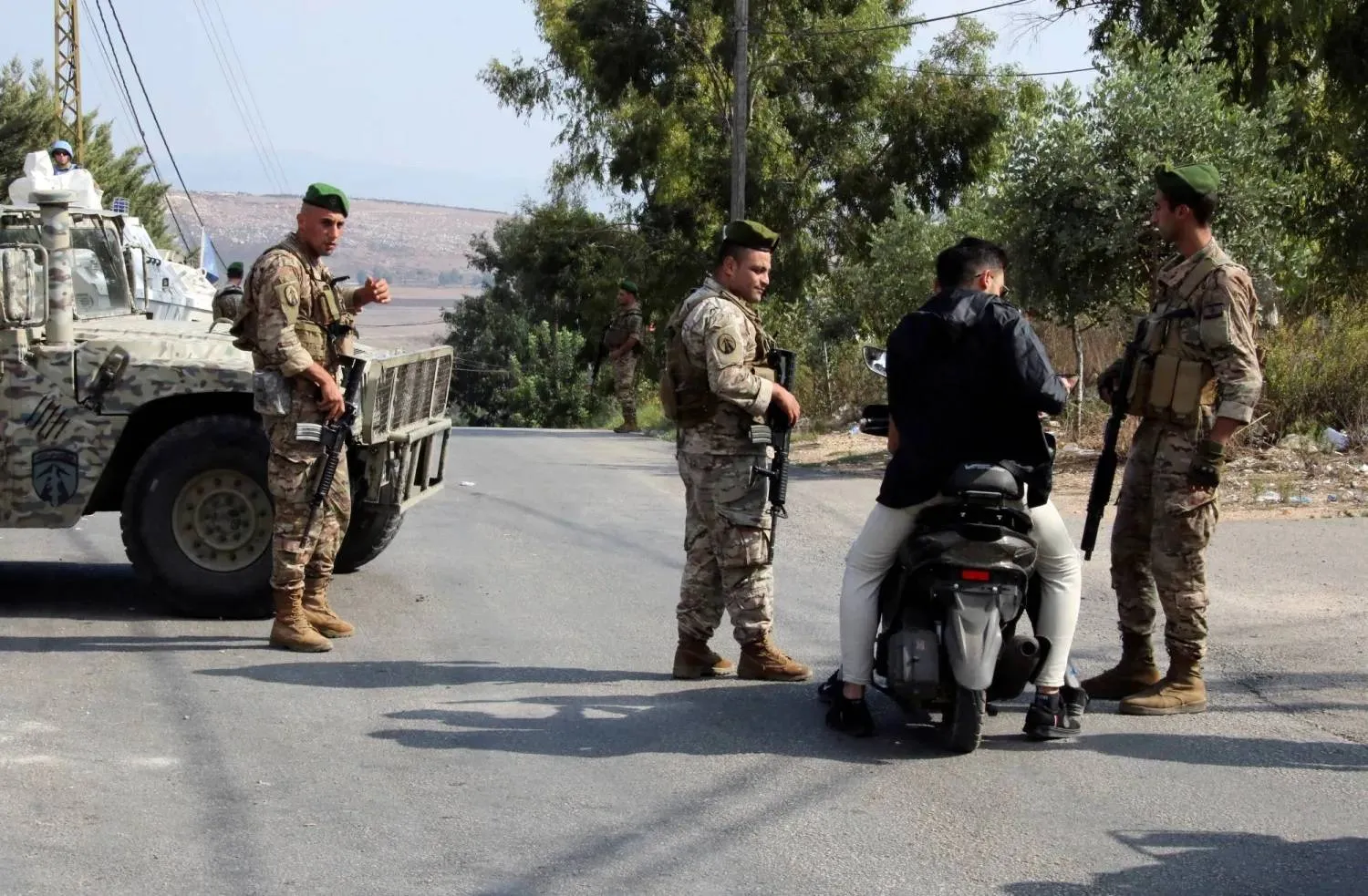

The understanding between the quintet committee for Lebanon and President Joseph Aoun over the planned conference in support of the army has raised questions on whether the countries friendly to Lebanon have been asking for guarantees related to the launch of the second phase of the state’s plan to impose state monopoly over arms.
The second phase tackles regions north of the Litani River, while the first covered regions south of it and extending to the border with Israel.
The conference on the army is set to take place in Paris on March 5.
Many believe that countries backing Lebanon are testing its seriousness in implementing the monopoly of weapons north of the Litani, particularly as Army Commander General Rodolphe Haykal is expected to present his plan to carry out the task in early February after securing cabinet approval.
Throughout, Hezbollah has firmly rejected cooperation with the government and army over the disarmament plan.
The president had previously said the army needs one billion dollars annually for 10 years, and last week asked security agency chiefs to prepare detailed reports on their needs to present to participants in the Paris conference.
Level of representation and aid
Security sources ruled out that the convening of the army support conference was tied to the implementation of the second phase of the disarmament plan. They argued that setting a fixed date for the meeting and having French President Emmanuel Macron chair it makes it very difficult for international parties to back away from holding it.
Sources told Asharq Al-Awsat that steps taken by the government and the army to monopolize weapons north of the Litani will be reflected in the momentum surrounding the conference, including the number of participating countries, the level of representation, and the amount of aid that can be secured.
If the international community senses concrete steps in this direction, support will be significantly greater, they said.
MP Ghada Ayoub, of the Lebanese Forces bloc, said once a date is set for a conference of this scale, it is rarely postponed unless very exceptional circumstances arise.
Therefore, March 5 should be treated as confirmed until further notice, she told Asharq Al-Awsat.
Ayoub stressed the need to distinguish between holding the conference and the scale of its outcomes.
The conference itself is not tied to a direct condition. Still, the level and type of support could be affected by the nature of the next phase and by the state’s ability to assert its authority, foremost by enabling the army to perform its role across all Lebanese territory.
Ayoub that the primary goal of the conference is to empower the Lebanese army and secure its financial and logistical requirements, as well as to address its needs and demands, because no state can be built and no stability can be protected without a strong, well-equipped military.
Riad Kahwaji, a researcher and writer specializing in security and defense affairs, said support for the army is an external political decision that hinges on its primary mission today which is to disarm Hezbollah.
Army leadership and the government are fully aware of this, he told Asharq Al-Awsat, noting that any potential assistance program will be centered on this task.
Kahwaji said that arming the military will proceed from the premise that confronting ISIS and al-Qaeda remains a task, but is no longer a top priority, as this role is now tied to the Syrian state.
As a result, the army’s primary armament will remain focused on protecting borders, maintaining internal stability, and imposing state monopoly over weapons.