


Lebanon and Syria Ink Deal on Prisoner Handover

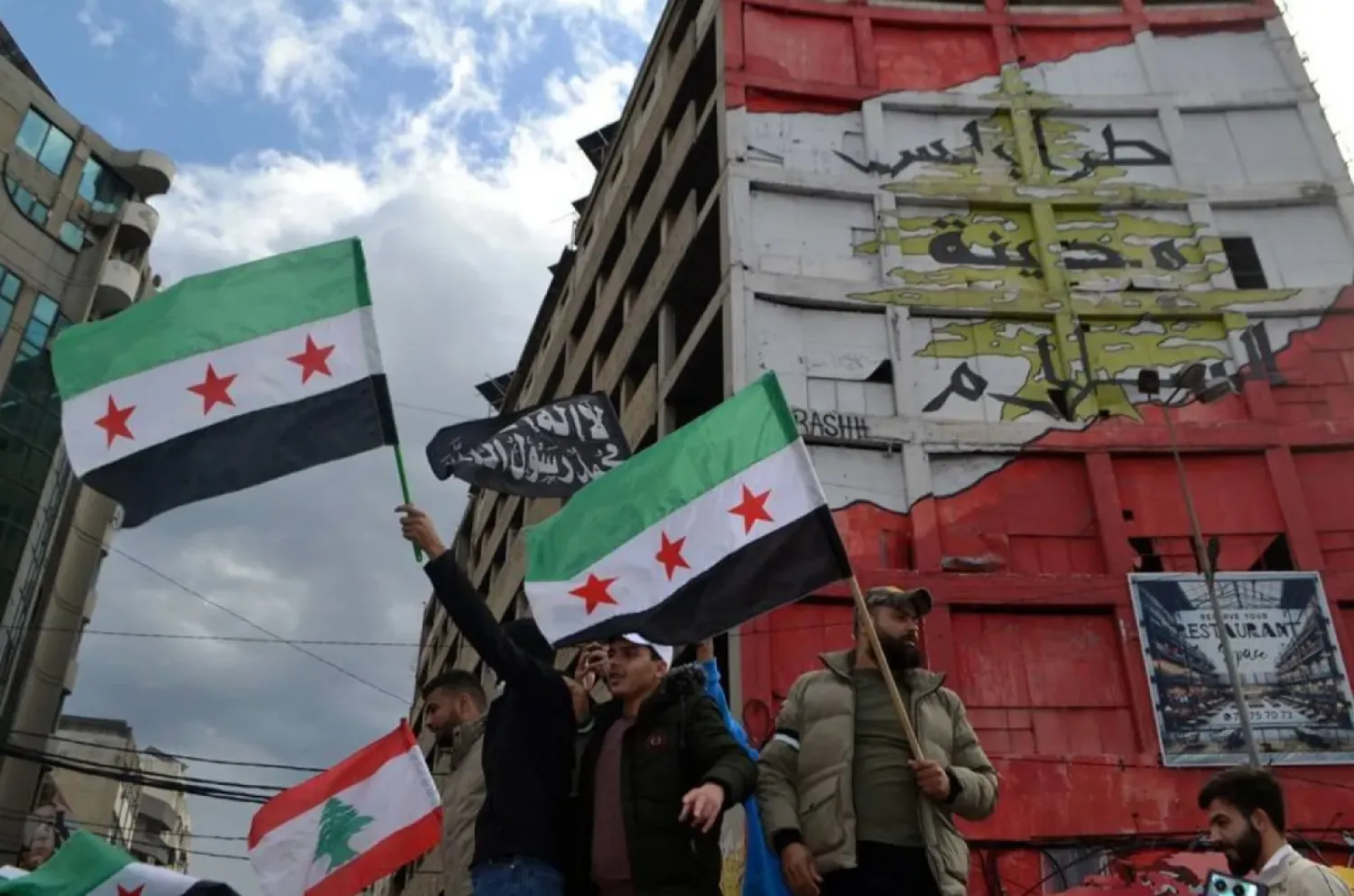
People carry Syrian flags of the opposition as they celebrate the ouster of the Assad regime in Damascus, in Tripoli, northern Lebanon, 08 December 2024. (EPA)
TT

Lebanon and Syria Ink Deal on Prisoner Handover

People carry Syrian flags of the opposition as they celebrate the ouster of the Assad regime in Damascus, in Tripoli, northern Lebanon, 08 December 2024. (EPA)

Lebanon inked an agreement with Syria on Friday to hand some 300 convicts over to Damascus, a move seen as key to helping turn a new page in ties between the countries.

Overcrowded Lebanese prisons hold more than 2,200 Syrians held on various charges.

Many of them are still awaiting trial, while hundreds accused of "terrorism" or related offences including attacks on Lebanese forces have been brought before military courts, according to AFP.

Others are in custody for alleged membership in militant or armed groups that were opposed to now ousted Syrian president Bashar al-Assad, who was supported by Lebanon's Hezbollah group during the Syrian civil war.

Lebanese Deputy Prime Minister Tarek Mitri and Syrian Justice Minister Mazhar al-Wais announced the signing of the agreement at a press conference in Beirut.

Wais called it "an important step on the path to justice in addressing the situation of convicts who have spent a long time in prison and whose cases were among the most complex legally".

The agreement covers around 300 convicts, while the remaining detainees require "long procedures" before a similar agreement on them can be reached, Wais said.

The deal reinforces "the trust and political will that already exists between the two countries", he said, expressing hope it would help improve ties.

Lebanese authorities have said that the convicts who meet the requirements, including having spent at least 10 years behind bars, will be handed over to Syria where they will serve the rest of their sentences.

Mitri told AFP that cooperation extended beyond the issue of convicts, with officials working to "resolve all common issues that will set bilateral relations right".

The first step following the deal's signing would be a cabinet decision to "abolish the Lebanese-Syrian Higher Council", an Assad-era body.

Authorities will also review "unfair agreements concluded during the time of Syrian tutelage in Lebanon, as well as the demarcation of the land and maritime borders", Mitri added.

Syria's army entered Lebanon in 1976 as part of an Arab force that was supposed to put an end to the Lebanese civil war which began a year earlier.

Instead Syria became the dominant military and political force in Lebanon, looming over all aspects of Lebanese life.

Syrian forces only withdrew from the country in 2005 after enormous pressure following the assassination of former prime minister Rafic Hariri, a killing attributed to Damascus and its ally Hezbollah.



Iraq, Kurds Say Country Not a Launchpad Against Neighbors

Smoke rises after an explosion near Erbil International Airport in Erbil on March 6, 2026. (AFP)
TT

Iraq, Kurds Say Country Not a Launchpad Against Neighbors

Smoke rises after an explosion near Erbil International Airport in Erbil on March 6, 2026. (AFP)

The Iraqi government and the autonomous Kurdistan region said Friday that Iraq must not be a launchpad for attacks against neighboring countries, following reports that militants might attempt to cross into Iran.

Prime Minister Mohammed Shia al-Sudani and Kurdistan's regional president Nechirvan Barzani agreed in a phone call "that Iraqi territory must not be used as a launching point for attacks against neighboring countries", the premier's media office said.

Tehran threatened Friday to target "all the facilities" of Iraq's autonomous region if exiled Kurdish Iranian militants were allowed to enter Iran.


Kurdish Iranian Dissidents in Iraq Deny Attack Plans but Say They Would Join a US Invasion of Iran

Members of the Kurdistan Freedom Party PAK stand guard in Erbil, Iraq, Thursday, March 5, 2026. (AP)
TT

Kurdish Iranian Dissidents in Iraq Deny Attack Plans but Say They Would Join a US Invasion of Iran

Members of the Kurdistan Freedom Party PAK stand guard in Erbil, Iraq, Thursday, March 5, 2026. (AP)

Officials with one of the armed Kurdish Iranian dissident groups based in northern Iraq told The Associated Press that they are not planning an imminent cross-border attack on Iran but would join a ground invasion if the US were to launch one.

The comments appeared to be aimed at reassuring Iraqi Kurdish officials, who have said they do not want attacks to be launched against Iran from their territory, fearing that they will be further dragged into the war in the Middle East sparked by the US and Israel’s strikes on Iran.

In the event of a US ground operation, “then we would enter alongside the coalition forces,” said Khalil Nadiri, an official with the Kurdistan Freedom Party PAK, in an interview with the AP Thursday. But he said, “The Kurds must not place themselves as the spearhead of the attack.”

He added that his group also has armed members already present inside of Iran and that they would not necessarily require cross-border support if they were to stage an uprising.

Nadiri said the Kurdish groups have been in contact with the US and Israel but denied having received any material aid from them.

The comments came after Kurdish officials said earlier this week that the Kurdish Iranian dissident groups based in northern Iraq are preparing for a potential cross-border military operation in Iran, and the US had asked Iraqi Kurds to support them

Rebaz Sharifi, a military commander with the PAK, said it would be “a very positive development” if the US and its allies were to arm the Kurdish groups, but also denied that they have received any such support so far.

Sharifi said he expects that at some point, US President Donald Trump “might want the peshmerga forces of Eastern Kurdistan to participate in the conflict during a ground invasion” and “if it reaches that point, we, for our part, would be pleased with it.”

However, the two officials sought to dispel the fears of Iraqi Kurdish officials that Iraq’s semiautonomous Kurdish region would be used as a launching pad.

Peshawa Hawramani, spokesperson for the Kurdistan Regional Government, said in a statement earlier this week that “allegations claiming that we are part of a plan to arm and send Kurdish opposition parties into Iranian territory are completely unfounded” and that the Iraqi Kurdish parties do not want to “expand the war and tensions in the region.”

Already Iran and allied Iraqi militias have launched dozens of missiles and drone attacks into northern Iraq, targeting the US bases and consulate in Irbil as well as bases of the Iranian Kurdish dissident groups.

Sharifi said PAK's bases have been attacked twice with ballistic missiles and four times with drones since the start of the war, killing one of their fighters and wounding three others.

Nadiri said that “since the (Iraqi) Kurdistan region has adopted a policy of not becoming a part of this conflict and because we do not want to disrupt the stability and security here and we respect the laws of this region, consequently, the environment has not yet been established for us to move our forces back into Eastern Kurdistan.”

He was using the term used by Kurdish groups to refer to the Kurdish region of Iran.

The potential military involvement of the Kurds has raised tensions with other Iranian opposition groups - notably the faction led by the former shah’s son, Reza Pahlavi, who has accused the Kurds of being separatists aiming to carve up Iran.

Sharifi said that his group's “ultimate goal is the statehood of the Kurds in all four regions and the reunification of Kurdistan,” referring to the Kurdish areas that are currently split among Iran, Iraq, Türkiyeand Syria.

Nadiri said that a confederal system could be a “viable solution” that would allow the Kurdish area to remain part of Iran while maintaining its “own sovereignty, identity, and unique characteristics.”


UN Demands Swift Probe into Israeli Strikes on Lebanon

A fireball ascends from the site of an Israeli airstrike that targeted an area in Beirut's southern suburbs on March 6, 2026. (AFP)
TT

UN Demands Swift Probe into Israeli Strikes on Lebanon

A fireball ascends from the site of an Israeli airstrike that targeted an area in Beirut's southern suburbs on March 6, 2026. (AFP)

The United Nations on Friday demanded swift investigations into fatal Israeli strikes across Lebanon to decide if they complied with international law.

"Lebanon is becoming a key flashpoint," UN rights chief Volker Turk told reporters in Geneva.

"I call for an immediate cessation of hostilities."

Lebanon has been engulfed by the expanding Middle East war, after the Iran-backed group Hezbollah on Monday fired missiles at Israel to avenge the death of Iranian supreme leader Ali Khamenei.

Israel responded with waves of air strikes, and Thursday night it escalated its response by hitting Beirut's southern suburbs where Hezbollah is active -- after warning the area's hundreds of thousands of residents to flee.

Lebanese Prime Minister Nawaf Salam has warned that "a humanitarian disaster is looming" due to the mass displacement.

Turk said he was particularly worried about Israel's "blanket, massive displacement orders" for Beirut's southern suburbs, the Bekaa region and the full area to the south of the Litani river.

These orders were impacting "hundreds of thousands of people", he said, raising "serious concern under international humanitarian law and in particular when it comes to issues around forced transfer".

Turk's spokeswoman Ravina Shamdasani cautioned that the orders risked amounting to "prohibited forced displacement" under international law.

The mass displacement, coupled with "continued air strikes on different parts of the country, are bringing more misery and suffering to an already weary civilian population", she told reporters.

The Israeli military announced Friday that it had carried out 26 waves of strikes on Beirut's southern suburbs in the past four days.

Late Thursday, Lebanon's health ministry said Israeli strikes since Monday had killed 123 people.

Shamdasani pointed to reports that at least eight people were killed in a strike on a residential building in Baalbek on Wednesday, including three girls and two women, and a family of four reportedly died when a building was struck in the Nabatyeh district on Thursday.

"Prompt and thorough investigations must be conducted, particularly to determine whether such attacks complied with the principles of distinction, proportionality and precaution," she said.

Shamdasani highlighted that "Hezbollah has continued launching barrages of rockets into Israel, striking residential areas in the north and the center of the country, with at least three people reportedly injured".

This, she said, raised "concerns, once again, about indiscriminate attacks against civilians".

She called for "urgent de-escalation", insisting "the sovereignty of Lebanon and the human rights of its people must be respected", she said.