
Lebanese Army Chief Faces Labeling Dispute During Washington Visit

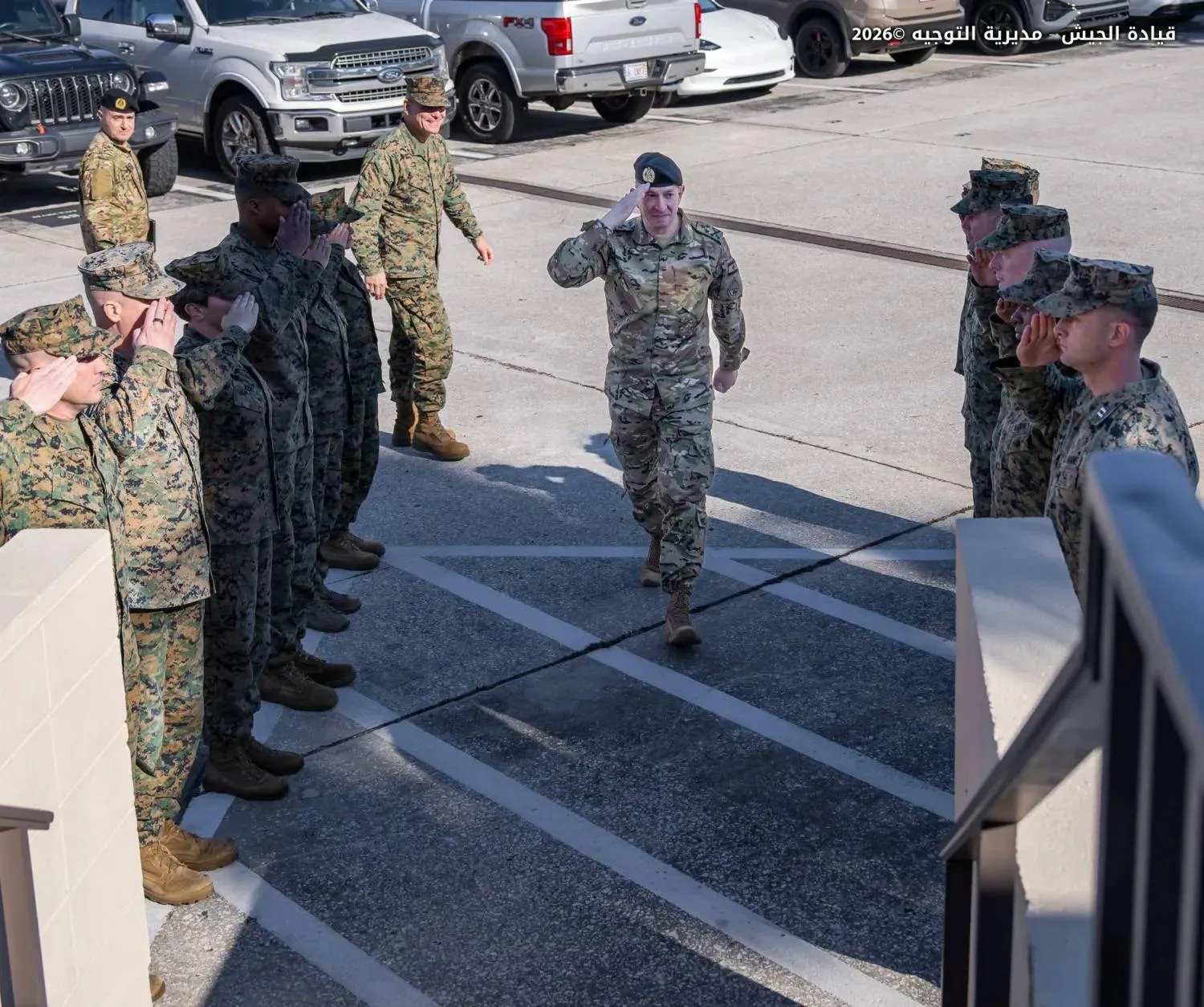
Lebanese Army Commander General Rodolphe Haykal during his visit to Washington (Lebanese Army Command)
TT

Lebanese Army Chief Faces Labeling Dispute During Washington Visit

Lebanese Army Commander General Rodolphe Haykal during his visit to Washington (Lebanese Army Command)

What was meant to be a routine visit by Lebanese Army Commander General Rodolphe Haykal to Washington to discuss military support and aid coordination turned into a political flashpoint, after a brief meeting with US Senator Lindsey Graham ignited a dispute over whether the army chief would describe Hezbollah as a “terrorist organization.”

The controversy was sparked by a brief meeting with hardline Republican Senator Lindsey Graham, who publicly said he cut the meeting short after Haykal declined to use the designation in what he called the “context of Lebanon.”

What happened in the Graham meeting

In a post on X, Graham said: “I just had a very brief meeting with the Lebanese Chief of Defense General Rodolphe Haykal. I asked him point blank if he believes Hezbollah is a terrorist organization. He said, “No, not in the context of Lebanon.” With that, I ended the meeting.”

“They are clearly a terrorist organization. Hezbollah has American blood on its hands. Just ask the US Marines,” he added.

“They have been designated as a foreign terrorist organization by both Republican and Democrat administrations since 1997 – for good reason.”

“As long as this attitude exists from the Lebanese Armed Forces, I don’t think we have a reliable partner in them.”

“I am tired of the double speak in the Middle East. Too much is at stake,” Graham concluded.

The reaction went beyond expressions of displeasure. Some US coverage suggested Graham effectively raised questions about the “usefulness” of continuing support for the Lebanese army if such a gap persists between the US position and Lebanon’s official language.

Haykal’s answer raises its cost in Washington

Inside Lebanon, the issue is not limited to the stance on Hezbollah. Still, it extends to the army’s role as a unifying institution in a country whose political balance rests on sectarian arrangements and deep sensitivities.

Adopting an external designation, even a US one, in official language by the head of the military could be interpreted domestically as a move that risks triggering political and sectarian division or drawing the army into confrontation with a component that has organized political and popular representation.

That explains why Lebanese voices, including some critics of Hezbollah, defended the logic that “the state does not adopt this classification.” Therefore, the army commander cannot formally do so.

In other words, Haykal sought to avoid two conflicting languages: Washington’s legal and political framing of Hezbollah, and the Lebanese state’s language, which walks a fine line between the demand for exclusive state control over arms and the avoidance of reproducing internal fractures.

US State Department position

Amid the controversy surrounding the Graham meeting, an official US position emerged on Tuesday through the US Embassy in Beirut, welcoming the visit and focusing on the core US message.

The statement said that “the Lebanese Armed Forces’ ongoing work to disarm non-state actors and reinforce national sovereignty as Lebanon’s security guarantor is more important than ever.”

The wording was notable because it separated two levels: continued US reliance on the army as a state institution, and, in practice, linking that reliance to the issue of disarming non-state actors.

The phrase avoids direct naming but, in the Lebanese context, is widely understood to refer primarily to Hezbollah.

The visit’s broader track

Despite the political awkwardness, Haykal’s visit was not reduced to a single meeting. He held senior-level military talks, including meetings with US Central Command chief Admiral Brad Cooper and Chairman of the Joint Chiefs of Staff General Dan Caine.

According to a statement from a Joint Chiefs spokesperson, the meeting “reaffirmed the importance of enduring US defense relationships in the Middle East.”

The visit coincided with broader discussions in Washington on support for the Lebanese army and plans to extend state authority, as international reports spoke of Lebanon entering new phases of a plan to dismantle illegal weapons structures in the south and north.

The army commander’s visit had initially been delayed for reasons that add another layer to understanding Washington’s sensitivity to the military’s language.

In November 2025, sources quoted the US State Department as saying Washington canceled scheduled meetings with the Lebanese army commander after objecting to an army statement on border tensions with Israel, prompting the visit to be postponed to avoid a pre-emptive political failure.


Iraqi Kataeb Hezbollah Say Commander Killed in Strike in Southern Iraq

Members of the Iraqi armed group Kataeb Hezbollah attend the funeral of their members, who were killed in an airstrike that targeted a Hashd al‑Shaabi headquarters near the western al‑Qaim district on the Syrian border, amid the US-Israel conflict with Iran, in Baghdad, Iraq, March 2, 2026. REUTERS/Thaier Al-Suda
TT

Iraqi Kataeb Hezbollah Say Commander Killed in Strike in Southern Iraq

Members of the Iraqi armed group Kataeb Hezbollah attend the funeral of their members, who were killed in an airstrike that targeted a Hashd al‑Shaabi headquarters near the western al‑Qaim district on the Syrian border, amid the US-Israel conflict with Iran, in Baghdad, Iraq, March 2, 2026. REUTERS/Thaier Al-Suda

The Iran-backed Kataeb Hezbollah in Iraq said on Thursday that one of its leaders was killed in a strike on southern Iraq a day earlier.

The Secretary-General of the group, Al-Hajj Abu Hussein al-Hamidawi, mourned in a statement “the great leader, brother, Ali Hassan al-Furayji," who carried out "his duties... for more than two decades."

Two sources from the armed faction told Agence France-Presse on Wednesday that a strike targeted a car near the Jurf al-Nasr base, where the faction is deployed in southern Iraq, resulting in the death of two members.

The death toll rose to three after the death of the leader was confirmed.

One of the sources described the attack as a "Zionist-American strike."

The Jurf al-Nasr base, also known as Jurf al-Sakhar, in southern Iraq, was the first Iraqi target of strikes attributed to Israel and the United States, which later extended to other areas.


Iraq Says it is Directly Affected by the War: ‘We are Under Attack from Both Sides’

Smoke and flames rise near Erbil International Airport in Iraq’s Kurdistan Region following explosions caused by intensive interception operations carried out by air defense systems (dpa)
TT

Iraq Says it is Directly Affected by the War: ‘We are Under Attack from Both Sides’

Smoke and flames rise near Erbil International Airport in Iraq’s Kurdistan Region following explosions caused by intensive interception operations carried out by air defense systems (dpa)

Military escalation across Iraq continues following the outbreak of the Israeli-US war on Iran, as the country is now facing a series of reciprocal attacks by multiple actors on its territory, along with mounting economic damage caused by disruptions to its oil exports.

“Iraq has become one of the countries directly affected by the ongoing conflict,” Iraqi Foreign Minister Fuad Hussein said, noting that the country was “being subjected to attacks from both sides of the conflict.”

Iraqi military and security bases, as well as positions belonging to factions affiliated with the Popular Mobilization Forces (PMF), have been targeted by Israeli and US airstrikes. At the same time, Iran and pro-Iranian factions have targeted American interests and military bases in the Kurdistan Region and other parts of the country.

Hussein made the remarks during a phone call with Russian Foreign Minister Sergei Lavrov, during which the two discussed rapidly evolving military developments in the region and their political and economic repercussions, according to a statement from the Iraqi Foreign Ministry.

Hussein ruled out an immediate ceasefire, saying the widening scope of the confrontation and the intensification of attacks have become daily features of the conflict.

He also warned that the closure of the Strait of Hormuz and ongoing military operations “have disrupted maritime navigation in the region.”

“Iraq is facing increasing difficulties in exporting its oil,” he underlined, a situation shared by several countries in the region and one that could have serious consequences for global energy markets.

He cautioned that the war will lead to a crisis in the energy market and rising prices, which will negatively affect the economies of the region and the world.

New Attacks

Iran and allied factions targeted Erbil International Airport and the nearby Harir Air Base with dozens of rockets and drones on Wednesday. Groups calling themselves the “Islamic Resistance factions” announced that they had carried out more than 28 attacks against US and local targets inside Iraq.

Meanwhile, Camp Victoria, near Baghdad International Airport, was also targeted by rocket attacks launched by armed factions, though Iraqi security forces said they thwarted the strikes.

Kurdistan

On Wednesday, an Iranian Kurdish fighter was reportedly killed in a missile strike targeting a headquarters of the Kurdistan Freedom Party (PAK) in Iraq’s Kurdistan Region, according to a source within the party cited by AFP.

The autonomous Kurdistan Region hosts camps operated by Iranian Kurdish opposition groups.

A party spokesperson, Khalil Kani Sanani, accused “the Iranian regime” of launching three missiles at a camp housing the families of party members, killing one camp guard and wounding three others. The camp lies east of Erbil, the capital of the Kurdistan Region.

On Tuesday, a camp housing Iranian Kurdish fighters and their families in Kurdistan was struck by a drone attack that left one person injured, according to Mohammad Nazif Qader, a member of the opposition Kurdistan Democratic Party of Iran (KDPI).

Iran classifies these Kurdish parties as “terrorist organizations” and accuses them of serving “Western or Israeli interests.”


Sudan Drone Strike Kills 18 People

File photo: A view shows a large plume of smoke and fire rising from fuel depot in Port Sudan, Sudan, May 6, 2025. (Reuters)
TT

Sudan Drone Strike Kills 18 People

File photo: A view shows a large plume of smoke and fire rising from fuel depot in Port Sudan, Sudan, May 6, 2025. (Reuters)

A drone strike on a Sudanese city under paramilitary control killed 18 people, a medic working in the area told AFP on Thursday, while blaming the army for the attack.

Both sides in Sudan's war have resorted to drone warfare, sparking frequent and strong condemnation from the UN, AFP said.

The strike on Al-Mojlad on Wednesday killed 18 people and wounded 25 others, according to a medic working at the city hospital who added that he blamed the military for the attack.

The paramilitary RSF have been fighting the army for nearly three years, and had accused the military of conducting a drone strike on a market in Al-Mojlad.