

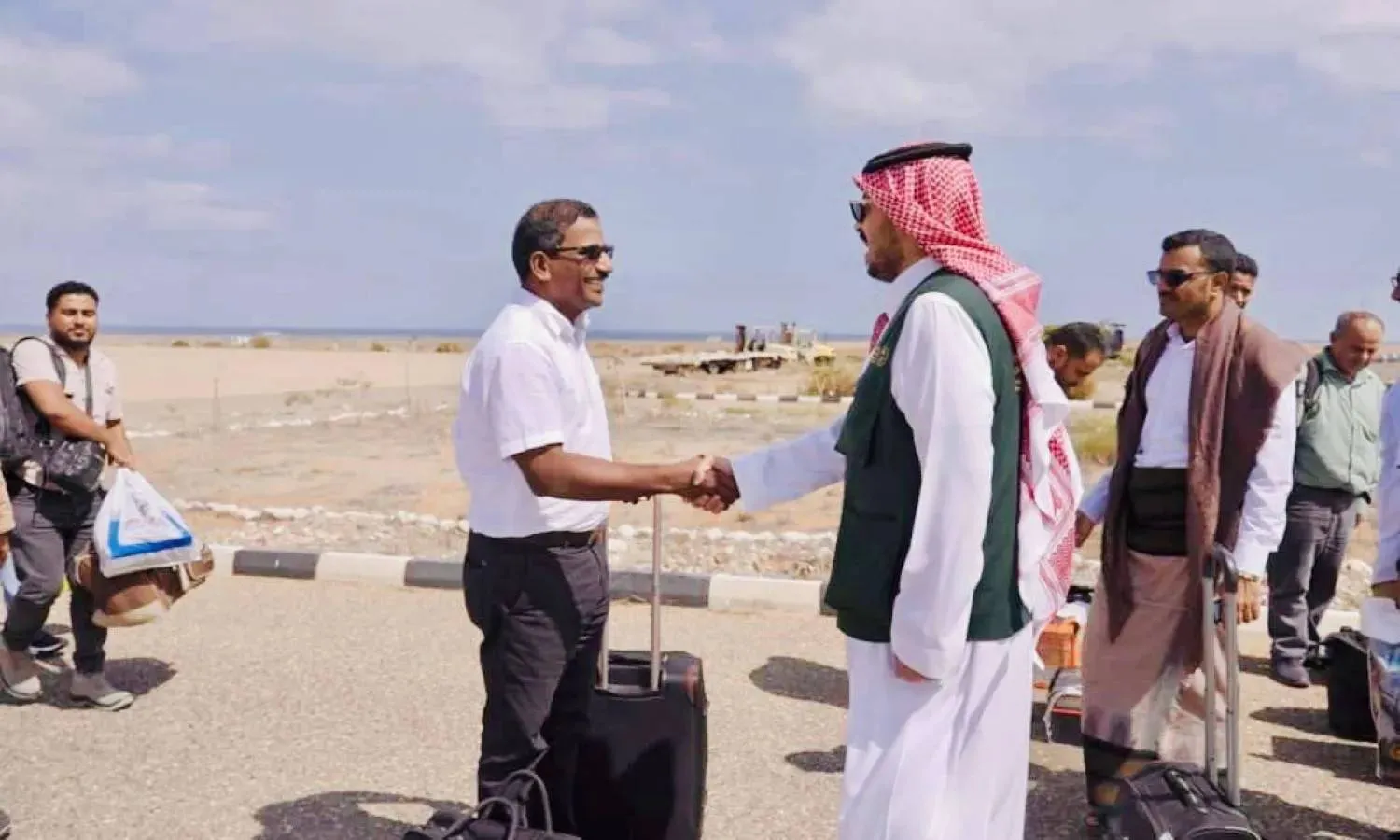

Saudi Intervention Ends Socotra Power Crisis

Socotra power generators restarted after Saudi intervention (X)
TT

Saudi Intervention Ends Socotra Power Crisis

Socotra power generators restarted after Saudi intervention (X)

Electricity has returned to Yemen’s Socotra archipelago after urgent Saudi intervention ended days of outages that disrupted daily life and crippled vital institutions, including the general hospital, the university and the technical institute.

The breakthrough followed a sudden shutdown of the power plants after the operating company withdrew and disabled control systems, triggering widespread blackouts and deepening hardship for residents.

The Saudi Program for the Development and Reconstruction of Yemen said its engineering and technical teams moved immediately after receiving an appeal from local authorities. Specialists were dispatched to reactivate operating systems that had been encrypted before the company left the island.

Generators were brought back online in stages, restoring electricity across most of the governorate within a short time.

The restart eased intense pressure on the grid, which had faced rising demand in recent weeks after a complete halt in generation.

Health and education facilities were among the worst affected. Some medical departments scaled back services, while parts of the education sector were partially suspended as classrooms and laboratories were left without power.

Socotra’s electricity authority said the crisis began when the former operator installed shutdown timers and password protections on control systems, preventing local teams from restarting the stations. Officials noted that the archipelago faced a similar situation in 2018, which was resolved through official intervention.

Local sources said the return of electricity quickly stabilized basic services. Water networks resumed regular operations, telecommunications improved, and commercial activity began to recover after a period of economic disruption linked to the outages.

Health and education rebound

In the health sector, stable power, combined with operational support, secured the functioning of Socotra General Hospital, the archipelago’s main medical facility.

Funding helped provide fuel and medical supplies and support healthcare staff, strengthening the hospital’s ability to receive patients and reducing the need to transfer cases outside the governorate, a burden that had weighed heavily on residents.

Medical sources said critical departments, including intensive care units and operating rooms, resumed normal operations after relying on limited emergency measures.

In education, classes and academic activities resumed at Socotra University and the technical institute after weeks of disruption.

A support initiative covered operational costs, including academic staff salaries and essential expenses, helping curb absenteeism and restore the academic schedule.

Local authorities announced that studies at the technical institute would officially restart on Monday, a move seen as a sign of gradual stabilization in public services.

Observers say sustained technical and operational support will be key to safeguarding electricity supply and preventing a repeat of the crisis in a region that depends almost entirely on power to run its vital sectors.



UN Security Council Warns of 'Imminent Risk of Mass Atrocities' in Sudan

A child looks at Sudanese women lining up to receive aid at the Al-Afad camp for displaced people in the town of Al-Dabba, northern Sudan, on November 15, 2025. (Photo by Ebrahim HAMID / AFP)
TT

UN Security Council Warns of 'Imminent Risk of Mass Atrocities' in Sudan

A child looks at Sudanese women lining up to receive aid at the Al-Afad camp for displaced people in the town of Al-Dabba, northern Sudan, on November 15, 2025. (Photo by Ebrahim HAMID / AFP)

The United Nations Security Council said Saturday it is concerned over the "imminent risk of mass atrocities" in Sudan as it called on paramilitary forces encircling El-Obeid to back down.

The majority-Muslim southern city, in the Kordofan region, has been under siege for several months by the Rapid Support Forces (RSF), which has been at war with the regular army since April 2023.

"The members of the Security Council expressed concern at the imminent risk of mass atrocities and demanded the RSF immediately halt its assault on El-Obeid," the Security Council said in a statement.

"Council members called on the parties to the conflict to immediately halt the fighting."

The UN has voiced fears that there could be a repeat of the atrocities committed during the October 2025 assault on the city of El-Fasher, which it said bore "hallmarks of genocide."

The UN said Friday that Pekka Haavisto, the secretary-general's special envoy for Sudan, had called rebel paramilitary forces chief Mohamed Hamdan Daglo to urge him not to attack El-Obeid.

Haavisto "underscored the need to urgently de-escalate the situation in El-Obeid and avoid any actions that may further worsen the already dire humanitarian situation and put civilian lives further at risk," said Stephane Dujarric, spokesman for UN Secretary-General Antonio Guterres.

The official said aid workers were "preparing for the potential movements of large numbers of people" fleeing the city, and that "our humanitarian colleagues are doing the responsible thing, which is getting ready for the worst while hoping for the best."

Dujarric said Haavisto was also talking to countries with influence over the warring parties to encourage dialogue and prevent the assault.

The conflict in Sudan has killed tens of thousands of people and forced more than 11 million from their homes, creating what the UN describes as the world's largest displacement and hunger crises.


Dual Saudi Support Measures Bolster Yemen’s Stability and Protect Civilians

Officials sign a previous Saudi agreement to supply fuel for Yemen’s power stations (X). 
TT

Dual Saudi Support Measures Bolster Yemen’s Stability and Protect Civilians

Officials sign a previous Saudi agreement to supply fuel for Yemen’s power stations (X). 

Saudi Arabia’s latest support measures for Yemen have been welcomed by the country’s leadership after Riyadh announced a new budget support payment and extended the Masam Project for landmine clearance for another year. The parallel initiatives aim to ease Yemen’s economic and humanitarian challenges.

Rashad Al-Alimi, chairman of Yemen’s Presidential Leadership Council, expressed his gratitude on behalf of the council, the government, and the Yemeni people to King Salman bin Abdulaziz and Crown Prince and Prime Minister Mohammed bin Salman for directing the release of a new tranche of financial assistance for the state’s general budget.

The announcement was made by Saudi Ambassador to Yemen Mohammed Al Jaber, who also serves as general supervisor of the Saudi Development and Reconstruction Program for Yemen.

He said the Saudi leadership had approved a new payment of more than SAR 224 million ($60 million) to help finance the Yemeni government’s budget deficit and cover public-sector salaries.

Al Jaber said the funding would support government cash flows, provide foreign-currency liquidity, help stabilize the Yemeni rial, and strengthen the government’s ability to maintain essential services and improve living conditions.

Yemeni officials say Saudi budget support has played a critical role in recent years by helping the government meet key financial obligations, particularly public-sector wages and basic services, at a time of declining state revenues and the continuing impact of war.

The assistance is also viewed as an important tool for easing pressure on the national currency and enabling state institutions to continue operating in government-controlled areas despite persistent economic challenges.

Alongside the financial announcement, Al-Alimi welcomed Saudi Arabia’s decision to extend the Masam Project for clearing mines from Yemeni territory for an additional year.

He described the initiative as one of the most significant humanitarian programs protecting civilians from mines planted by the Houthi movement across large areas of the country.

Al-Alimi praised the project’s achievements since its launch, saying landmines remain among the most devastating legacies of Yemen’s conflict because of the deaths, injuries, and permanent disabilities they have caused among civilians.

He said the extension reflects Saudi Arabia’s continued humanitarian commitment to Yemen and represents a long-term investment in protecting Yemeni lives and securing war-affected communities.

The King Salman Humanitarian Aid and Relief Center (KSrelief) announced it had extended the Masam Project for another year at a cost of more than $52.5 million, continuing efforts to remove landmines and unexploded ordnance from Yemen.


The project is implemented through Saudi personnel and international expertise in cooperation with trained Yemeni teams. Activities include mine-clearance operations, public-awareness campaigns, and capacity-building programs designed to strengthen national expertise in the sector.

According to project figures, Masam has cleared more than 567,000 landmines, unexploded ordnance items, and other explosive remnants of war since its launch in mid-2018. The items recovered include anti-personnel and anti-tank mines planted in residential areas, farmland, roads, and civilian facilities.

Dr. Abdullah Al Rabeeah, adviser at the Saudi Royal Court and supervisor general of KSrelief, said the extension reflects Saudi Arabia’s humanitarian responsibility toward the Yemeni people and its commitment to eliminating threats posed by landmines.

He noted that indiscriminately planted mines, often concealed through various methods, have caused thousands of civilian casualties, left many victims permanently disabled, spread fear among local communities, and disrupted agriculture and development activities across wide areas.

Al Rabeeah said Masam has become a leading humanitarian model for addressing the dangers of landmines and war remnants by combining field-clearance operations with training and rehabilitation programs that will help Yemenis confront such threats in the future.

He also praised the Saudi leadership for its humanitarian and relief efforts in Yemen and elsewhere, stressing that the Kingdom’s support for the Yemeni people will continue through a range of development, relief, and humanitarian programs.


Israel Says It 'Eliminated' Two Hamas and Islamic Jihad Operatives Tied to Major Funding Network

TOPSHOT - A man sits atop a hill near destroyed and heavily-damaged buildings at the Nuseirat camp for Palestinian refugees in the central Gaza Strip on June 19, 2026. (Photo by Eyad Baba / AFP)
TT

Israel Says It 'Eliminated' Two Hamas and Islamic Jihad Operatives Tied to Major Funding Network

TOPSHOT - A man sits atop a hill near destroyed and heavily-damaged buildings at the Nuseirat camp for Palestinian refugees in the central Gaza Strip on June 19, 2026. (Photo by Eyad Baba / AFP)

The Israeli military said on Sunday that they "eliminated" Hussein Qadra and ‌Mohammed ‌Farra, operatives in ‌the ⁠military wings of ⁠Hamas and Islamic Jihad, Reuters said.

Qadra, who headed ⁠the ‌network with ‌Farra, acted ‌under ‌Hamas leadership and facilitated the transfer ‌of more than half a billion ⁠shekels ⁠to Hamas, according to an Israeli military X post.