
Maliki Says Has ‘Absolutely No Intention’ to Withdraw PM Candidacy as Barrack Visits Iraq 

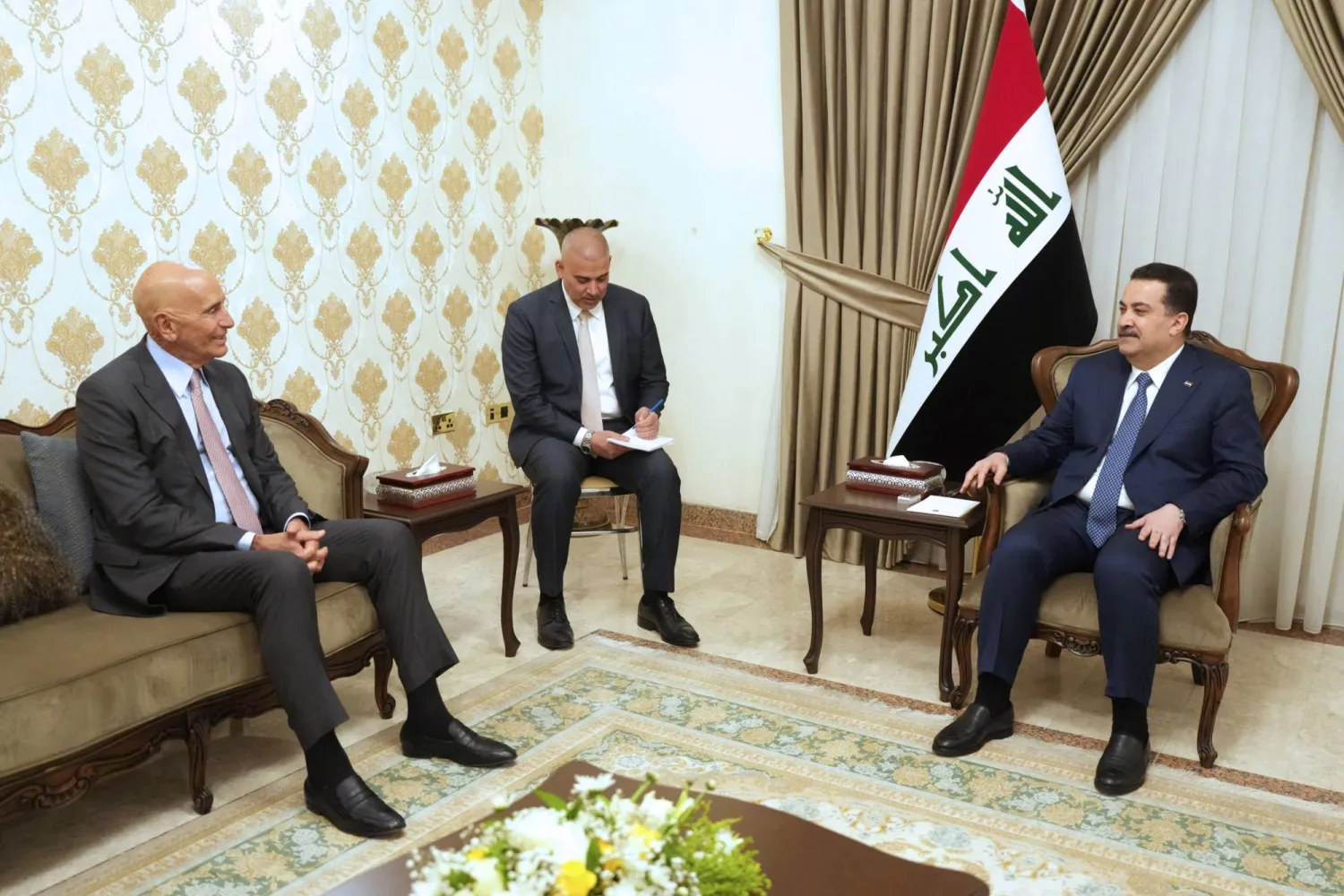
A handout picture made available by the Iraqi prime minister's office on February 22, 2026, shows US envoy to Syria Tom Barrack (L) meeting with Iraq's Prime Minister Mohammed Shia al-Sudani (R) in Baghdad's Green Zone. (Handout / Iraqi Prime Minister’s Press Office / AFP)
TT

Maliki Says Has ‘Absolutely No Intention’ to Withdraw PM Candidacy as Barrack Visits Iraq 

A handout picture made available by the Iraqi prime minister's office on February 22, 2026, shows US envoy to Syria Tom Barrack (L) meeting with Iraq's Prime Minister Mohammed Shia al-Sudani (R) in Baghdad's Green Zone. (Handout / Iraqi Prime Minister’s Press Office / AFP)

The leading candidate to become Iraq's next prime minister, former premier Nouri al-Maliki, told AFP on Monday that he will not withdraw his nomination after pressure from the US, while also seeking to allay Washington's concerns.

Since the US-led invasion that overthrew former ruler Saddam Hussein in 2003, Iraqi leaders have struggled to find a balance between two global powers competing for influence in the country: neighbor Iran and its arch-rival the United States.

Last month President Donald Trump intervened by issuing an ultimatum that if Maliki -- a two-time former premier with close ties to Iran -- was named Iraq's next prime minister, the US would no longer help the country.

"I have absolutely no intention of withdrawing out of respect for my country, its sovereignty, and its will," Maliki told AFP in an interview.

"No one has the right to say whom we can or cannot vote for," the powerbroker added.

"I will not withdraw until the end."

Trump's threat left Iraqi leaders at a loss, particularly within the Coordination Framework -- a ruling alliance of Shiite groups with varying degrees of links to Iran than nominated Maliki.

Maliki told AFP that "countries have the right to set conditions in their dealings with Iraq," but changing the nomination depends on the Coordination Framework, which still backs him.
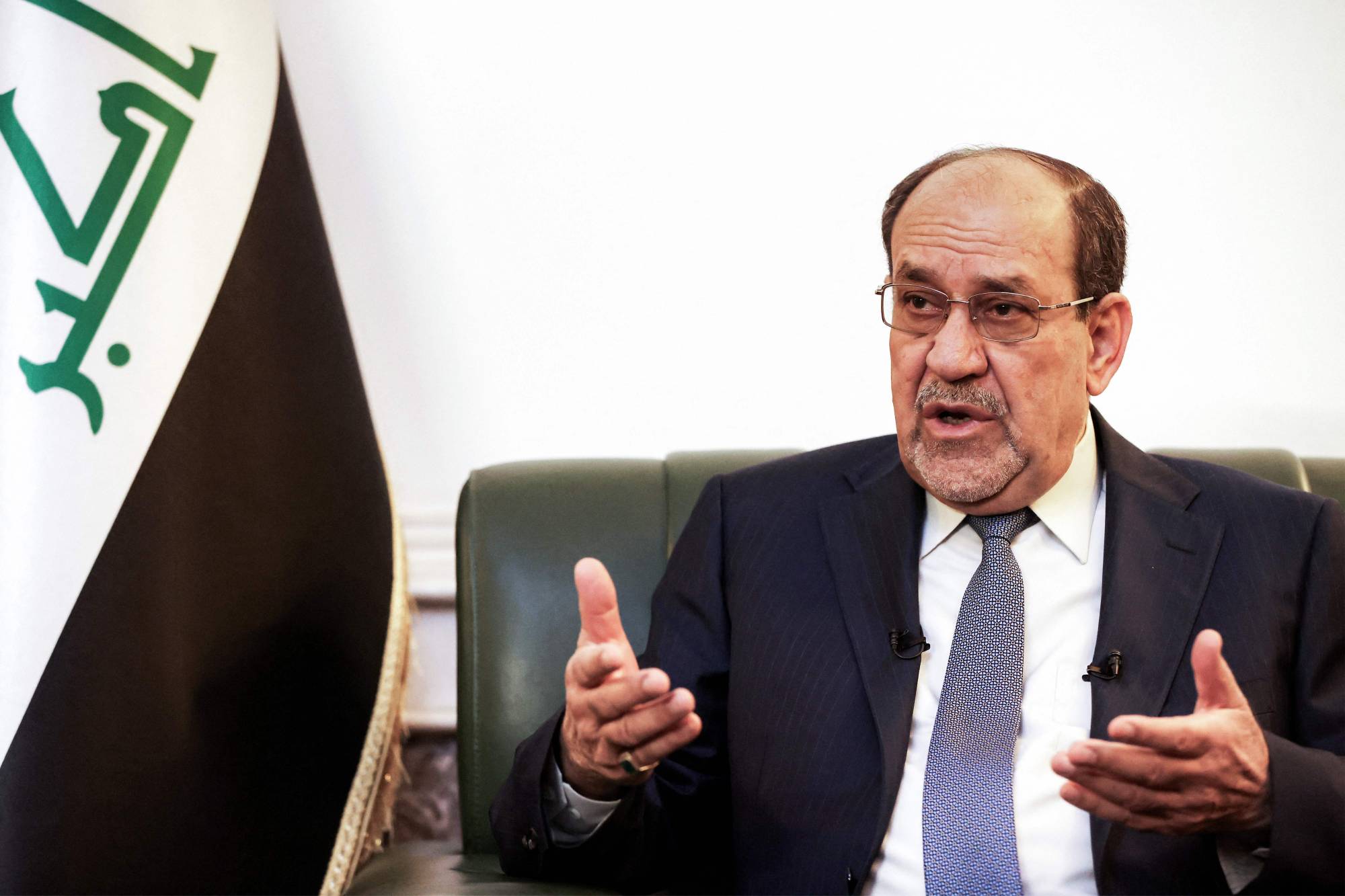
Iraq’s former PM and candidate for the premiership, Nouri al-Maliki, speaks during an interview with AFP at his office in the Green Zone in Baghdad on February 23, 2026. (AFP)

- 'One army under one command' -

Maliki -- who is Iraq's only two-term prime minister, serving from 2006 to 2014 -- also rejected claims that his relationship with the US was bad during his previous tenure.

Maliki at first enjoyed support from the American occupation following the 2003 invasion, but later fell out with Washington over his growing ties with Iran and allegations that he pushed a sectarian agenda.

Iraq's new premier will be expected to address Washington's longstanding demand that Baghdad rein in Tehran-backed factions that are designated terrorist groups by the US.

Maliki said that Washington has conveyed several messages to Iraqi leaders.

"They seek changes in the state's policies," he said.

Washington's concerns include the future of the Popular Mobilization Forces (PMF) -- a former paramilitary alliance that has integrated into the armed forces -- as well as disarming pro-Iran armed factions and accusations that some Iraqi entities are helping Iran evade US sanctions on oil exports.

Maliki sought to reassure the US on Monday.

"In fact, what America wants is not new. These are our demands," he said.

"We want weapons in the hands of the state. We want a centralized military force. We have said it repeatedly: we want one army under one command, directly under state authority.

"It's quite possible" to achieve a deal with pro-Iran armed factions, he added.

"There is a good basis for understanding with the factions" but this cannot happen "through force, war or confrontations," he said.

Maliki added that he believes factions "do not want to expose Iraq to any danger."

Washington has also demanded that the eventual Iraqi government exclude Iran-backed armed groups -- an issue that is under discussion, according to Maliki.

Some of these groups have increased their presence in the new parliament and have seen their political and financial clout increase.

"We want those who participate in the political process and the government to lay down their arms," Maliki said.

"Those who lay down their arms are welcome to be part of the next government."
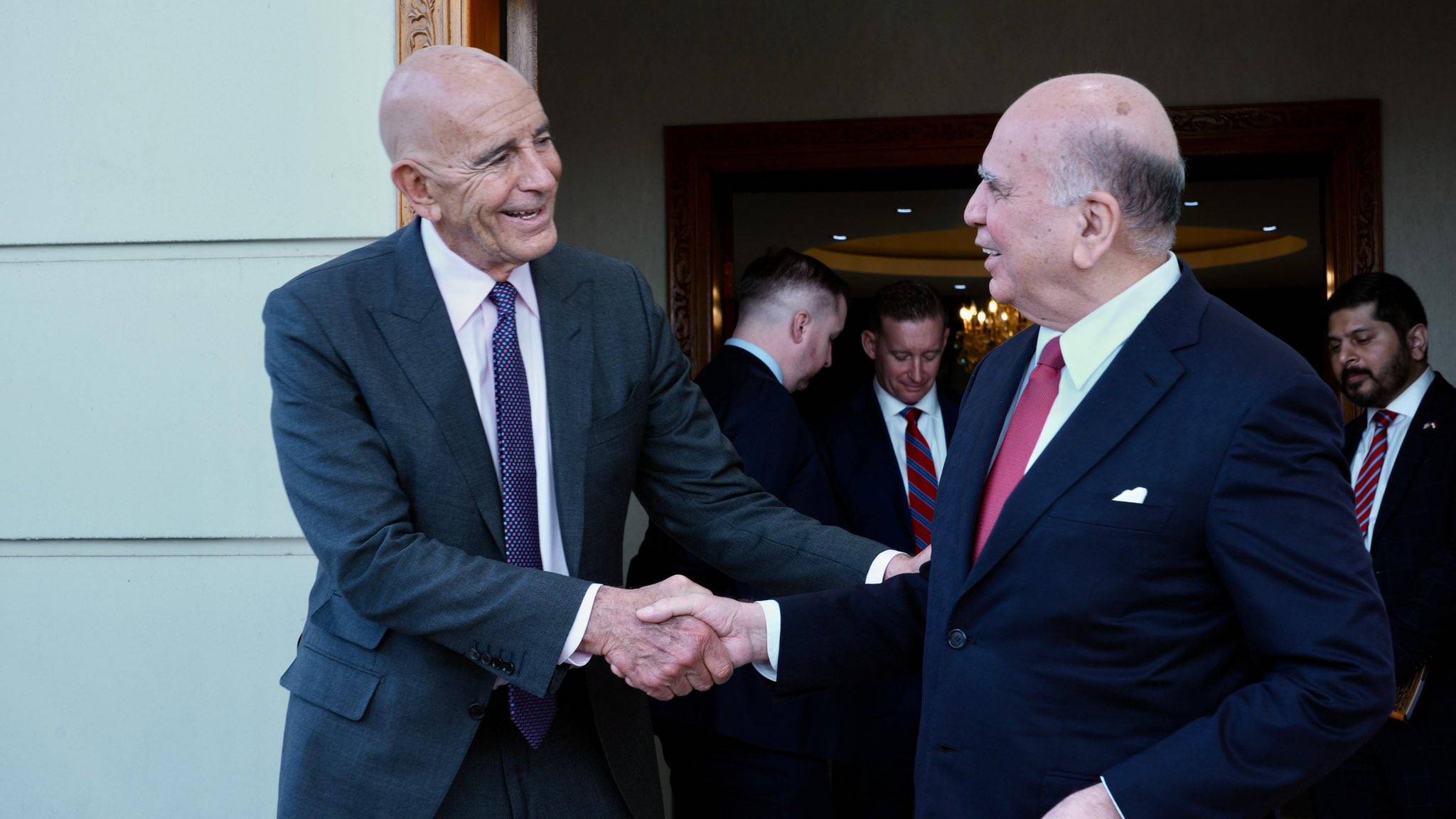
Iraqi Foreign Minister Fuad Hussein and US envoy Tom Barrack meet in Baghdad on Monday. (Iraq Foreign Ministry)

- No attacks -

After decades of conflict, Iraq has begun to enjoy some stability in recent years, yet its politics remain volatile, shaped not only by internal disputes but also by regional dynamics.

Today, all eyes are on negotiations between the US and Iran over Tehran's nuclear program, with a third round of talks scheduled for Geneva on Thursday.

With fears rising that Iraq could be dragged into a war if the US strikes Iran, Maliki vowed to prevent attacks on diplomatic missions in Iraq if he becomes prime minister.

"All countries can be assured that we will prevent any violation against their embassies or officially recognized interests in Iraq," Maliki said.

"We will not allow any party to target any country that maintains a diplomatic presence."

Previously, Iran-backed armed groups attacked US missions and troops in Iraq.

Maliki defended Iraq's relations with Iran, which he said "rest on the principle that Iraq's sovereignty is respected" and that "shared interests define this relationship".

"We share a 1,300-kilometer border and mutual interests with Iran," he added.

Despite its oil wealth, Iraq depends on imports from Iran to meet its energy needs.

Maliki warned that "if Iran cut off our natural gas supply... it would be a major catastrophe."
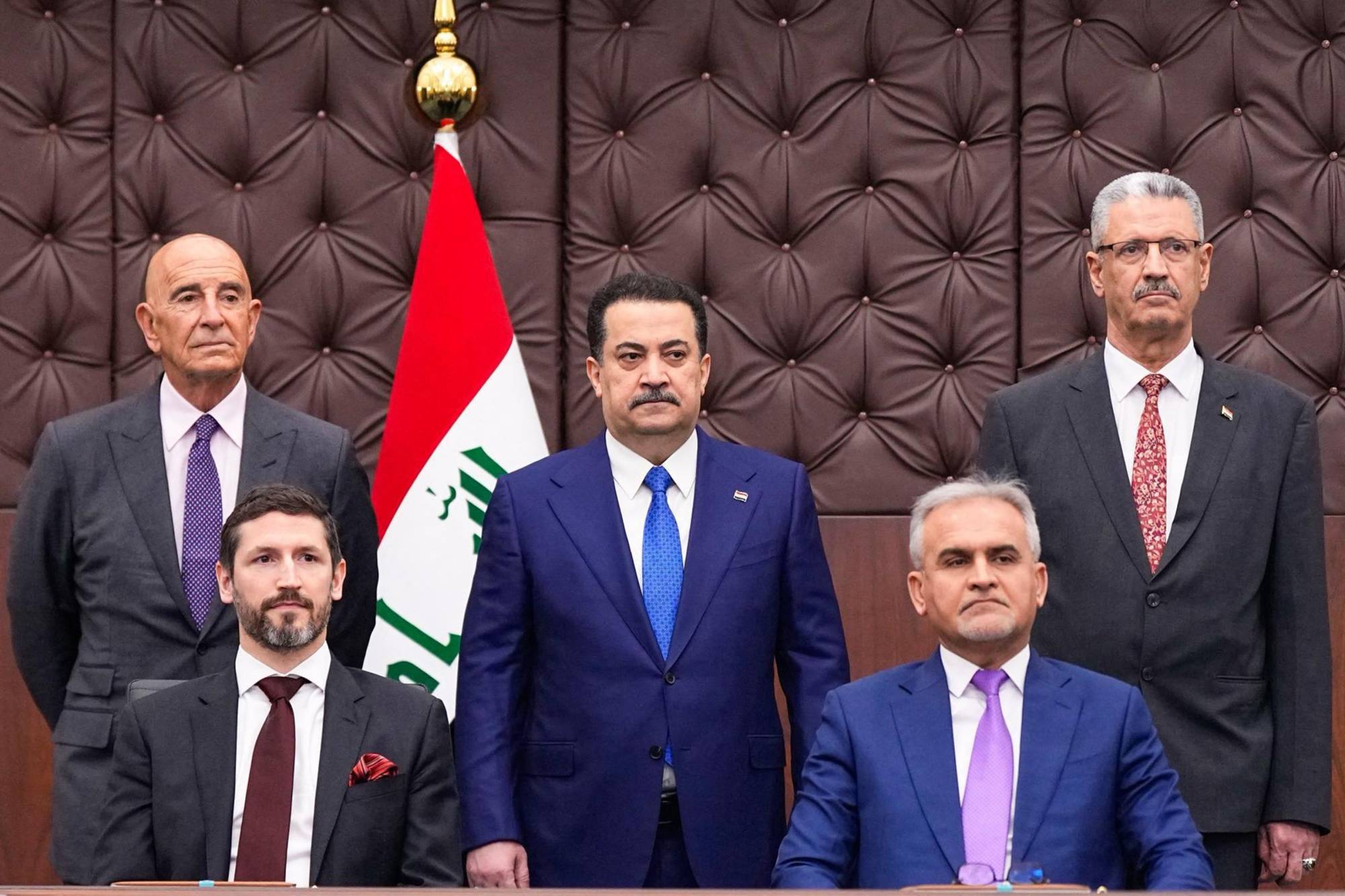
This handout picture made available by the Iraqi prime minister's office shows Iraq's Prime Minister Mohammed Shia al-Sudani (top C), Oil Minister Hayan Abdul Ghani al-Sawad (top R), US envoy Tom Barrack (top L), Chevron's Director of Business Development Joe Koch (bottom L), and the Basra Oil Company Director Bassem Abdul Karim (bottom R) attending the signing of agreements between Chevron Corporation and the Basra Oil Company at the government palace in Baghdad on February 23, 2026. (Iraqi Prime Minister’s Press Office / AFP)

- Barrack visits -

Meanwhile, US envoy Tom Barrack was in Iraq on Monday where he held talks with caretaker Prime Minister Mohammed Shia al-Sudani, Foreign Minister Fuad Hussein and President of the Supreme Judicial Council Faiq Zidan.

Sudani said the meeting with Barrack stressed the importance of dialogue and diplomacy to resolve disputes.

The officials discussed bilateral ties between Iraq and the US and developments in the region, as well as Baghdad’s efforts to support regional stability, especially in Syria, read a statement from Sudani’s office.

They also tackled opportunities for economic cooperation.

For his part, Barrack described the meeting with Sudani as "fruitful".

In a post on the X platform, he said he discussed with Sudani "continued Iraqi goals and objectives to build a sovereign, stable, and prosperous future that aligns with Trump’s desire and plan for peace and prosperity in the region."

"The necessity of effective leadership that aligns itself with the policies and practices of further stabilization for Iraq and the Iraqi people is key to our mutual goals," he remarked.

Barrack later held meetings with President of the Iraqi Kurdistan Region Nechirvan Barzani and Taqaddum Party leader Mohammed Halbousi.

During his visit, Iraq's foreign minister said Türkiye had agreed to take back Turkish citizens from among thousands of ISIS detainees transferred to Iraq from Syria when camps and prisons there were shut in recent weeks.

Also on Monday, Iraq and the US energy giant Chevron signed deals to manage and develop several oil fields, including one previously operated by Russia's Lukoil.

Sudani's media office said "two preliminary memoranda of principles" were signed with Chevron, the first of which was "concerning the transfer of management of the West Qurna 2 field," one of the world's largest oil fields.

The second agreement concerns the development of the Nasiriyah field and four exploratory blocks in Dhi Qar province in the country's south, as well as the Balad field in the northern province of Salah al-Din.

Sudani and Barrack attended the signing ceremony.


Gazans Flee Scorching Tents for a Polluted Sea

 Tents housing displaced Palestinians stand amid summer heat in Gaza City, June 20, 2026. (Reuters)
Tents housing displaced Palestinians stand amid summer heat in Gaza City, June 20, 2026. (Reuters)
TT

Gazans Flee Scorching Tents for a Polluted Sea

 Tents housing displaced Palestinians stand amid summer heat in Gaza City, June 20, 2026. (Reuters)
Tents housing displaced Palestinians stand amid summer heat in Gaza City, June 20, 2026. (Reuters)

Residents of the Gaza Strip have been flocking from suffocating tents to the territory's polluted Mediterranean shore to bathe and wash their clothes, as summer temperatures rise and fresh water remains hard to come by.

Nearly all Gaza's population was displaced during two years of war between Israel and Hamas, with Gazans now crammed into a narrow strip along the coast, mainly in tents and damaged buildings.

"The only outlet in the Gaza Strip, from north to south, is the sea," said Wadie al-Ras, 36, a displaced Palestinian standing on Gaza ‌City's shore.

"The tents ‌we have been staying in since the war ‌are ⁠a torment."

Before war with ⁠Israel broke out in October 2023, Gaza City's sandy beach was a favorite spot for locals to relax. Now it is their only refuge from the crammed, makeshift tents, which are a hotbed of bugs and disease.

Temperatures in Gaza range between 28 and 31 degrees Celsius in the mornings, and inside the tents, it feels far hotter.

The sea offers little comfort. The water is thick with sewage and waste, the ⁠result of a collapse of infrastructure that once served a population ‌of more than two million people.

"The seawater ‌is not clean. There's sewage in it, filled with dirt," said Shehab al-Suwaireki, 36, a ‌displaced father of six.

With no steady supply of fresh water, however, families have been ‌left with little choice.

"We go in and wash (clothes) and bathe then we get out," Suwaireki said. "In any case, germs are getting to our bodies."

Many water pumps have stopped working due to Israeli bombardment, while sewage stations, pumping facilities, and water treatment plants have all been ‌severely damaged, said Husni Muhanna, a spokesperson for the Gaza municipality.

"Residents resort to the beach despite all the dangers," Muhanna ⁠said.

The war began ⁠when Hamas-led fighters attacked Israel from Gaza on October 7, 2023, killing 1,200 people and seizing 251 hostages.

Israel responded with an all-out assault on Gaza that killed at least 73,000 Palestinians, according to health officials in the Hamas-controlled territory.

Despite an October 2025 truce, Israel has continued to carry out deadly attacks in Gaza, which it says aim to thwart imminent attacks by Hamas and other fighters. Hamas has so far rebuffed calls to lay down its arms in exchange for Israel withdrawing its troops.

Aid and basic essentials are scarce.

Nahed Hamouda, a 56-year-old father of four who has been displaced from Jabalia, north of Gaza City, said the tents were "like an oven".

"There's no electricity, no fan, no water, even the food is inedible," he said, as he sat fanning himself with a piece of cardboard.


Lebanon Ceasefire Largely Holds but Fears Persist It May Collapse

 People check destroyed cars following a ceasefire between Israel and Hezbollah in the village of Mayfadoun, southern Lebanon, Monday, June 22, 2026. (AP)
People check destroyed cars following a ceasefire between Israel and Hezbollah in the village of Mayfadoun, southern Lebanon, Monday, June 22, 2026. (AP)
TT

Lebanon Ceasefire Largely Holds but Fears Persist It May Collapse

 People check destroyed cars following a ceasefire between Israel and Hezbollah in the village of Mayfadoun, southern Lebanon, Monday, June 22, 2026. (AP)
People check destroyed cars following a ceasefire between Israel and Hezbollah in the village of Mayfadoun, southern Lebanon, Monday, June 22, 2026. (AP)

A ceasefire largely held in Lebanon on Monday as the country experienced the longest lull yet in three months of war between Hezbollah and Israel, even as fear of renewed hostilities kept displaced people from going home.

A senior Lebanese security official said that adherence to the ceasefire had been "almost total" since Saturday evening, though the official said an Israeli tank fired shells towards a village near Tyre and Israeli forces fired sound grenades in two other locations on Monday. An Israeli drone buzzed over Beirut.

The war has tested the interim US-Iran deal on ending the regional conflict, leading Tehran to announce at the weekend it had once more closed the Strait of Hormuz, saying the US had failed to meet its commitment to halt the fighting in Lebanon.

US Vice President JD Vance, who led Washington's delegation to a first round of talks with Iran aimed at reaching a final peace deal, said on Monday that progress had been made towards ending hostilities in Lebanon, ‌and that the Strait ‌was open.

He said Lebanon was a work in progress.

Hassan Wazni, director of a hospital in ‌Nabatieh - ⁠a city in the ⁠south that has been heavily bombarded during the conflict - said there had been calm since Saturday evening.

"I'm monitoring the situation day by day, and most of the time I'm sleeping in the hospital. This is the longest a ceasefire has held," he told Reuters by phone.

'PEOPLE ARE STILL UNEASY'

But people were hesitant to return, he added, noting that a ceasefire declared on Friday had quickly collapsed, with 20 people in Lebanon killed by Israeli attacks on Saturday, according to Lebanon's civil defense.

"People are still uneasy," Wazni said.

The municipal council of the village of Zawtar al-Sharqiyeh, in a statement circulated on social media, warned residents against returning until safe to do so.

Israeli forces remain deployed deep inside southern Lebanon, occupying a ⁠self-declared security zone where they have been razing villages, saying Hezbollah has embedded itself in civilian ‌areas.

Israeli Prime Minister Benjamin Netanyahu said on Monday that troops had full freedom of ‌action to thwart any Hezbollah direct or emerging threat against them or Israeli citizens, and would remain in Lebanon for "as long as is necessary".

Still, the ‌Israeli military lifted safety restrictions in eight communities near the Lebanese border beginning at 6 a.m. (0300 GMT) on Monday.

VANCE DISCUSSES CEASEFIRE WITH LEBANESE PRESIDENT

A joint statement issued at the end ‌of US-Iranian talks mediated by Pakistan and Qatar in Switzerland said the parties had agreed to create "a de-confliction cell" to ensure adherence to the termination of hostilities in Lebanon.

Israel has yet to issue ⁠any comment on this.

At Iran's ⁠insistence, an interim deal signed with the United States last week requires Washington, Tehran, and their allies to declare an immediate and permanent termination of military operations on all fronts, including Lebanon.

Israel and Hezbollah agreed to a ceasefire on Friday afternoon, only for hostilities to flare up again on Saturday, leading Iran to announce that it had again shut the Strait of Hormuz.

US officials disputed that the strait was closed, but commercially available shipping data showed an immediate impact.

On Saturday evening, an Israeli military official said the military had received updated directives from the political echelon to cease fire. The Israeli military was operating in "a defensive manner within the security zone", the official said.

Lebanese President Joseph Aoun discussed efforts to maintain a ceasefire and halt Israeli military escalation during a phone call with Vance, Qatari Prime Minister Sheikh Mohammed bin Abdulrahman al-Thani, and White House envoy Jared Kushner, the Lebanese presidency said.

Since Hezbollah opened fire in support of Iran on March 2, Israeli attacks in Lebanon have killed 4,106 people, including 773 women, children and health care workers, according to the Lebanese health ministry. The toll does not say how many combatants are among the dead.

Israeli attacks have forced some 1.2 million people from their homes in Lebanon, according to Lebanese authorities.

Direct damage to buildings in south Lebanon in the latest war between Israel and Hezbollah is estimated at around $1.38 billion, a UN agency and Lebanese research center said on Monday.

"In total, 11,095 buildings were completely destroyed, impacting 17,891 housing units, while 2,242 buildings sustained partial damage... and 9,311 buildings incurred minor damage," the United Nations Development Program (UNDP) and Lebanon's government-linked National Council for Scientific Research (CNRS) said.

The assessment compared satellite imagery from late April, nearly two months into the latest war, with those from October 2025.

Israel's death toll from this round of hostilities with Hezbollah includes at least 32 soldiers and four Israeli civilians.


Wife of Iraqi Official Accused of Corruption Allegedly Burns Millions of Dollars in Clay Oven

Iraqi Prime Minister Ali al-Zaidi. (AP) 
TT

Wife of Iraqi Official Accused of Corruption Allegedly Burns Millions of Dollars in Clay Oven

Iraqi Prime Minister Ali al-Zaidi. (AP) 

As the Iraqi government intensifies its anti-corruption campaign, the arrests of senior officials across several ministries have been accompanied by allegations that read almost like fiction.

Two senior officials from the Oil and Electricity Ministries have reportedly confessed to embezzling millions of US dollars and billions of Iraqi dinars, as well as participating in what authorities describe as one of the country’s largest money-laundering operations.

The officials and their alleged backers—widely known in Iraq as the “whales of corruption”—are now at the center of a widening investigation.

At the same time, social media platforms and local news outlets have been awash with stories about how illicit wealth was concealed, whether in fortified homes or on private estates.

One of the most widely circulated claims alleges that the wife and sister of former Oil Ministry official Adnan al-Jumaili burned more than $5 million and billions of Iraqi dinars in a traditional clay oven at a family farm in Salahuddin province before security forces arrived to conduct a search.

An Iraqi source told Asharq Al-Awsat that teams from the Integrity Commission, headed by Mohammed Ali al-Lami and operating under directives from Prime Minister Ali al-Zaidi, have not officially confirmed whether large sums of money were actually destroyed or whether additional cash was found at specific homes and orchards.

According to the source, recovered funds have been deposited in the state treasury pending further investigations into whether the confessed crimes were carried out independently or on behalf of a broader network.

“The scale of these funds and the manner in which they were obtained leave no doubt that those responsible, enjoyed protection from powerful figures,” the source said. “They may have been little more than front men.”

Iraq’s judiciary has issued arrest warrants for the wife and sister of detained former Oil Ministry undersecretary Adnan Mohammed Mahmoud al-Jumaili, accusing them of burning billions of dinars and more than $5 million before security forces reached the property.

According to a statement from the Supreme Judicial Council, headed by Faiq Zaidan, investigators seized assets linked to al-Jumaili valued at roughly $10 million, in addition to real estate, gold and weapons. Al-Jumaili served as undersecretary for refining affairs at the Oil Ministry.

The statement said preliminary investigations uncovered nearly 40 properties in Baghdad, Salahuddin and Erbil, along with approximately $10 million in cash and 3 billion Iraqi dinars.

Authorities also confiscated about 1.5 kilograms of gold jewelry and large quantities of light and medium weapons. Investigations remain ongoing to identify all individuals and entities connected to the case.

From “Most Honest Employee” to Corruption Suspect

Days after al-Jumaili’s arrest, authorities detained Alaa Samir al-Jubouri, director general of the Middle Electricity Distribution Company and the recipient of Iraq’s 2023 “Most Honest Employee” award. Interior Ministry reports said he was caught in possession of tens of billions of Iraqi dinars.

Following al-Jumaili’s arrest, Communications Minister Mustafa Sanad accused him on Facebook of acting as a conduit for political-party corruption and the sale of government posts within the Oil Ministry.

Commenting on the broader anti-corruption drive, Ghaleb al-Daami, a media professor at Mustansiriyah University, said the campaign reflects an unprecedented level of coordination among the government, judiciary and Integrity Commission.

“This is the first time since 2003 that state institutions have worked together in this way,” al-Daami told Asharq Al-Awsat. “In the past, conflicts between executive and judicial authorities often undermined accountability. Today, the process appears markedly different.”