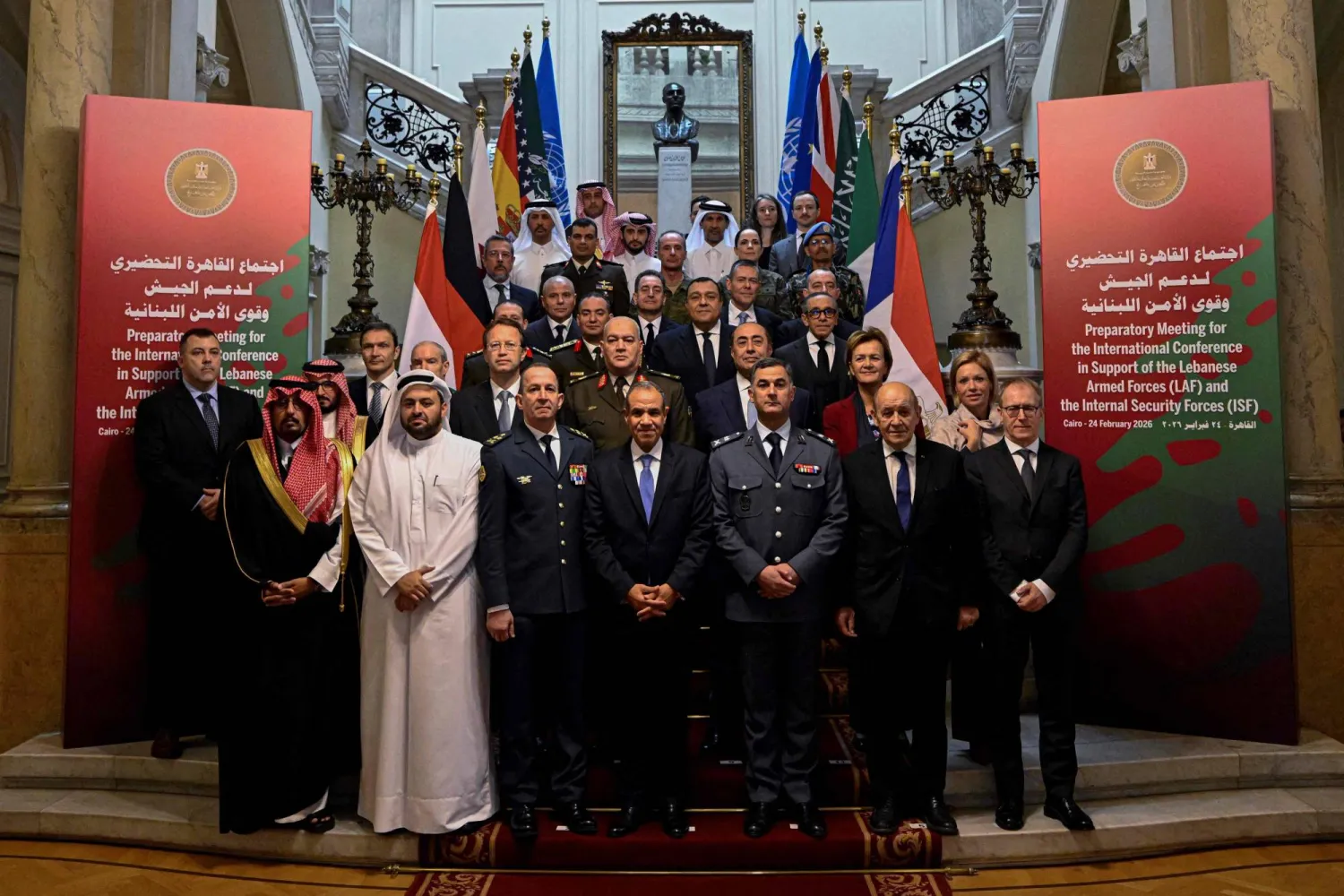

Paris is pinning high hopes on a preparatory meeting held in Cairo on Tuesday under Egyptian Foreign Minister Badr Abdelatty, seen as a key step toward the conference France will host in Paris on March 5, to rally support for the Lebanese army and the Internal Security Forces.
French diplomatic sources said President Emmanuel Macron’s special envoy for Lebanon Jean-Yves Le Drian represented France at the meeting.
He was joined by General Valentin Seiler, France’s representative in the ceasefire supervision mechanism between Lebanon and Israel and in the Technical Military Committee for Lebanon, which also includes the United States, Italy, Britain, Spain and Germany.
Civilian-military coordination
Paris described the Cairo gathering as both civilian and military, calling it “the result of close coordination among the members of the Quintet in terms of content, format and objectives.”
The meeting followed intensive groundwork by the Technical Military Committee for Lebanon, working with Lebanese security institutions to precisely define the needs of the Lebanese army and the Internal Security Forces.
The expanded session was preceded by talks between Abdelatty and Le Drian.
France wants Cairo to deliver a clear, comprehensive assessment of Lebanon’s needs and a detailed priority map. Urgent requirements include logistical support — fuel, troop mobility, communications and training — to help the army carry out tasks assigned by the political leadership.
Foremost among them is the second phase of consolidating state control over weapons, between the Litani and Awali rivers. Army Commander General Rodolphe Haykal said the operation could take between four and eight months.
Paris believes coordination among the main stakeholders is essential to avoid duplication, ensure complementarity and clarify what each party can provide. Expected assistance ranges from weapons and equipment to training, communications tools and financial support.
With 50 countries and 10 regional and international organizations invited to the Paris conference, coordination is seen as urgent so Lebanon knows exactly what it can expect.
What can Lebanon expect?
Sources declined to spell out what Beirut may secure in Paris. Several parties are tying their pledges to the Lebanese army’s progress in implementing UN Security Council Resolution 1701 and advancing the weapons consolidation plan, which faces resistance from Hezbollah.
Countries engaged in Lebanon are betting on the army not only to consolidate state authority over arms, but as a cornerstone of security and stability. Lebanon is seeking to recruit more troops, while the Internal Security Forces are expected to shoulder internal security duties to ease pressure on the army.
Yet mounting regional tensions could complicate those efforts. The possibility of US strikes on Iran, potential Israeli involvement, and intensified operations against Hezbollah would deepen the challenges confronting Lebanese authorities, especially the army.
Hopes for the Paris conference rest not only on military and financial aid, but also on political backing to shield Lebanon from a repeat of what it endured during the “support war” and its aftermath, the consequences of which continue to weigh on Lebanese citizens almost daily.