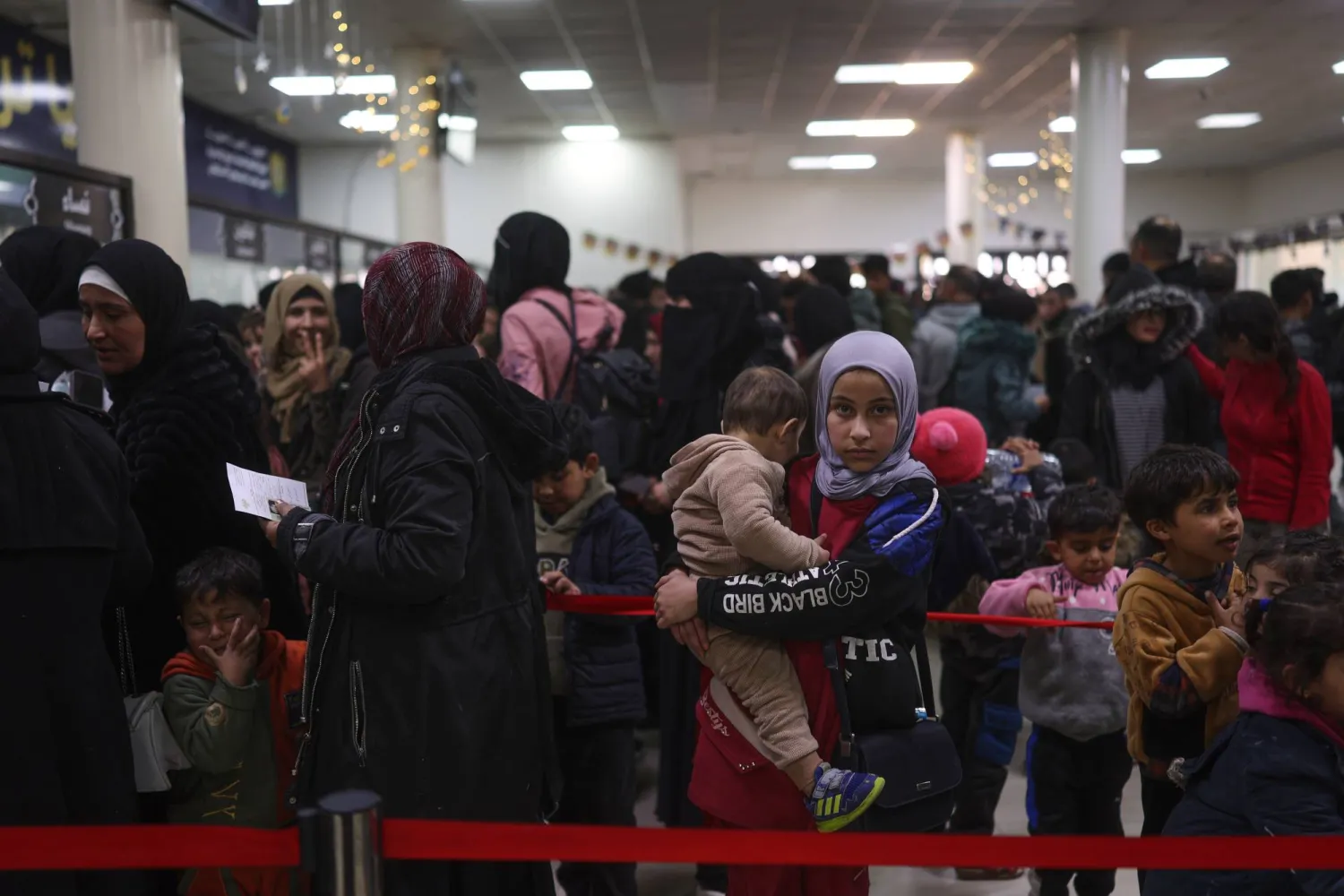

Syrian experts warned that escalating tensions in the region could drag on indefinitely, placing Syria at the heart of the crisis as the government struggles to meet citizens’ needs amid the return of hundreds of thousands of refugees from Lebanon and expectations of further returns from Türkiye and neighboring countries this summer.
Sources told Asharq Al-Awsat that if tensions ease in the near term, the impact of the ongoing regional war would be limited.
“But if it continues, the consequences will be catastrophic for countries with fragile economies, foremost among them Syria,” they said.
Even as the Energy Ministry denied any current shortages of petroleum products, Syrian refugees continued to stream back from Lebanon.
The state-run Syrian Arab News Agency (SANA) said the Jousieh border crossing in Homs province recorded a noticeable rise on Tuesday in the number of returnees due to current security developments in the region.
The General Authority for Land and Sea Ports said on Monday that the Jdeidet Yabous and Jousieh crossings had received about 11,000 arrivals from Lebanon, most of them Syrians. It said it remained on full alert to handle the growing influx.
At home, early signs of strain are emerging. Lines have lengthened at household gas distribution centers, and electricity rationing hours have increased after a relative improvement in recent months.
The fallout from the regional escalation was immediate, economists said. Firas Shaabo told Asharq Al-Awsat that while Syria is not a direct party to the conflict, it sits at its economic center. A prolonged crisis would be devastating for fragile economies, especially Syria’s, he said.
Investors and institutions that signed agreements with Damascus would retreat into what he described as “internal hedging,” leaving Syria to cope alone.
That comes as hundreds of thousands of refugees return involuntarily from Lebanon and Iraq, with large numbers also expected from Türkiye this summer, along with expatriates - a heavy burden for a government already under strain.
Academic researcher and economic adviser Ziad Ayoub Arbache said the military escalation had morphed into an “economic shock,” rippling through oil prices, shipping lanes and civil aviation routes.
As regional security risks mount, fragile economies, led by Syria, are facing mounting pressure on energy supplies, supply chains and exchange rates amid warnings of disruptions.
The broad strikes on Iran carry economic implications, alongside threats to Gulf shipping.
Iranian strikes affecting the Strait of Hormuz, through which roughly 25% of global oil trade passes, have driven up insurance premiums and freight costs.
Arbache said higher shipping and insurance costs were already squeezing Syria’s access to fuel, industrial and food supplies, and production inputs. Oil, he noted, is used in the manufacture of 500,000 products in Syria. Energy-intensive sectors such as cement, food and agriculture have been hit, with output falling and prices rising, fueling inflation.
If the escalation widens, oil prices could top $100 a barrel, he warned. Factory closures, rising unemployment and shrinking remittances from expatriates, particularly in the Gulf, would likely follow.
Long-awaited investments could stall, capital could flee, and unemployment could climb again amid entrenched stagflation, especially in construction and tourism. A renewed energy crisis would pile further pressure on households.
The Energy Ministry said on Tuesday there was no shortage of gasoline, diesel or household gas. Refineries were operating normally, crude import contracts remained in place through approved channels, and operational stockpiles were within safe limits.
It said congestion at some fuel stations stemmed from an unprecedented spike in demand, with sales surging to more than 300% of the normal daily average due to fears over regional developments and the spread of rumors, not an actual supply shortfall.
Still, Shaabo warned of “very difficult days” ahead if tensions fail to subside. Syria depends heavily on imported essentials, while its production base is limited, reserves are weak and infrastructure worn down. Exchange rate distortions add further strain.
Syria’s external vulnerability outweighs its internal resilience, he said, and any global energy shock would quickly erode purchasing power and living standards.
Arbache agreed, saying Syria’s economy “is tied to the trajectory of the conflict through oil, transport and exchange rates.”
Between open-ended escalation and possible political containment, he said, the course of the war will determine economic and living stability in the period ahead.