


UN: Almost 700,000 Displaced, 84 Children Killed after Israeli Strikes on Lebanon

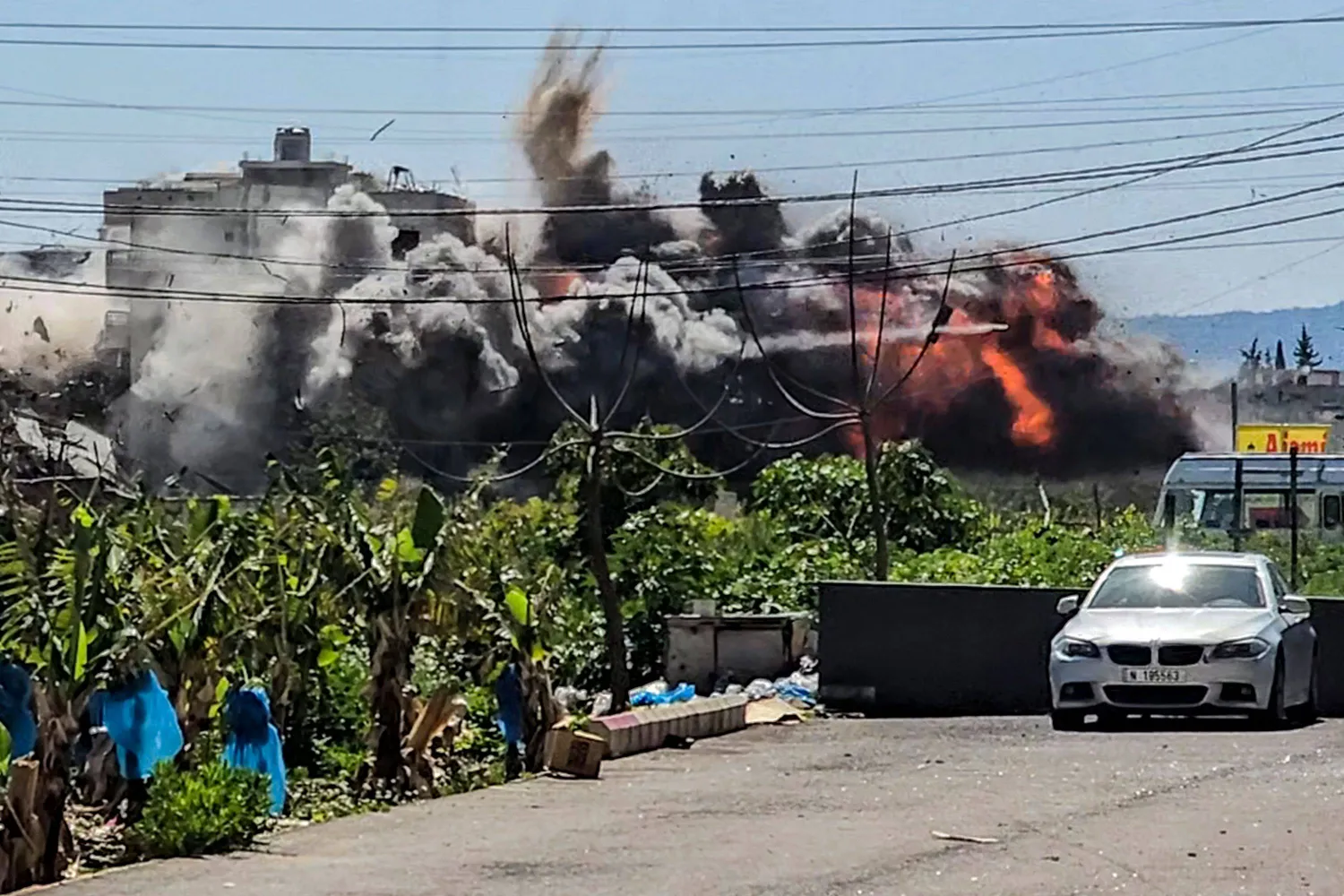
An explosion erupts following an Israeli airstrike on the village of Abbasiyeh in southern Lebanon on March 10, 2026 -  (Photo by KAWNAT HAJU / AFP)
An explosion erupts following an Israeli airstrike on the village of Abbasiyeh in southern Lebanon on March 10, 2026 - (Photo by KAWNAT HAJU / AFP)
TT

UN: Almost 700,000 Displaced, 84 Children Killed after Israeli Strikes on Lebanon

An explosion erupts following an Israeli airstrike on the village of Abbasiyeh in southern Lebanon on March 10, 2026 -  (Photo by KAWNAT HAJU / AFP)
An explosion erupts following an Israeli airstrike on the village of Abbasiyeh in southern Lebanon on March 10, 2026 - (Photo by KAWNAT HAJU / AFP)

The humanitarian crisis in Lebanon has deepened amid the wider Middle East war, with 84 children killed and more than 667,000 people displaced, two UN agencies said on Tuesday, as lives are upended on a massive scale across the country.

A total of 486 people have been killed in the war so far and 1,313 injured, of which 259 are children, according to the World Health Organization.

"This is only seven-days conflict, and we are already seeing that almost 100 children that have lost their lives," said Abdinasir Abubakar, WHO representative in Lebanon.

"One reason why we have a high number of children is that most of the attacks that we see actually is, it's urban centers, like in Beirut," he said, adding that Israel's airstrikes, which it says target Hezbollah infrastructure, are putting civilian lives at risk.

The current rate of displacement in Lebanon is outpacing levels seen during the 2023-24 war between Hezbollah and Israel, the UN Refugee Agency said on Tuesday. During that conflict, 886,000 people were internally displaced in Lebanon, while tens of thousands of Israelis were evacuated from northern towns near the Lebanese border.

ISRAEL ORDERS EVACUATION

Lebanon's sharp rise in displacement this week stems from large-scale evacuation orders issued by the Israeli army for southern Lebanon and Beirut's densely populated southern suburbs, which the UN human rights chief said on Friday raised serious concerns under international law.

The WHO warned that Lebanon's hospitals and frontline responders were under "extraordinary strain" trying to manage the rising number of patients.

Five hospitals are now out of service, four partially damaged, and 43 primary healthcare centers are closed - mostly in the south, which has been largely evacuated, Abubakar said.

"Many of the people fleeing were also fleeing back in 2024. We met many who then had their homes completely destroyed, family members killed and so on. So this means that people are not waiting to see what will happen next. They leave immediately," said Karolina Lindholm Billing, UNHCR representative in Lebanon.

Some 120,000 people are staying in government-designated shelters, while others are still looking for somewhere to stay, the UNHCR said, citing government figures.

"Many others are staying with relatives or friends or still searching for accommodation, and we see cars lined along the street with people sleeping in them and also on the sidewalks," Billing said.



Lebanon State Media Reports Israeli Strikes after Conditional Truce Announcement

This photograph taken from the southern Lebanese area of Marjayoun shows smoke rising from the site of an Israeli strike that targeted the village of Kfar Tibnit on June 3, 2026. (Photo by AFP)
TT

Lebanon State Media Reports Israeli Strikes after Conditional Truce Announcement

This photograph taken from the southern Lebanese area of Marjayoun shows smoke rising from the site of an Israeli strike that targeted the village of Kfar Tibnit on June 3, 2026. (Photo by AFP)

Lebanese official media reported Israeli strikes on the country's south on Thursday morning, hours after an announcement that Israel and Lebanon had agreed to implement a conditional ceasefire following talks in Washington.

The state-run National News Agency (NNA) reported Israeli drone strikes along roads at several south Lebanon locations, saying at least one caused casualties.

Israel and Lebanon agreed Wednesday to implement a ceasefire but said it would require a "complete cessation" of fire by Iran-backed Hezbollah, according to a joint statement after US-led talks in Washington.


Israel Far-right Minister Slams Ceasefire with Lebanon as 'Serious Mistake'

A photograph shows the aftermath of Israeli airstrikes in the Burj al-Chamali area near the southern city of Tyre, on June 2, 2026. (Photo by Kawnat HAJU / AFP)
TT

Israel Far-right Minister Slams Ceasefire with Lebanon as 'Serious Mistake'

A photograph shows the aftermath of Israeli airstrikes in the Burj al-Chamali area near the southern city of Tyre, on June 2, 2026. (Photo by Kawnat HAJU / AFP)

Israel's far-right National Security Minister Itamar Ben Gvir criticized on Thursday a ceasefire deal with Lebanon brokered by Washington, calling it a "serious mistake".

"The ceasefire with Lebanon is a serious mistake and the pipe dreams of advisers are dragging the prime minister (Benjamin Netanyahu) to wrong decisions," the minister wrote on X.

Israel and Lebanon agreed Wednesday to implement a ceasefire but said it would require a "complete cessation" of fire by Iran-backed Hezbollah, according to a joint statement after US-led talks in Washington, said AFP.


Lebanon’s Shiite Duo Drops Israeli Withdrawal Demand in Ceasefire Talks

The Lebanese delegation participating in the Washington talks on Tuesday (Reuters) 
TT

Lebanon’s Shiite Duo Drops Israeli Withdrawal Demand in Ceasefire Talks

The Lebanese delegation participating in the Washington talks on Tuesday (Reuters) 

Recent statements by Lebanon’s Shiite duo - the Amal Movement and Hezbollah - indicate a tacit acceptance that Israeli forces could remain in Lebanese territory during an anticipated ceasefire phase.

This marks a shift from their previous insistence that any truce be accompanied by an Israeli withdrawal, the return of displaced residents to their villages, and the reconstruction of areas devastated by the war with Israel since 2023.

Israeli Prime Minister Benjamin Netanyahu on Wednesday blamed Hezbollah for the latest escalation, telling CNBC that it was being driven by Hezbollah rather than Israel and that his government remained committed to the ceasefire.

He also said that US President Donald Trump shares his objective of stripping Hezbollah of its arsenal and turning Lebanon into a demilitarized state.

A Lebanese source involved in ongoing contacts between Beirut and Washington said the demands of the Shiite duo, represented in negotiations by Parliament Speaker Nabih Berri, no longer focus on Israeli withdrawal or reconstruction.

Instead, the source said, their position is now limited to securing a ceasefire across land, sea and air, along with an end to the demolition and bulldozing operations carried out by Israeli forces in occupied Lebanese territory.

However, sources familiar with the duo’s position told Asharq Al-Awsat that the immediate objective is achieving a ceasefire in all its dimensions, stressing that subsequent steps — including an Israeli withdrawal, reconstruction efforts, and the deployment of the Lebanese Army to areas vacated by Israeli forces in southern Lebanon — would follow once a truce is in place.

Lebanese and Israeli diplomats held a second day of direct talks in Washington on Wednesday, the fourth such round since the outbreak of the war on March 2. The discussions coincided with an Israeli military escalation and intensified Lebanese contacts with Washington aimed at pressing Israel to implement a comprehensive ceasefire in Lebanon that would also apply to Hezbollah.

On Monday evening, Trump announced that a de-escalation arrangement had been reached between Hezbollah and Israel, saying that Israel would refrain from attacking Hezbollah and that Hezbollah would likewise refrain from attacking Israel. He also revealed he had stopped an Israeli strike on Beirut.

Israel on Tuesday underscored what it described as a “new equation,” under which it would strike Beirut’s southern suburbs if Hezbollah targeted northern Israel, adding that the United States had endorsed the principle.

Hezbollah Deputy Chairman of the Political Council Mahmoud Qomati told Agence France-Presse on Tuesday that the group would not accept any partial ceasefire agreement and rejected any arrangement that would trade an end to Israeli strikes on Beirut’s southern suburbs for a halt to Hezbollah attacks on northern Israel.

Meanwhile, the United Kingdom voiced support for Lebanon’s negotiating efforts. The Lebanese presidency said President Joseph Aoun received a phone call from UK National Security Adviser Jonathan Powell to discuss security and military developments in Lebanon, as well as the course of negotiations.

Powell reaffirmed Britain’s support for Lebanon and its political choices aimed at preserving the country’s security and stability, according to the presidency.