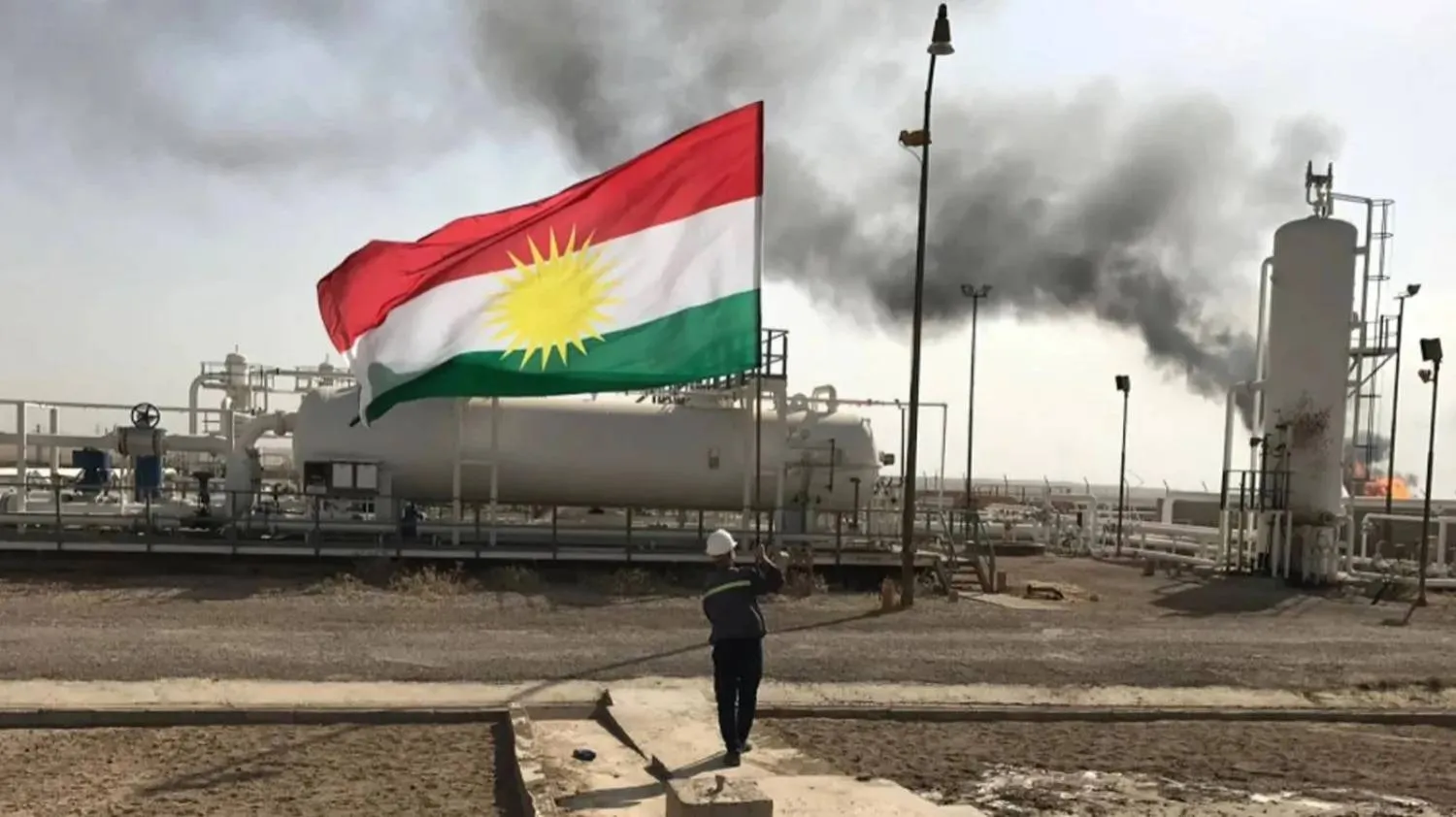

Two Kurdish officials ruled out allowing Iraqi oil exports through the Kurdistan Region’s pipeline to Türkiye’s Ceyhan port “without a deal and conditions.”
Their remarks come after reports that Iraq’s Oil Ministry sent a letter to the Kurdistan Regional Government requesting the export of at least 100,000 barrels per day through the Kurdistan pipeline to the Turkish port.
Speaking to Asharq Al-Awsat on condition of anonymity, the officials said the region may agree to allow Iraqi oil from the Kirkuk fields to pass through its pipeline “under the weight of the current crisis and US pressure.”
However, they stressed that the region would not allow the oil to pass free of charge or without conditions.
There has been no official confirmation or denial from the Kurdistan Region regarding the federal ministry’s request. One official said the issue is expected to be discussed at a meeting of the region’s government and predicted a “conditional Kurdish approval.”
He noted that the pipeline in the Kurdistan Region cost billions of dollars to build and was largely financed through loans taken by the region from Türkiye and other countries.
The official said the region’s authorities “were forced to build the pipeline” after Baghdad cut the region’s financial allocations between 2014 and 2018, prompting Kurdistan to seek alternative revenue sources to sustain daily life and cover government spending.
“It is not logical for Baghdad to pay only transit fees,” he said. “It should pay more than that to the regional government because this pipeline was not built from the Iraqi state treasury but from funds that became debts owed by the region.”
He added that “the time has come to hold accountability on many issues, including the suspension of the region’s budget for several years.”
The second official said exporting oil through the Kurdistan Region’s pipelines to Türkiye “cannot happen without conditions.”
“Such a step is usually linked to a package of political and economic understandings between the region and the federal government,” he said, adding that it could also influence developments in the energy market, particularly the sharp rise in oil prices.
He said it was “natural for the region to seek to resolve several outstanding issues with Baghdad within a framework that takes into account the interests of both sides and strengthens stability in the energy file.”
“We also have the dollar problem resulting from the application of the ASYCUDA system at the region’s border crossings, which has caused significant damage to imports and trade in the region in recent months,” he added.
Iraq’s crisis
Baghdad is facing a serious challenge after halting oil exports following the war that erupted between the US, Israel, and Iran, leaving it unable to meet financial obligations or pay public sector salaries in the coming months.
Nabil Al-Marsoumi, a professor of economics at the University of Basra, said Iraq has made the largest oil production cuts in the world due to the war and the closure of the Strait of Hormuz, reducing output by about 2.9 million barrels per day.
In a Facebook post, Al-Marsoumi said that because of the war and the shutdown of most oil fields, Iraq’s crude exports from Kurdistan fields via the Turkish Ceyhan pipeline had fallen from 200,000 barrels per day to between 20,000 and 40,000 barrels per day.
He said this means Iraq’s current exports do not exceed 50,000 barrels per day after including shipments to Jordan of about 10,000 barrels per day.
Al-Marsoumi said it would be possible to export 250,000 barrels per day of Kirkuk oil through the Kurdistan Region’s pipeline to Ceyhan once the Kurdistan Regional Government approves.
He added that contacts are underway with the Jordanian government to increase oil exports through tanker trucks.
Authorities in Baghdad have faced strong public criticism for relying entirely on southern ports for oil exports and for failing to complete alternative export pipelines through Jordan or Syria.
Alternative routes
Saheb Bazoun, an Oil Ministry spokesperson, told AFP that Iraq’s oil sector has been heavily affected by the disruption.
“Much like other countries in the region, oil production and marketing have been severely impacted, leaving the government no choice but to seek alternative export routes to the Strait of Hormuz,” Bazoun said.
He added that several Iraqi oil shipments are currently stranded at sea.