


Iran War Raises Concerns Over Impact on Suez Canal Traffic

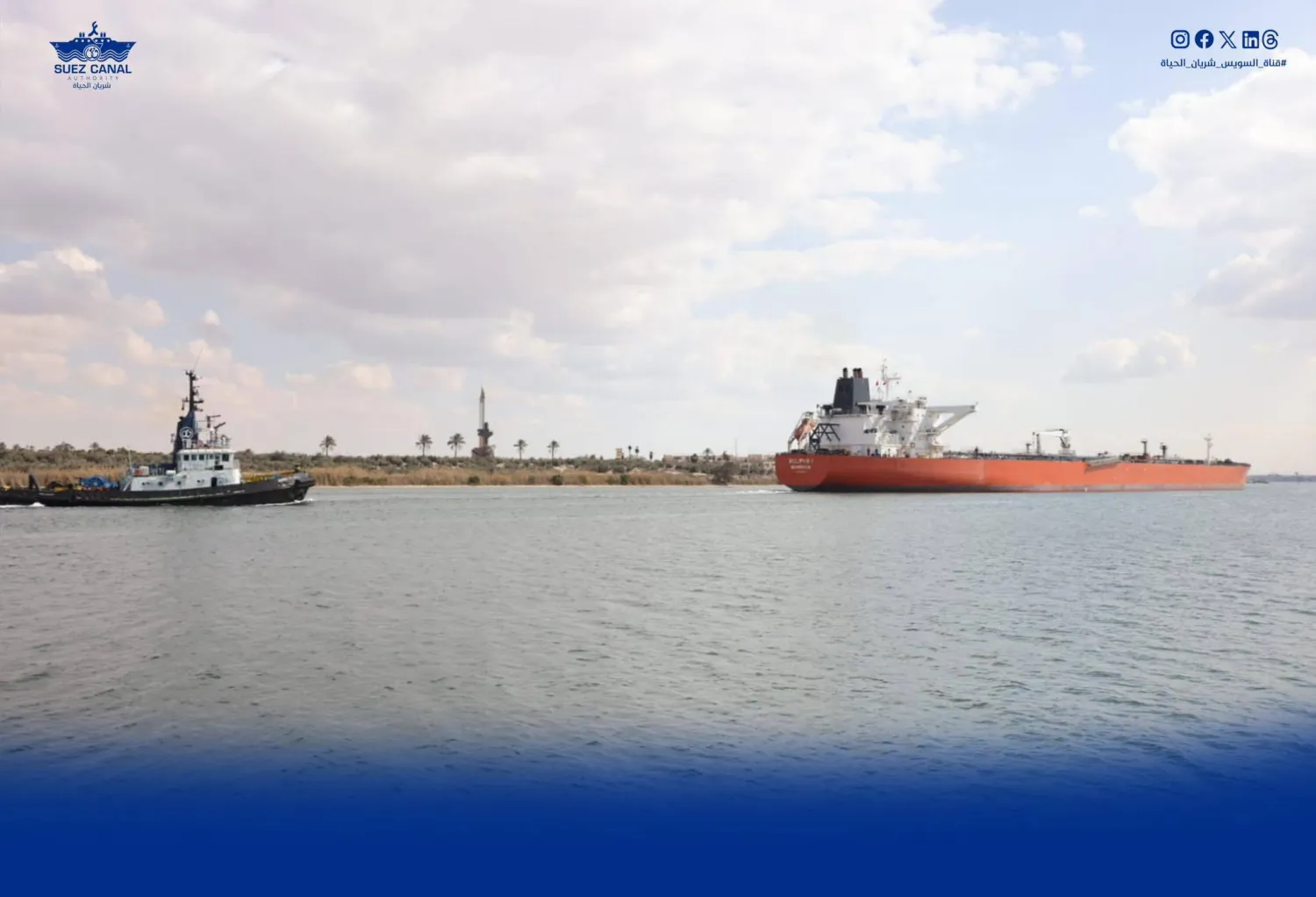
A ship transits the Suez Canal last month (Suez Canal Authority). 
TT

Iran War Raises Concerns Over Impact on Suez Canal Traffic

A ship transits the Suez Canal last month (Suez Canal Authority). 

The Iran war has sparked growing concern in Egypt over its potential impact on navigation through the Suez Canal, one of the country’s most important sources of national income. Experts say the conflict has already begun affecting traffic through the strategic waterway as security risks for ships increase.

Recent reports indicate that several major global shipping companies—including Denmark’s Maersk, France’s CMA CGM, and Germany’s Hapag-Lloyd—have suspended the transit of some vessels through the canal.

The head of the Suez Canal Authority, Admiral Osama Rabie, expressed hope that regional stability would return soon, warning that escalating tensions could have serious repercussions for maritime transport and global supply chains.

In a statement issued Thursday, Rabie said the authority has moved to upgrade its maritime and navigational services and introduce new activities designed to meet customer needs in both normal and emergency circumstances. These include ship maintenance and repair services, maritime rescue operations and marine ambulance services, alongside continued modernization of the authority’s fleet of marine units.

Early impact on canal traffic

International transport expert Osama Aqil said the war’s effect on the canal had been evident since the first days of the conflict.

“Current indicators show that canal traffic has declined by about 50 percent since the war began,” Aqil told Asharq Al-Awsat. He attributed the drop to rising security risks and higher insurance premiums imposed on vessels passing through the region.

Aqil warned that the impact could deepen if the conflict drags on. Even after hostilities end, he said, it may take considerable time for shipping traffic to return to normal.

“International shipping groups that divert their vessels to the Cape of Good Hope route will likely sign contracts for the alternative passage,” he said. “Ending those arrangements and redirecting ships back through the canal will take time.”

Before the latest tensions, the Suez Canal had been showing signs of recovery following an earlier setback caused by Houthi attacks on commercial vessels in the Red Sea linked to the war in Gaza.

In January, the Suez Canal Authority said navigation statistics showed a “noticeable improvement” during the first half of the 2025–2026 fiscal year. Rabie said at the time that indicators pointed to improving revenues as some shipping lines resumed using the canal after conditions stabilized in the Red Sea.

Wider threat to global trade

Egyptian President Abdel Fattah el-Sisi has also warned about the impact of regional tensions on shipping in the Red Sea. During a meeting in Cairo earlier this month with Ajay Banga, president of the World Bank Group, Sisi said Egypt had lost roughly $10 billion in Suez Canal revenues due to the Gaza war, according to the Egyptian presidency.

Aqil said the Iran war could affect not only the canal but global trade more broadly, which he said has already shown signs of slowing.

“If the conflict continues, transport costs will rise, which will push up prices for many goods and commodities,” he stated.

Suez Canal revenues dropped sharply in 2024, falling 61 percent to $3.9 billion, compared with about $10.2 billion in 2023.

Security risk management expert Major General Ihab Youssef noted that the continuation of the war poses a threat to global navigation, not only to the Suez Canal.

Egypt secures ships along the canal and up to the limits of its territorial waters, he remarked. However, vessels traveling to and from the waterway must still pass through areas affected by military operations in the Gulf region and the Bab el-Mandeb Strait, prompting many shipping companies to reroute vessels around the Cape of Good Hope.

“Any closure of the Strait of Hormuz would further increase the risks of transit, particularly if the war is prolonged,” Youssef said.



Egypt Says It Held Calls with US Witkoff, Regional Counterparts

 Egyptian Foreign Minister Badr Abdelatty speaks during a joint news conference with Russian Foreign Minister Sergei Lavrov following their meeting in Moscow, Russia April 3, 2026. (Pavel Bednyakov/Pool via Reuters)
Egyptian Foreign Minister Badr Abdelatty speaks during a joint news conference with Russian Foreign Minister Sergei Lavrov following their meeting in Moscow, Russia April 3, 2026. (Pavel Bednyakov/Pool via Reuters)
TT

Egypt Says It Held Calls with US Witkoff, Regional Counterparts

 Egyptian Foreign Minister Badr Abdelatty speaks during a joint news conference with Russian Foreign Minister Sergei Lavrov following their meeting in Moscow, Russia April 3, 2026. (Pavel Bednyakov/Pool via Reuters)
Egyptian Foreign Minister Badr Abdelatty speaks during a joint news conference with Russian Foreign Minister Sergei Lavrov following their meeting in Moscow, Russia April 3, 2026. (Pavel Bednyakov/Pool via Reuters)

Egypt's Foreign Minister Badr Abdelatty held separate calls to discuss proposals for regional de-escalation with ‌US Envoy ‌Steve Witkoff ‌and ⁠regional counterparts including Iranian ⁠Foreign Minister Abbas Araqchi, the ministry said in a ⁠statement on ‌Sunday.

Egypt, ‌Türkiye and ‌Pakistan have ‌emerged as active intermediaries in the crisis, with ‌Islamabad recently hosting a meeting to ⁠discuss ⁠regional de-escalation and proposals to reopen the Strait of Hormuz.


Hezbollah Says Targeted Israeli Warship with Cruise Missile

A man checks his phone on a beach as smoke rises from Israeli artillery shells on Qlaileh village, visible from Tyre city, south Lebanon, March 28, 2026. (AP)
TT

Hezbollah Says Targeted Israeli Warship with Cruise Missile

A man checks his phone on a beach as smoke rises from Israeli artillery shells on Qlaileh village, visible from Tyre city, south Lebanon, March 28, 2026. (AP)

Hezbollah on Sunday said it had targeted an Israeli warship with a cruise missile off the Lebanese coast, the first such claim by the group since the start of the Middle East war.

In a statement, the Iran-backed group said it targeted the vessel 68 nautical miles off the Lebanese coast, claiming the warship was "preparing to launch attacks on Lebanese territory".

Israeli warships have been used on several recent occasions to launch strikes on Lebanon.


IMF Hails Yemen’s Reforms, Supports its Recovery Path

The light of the setting sun illuminates some clouds in the sky over Sanaa, Yemen, 30 March 2026. (EPA)
TT

IMF Hails Yemen’s Reforms, Supports its Recovery Path

The light of the setting sun illuminates some clouds in the sky over Sanaa, Yemen, 30 March 2026. (EPA)

The Executive Board of the International Monetary Fund (IMF) on Saturday resumed Article IV consultations with the Yemeni legitimate government after 11 years.

Reflecting the country’s improved institutional performance, this development is an important indicator of restoring channels of cooperation with international financial institutions and boosting confidence in the reform path being taken by the government.

“The renewed consultation reflects enhanced institutional capacity and data production,” the IMF said in a statement.

It positively noted the government’s efforts to achieve the minimum economic stabilization despite the extraordinary circumstances the country is going through.

The Fund said Yemen’s economy is gradually emerging from the deep recession following the suspension of oil exports in 2022, with the pace of contraction moderating and fiscal and external pressures easing. However, it warned that the war in the Middle East is expected to weigh on Yemen’s economy this year, while risks to the outlook remain substantial.

IMF directors affirmed the authorities' commitment to revenue mobilization and fiscal governance enables the delivery of essential public services.

They noted that a market-based exchange rate supports Yemen’s economic recovery and social stability.

Directors said that engagement with creditors to support a comprehensive debt treatment is also essential to restore debt sustainability.

Meanwhile, the prioritization of essential spending is expected to weigh temporarily on the fiscal balance, the IMF said, but over time will help protect the most vulnerable.

The Yemeni government welcomed the approval of the IMF’s Article IV consultation results after an 11-year pause - an important step restoring international engagement and confidence in its reform agenda to strengthen financial management, transparency and fight corruption, despite the war outcomes and the suspension of oil exports as a result of Houthi attacks.

The government reaffirmed its commitment to continue implementing a comprehensive reform program in various sectors, and to work in coordination with international partners to alleviate human suffering and achieve economic stability.

It then noted the adoption of the 2026 general budget as part of efforts to revive state institutions.

Despite the positive indicators, the IMF said the challenges facing Yemen's economy remain large and complex amid the ongoing war, institutional fragmentation and lack of financial resources.

The IMF stressed that the risks surrounding the future outlook remain high, especially in light of regional developments and their potential impact on the global economy.

It said inflation, fluctuating exchange rates and rising import costs will cause major pressure on the economy, requiring the adoption of balanced precautionary policies to maintain monetary and financial stability.

From 2027 onward, the IMF said the economy is expected to begin regaining momentum as inflation declines, real incomes recover and remittances and non-oil exports expand under the authorities’ Agriculture Plan.
