
Syria’s capital is witnessing an unprecedented cultural development as preparations got underway for official and popular celebrations of Nowruz, the Kurdish New Year, marking the arrival of spring on March 21.
For the first time in modern Syrian history, festivities will take place openly in Damascus, reflecting growing recognition of the Kurdish identity and culture.
The celebrations follow a decree issued two months ago by President Ahmed al-Sharaa, with expectations of broad participation from across society. Events are set to begin Friday night and continue through Saturday.
A Nowruz concert will be held in Umayyad Square - one of Damascus’s most prominent landmarks. The Ministry of Culture has invited audiences to a performance by the Kurdish heritage group Ashti at the Damascus Opera House, while a major celebration is planned at Al-Fayhaa Stadium in the Mazzeh area. Additional festivities are expected in Kurdish-populated neighborhoods such as Rukn al-Din and Wadi al-Mashari.
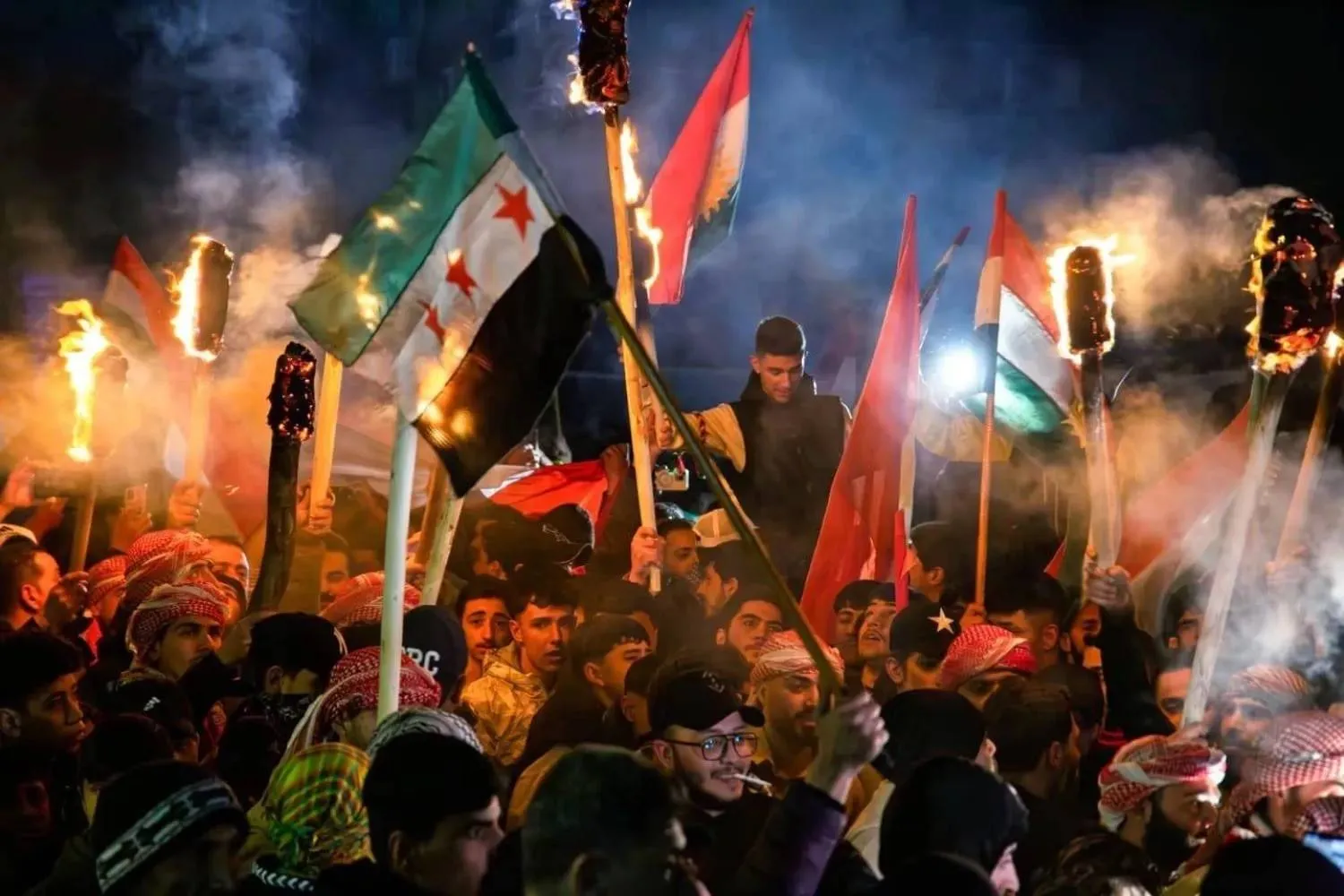
Nowruz symbolizes freedom, renewal and Kurdish national identity. Traditions include lighting bonfires, performing folk dances and wearing traditional dress.
Kurdish political analyst Zaid Safouk said the occasion would resonate both domestically and regionally. “For the first time in the history of the Syrian Republic, there is official recognition of a Kurdish holiday,” he told Asharq Al-Awsat, describing the celebration as “a message of hope that peace remains the only path for societies.”
For decades under Baath Party rule and later under Bashar al-Assad, Nowruz celebrations were banned, along with public expressions of Kurdish identity. Authorities often viewed such activities as separatist threats.
That has now changed. Following the fall of the Assad regime in December 2024, Damascus saw its first unrestricted Nowruz celebration in March 2025.
In January 2026, al-Sharaa issued Decree No. 13, granting broader rights to Kurdish citizens. The decree recognizes Nowruz as a national holiday, restores citizenship to previously stateless Kurds, and designates Kurdish as a national language.
Kurdish writer and political researcher Mohammed Wali described the decree as a break from decades of marginalization.
“Syrian Kurds view these steps with great positivity and have welcomed it,” he said, noting that official recognition of their language and culture represents a major milestone.
He added that acknowledging Kurdish rights within a national framework could help build “a future based on legal recognition and pluralism,” while strengthening trust among Syrians during a sensitive transitional period.
The presidency has also included Nowruz for the first time in the official holiday calendar, alongside Revolution Day, Eid al-Fitr and Mother’s Day, with public institutions closed from March 18 to 23.
Foreign Minister Asaad al-Shaibani said the move reflects “deep respect for all components of the Syrian population,” stressing that a free Syria must embrace its diverse cultures and heritage.
Damascus also hosted a rare public condolence ceremony for Kurdish politician Salih Muslim, a senior figure in the Democratic Union Party (PYD), who died on March 11. His funeral in Kobani drew Kurdish leaders and political representatives from across the region.