


At Least 17 Dead in Fighting on Sudan's Border with Chad

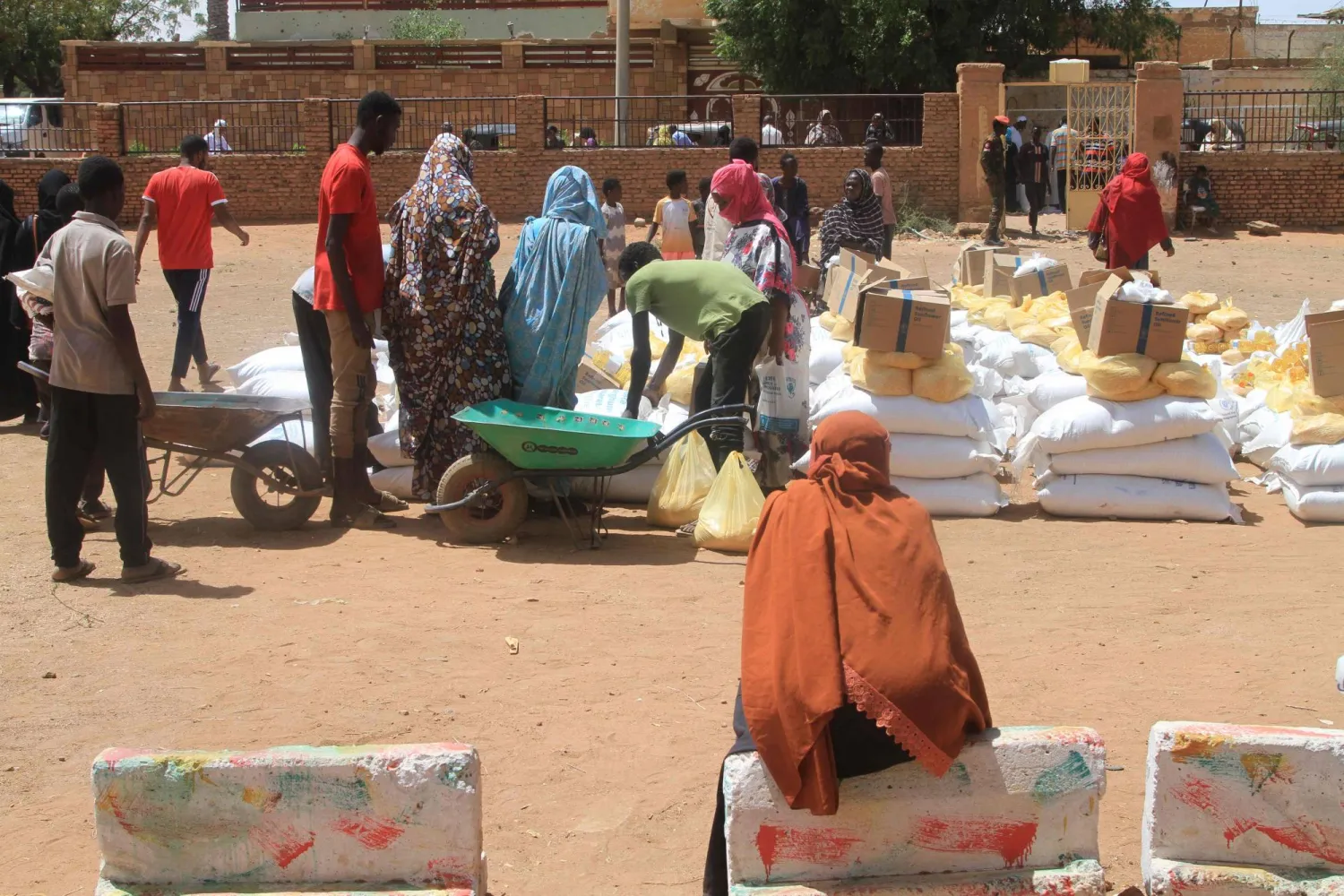
Residents receive aid from World Food Programme (WFP) at Al-Omada neighborhood of Omdurman, the twin city of Khartoum on March 11, 2026. (Photo by Ebrahim Hamid / AFP)
TT

At Least 17 Dead in Fighting on Sudan's Border with Chad

Residents receive aid from World Food Programme (WFP) at Al-Omada neighborhood of Omdurman, the twin city of Khartoum on March 11, 2026. (Photo by Ebrahim Hamid / AFP)

The latest heavy fighting between warring parties along Sudan’s border with Chad has killed 17 people and many wounded, a medical group said.

The attacks on Monday in Tina left 66 people in serious condition, Doctors Without Borders, also known as Médecins Sans Frontières, or MSF, said in a post on X late Tuesday.

The army said in an update that the Rapid Support Forces, or RSF, had expanded its attacks on military areas in Tina, but that troops were able to repel them and forced them to withdraw.

The attacks were part of intensified fighting near the border between the army and the RSF, who have been at war since April 2023. The conflict has killed more than 40,000 people, according to UN figures, but aid groups say the true number could be much higher.

Tina is one of the last areas still being held by the Sudanese military in the sprawling Darfur region, which has been under RSF control since October 2025.

The nearby Tine crossing was also used as the sole route for cross-border humanitarian aid and delivery from Chad when Adre border crossing was temporarily closed in recent years.

Chad said last month it had closed its border with Sudan “until further notice'' in an attempt to limit the spread of conflict into its territory.

Those injured in Monday’s attacks were treated by MSF teams and Chadian health services at a new hospital in Tine, Chad, The Associated Press reported.

A MSF staffer at the hospital said doctors are treating patients without water or electricity and are relying on generators and solar panels. Stockpiles of medicine are also said to be running low because of the influx of new patients.

Chad closed its border for a period shortly after Sudan plunged into chaos in April 2023, when a power struggle between the military and the RSF exploded into open fighting in the capital, Khartoum, and elsewhere in the country.

The Darfur and Kordofan regions became the epicenter of the Sudan war, with deadly drone attacks frequently reported in Kordofan. A surge in drone strikes in the Sudanese region of Kordofan has taken a growing toll on civilians and hampered aid operations, analysts and humanitarian workers previously said.



Iraqi, Jordanian, Syrian Military Officials Meet in Amman to Bolster Readiness

Iraqi Defense Ministry spokesman Yahya Rasool. (Government media)
TT

Iraqi, Jordanian, Syrian Military Officials Meet in Amman to Bolster Readiness

Iraqi Defense Ministry spokesman Yahya Rasool. (Government media)

Senior Iraqi, Jordanian and Syrian military officials agreed Tuesday to step up coordination, information-sharing and joint military readiness to address current and future security challenges in the region, said Iraq’s Defense Ministry.

Yahya Rasool, the ministry’s spokesman, said Iraqi Army Chief of Staff Gen. Abdul Amir Rashid Yarallah attended a high-level meeting in Amman with Jordan’s chairman of the Joint Chiefs of Staff and Syria’s chief of the General Staff. The Kurdistan Regional Government’s Peshmerga affairs minister and Peshmerga chief of staff also took part.

The talks focused on strengthening military ties and cooperation amid rapidly evolving regional developments and security challenges.

Participants discussed regional security, border protection and cross-border threats, stressed closer coordination and greater exchanges of information and expertise. They agreed on the need to strengthen joint capabilities and operational readiness.

The military leaders said that rapidly changing conditions in the region required coordinated efforts and continued communication among military and security institutions to protect borders, safeguard national sovereignty and confront threats effectively.

They underscored the importance of expanding existing military cooperation and sharing expertise to bolster defense capabilities, operational readiness and regional stability.

Rasool said the meeting reflected Iraq’s commitment to strengthening military ties with countries in the region and expanding coordination to address security challenges and protect borders.

On the sidelines of the meeting, Yarallah met the commander of US Central Command to discuss military cooperation and coordination, the latest regional security developments and ways to strengthen joint efforts in support of security and stability.


Repeated Drone Attacks Threaten Libya’s Oil Production

Firefighters work to extinguish a fire at a fuel storage tank at the Zawiya oil depot, west of Tripoli, Libya, 11 August 2026. (EPA)
TT

Repeated Drone Attacks Threaten Libya’s Oil Production

Firefighters work to extinguish a fire at a fuel storage tank at the Zawiya oil depot, west of Tripoli, Libya, 11 August 2026. (EPA)

Libya’s oil sector is facing mounting security concerns after repeated drone attacks set facilities ablaze in Zawiya, 40 kilometers (25 miles) west of Tripoli, targeting infrastructure vital to the country’s energy industry.

Experts have described the attacks as a serious threat to the sector, warning that further strikes could prompt the National Oil Corporation (NOC) to declare force majeure and suspend operations at the Zawiya refinery. Calls are growing for urgent measures to protect oil installations.

As of Tuesday afternoon, teams from authorities were still battling a fire at the refinery, cooling the site and securing nearby tanks and facilities to prevent the flames from spreading.

The attacks present a new security challenge for Libya’s oil industry as drones increasingly target facilities directly linked to storage, refining and distribution, putting operations at risk.

Mohammed al-Bakoush, director of the emergency and crisis management department at the National Safety Authority, told Asharq Al-Awsat that “drone chaos and armed groups” had contributed to deteriorating security around the strategically important refinery.

He said conditions had improved Tuesday morning after additional emergency teams and equipment arrived from several areas, though firefighting and cooling operations were continuing.

Among the sites targeted was the Zawiya Oil Refining Company’s lubricants blending and packaging plant, where a drone fell near the main oil tank and a pipeline network used to produce lubricants for the domestic market.

A gasoline storage tank belonging to Brega Oil Marketing Company was also directly hit. The tank contained about 4.5 million liters of gasoline, triggering a major fire that caused it to collapse completely.

On Saturday, a tank at the Zawiya refinery was struck, damaging its wall and leaving two holes that caused some of the stored product to leak, though no fire erupted.

Brega spokesman Ahmed al-Maslati told Asharq Al-Awsat that fuel distribution had been partially disrupted by the situation at the refinery, forcing the company to shift distribution operations to the Tripoli oil depot.

He called for decisive action to end the drone attacks threatening Libya’s oil production and fuel distribution.

No casualties have been reported in the attacks, according to available official statements. However, the NOC has warned that continued strikes could force it to declare force majeure and shut down the refinery entirely.

Oil expert Najwa al-Beshti said such a declaration in Zawiya would have immediate repercussions for Libya’s oil production and exports. It could halt the refining of 100,000 barrels per day from the Sharara field and stop exports of around 200,000 barrels of crude through Zawiya port.

That would deprive the country of more than 20 percent of its oil output, posing a serious threat to an economy heavily dependent on petroleum revenues, she told Asharq Al-Awsat.

Libya produces around 1.4 million barrels of crude per day, according to official figures, while the NOC aims to raise output to about 1.5 million bpd by the middle of next year.

The escalating attacks in Zawiya highlight the vulnerability of Libya’s oil infrastructure amid persistent insecurity and the proliferation of armed groups, making the sector’s protection increasingly dependent on the authorities’ ability to establish lasting security around critical facilities.


RSF-Led Alliance Claims Capture of Strategic Sudanese City Near Ethiopian Border

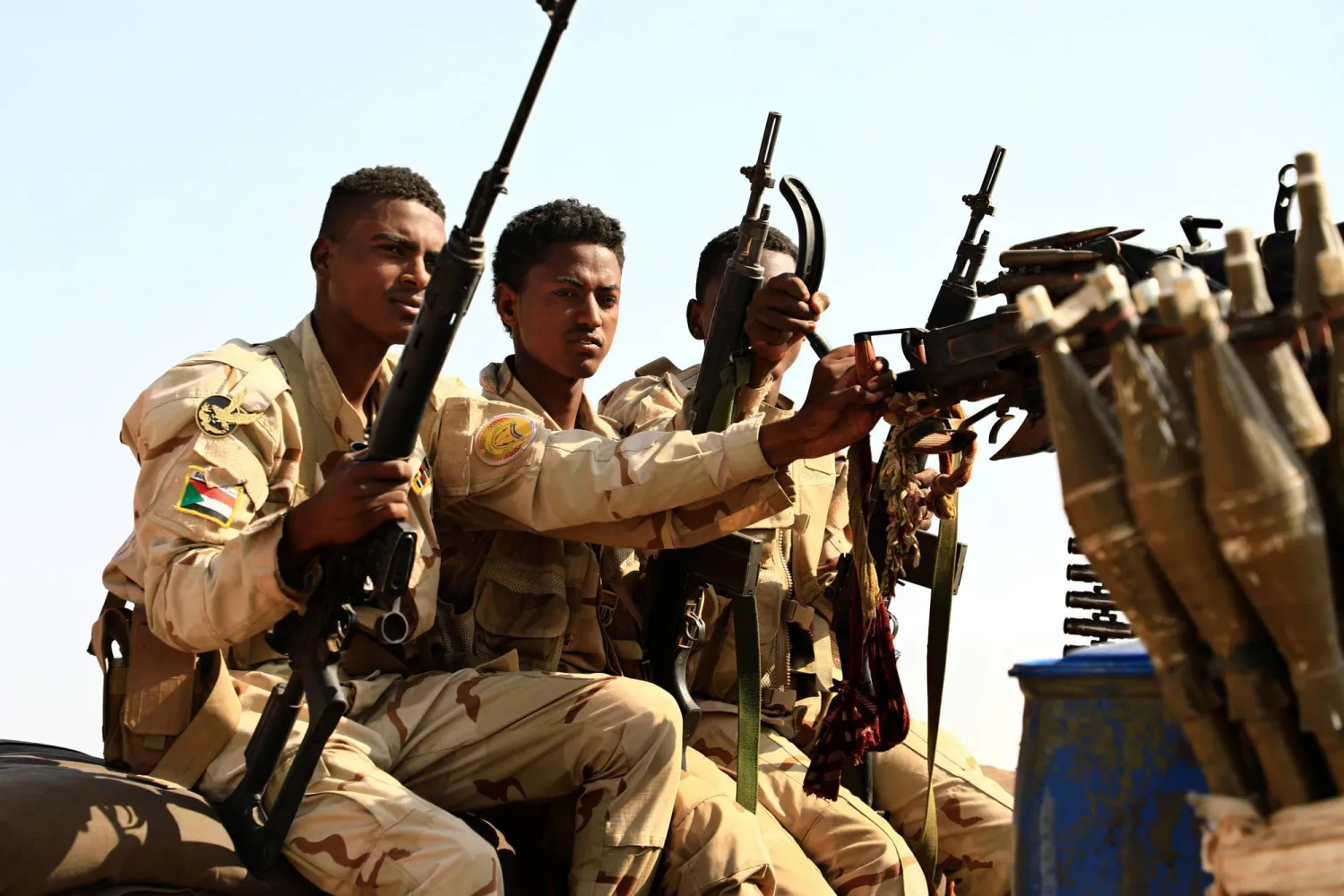
Members of the RSF. (AP file)
TT

RSF-Led Alliance Claims Capture of Strategic Sudanese City Near Ethiopian Border

Members of the RSF. (AP file)

Sudan’s Tasis Alliance, of the Rapid Support Forces (RSF), announced that its troops have seized the strategic city of Qeissan in the Blue Nile state, southeastern Sudan after fierce fighting with the army.

The development marks a new shift on a front that has seen intensifying combat for months. It comes weeks after government forces advanced in southern Blue Nile and recaptured the nearby border city of Kurmuk and other positions.

The Sudan Founding Alliance, known as Tasis, brings together the RSF, led by Mohamed Hamdan Dagalo, known as Hemedti; the Sudan People’s Liberation Movement-North (SPLM-N), led by Abdelaziz al-Hilu; other armed Darfuri groups; and political and civilian forces.

Tasis was formed after its members signed a political charter in Nairobi in February 2025. It later established a parallel authority called the Government of Peace and Unity, headed by Hemedti, with al-Hilu serving as deputy chairman of the presidential council. The army-aligned government in Port Sudan does not recognize the authority.

Tasis claims full control

In a statement Tuesday, Tasis forces announced they had taken “full control” of Qeissan, about 170 kilometers southeast of Blue Nile’s capital, Damazin, and seized all military positions inside the city, along with large quantities of weapons and equipment that were still being inventoried.

The alliance said it was pursuing retreating army units and inflicting losses in personnel and equipment, without providing figures.

The army had not confirmed or denied losing the city by the time of publication, while no independent estimates of casualties were available.

Field sources reported that fierce clashes were continuing in several areas of Qeissan and that the situation on the ground was changing rapidly.

Strategic importance

Qeissan is strategically important because of its location near the Ethiopian border and along an area that has become a battleground for control of key movement and supply routes.

Fighting on the Blue Nile front has intensified in recent months following joint military operations by the RSF and SPLM-N against the army.

Qeissan came under its first major drone attack of the new campaign on February 27. Between March and June, alliance forces repeatedly tried to advance toward the city and cut government supply lines but failed to capture it.

Control of southern Blue Nile has shifted several times in recent months. Tasis captured Kurmuk in March before the army launched counteroffensives in July, retaking the city and other positions and expanding its control near the Ethiopian border.

The claim of Qeissan’s capture follows recent army gains in North Kordofan, where government forces and their allies retook Bara, Umm Sayala and Jabra al-Sheikh from the RSF, reopening the Export Road linking El Obeid and Omdurman.

Qeissan has repeatedly changed hands during Sudan’s past conflicts. It had remained under army control since war broke out between the military and the RSF on April 15, 2023, with ground fighting largely bypassing the area during the first two years. This year, however, it has emerged as a key front between the army and the RSF-SPLM-N alliance.