


Iran Pledges to its Allies in Lebanon to Include Them in Any Possible Deal to End the War

Berri to Asharq Al-Awsat: We are hoping for a comprehensive deal.

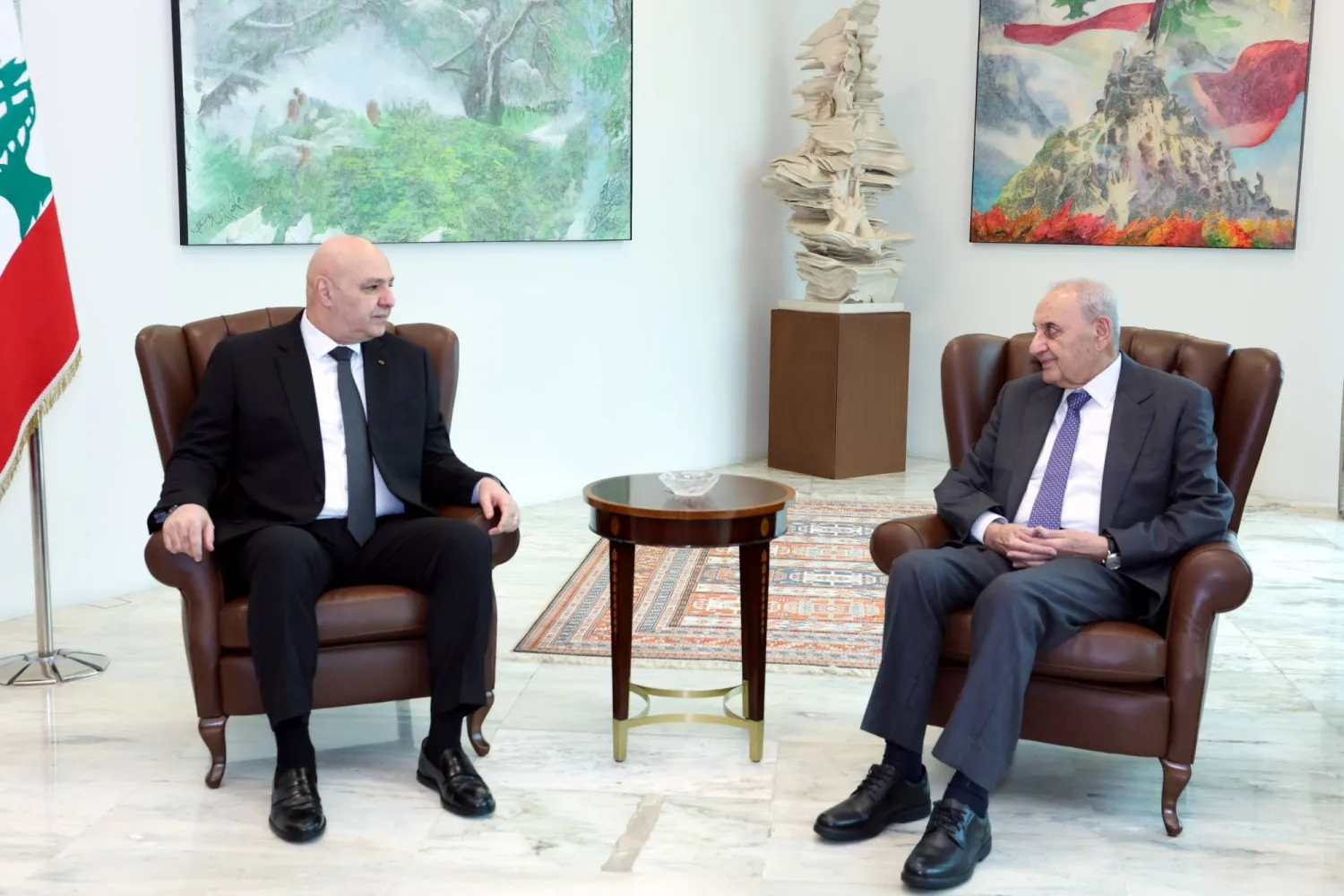
President Joseph Aoun meets with parliament Speaker Nabih Berri at the Baabda presidential palace. (Lebanese Presidency)
TT

Iran Pledges to its Allies in Lebanon to Include Them in Any Possible Deal to End the War

President Joseph Aoun meets with parliament Speaker Nabih Berri at the Baabda presidential palace. (Lebanese Presidency)

Widely informed Lebanese sources revealed to Asharq Al-Awsat that Iran has “clearly pledged” to leaderships in Beirut to include Lebanon in any possible deal that could end the war between it and the US and Israel.

The sources said Lebanese officials learned through non-diplomatic channels that Tehran informed a number of its allies in Lebanon that any agreement to end the war will “certainly include Lebanon.”

Lebanon fears that should the war end, Israel will shift all of its attention on the Lebanese front. The Israeli military’s recent maneuvers indicate that it may be planning to launch broader operations.

President Joseph Aoun, meanwhile, received parliament Speaker Nabih Berri, Prime Minister Nawaf Salam, Druze leader Walid Jumblatt and army commander Rodolphe Haykal in separate meetings at the Baabda presidential palace.

In a telephone call with Asharq Al-Awsat, Berri hoped that Iran and the US would reach a deal soon and that it would also lead to an end to Israel’s war on Lebanon.
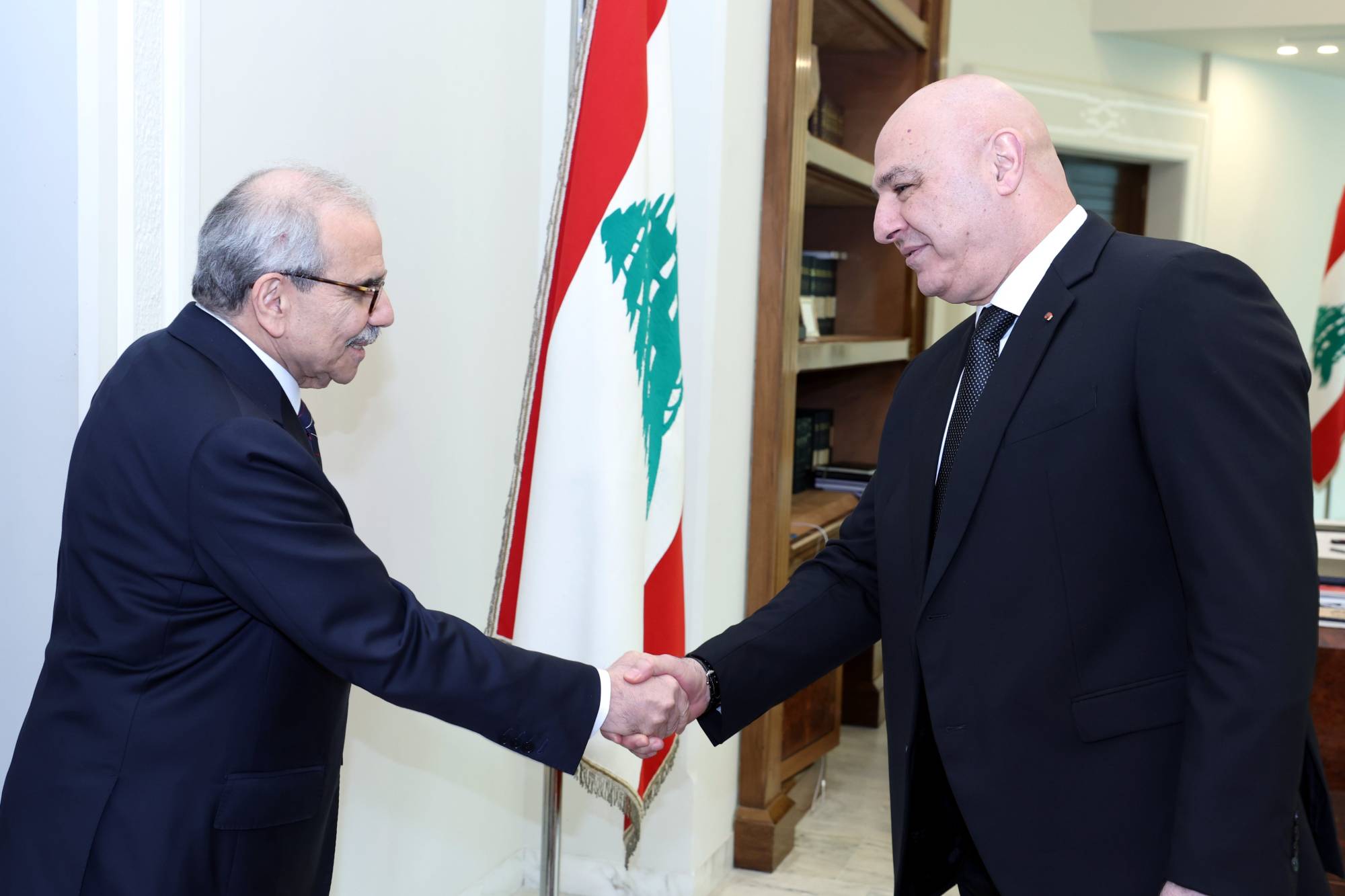
President Joseph Aoun meets with Prime Minister Nawaf Salam at the Baabda presidential palace. (Lebanese Presidency)

Asked if Aoun had brought up with him the issue of naming a Shiite representative to the Lebanese delegation expected to hold negotiations with Israel, he replied: “I focused on the issues of the displaced that should be addressed through the utmost seriousness.”

He expressed his concern that “Israel may exploit the situation in order stir strife in Lebanon.”

“Israel is bombing bridges in the South and we must not lose internal bridges of communications. This is what Israel is seeking,” he warned.

A statement from the presidency said Aoun and Berri discussed Israel’s targeting of bridges with the aim to cut off the South from the rest of Lebanon. They addressed the plight of the nearly 1 million displaced people.

They praised the Lebanese people for welcoming the displaced, underlining national unity and solidarity during the crisis and the importance of maintaining civil peace and avoiding rumors that aim to harm Lebanon.

Aoun then met with PM Salam, who told reporters at the presidential palace that he was in daily contact with the president. “We are working with everyone to end the war as soon as possible,” he added.
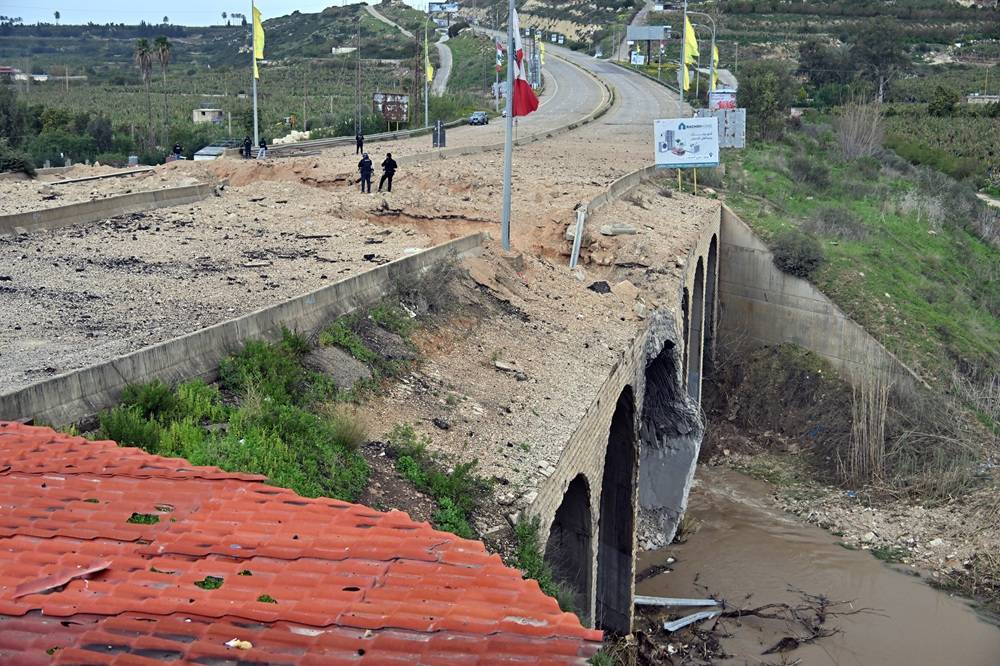
Damage at the site of an Israeli strike targeting the Qasmiyeh bridge near Tyre, southern Lebanon, 23 March 2026. (EPA)

After meeting with Aoun, Jumblatt condemned to reporters “accusations of treason” that have been directed against the president and prime minister given their willingness for Lebanon to hold negotiations with Israel.

“Negotiations are acceptable if they are held on declared foundations. The president's swearing in speech committed to the truce agreement, Taif Accord and international resolutions,” he went on to say.

“Negotiations are among the world’s legitimate means. We object to the rejection of the negotiations for the sake of rejecting them and for keeping Lebanon an open battlefield,” he stressed.

Aoun and Haykal discussed the security situation in the country, especially in the South amid the expected Israel escalation.

The president urged the army commander to bolster security measures throughout the country, especially in Beirut and to closely watch over the safety of displacement shelters.



Syria Arrests Former Assad-era Air Force Chief of Staff

FILE PHOTO: Guard standing near an image of Syria's Bashar al-Assad at the fourth division headquarters in Damascus, Syria, January 23, 2025 REUTERS/Yamam Al Shaar/File Photo
TT

Syria Arrests Former Assad-era Air Force Chief of Staff

FILE PHOTO: Guard standing near an image of Syria's Bashar al-Assad at the fourth division headquarters in Damascus, Syria, January 23, 2025 REUTERS/Yamam Al Shaar/File Photo

Syrian authorities said Tuesday that they had arrested a former air force chief of staff under Bashar al-Assad who was sanctioned by the European Union including for his role in chemical attacks.

Since Assad's December 2024 overthrow, Syria's new authorities have periodically announced the arrest of military and security officials involved in atrocities during Syria's more than decade-long civil war.

Last month, authorities launched the first trials for such senior figures as part of their commitment to providing justice for victims and their families.

An interior ministry statement announced the arrest of Jayez al-Moussa, "chief of staff for the air force during the era of the former regime" in a security operation.

Moussa served for more than four decades in Syria's military under the Assad dynasty.

After the civil war erupted in 2011, he took control of the 20th division, which ran six military airports, before becoming air force chief of staff in early 2015.

For a time, he was responsible for coordinating with Russian forces, which intervened militarily in Syria's conflict on Assad's behalf later that year.

After retiring in 2016, Moussa was named governor of northeast Syria's Hasakah province.

He hails from an Arab tribe in the eastern Deir Ezzor province and is known for his absolute loyalty to Assad and his calls to crush the former leader's adversaries.

The EU added Moussa to its sanctions list in 2017, saying he was responsible "for the violent repression of the civilian population in Syria, including the use of chemical weapons attacks" during his tenure as air force chief.

Syrian authorities have recently announced the arrest of a number of Assad-era figures, including two former generals detained on Friday, one of whom is accused of involvement in a 2013 chemical attack on a Damascus suburb.


ISIS Claims Deadly Attack on Syrian Government Forces 

Syrian security forces in Aleppo (File/Reuters)
TT

ISIS Claims Deadly Attack on Syrian Government Forces 

Syrian security forces in Aleppo (File/Reuters)

ISIS claimed responsibility on Tuesday for an attack in eastern Syria that killed two Syrian army soldiers, the militant group's first deadly operation against the Syrian government since February.

Monday's attack in the eastern province of Hasakah points to the lingering threat posed by ISIS as President Ahmed al-Sharaa seeks to consolidate government authority over the country, nearly 1-1/2 years after he ousted Bashar al-Assad.

The Syrian state news agency SANA reported on Monday that two Syrian army soldiers were killed and others wounded in an attack by unknown assailants on a bus in the Hasakah countryside, Reuters reported.

ISIS, in a brief statement posted on its Amaq News Agency, said its fighters had killed and wounded six members of "the apostate Syrian army" during an ambush in the same area.

ISIS controlled around a quarter or more of Syria at the peak of its power during the Syrian civil war a decade ago, before it was beaten out of the territory by a US-led coalition and other foes.

The Syrian government under Sharaa last year joined the US-led coalition to combat ISIS.

ISIS in February declared a new phase of operations against Sharaa's government, and carried out a spate of attacks including one that killed four Syrian government security personnel near Raqqa city.


Lebanon Says Israeli Strike Kills Two Civil Defense Personnel

Smoke rises from Israeli bombardment on the outskirts of the village of el-Qatrani as seen from nearby Marjayoun (Marjeyoun) in southern Lebanon on May 11, 2026.. (Photo by AFP)
TT

Lebanon Says Israeli Strike Kills Two Civil Defense Personnel

Smoke rises from Israeli bombardment on the outskirts of the village of el-Qatrani as seen from nearby Marjayoun (Marjeyoun) in southern Lebanon on May 11, 2026.. (Photo by AFP)

Lebanon's civil defense agency said two of its personnel were killed in an Israeli strike on Tuesday while they were on duty in the country's south.

The personnel were killed in "an Israeli airstrike that targeted them while they were carrying out a rescue mission" after a previous strike in the city of Nabatieh, a civil defence statement said.

According to AFP, Israeli strikes on Lebanon have killed 380 people since a ceasefire in the Israel-Hezbollah war began on April 17, citing Lebanon's Health Minister Rakan Nassereddine.

The overall toll in Israeli strikes since the war erupted between Israel and Hezbollah on March 2 has reached 2,882 people including 279 women and 200 children, he added.

Since the ceasefire, "380 people have been killed and 1,122 wounded," Nassereddine said.

A ministry official told AFP that the toll includes 39 women and 22 children.

Under the terms of the truce released by Washington, Israel reserves the right to act against "planned, imminent or ongoing attacks".

In addition to carrying out ongoing airstrikes, Israeli troops have been operating behind a so-called "yellow line" that runs around 10 kilometres (six miles) north of the border between the two countries.

Some 108 emergency and health workers are among the overall death toll while 249 others have been wounded and "16 hospitals have been damaged" since the start of the conflict, Nassereddine said.

"It's a massacre... there are no armed men or fighters in these (ambulance) vehicles, just medical equipment and wounded, contrary to what Israel says," he added.

Lebanese leaders on Monday urged the United States to pressure Israel to halt its attacks, which have intensified in recent days.

The appeal came as Lebanese and Israeli representatives are set to meet later this week in Washington for a third round of direct talks.