


Israel’s Military to Occupy Swathe of Southern Lebanon, Defense Chief Says

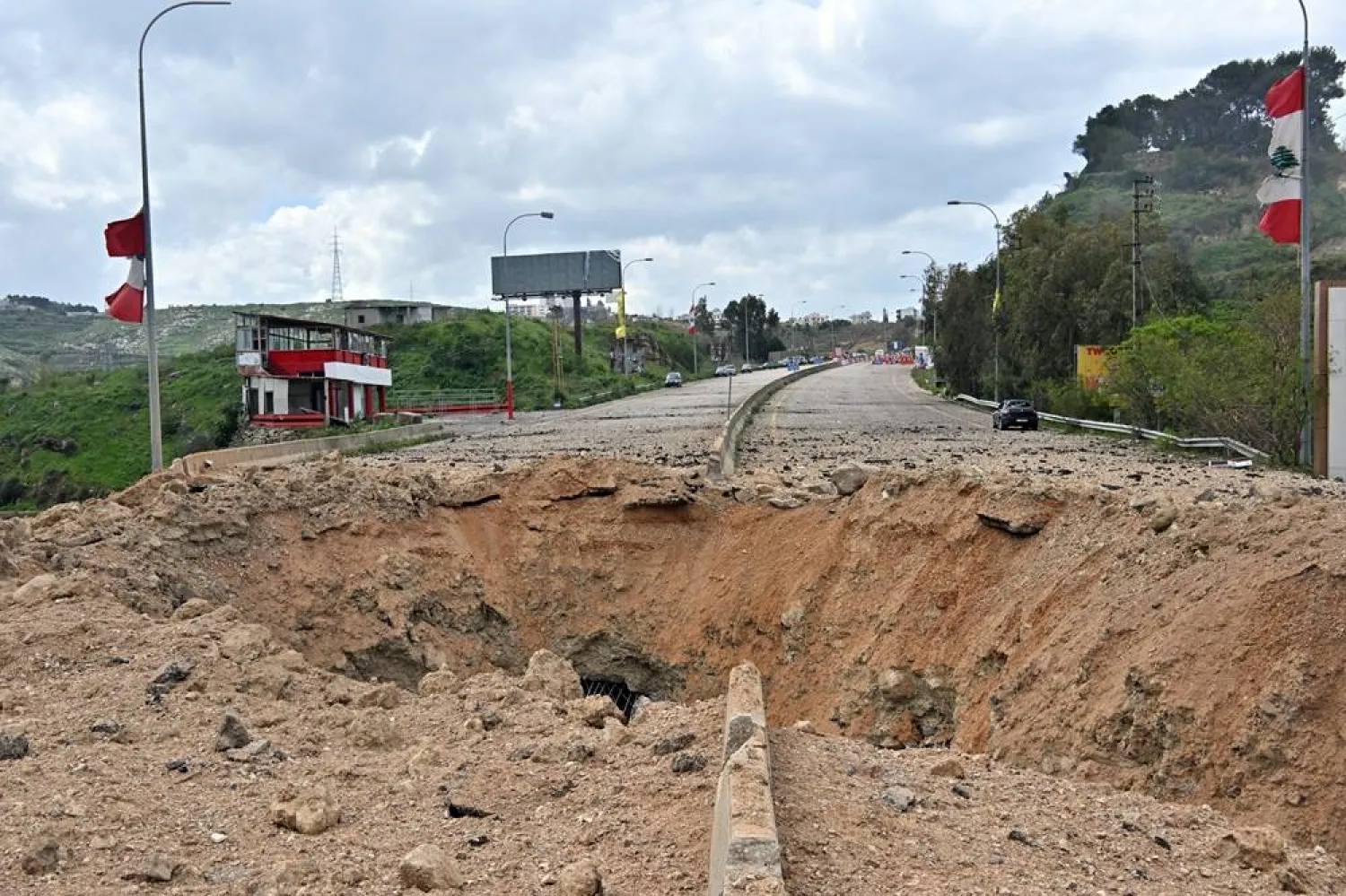
Damage at the site of an Israeli strike targeting the Qasmiye bridge near Tyre, southern Lebanon, 23 March 2026. (EPA)
TT

Israel’s Military to Occupy Swathe of Southern Lebanon, Defense Chief Says

Damage at the site of an Israeli strike targeting the Qasmiye bridge near Tyre, southern Lebanon, 23 March 2026. (EPA)

Israel's military will occupy southern Lebanon up to the Litani River, defense minister Israel Katz said on Tuesday, the first time Israel has clearly spelled out its intent to seize swathes of territory that make up nearly a tenth of Lebanon. 

Katz has previously threatened Lebanon's government it would lose territory if it did not disarm Hezbollah, the group backed by Tehran that drew Lebanon into the US-Israeli war on Iran when it fired into Israel on March 2. 

On Tuesday, Katz said in a meeting with the military chief of staff that the military would "control the remaining bridges and ‌the security zone ‌up to the Litani", and was creating a "defensive buffer". 

The Litani ‌River ⁠meets the Mediterranean ⁠about 30 km (20 miles) north of the Israeli border with Lebanon. 

The military has destroyed five bridges over the river since March 13 and has accelerated the demolition of homes in Lebanese villages close to the Israeli border as part of a campaign that Israel says is aimed at Hezbollah and not Lebanese civilians. 

Under international law, attacks on civilian infrastructure, including homes and bridges, are generally prohibited. 

The Israeli military declined to comment on the defense minister's remarks. The military has previously said ground troops were carrying out limited ⁠and targeted raids close to the border with Israel. 

ISRAEL SEEKS DEFENSIVE BUFFER ‌LIKE IN GAZA, SAYS KATZ 

Katz said there could be ‌no homes or residents in areas of southern Lebanon where there was "terror" in the area, in an apparent ‌reference to Hezbollah, whose fighters have continued to launch daily rocket and drone attacks into Israeli ‌territory and battle Israeli troops in southern Lebanese villages. 

Katz said Israeli soldiers were maneuvering in Lebanon to establish a "forward defensive line", fighting Hezbollah and destroying infrastructure used by the group, including homes that he said function as "terrorist outposts". 

For the second time this week, he said the approach was similar to that taken by the ‌military in Gaza, clearing and demolishing buildings near the border "to create a defensive buffer and push the threat away from communities". 

On Monday, influential Finance ⁠Minister Bezalel Smotrich said Israel ⁠should annex southern Lebanon up to the river. 

Israel's strikes on Lebanon have caused widespread destruction across the country's south and parts of the capital, Beirut, and have killed more than 1,000 people. 

Over a million people have been forced from their homes. The United Nations human rights chief has criticized Israel's actions, particularly its use of widespread evacuation orders. 

Among those killed are almost 120 children, 80 women and 40 medical personnel, according to Lebanon's health ministry, which does not otherwise distinguish between civilians and fighters. Two Israeli soldiers have been killed in fighting in Lebanon. 

President Donald Trump on Monday said Washington and Tehran could soon reach an agreement on ending the war following what he has described as talks between US and Iranian officials. Iran has denied there have been any negotiations with the US 

It is unclear if a ceasefire in Lebanon would be part of any agreement on ending the US-Israeli war with Iran. 


Aoun: Lebanon Appreciates Saudi Crown Prince’s Efforts to Promote Regional Stability

FILE - Lebanese President Joseph Aoun gestures to journalists at the Presidential Palace, in Baabda, east of Beirut, Lebanon, Wednesday, May 21, 2025. (AP Photo/Hassan Ammar, File)
TT

Aoun: Lebanon Appreciates Saudi Crown Prince’s Efforts to Promote Regional Stability

FILE - Lebanese President Joseph Aoun gestures to journalists at the Presidential Palace, in Baabda, east of Beirut, Lebanon, Wednesday, May 21, 2025. (AP Photo/Hassan Ammar, File)

Lebanese President Joseph Aoun hailed on Wednesday the “balanced and wise” efforts made by Saudi Crown Prince and Prime Minister Mohammed bin Salman, saying his endeavors have created an “atmosphere to support stability, which Lebanon appreciates as a source of pride”.

In a post on media platform X, Aoun added: “We hope that Lebanon will be an integral part of this effort. The Kingdom of Saudi Arabia, as the sponsor of the Taif Agreement, is trusted by the Lebanese, the countries of the region and the world”.


Syria's Kurds Register for Citizenship after Decades of Marginalization

"Unregistered" Kurds, who have been stateless since a controversial 1962 census, have been flocking to registration centers across Syria. Delil SOULEIMAN / AFP
TT

Syria's Kurds Register for Citizenship after Decades of Marginalization

"Unregistered" Kurds, who have been stateless since a controversial 1962 census, have been flocking to registration centers across Syria. Delil SOULEIMAN / AFP

In a packed hall in Qamishli's sports stadium in northeast Syria, Firas Ahmad is one of dozens of Kurds waiting to apply for citizenship after many in the minority were barred from doing so for decades.

Since last week, "unregistered" Kurds, who have been stateless since a controversial 1962 census, have been flocking to registration centers across Syria to apply for citizenship, based on the interior ministry's instructions.

"A person without citizenship is considered as good as dead," Ahmad, 49, told AFP.

"Imagine not being able to register my children or our homes in our names," he said, adding that "my grandfather never had citizenship, and we have been living without official documents ever since".

On the tables facing long queues of people, registration forms were scattered along with personal photos and old documents, while government employees were recording the data.

The new measure follows Syrian President Ahmed al-Sharaa's January decree granting citizenship to Kurds residing in the country, including those who have been unregistered for decades.

It also enshrines the Kurds' cultural and language rights, and recognizes Kurdish as a national language.

The decree came during weeks of clashes between Kurdish fighters, who once controlled swathes of northeastern Syria, and government forces after which an agreement was reached to integrate the Kurdish administration into the central state.

The integration included government forces entering the previously Kurdish-controlled cities of Hasakeh and Qamishli in February, and the appointment in March of senior Kurdish military leader Sipan Hamo as assistant defense minister for the eastern region, among other steps.

- 'We suffered greatly' -

The lack of citizenship affected many aspects of daily life, from the inability to register births and property ownership to difficulties in studying, moving around, travelling and working, leaving many without full legal recognition of their existence.

"We suffered greatly," says Galya Kalash, a mother of five, speaking in Kurdish.

"My five children could not complete their education, and we could not travel at all. Even now, our house is not registered in our name."

Around 20 percent of Syria's Kurds were stripped of their Syrian nationality in a controversial 1962 census in the northeastern Hasakeh province.

Ali Mussa, a member of Hasakeh's Network of Statelessness Victims, told AFP that there are around 150,000 unregistered people in Syria today.

There are around two million Kurds in Syria, most of them in the northeast.

Mussa called on authorities to show "flexibility in implementing the decision and to provide facilities for residents outside Syria" who may not be able to travel due to their refugee status in Europe or fear of flight disruptions due to the Middle East war.

Authorities are expected to keep registration centers open for a month.

Abdallah al-Abdallah, a civil affairs official in the Syrian government, told AFP the period could be extended.

"The most important compensation for these people is gaining citizenship after being deprived of it for all these years," he said.

In the registration center, Mohammed Ayo, 56, said not having citizenship made him feel "helpless", including being unable to get a driver's license or book a hotel room in capital Damascus as it required prior security clearance.

"You study for many years, and in the end they say you have no certificate," he said, adding that, after finishing high school, he was unable to obtain an official document to study at university.

"We did not even have the right to run for office or vote."


Trump Says Israel and Lebanon Leaders to Hold Talks Thursday

TOPSHOT - US President Donald Trump speaks to the press outside the Oval Office at the White House in Washington, DC, on April 13, 2026. (Photo by Brendan SMIALOWSKI / AFP)
TT

Trump Says Israel and Lebanon Leaders to Hold Talks Thursday

TOPSHOT - US President Donald Trump speaks to the press outside the Oval Office at the White House in Washington, DC, on April 13, 2026. (Photo by Brendan SMIALOWSKI / AFP)

US President Donald Trump ‌said leaders of Lebanon and Israel will speak, saying he was "trying to get a little breathing room" between the countries, after more than six weeks of war between Israel and the Lebanese armed group Hezbollah. 

"It has been a long time since the two leaders have spoken, like 34 years. It will happen tomorrow. Nice!," Trump wrote in a social media post published before midnight on Wednesday, Washington ‌time. 

It did ‌not say which Lebanese and Israeli ‌leaders ⁠would speak, or give ⁠any further details, Reuters reported. 

The Israeli Prime Minister’s office did not immediately respond to a request for comment. There was no immediate response to a request for comment from the offices of Lebanese President Joseph Aoun and Prime Minister Nawaf Salam. 

The conflict spiraled out ⁠of the US-Israeli war with Iran, with ‌the Iran-backed Hezbollah opening ‌fire in support of Tehran on March 2, prompting ‌an Israeli offensive in Lebanon just 15 months after ‌the last conflict.  

Washington on Wednesday expressed optimism about reaching a deal to end the war with Iran.  

Israel's security cabinet convened late on Wednesday to discuss a possible Lebanon ‌ceasefire, a senior Israeli official said. Another senior Israeli official and a senior ⁠Lebanese official said ⁠Israeli Prime Minister Benjamin Netanyahu's government was under heavy pressure from Washington to reach a ceasefire in Lebanon. 

Netanyahu, in a video statement released late on Wednesday, said the Israeli military continued to strike at Hezbollah and was about to "overcome" the southern Lebanese town of Bint Jbeil. 

The senior Lebanese official said that Lebanon’s assessment was that Israel wanted to secure a victory in Bint Jbeil before diplomatic progress could be made.
