


Hamas to Seek Changes in Response to Disarmament Plan

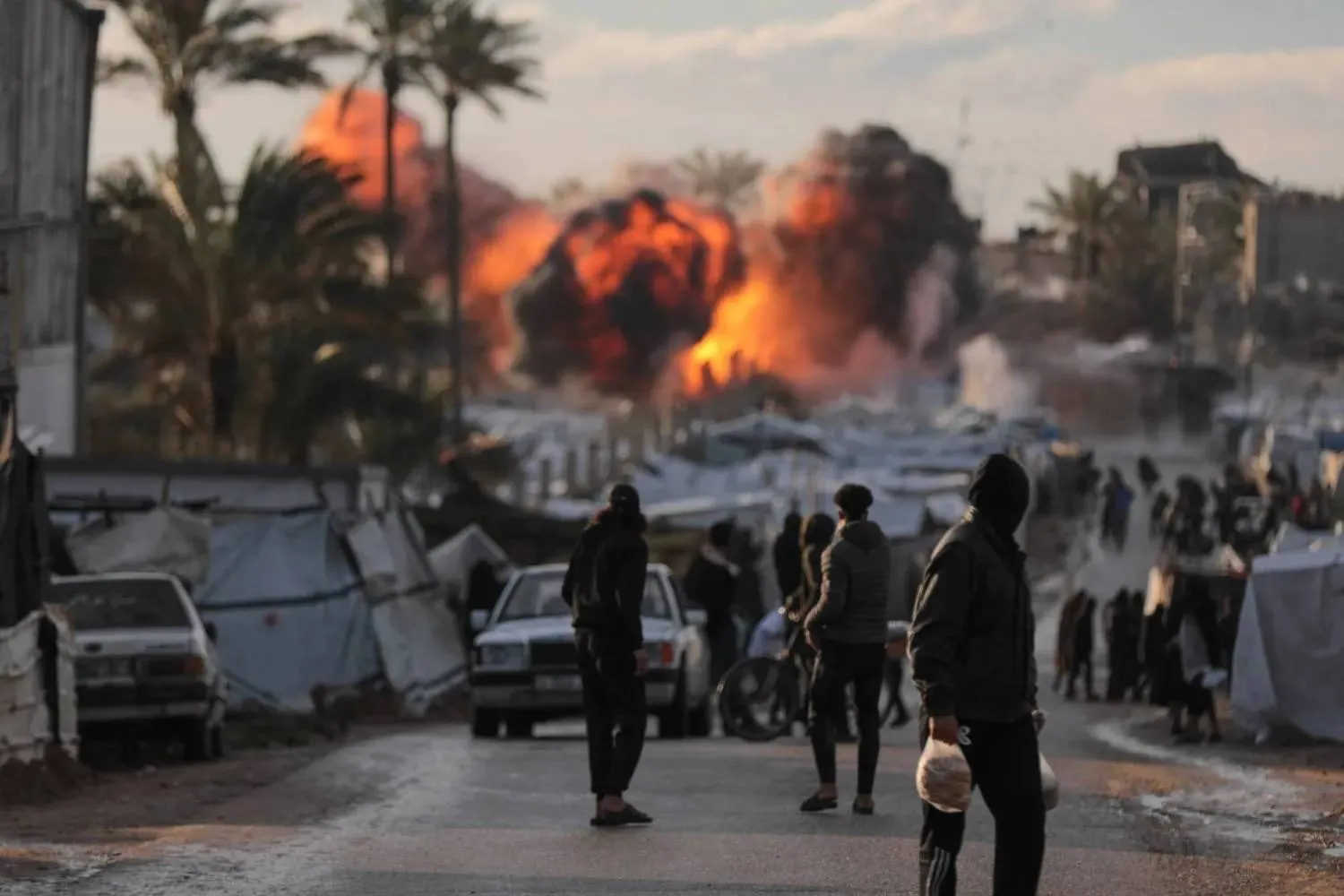
Smoke rises from a site hit by an Israeli strike near a camp for displaced people in Deir al-Balah in central Gaza Strip last Wednesday (AP)
TT

Hamas to Seek Changes in Response to Disarmament Plan

Smoke rises from a site hit by an Israeli strike near a camp for displaced people in Deir al-Balah in central Gaza Strip last Wednesday (AP)

Sources in Hamas and other Palestinian factions say there’s growing pessimism over a plan presented by the high representative of the US-backed Board of Peace, Nikolay Mladenov, to the movement’s leadership, proposing the full and unconditional disarmament of the Gaza Strip.

Two Hamas sources, inside and outside Gaza, told Asharq Al-Awsat the group is leaning toward partially rejecting the plan and will push for amendments to make it more equitable for Palestinians.

They said it does not clearly bind Israel to carry out the second phase, or even complete the first.

A third Hamas source and a senior Palestinian faction figure in Gaza said internal discussions are ongoing within each faction and at a broader national level.

Despite major reservations, they said the proposal would be handled positively while safeguarding Palestinian rights.

A unified response is expected, they added, one that stops short of full approval and instead seeks clarifications, guarantees and clear changes to several provisions.

Although the plan, reported by some media outlets and confirmed by sources, refers to “step-by-step” implementation by both sides, Hamas and other factions believe it favors Israel and does not compel it to meet its obligations.

The sources said it aims to fully disarm Gaza, including light, heavy and even personal weapons that individuals wanted by Israel may retain for self-defense.

Another senior faction source said the plan seeks to reshape Gaza’s political and security landscape and dismantle the “resistance” structure, offering in return only humanitarian and administrative measures that do not preserve Palestinians’ political and national rights.

The “step-for-step” principle, the source said, is largely symbolic, requiring factions to take strategic steps including full disarmament, surrendering all powers, halting any military activity and potentially restricting political activity under various pretexts.

It would also require factions to dismantle their own tunnels in areas under their control in exchange for temporary humanitarian packages.

A Hamas source in Gaza said disarmament “in this way” is unacceptable, arguing that Israel is imposing its conditions without regard for Palestinian demands.

The source said individuals wanted by Israel and leading activists must retain at least personal weapons for self-defense, citing ongoing Israeli special forces operations and armed groups accused of carrying out assassinations.

Such a scenario, the source said, could allow Israel to carry out killings while attributing them to ordinary criminal acts.

The plan’s general principles call for completing outstanding commitments from the first phase without delay and allowing the entry of reconstruction materials, including dual-use items, into areas verified as disarmed and placed under a national committee.

Hamas sees this as linking reconstruction and access to areas in Gaza with the surrender of weapons.

Hamas sources said this contradicts a plan by US President Donald Trump presented to the group during ceasefire talks last September, noting the original proposal called for setting weapons aside under a negotiated framework, not imposing disarmament through what they described as threats.

They added that the Board of Peace plan does not require a full Israeli withdrawal; instead, it outlines a partial, phased pullback without clear benchmarks.

It also falls short of committing to genuine reconstruction, focusing mainly on temporary housing such as caravans, while allowing construction materials in unspecified quantities and without clarifying whether they would support the comprehensive rebuilding of homes and civilian infrastructure.

According to the sources, the plan allows Israel to take military action if the national committee fails to carry out its duties, to address what it describes as a “serious potential threat” in areas declared disarmed. Hamas views this as giving Israel room to justify operations similar to those it currently conducts against Palestinian factions.

Among Hamas’s objections is the Board of Peace’s insistence that no government employees affiliated with the movement serve on the committee that would administer Gaza. The issue was discussed during a recent meeting in Cairo between Hamas leaders and Mladenov and remains under further negotiation.

The plan stipulates that Hamas must cease exercising any civil or security authority in Gaza and refrain from governance, policing and administrative functions.

Hamas is seeking an arrangement under which its civil servants would be integrated after security vetting, while senior officers and others rejected by Israel would be excluded from any governing role in Gaza.

Since Hamas leaders expressed anger at Mladenov, particularly following his remarks before the UN Security Council, the movement’s media outlets have stepped up efforts to promote its position, featuring interviews with faction figures, tribal leaders, analysts and writers to rally support for its stance.



US Condemns Attack on Home of the Leader of Autonomous Iraqi Kurdistan

Smoke rises after an explosion near Erbil International Airport in Erbil on March 6, 2026. (Photo by Ozan KOSE / AFP)
TT

US Condemns Attack on Home of the Leader of Autonomous Iraqi Kurdistan

Smoke rises after an explosion near Erbil International Airport in Erbil on March 6, 2026. (Photo by Ozan KOSE / AFP)

The United States on Saturday condemned a drone attack on a residence of the leader of autonomous Iraqi Kurdistan, Nechirvan Barzani, blaming Iranian militia proxies in Iraq.

"These actions by Iran and its proxies are a direct assault on Iraq's sovereignty, stability, and unity," a statement from State Department deputy spokesman Tommy Pigott said.

"We categorically reject the indiscriminate and cowardly terrorist acts that Iran and its terrorist proxies have unleashed in the Iraqi Kurdistan Region and throughout Iraq," he added.

The Iraqi government has promised to investigate Saturday's drone attack that targeted Barzani's second home.

French President Emmanuel Macron, who spoke with Barzani, on Saturday called the attack "unacceptable" and described the rise in attacks on Iraqi institutions as "worrying."

Since the launch of the US-Israeli offensive against Iran on February 28, Iraq has been drawn into a regional conflict it has sought to avoid.

Pro-Iranian groups in Iraq claim responsibility on a daily basis for drone attacks and rocket strikes targeting the US military presence, both within Iraq and elsewhere in the Middle East.

These attacks have targeted the US Embassy in Baghdad and personnel for an international anti-extremist coalition deployed in Iraq.


Israeli Military Says Another Soldier Killed in Southern Lebanon

Israeli military vehicles maneuver on the Lebanese side of the border, as seen from the Upper Galilee in northern Israel, 25 March 2026. EPA/ATEF SAFADI
TT

Israeli Military Says Another Soldier Killed in Southern Lebanon

Israeli military vehicles maneuver on the Lebanese side of the border, as seen from the Upper Galilee in northern Israel, 25 March 2026. EPA/ATEF SAFADI

The Israeli ‌military ‌said early Sunday ‌that ⁠one of ⁠its ⁠soldiers ‌was ‌killed during ‌combat ‌in southern ‌Lebanon.

"Sergeant Moshe Yitzchak hacohen Katz, aged 22, from New Haven, Connecticut, a soldier of the 890th battalion, Paratroopers Brigade, fell during combat in southern Lebanon," a military statement said.

Five Israeli soldiers have now been killed in fighting in south Lebanon since Hezbollah began launching rocket attacks against Israel on March 2 to avenge the killing of Iran's supreme leader.

Israel’s attacks continued in Lebanon.

On Saturday, the Israeli military killed three journalists in the south, including Al Manar correspondent Ali Shoeib, one of the network's most prominent war correspondents, who had covered Israeli attacks on Lebanon for decades.

The Israeli military accused him of operating within Hezbollah "under the guise of a journalist."

Lebanese authorities, including President Joseph Aoun and Prime Minister Nawaf Salam, condemned the killings as war crimes.

Israel also carried out raids in southern Lebanon that killed nine paramedics, according to the health ministry.


Israeli Strikes Hit Two Gaza Police Checkpoints, Killing Six, Medics Say

26 March 2026, Palestinian Territories, Khan Younis: Israeli warplanes launch an airstrike near a camp sheltering displaced people in Deir al-Balah in the central Gaza Strip. (dpa)
TT

Israeli Strikes Hit Two Gaza Police Checkpoints, Killing Six, Medics Say

26 March 2026, Palestinian Territories, Khan Younis: Israeli warplanes launch an airstrike near a camp sheltering displaced people in Deir al-Balah in the central Gaza Strip. (dpa)

Two ‌Israeli air strikes on two checkpoints of the Hamas-led police force killed at least six Palestinians including a child, local health officials said, in the latest round of violence despite a US-brokered ceasefire that is now more than five months old.

Medics said Israeli planes ‌attacked two ‌police checkpoints in Khan Younis ‌in ⁠the southern Gaza ⁠Strip, killing three policemen and three civilians, including a girl, and wounding four others.

The Israeli military did not immediately comment on the recent strikes.

The military has ⁠killed over 680 Palestinians ‌in Gaza since ‌a ceasefire with Hamas came into ‌effect in November, local health officials ‌say.

More than 72,000 have been killed since the war started in October 2023. Israel is now also waging ‌a war, alongside the US, against Iran, and is carrying ⁠out ⁠a new campaign against Hezbollah in which Israel forces have invaded southern Lebanon.

Violence in Gaza has persisted despite the ceasefire and amid Israel's war with Iran. Health officials in the territory say at least 50 Palestinians have been killed by Israeli forces since the Iran conflict began a month ago.