


UNDP: Arab Countries May Lose Up to $194 Billion from Iran War

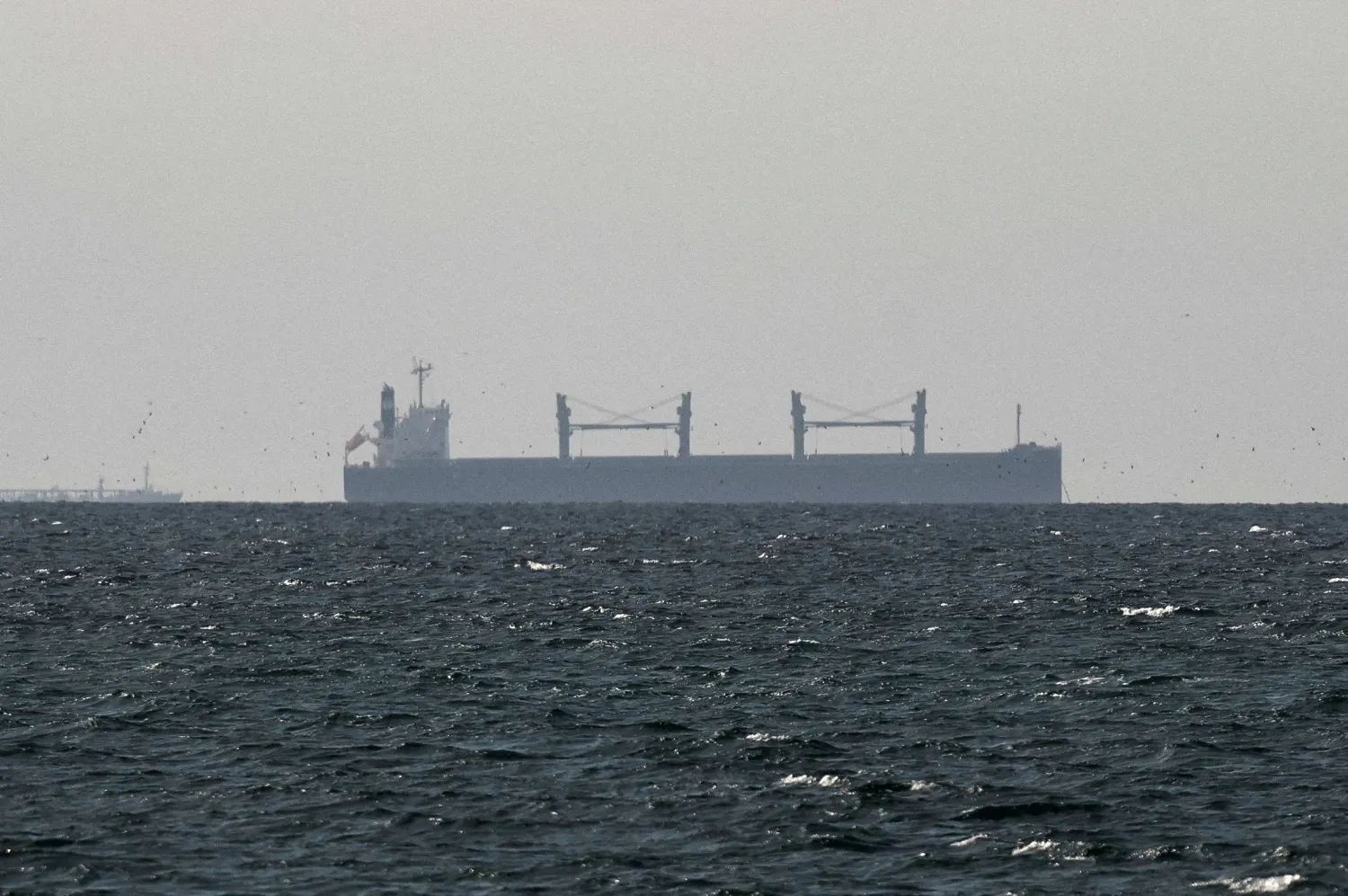
FILE PHOTO: A cargo ship in the Gulf, near the Strait of Hormuz, as seen from northern Ras al-Khaimah in United Arab Emirates, March 11, 2026. REUTERS/Stringer/File Photo
TT

UNDP: Arab Countries May Lose Up to $194 Billion from Iran War

FILE PHOTO: A cargo ship in the Gulf, near the Strait of Hormuz, as seen from northern Ras al-Khaimah in United Arab Emirates, March 11, 2026. REUTERS/Stringer/File Photo

The military escalation in the Middle East, now into its fifth week, may cost economies in the region from 3.7 to 6 percent of their collective Gross Domestic Product (GDP), a staggering loss of $120-194 billion, a new United Nations study found.

“Coupled with an estimated rise in unemployment of up to 4 percentage points or 3.6 million jobs lost—more than the total jobs created in the region in 2025, these reversals will push up to 4 million people into poverty,” according to an analysis by the United Nations Development Programme (UNDP), which was released early Tuesday.

The assessment - “Military Escalation in the Middle East: Economic and Social Implications for the Arab States region” - exposes the concerning reality of structural vulnerabilities characteristic to the region, which enable a short lived military escalation to generate profound and widespread socio economic impacts that may persist over a long-term.

The agency said it had studied a number of different scenarios to determine how the conflict, which began on Feb. 28, might affect countries in the region. The report’s authors indicated that the damage could be profound, even if the war ends relatively soon.

“A short-lived military escalation in the Middle East could generate profound and widespread socio-economic impacts across the Arab States region,” they said.

“Since the escalation began, maritime security risks and attacks on tankers have sharply curtailed shipping activity through the Strait of Hormuz,” said the study.

The Strait remains the world’s most critical maritime energy chokepoint, it added.

It warned that even limited military escalation or accidental incidents affecting the Strait can rapidly destabilize global energy markets and trigger sharp price movements.

The study added that simulations suggest that the military escalation could generate substantial but uneven macroeconomic impacts across the Arab States region.

Simulations indicate the Gulf Cooperation Council countries would experience macroeconomic impacts. GDP is projected to decline between 5.2 percent under the moderate disruption scenario and 8.5 percent under the most severe scenario.

The Levant region (Iraq, Lebanon, Jordan and Syria) could experience significant macroeconomic losses across all scenarios. Compared to the No-War scenario GDP is projected to decline between 5.2 percent and 8.7 percent.

These translate into between approximately 2.8 and 3.3 million additional people pushed into poverty.

The Human Development Index (HDI) declines by approximately –0.2 to –0.4 percent, corresponding to a loss of roughly half a year to nearly one year of human development progress. These impacts are most pronounced in the Levant, where losses translate into setbacks of around one to one and a half years.

According to the study, the war could also have significant implications for the region’s monetary, fiscal and financial conditions.

“The region’s central banks may therefore need to raise interest rates and intervene in foreign currency markets to contain foreign exchange and inflationary pressures and to provide liquidity support to banks,” it said.



Oil Steadies as Investors Weigh Impact of Latest US Sanctions on Iran

 Tankers anchor near Venezuelan state oil company PDVSA's Jose terminal while waiting to load and discharge, in Puerto La Cruz, Venezuela August 9, 2026. (Reuters)
Tankers anchor near Venezuelan state oil company PDVSA's Jose terminal while waiting to load and discharge, in Puerto La Cruz, Venezuela August 9, 2026. (Reuters)
TT

Oil Steadies as Investors Weigh Impact of Latest US Sanctions on Iran

 Tankers anchor near Venezuelan state oil company PDVSA's Jose terminal while waiting to load and discharge, in Puerto La Cruz, Venezuela August 9, 2026. (Reuters)
Tankers anchor near Venezuelan state oil company PDVSA's Jose terminal while waiting to load and discharge, in Puerto La Cruz, Venezuela August 9, 2026. (Reuters)

Oil prices recovered ground on Tuesday after settling down more than 2% in the previous session, with investors assessing the impact of the latest US sanctions against Iran.

Brent crude futures rose 27 cents, or 0.3%, to $92.44 a barrel by 0330 GMT, while US West Texas Intermediate crude was up 37 cents, or 0.4%, at $85.38.

Both contracts settled lower on Monday, with US crude oil falling to a one-week low on profit taking after prices rallied over the previous two weeks.

"The market seems largely unfazed by Washington's push for tighter economic pressure ‌on Iran, with ‌traders treating the US effort to nudge partners away from Iranian ‌trade ⁠as marginal rather than ⁠market moving," said ING commodity strategists in a note on Tuesday.

US Treasury Secretary Scott Bessent on Monday unveiled an expansion of sanctions to cut off Iran's economic lifeline, to force an end to the war between them, telling countries they would need to sever their business ties or risk being cut out of the dollar-based financial system.

However, he declined to identify the countries that would be targeted or reveal when those penalties would take effect, saying ⁠he would instead provide them time to comply with ‌the new directive.

While US Defense Secretary Pete Hegseth said ‌on Monday the US would not rule out using military force against Iran, the country is turning ‌towards more economic coercion, which analysts said removed concerns about threats to Middle ‌Eastern oil supply because of the war.

"Markets appear to be pricing economic pressure as a lower-risk path for physical supply than kinetic action, which is why the initial reaction was for oil to move lower rather than spike higher," said Tim Waterer, chief market analyst at KCM.

However, he warned, "Iran still ‌retains the ability to respond by disrupting shipping, which continues to keep a residual premium in the oil price."

Iran is still maintaining it should have control over the key Strait of Hormuz, which before the war started in February typically carried cargoes equal to about 20% of global oil use. On Monday, it named 45 tankers that had broken its rules on crossing the strait and threatened action against them, including confiscating their cargoes.

The supply disruptions as a result of the US-Israeli war on Iran that started on February 28 have caused countries to draw down their commercial and strategic reserves.

On Monday, the Department of Energy reported stocks of crude oil in the US Strategic Petroleum Reserve fell by about 3.7 million barrels to 289.7 million barrels last week, the lowest since November 1982.


Gold Steadies after Hitting over 3-month Peak, US Inflation Data Looms

A saleswoman adjusts gold jewelry displayed for sale in a shop in Lianyungang City, eastern Jiangsu Province, China (AFP)
TT

Gold Steadies after Hitting over 3-month Peak, US Inflation Data Looms

A saleswoman adjusts gold jewelry displayed for sale in a shop in Lianyungang City, eastern Jiangsu Province, China (AFP)

Gold held steady after hitting its highest in more than three months on Tuesday, as investor focus shifted to upcoming US inflation data and a speech later this week by Federal Reserve Chair Kevin Warsh.

Spot gold steadied at $4,645.67 per ounce by 0651 GMT, after scaling its highest since May 14 earlier. US gold futures rose 0.1% to $4,702.00.

"Looking ahead, we expect dips in gold to be well-supported from ⁠buyers looking for ⁠gold to make its way towards the next upside resistance at $4,900/$5,000," IG market analyst Tony Sycamore said.

Prices rose sharply last week after the US Treasury Department said it would double the size of liquidity support buyback operations for longer-dated notes and bonds. The announcement spurred currency debasement fears.

"These US ⁠dollar debasement fears should see gold be well-supported in the coming weeks, as the Fed has not been sending a clear signal it is ready to fight higher inflation," TD Securities said in a note.

"However, it's too early for the metal to surge to our $5,350/oz target, given the risk rates on the short term may eventually rise as crude grinds higher."

While gold is widely regarded as an inflation hedge, elevated rates can curb its appeal as it is a ⁠non-yielding asset.

Fed Chairman ⁠Warsh's debut speech at the annual Jackson Hole conference this week has taken on added weight as traders and analysts look for guidance about the recent jump in bond yields and for reassurance of his independence from the Trump administration.

The US Personal Consumption Expenditures report, the Fed's preferred inflation gauge, is due on Wednesday.

On the geopolitical front, Iran promised to retaliate against expanded US economic sanctions that Washington said would cut off Tehran's economic lifeline.

Among other metals, spot silver fell 0.7% to $68.43 per ounce, platinum lost 1.1% to $1,854.67 and palladium slipped 1.4% to $1,338.15.


Saudi Economic Growth Draws Foreign Investment

Saudi Arabia and France strengthened cultural cooperation through nine executive programs during the French president’s visit in December 2024. (SPA)
TT

Saudi Economic Growth Draws Foreign Investment

Saudi Arabia and France strengthened cultural cooperation through nine executive programs during the French president’s visit in December 2024. (SPA)

French President Emmanuel Macron described the visit of Prince Mohammed bin Salman, Saudi Crown Prince and Prime Minister, to France as an important milestone in bilateral relations.

“The Saudi Crown Prince’s visit to France marks an important stage,” Macron wrote on X ahead of his meeting with the Crown Prince. “Faced with the challenges in the region, France and Saudi Arabia have always worked together to promote peace and stability and will continue their consultations to this end.”

Macron said the partnership was rooted in action, spanning major projects, advanced technologies, investment and international events, including the Esports World Cup held in France this summer. “We have achieved a great deal together, and we want to go further,” he added.

In a second post, Macron said France was proud to have hosted the Esports World Cup “at Saudi Arabia’s request,” describing its success as the product of a shared ambition to develop talent and bring the two countries closer.

Shared economic ambitions

Macron’s remarks reflect not only the state of Saudi-French relations, but also their ambitions. Data from both countries show that economic ties, broadly encompassing trade, investment and other commercial activities, are expanding, with both sides seeking further growth.

One aim of the Crown Prince’s visit is to accelerate those ambitions. The Crown Prince and Macron chaired the first meeting of the Saudi-French Strategic Partnership Council, established in late 2024, at the Élysée Palace on Monday.

Saudi Arabia, which is moving rapidly into new strategic sectors, is seeking partnerships that build on decades of cooperation. Artificial intelligence, digital technologies, innovative and low-carbon industries and environmental sustainability are among the areas at the heart of Vision 2030.

France, meanwhile, is seeking to align its economic agenda with Saudi Arabia’s and participate in the Kingdom’s major development projects.

The ‘new economy’

A briefing by the Saudi Ministry of Investment highlighted the Kingdom’s economic strengths and the incentives it offers investors seeking access to the region’s largest economy.

Bilateral trade reached €10.1 billion last year, up 7.2% from the previous year. French direct investment in Saudi Arabia exceeded €16 billion in 2024, spread across 18 sectors and 651 licenses.

Macron has repeatedly encouraged Saudi investment in France while urging French companies to pursue opportunities in the Kingdom.

French presidential sources said the planned opening of a Saudi Public Investment Fund (PIF) office in Paris could help increase the Kingdom’s still relatively modest investment in France.

Paris, for its part, pointed to France’s record in attracting foreign investment. EY’s 2026 European Attractiveness Survey ranked France first in Europe for international investment projects for a seventh consecutive year, with 852 projects last year, ahead of the United Kingdom with 730 and Germany with 548. Europe’s 47 countries attracted a combined 5,026 projects.

Growth attracts investment

The French-Saudi Investment Roundtable held in Paris on Monday focused on investment and new opportunities, bringing together executives from major companies in both countries.

French businesses have traditionally concentrated on energy, water, transport, logistics, construction, hospitality and health care in Saudi Arabia. That footprint is now expanding into AI, digital infrastructure, culture, creative industries and mining.

Available figures show that the PIF invested about €7.36 billion in France between 2017 and 2024, supporting some 29,000 jobs. A financing memorandum between the PIF and state-backed Bpifrance also established a framework for €8.56 billion in new investment.

Laurent Germain, CEO of engineering and infrastructure consultancy at Egis, said he attended the forum to meet clients who had traveled to Paris for the occasion and to explore opportunities for new projects.

Egis has generated €300 million from its Saudi operations and employs 1,700 people there, most of them Saudis, in line with the government’s Saudization drive.

Germain described the Saudi economy as highly attractive, citing growth of around 4%, above global rates.

Egis intends to expand its investment in the Kingdom and continue supporting Saudi Vision 2030, launched a decade ago, he revealed.

The company has worked on projects, including Qiddiya, Diriyah, AlUla and the Riyadh Metro.

Florence Verzelen, executive vice president at Dassault Systèmes, similarly highlighted Saudi Arabia’s economic growth as a key attraction, saying it was among the highest in the Gulf region and globally.

The €5 billion company focuses on digitalization and AI, using virtual modeling to help accelerate the transition to real-world production. Its technologies are used in aircraft and electric vehicle manufacturing, infrastructure and nuclear projects, as well as pharmaceuticals.

Its Saudi clients include Aramco, railway operators, NEOM, AlUla and food producers, while it also has activities in the defense sector.

Verzelen highlighted Saudi Arabia’s recognition of the importance of the digital economy and its potential for practical applications.