
Israel Strikes Tyre in South Lebanon After Evacuation Warnings

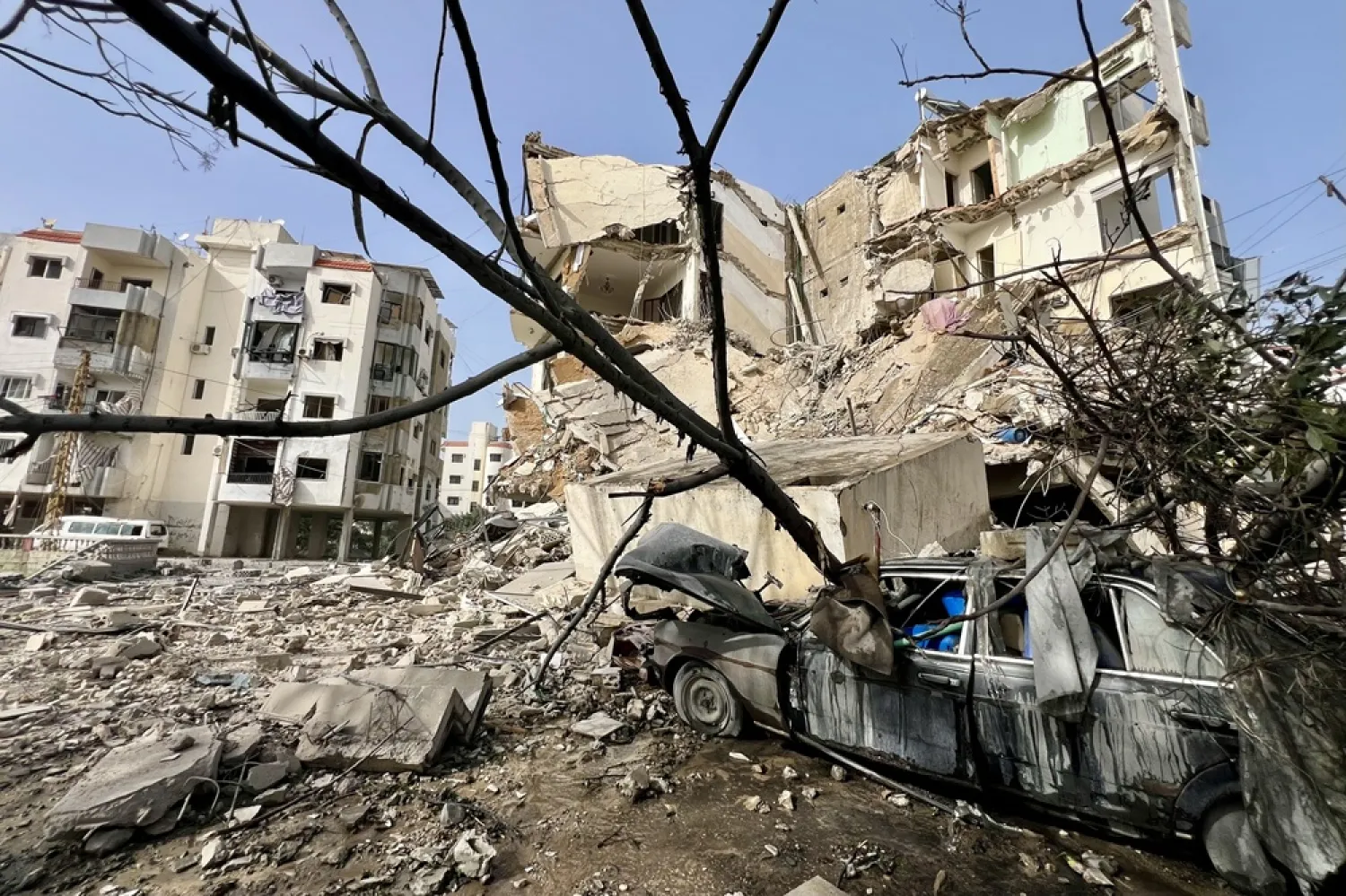
Damage at the site of an Israeli airstrike in the southern port city of Tyre, Lebanon, 04 April 2026. (EPA)
TT

Israel Strikes Tyre in South Lebanon After Evacuation Warnings

Damage at the site of an Israeli airstrike in the southern port city of Tyre, Lebanon, 04 April 2026. (EPA)

Israel's military renewed its strikes on the southern Lebanese city of Tyre on Saturday after issuing evacuation warnings, following attacks on nearby buildings that damaged a hospital in the city. 

Israel has carried out strikes across Lebanon and launched a ground invasion in the south since March 2, when Hezbollah entered the war in the Middle East on the side of its backer Iran. 

The Israeli army struck three buildings it had warned people to evacuate, according to Lebanon's state-run National News Agency (NNA). 

An AFP correspondent said a missile hit an 11-storey building northeast of Tyre, completely destroying it and reducing it to a pile of rubble that covered a nearby gas station. 

A second raid on a five-storey building near the city levelled half of it, leaving the other half standing. 

The third strike was on the Burj al-Shamali Palestinian refugee camp, southeast of the city. 

Tens of thousands of people have left Tyre, but around 20,000 remain, including 15,000 displaced from surrounding villages, despite Israeli evacuation warnings covering most of the city and a broad swathe of the south. 

Saturday's Israeli warning followed strikes that wounded at least 11 people, including three civil defense members, and damaged a major hospital, the health ministry in Beirut said. 

The director of the Lebanese Italian Hospital told the NNA that it would "remain open to provide the necessary medical care" despite the damage. 

Overnight strikes destroyed two buildings nearby, an AFP correspondent saw, shattering windows and also causing suspended ceilings to collapse in the hospital, management said. 

A wave of attacks hit the Tyre area on Saturday, including one on its port that struck a small boat and damaged others moored nearby, the correspondent said. 

Another Israeli airstrike targeted and completely destroyed a mosque in the town of Baraashit in the Bint Jbeil district, the NNA reported. 

- 'Unacceptable' attacks - 

Dawn strikes also targeted Beirut's southern suburbs, a largely evacuated Hezbollah stronghold that has been attacked repeatedly during more than a month of war. 

In a statement on Saturday, Israel's military said it had "completed an additional wave of strikes targeting command centers belonging to the Quds Force Lebanon corps in Beirut", referring to the Iranian Revolutionary Guards' foreign operations arm, and "two headquarters of the (Palestinian Islamic Jihad)". 

After attacking a bridge in the West Bekaa region in eastern Lebanon on Friday "to prevent the transfer of reinforcements and military equipment", Israel hit it again on Saturday, destroying it completely, the NNA said. 

West Bekaa is right above Lebanon's south, where Israeli troops have been advancing on the ground. 

The NNA also reported that, in Shebaa near the eastern side of the Israeli border, Israeli forces abducted a man at around 3:00 am on Saturday. 

It was at least the third time Israeli forces have seized someone from south Lebanon after infiltrating their home since the war with Hezbollah began. 

The Iran-backed group claimed responsibility Saturday for a series of attacks on northern Israeli towns and Israeli troops in Lebanese border towns, particularly Mar0un al-Ras, H0ula and Ainata. 

The war has displaced upwards of a million people in Lebanon and killed more than 1,400 people in the country, including 54 medics and three Indonesian UN peacekeepers in the south. 

On Saturday, a strike on al-Hawsh near Tyre wounded 18 people, and a strike on Habboush in the Nabatiyeh district killed at least two children and wounded 22 people, according to Lebanon's health ministry. 

The United Nations force said on Friday that three peacekeepers were wounded in a blast inside a UN facility near Odaisseh, and were rushed to hospital. 

Jakarta slammed the incident as "unacceptable" after the UN office there confirmed the wounded were Indonesian. 

Indonesia's government said "these events underscore the urgent need to strengthen protection for UN peacekeeping forces amid an increasingly dangerous conflict situation". 

On Saturday, a UN security official told AFP that Israeli forces destroyed 17 surveillance cameras linked to UNIFIL's main headquarters in Naqoura. 

The UN peacekeeping force has been caught in the crossfire in southern Lebanon since the start of the war, with Hezbollah launching attacks on Israel and its troops, and Israeli forces pushing into border towns. 


Syria: Former Assad Intelligence Deputy Arrested

Qais Hassan al-Abd al-Rajab (SANA) 
TT

Syria: Former Assad Intelligence Deputy Arrested

Qais Hassan al-Abd al-Rajab (SANA) 

Syria’s Counterterrorism Directorate has arrested Major General Qais Hassan al-Abd al-Rajab, the former deputy director of the General Intelligence Directorate (State Security) under the government of Bashar al-Assad, state news agency SANA reported.

According to a statement posted Friday by the Interior Ministry on Telegram, al-Abd al-Rajab is considered “one of the most prominent officials involved in committing serious violations” against residents of the Hajar al-Aswad district, the cities of Daraya and Moadamiyat al-Sham, and a number of towns and villages in Daraa province.

The ministry said the arrest followed “continuous security monitoring” of his movements and efforts to evade detection and legal prosecution.

Interior Minister Anas Khattab said the Counterterrorism Directorate, working in coordination with provincial internal security authorities, would continue pursuing suspects and bringing them before the courts.

The effort involves search, surveillance and investigative operations aimed at gathering information, he said, “in fulfillment of a promise we made to our patient people that there will be no leniency toward those whose hands are stained with blood.”

SANA said the arrest forms part of broader efforts by the Interior Ministry and other authorities to pursue and hold accountable those implicated in crimes and violations against Syrians, in line with the principles of ending impunity, advancing transitional justice and protecting the rights of victims’ families.

In a related development, 18 Syrian organizations and associations representing victims of abuses said in a position paper issued Thursday that the collapse of the Assad regime presents “a historic opportunity” to dismantle the legacy of torture and grave violations and to lay the foundations for justice and accountability.

The statement marked the third anniversary of the Dutch-Canadian case against Syria before the International Court of Justice (ICJ).

The organizations, including the Sednaya Prison Detainees Association, the Syrian Center for Justice and Accountability, and Huquqyat, praised the governments of the Netherlands and Canada for bringing the case before the court.

They said the lawsuit filed in 2023, along with the provisional measures ordered by the ICJ, represented “an important milestone” in efforts to secure justice for Syrian victims.

The groups also welcomed a June 2025 declaration by the Syrian government committing to address the legacy of torture and abuses, saying the current period offers a genuine opportunity to launch meaningful reforms. These include closing secret detention facilities, dismantling structures linked to torture and strengthening cooperation with international judicial and human rights mechanisms.

The organizations called for a comprehensive approach based on holding all perpetrators accountable without exception, arguing that such a process is essential to safeguarding victims’ rights and restoring confidence in justice institutions.

They concluded that the ICJ proceedings remain a key pillar in building a new Syria based on the rule of law, preventing future abuses and protecting human dignity.


Egypt Banks on Domestic Defense Manufacturing to Curb Military Spending

A military vehicle manufactured in Egypt. (Egyptian Ministry of Military Production)
TT

Egypt Banks on Domestic Defense Manufacturing to Curb Military Spending

A military vehicle manufactured in Egypt. (Egyptian Ministry of Military Production)

Egypt is increasingly relying on domestic defense manufacturing to curb military spending, expanding local production of armored vehicles, drones and air defense systems while continuing to diversify its foreign arms suppliers and pursue joint-production partnerships with other countries.

The strategy comes as the country posted the lowest military spending among Arab states last year, with defense expenditure accounting for 0.61% of gross domestic product, according to figures released by the Stockholm International Peace Research Institute (SIPRI).

Military experts told Asharq Al-Awsat that local arms production helps ease pressure on foreign-currency reserves required for imports while ensuring a more secure supply chain. They explained that modern warfare is characterized by the heavy consumption of weapons and ammunition, making uninterrupted access to military supplies a strategic necessity.

Egypt’s armed forces have pursued a comprehensive modernization program in recent years, including diversifying sources of weaponry and forging partnerships with major defense-producing countries, according to Egypt’s State Information Service.

The government is also pushing to expand reliance on locally manufactured defense products.

Minister of State for Military Production Salah Mostafa Gomblat said the current phase focuses on localizing advanced industrial technologies to improve production efficiency and enhance the competitiveness of Egyptian-made products.

He added that the strategy includes forging new partnerships with the private sector to reduce import costs and support the national economy.

According to SIPRI, Egypt recorded the lowest military spending among Arab countries in 2025 even as global military expenditure rose 2.9% from the previous year to $2.887 trillion. Algeria recorded the highest military-spending among Arab countries, at 8.83% of GDP.

Egypt has recently showcased a range of domestically produced defense systems, including armored vehicles, drones and air defense platforms displayed at the EDEX 2025 defense exhibition held in Cairo last December.

Among the systems highlighted were the Raad 300, a multiple-caliber guided rocket launcher capable of striking targets at ranges of up to 300 kilometers, and the Jabbar 150 unmanned aerial vehicle, which Egyptian officials describe as possessing advanced offensive capabilities.

The unveiling of the Jabbar 150 attracted attention in Israel. In a report published on June 8, Israeli website Natziv.net said Israeli security agencies were monitoring advances in Egyptian military technology and assessing their strategic implications.

Major General Nasr Salem, a military analyst, noted that Egypt’s drive to deepen domestic weapons production is intended both to secure military supply lines and reduce the cost of importing arms.

“Part of Egypt’s strategy to diversify its sources of armaments is based on localizing military industries,” Salem told Asharq Al-Awsat.

He stressed that the prolonged nature of modern conflicts requires armies to maintain a continuous flow of weapons and ammunition, adding that some military estimates suggest the cost of a single day of combat can equal a year’s defense procurement budget for some armed forces.

“For that reason, the best option for countries is to manufacture their own weapons,” he said.

Salem cautioned, however, that building a domestic defense industry is itself costly and requires access to advanced technologies capable of competing with foreign systems.

He added that local production offers another advantage: the ability to design weapons tailored to a country’s operational environment and the needs of its armed forces.

Major General Samir Ragab said expanding local defense production also helps reduce pressure on foreign-currency resources.

“No country in the world can achieve complete self-sufficiency in armaments,” Ragab told Asharq Al-Awsat, noting that certain categories of advanced weapons will continue to be imported from countries with more sophisticated defense-industrial capabilities.

Nevertheless, he said, a strong domestic defense-industrial base enhances the Egyptian military’s capabilities and provides Cairo with greater flexibility to develop weapons systems suited to its own requirements.


Lebanon Reports Israeli Strikes in South after Evacuation Warning

 Smoke billows from southern Lebanon following an Israeli strike, as seen from Marjeyoun, Lebanon, June 12, 2026. (Reuters)
Smoke billows from southern Lebanon following an Israeli strike, as seen from Marjeyoun, Lebanon, June 12, 2026. (Reuters)
TT

Lebanon Reports Israeli Strikes in South after Evacuation Warning

 Smoke billows from southern Lebanon following an Israeli strike, as seen from Marjeyoun, Lebanon, June 12, 2026. (Reuters)
Smoke billows from southern Lebanon following an Israeli strike, as seen from Marjeyoun, Lebanon, June 12, 2026. (Reuters)

Lebanon reported Israeli strikes on the country's south on Saturday shortly after the Israeli army issued an evacuation warning for 20 locations including the city of Nabatieh ahead of raids there, said AFP.

The state-run National News Agency (NNA) said Israeli airstrikes hit several areas covered by the warning, including the villages of Rihan and Sujud, located not far from Nabatieh. 

The Israeli army warning urged residents to "evacuate your homes immediately and move to the north of the Zahrani River", around 45 kilometers (28 miles) from the southern border with Israel. 

The Israeli army last month declared all areas south of the river "combat zones", and has since been striking the area. 

The NNA late Friday reported explosions and artillery shelling near the Ali Taher hills overlooking Nabatieh. 

On Friday Hezbollah, which has kept up attacks on Israeli troops who have invaded south Lebanon, said its fighters had confronted Israeli forces advancing towards the town of Majdal Zoun. 

Israel and Hezbollah have been at war since early March when the Iran-backed group drew Lebanon into the Middle East conflict with rocket fire at Israel to avenge the killing of Iran's supreme leader in US-Israeli strikes. 

Israel launched a massive campaign of airstrikes and a ground invasion, killing more than 3,700 people in Lebanon, authorities say. 

Neither Israel nor Hezbollah have respected an April ceasefire, and a conditional truce deal announced this month after the fourth round of direct Lebanese-Israeli negotiations in Washington has also failed to halt the fighting. 

Hezbollah has rejected the direct talks and the conditional agreement, which requires it to cease attacks but makes no mention of Israel doing so or withdrawing troops from Lebanon. 

Iran insists that Lebanon must be part of any agreement to end the wider Middle East war, and a senior US official said Friday that a peace deal with Iran "includes Lebanon". 

But Lebanon's leaders have accused Tehran of treating Lebanon as a "bargaining chip". 

Hezbollah lawmaker Ali Fayyad on Saturday urged Lebanon to take advantage of any deal to end the Iran war that includes the country. 

"We want the Lebanese state to negotiate for itself, and nobody is suggesting forfeiting this role," Fayyad said, "however, the state must abandon the policy of being crushed in the face of the Israelis and submission to the Americans." 

Lebanese President Joseph Aoun said in a statement on X on Saturday that Lebanon faces "a fateful test". 

"Either its people unite around a sovereign state that monopolizes weapons, upholds the law and protects citizens irrespective of their affiliation or position, or it remains hostage to the logic of militias," the statement said.