Multiple Israeli Airstrikes Hit Central Beirut Hours after US and Iran Announce Ceasefire

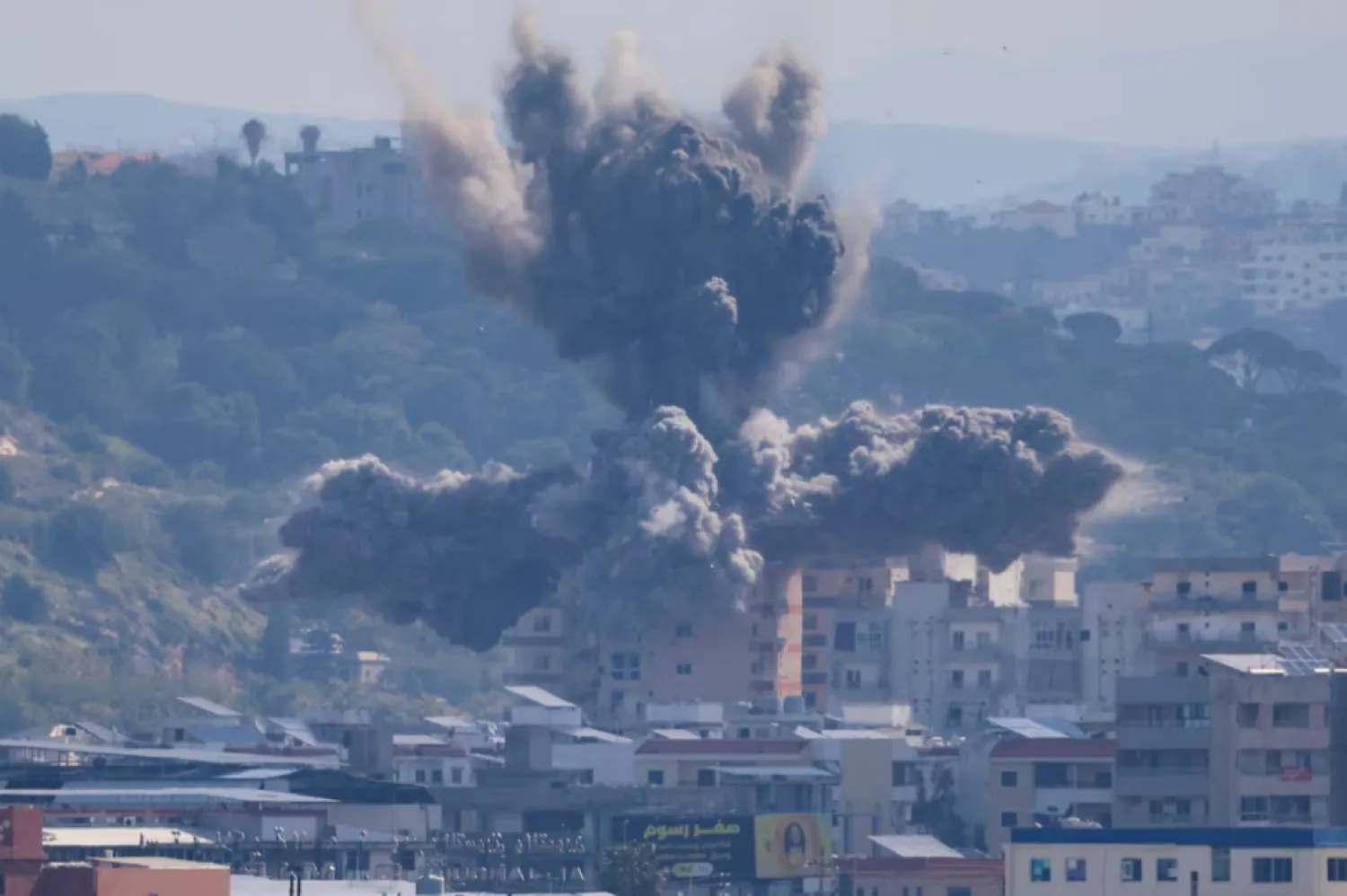
Smoke rises from an explosion in the Abbasiyeh neighbourhood following an Israeli strike, in Tyre, Lebanon, April 8, 2026. REUTERS/Adnan Abidi
TT

Multiple Israeli Airstrikes Hit Central Beirut Hours after US and Iran Announce Ceasefire

Smoke rises from an explosion in the Abbasiyeh neighbourhood following an Israeli strike, in Tyre, Lebanon, April 8, 2026. REUTERS/Adnan Abidi

Multiple Israeli airstrikes hit central Beirut hours after US and Iran announce ceasefire.

The Israeli military said it struck around 100 Hezbollah sites across Lebanon on Wednesday, describing the operation as the "largest coordinated strike" since the war with Iran began.

"The -army- completed the largest coordinated strike targeting approximately 100 Hezbollah command centres and military sites" in Beirut, Bekaa, and southern Lebanon, the military said.

"This is the largest strike carried out against Hezbollah infrastructure since the start of Operation Roaring Lion," it said, referring to its military campaign against Iran, which began on February 28. Hezbollah, however, entered the conflict on March 2.


Syria's Kurds Register for Citizenship after Decades of Marginalization

"Unregistered" Kurds, who have been stateless since a controversial 1962 census, have been flocking to registration centers across Syria. Delil SOULEIMAN / AFP
TT

Syria's Kurds Register for Citizenship after Decades of Marginalization

"Unregistered" Kurds, who have been stateless since a controversial 1962 census, have been flocking to registration centers across Syria. Delil SOULEIMAN / AFP

In a packed hall in Qamishli's sports stadium in northeast Syria, Firas Ahmad is one of dozens of Kurds waiting to apply for citizenship after many in the minority were barred from doing so for decades.

Since last week, "unregistered" Kurds, who have been stateless since a controversial 1962 census, have been flocking to registration centers across Syria to apply for citizenship, based on the interior ministry's instructions.

"A person without citizenship is considered as good as dead," Ahmad, 49, told AFP.

"Imagine not being able to register my children or our homes in our names," he said, adding that "my grandfather never had citizenship, and we have been living without official documents ever since".

On the tables facing long queues of people, registration forms were scattered along with personal photos and old documents, while government employees were recording the data.

The new measure follows Syrian President Ahmed al-Sharaa's January decree granting citizenship to Kurds residing in the country, including those who have been unregistered for decades.

It also enshrines the Kurds' cultural and language rights, and recognizes Kurdish as a national language.

The decree came during weeks of clashes between Kurdish fighters, who once controlled swathes of northeastern Syria, and government forces after which an agreement was reached to integrate the Kurdish administration into the central state.

The integration included government forces entering the previously Kurdish-controlled cities of Hasakeh and Qamishli in February, and the appointment in March of senior Kurdish military leader Sipan Hamo as assistant defense minister for the eastern region, among other steps.

- 'We suffered greatly' -

The lack of citizenship affected many aspects of daily life, from the inability to register births and property ownership to difficulties in studying, moving around, travelling and working, leaving many without full legal recognition of their existence.

"We suffered greatly," says Galya Kalash, a mother of five, speaking in Kurdish.

"My five children could not complete their education, and we could not travel at all. Even now, our house is not registered in our name."

Around 20 percent of Syria's Kurds were stripped of their Syrian nationality in a controversial 1962 census in the northeastern Hasakeh province.

Ali Mussa, a member of Hasakeh's Network of Statelessness Victims, told AFP that there are around 150,000 unregistered people in Syria today.

There are around two million Kurds in Syria, most of them in the northeast.

Mussa called on authorities to show "flexibility in implementing the decision and to provide facilities for residents outside Syria" who may not be able to travel due to their refugee status in Europe or fear of flight disruptions due to the Middle East war.

Authorities are expected to keep registration centers open for a month.

Abdallah al-Abdallah, a civil affairs official in the Syrian government, told AFP the period could be extended.

"The most important compensation for these people is gaining citizenship after being deprived of it for all these years," he said.

In the registration center, Mohammed Ayo, 56, said not having citizenship made him feel "helpless", including being unable to get a driver's license or book a hotel room in capital Damascus as it required prior security clearance.

"You study for many years, and in the end they say you have no certificate," he said, adding that, after finishing high school, he was unable to obtain an official document to study at university.

"We did not even have the right to run for office or vote."


Trump Says Israel and Lebanon Leaders to Hold Talks Thursday

TOPSHOT - US President Donald Trump speaks to the press outside the Oval Office at the White House in Washington, DC, on April 13, 2026. (Photo by Brendan SMIALOWSKI / AFP)
TT

Trump Says Israel and Lebanon Leaders to Hold Talks Thursday

TOPSHOT - US President Donald Trump speaks to the press outside the Oval Office at the White House in Washington, DC, on April 13, 2026. (Photo by Brendan SMIALOWSKI / AFP)

US President Donald Trump said Wednesday that leaders of Israel and Lebanon will speak Thursday, after they held a high-level face-to-face meeting in Washington Tuesday -- the first such negotiation since 1993.

"Trying to get a little breathing room between Israel and Lebanon. It has been a long time since the two leaders have spoken, like 34 years. It will happen tomorrow," Trump wrote without specifying who will be involved or offering further details.

Lebanon was pulled into the Middle East war on March 2 after Iran-backed Hezbollah attacked Israel, and more than 2,000 people have been killed by Israeli strikes since.

Israel pressed ahead with its aerial and ground war in Lebanon. The country's National News Agency reported airstrikes and artillery shelling throughout southern Lebanon on Wednesday, including near Bint Jbeil, where Israeli forces have encircled Hezbollah fighters.

Israeli Prime Minister Benjamin Netanyahu said Israeli troops were about to “eliminate this great stronghold of Hezbollah” and would continue expanding control of areas in southern Lebanon.

Netanyahu said negotiations are continuing, with disarming Hezbollah a key goal.

The Lebanese Health Ministry said Israel struck three teams of paramedics Wednesday in southern Lebanon, first hitting one team and then two more that rushed to help. The attacks killed three paramedics and wounded six others, the ministry said.

The Israeli military did not immediately respond to a request for comment.

Israel and Lebanon have technically been at war since Israel was established in 1948, and Lebanon remains deeply divided over diplomatic engagement with Israel.


Damascus Foils Smuggling of 6,000 Detonators to Lebanon

Tunnel found in Homs countryside linking Qusayr to Lebanon (Syrian media)
TT

Damascus Foils Smuggling of 6,000 Detonators to Lebanon

Tunnel found in Homs countryside linking Qusayr to Lebanon (Syrian media)

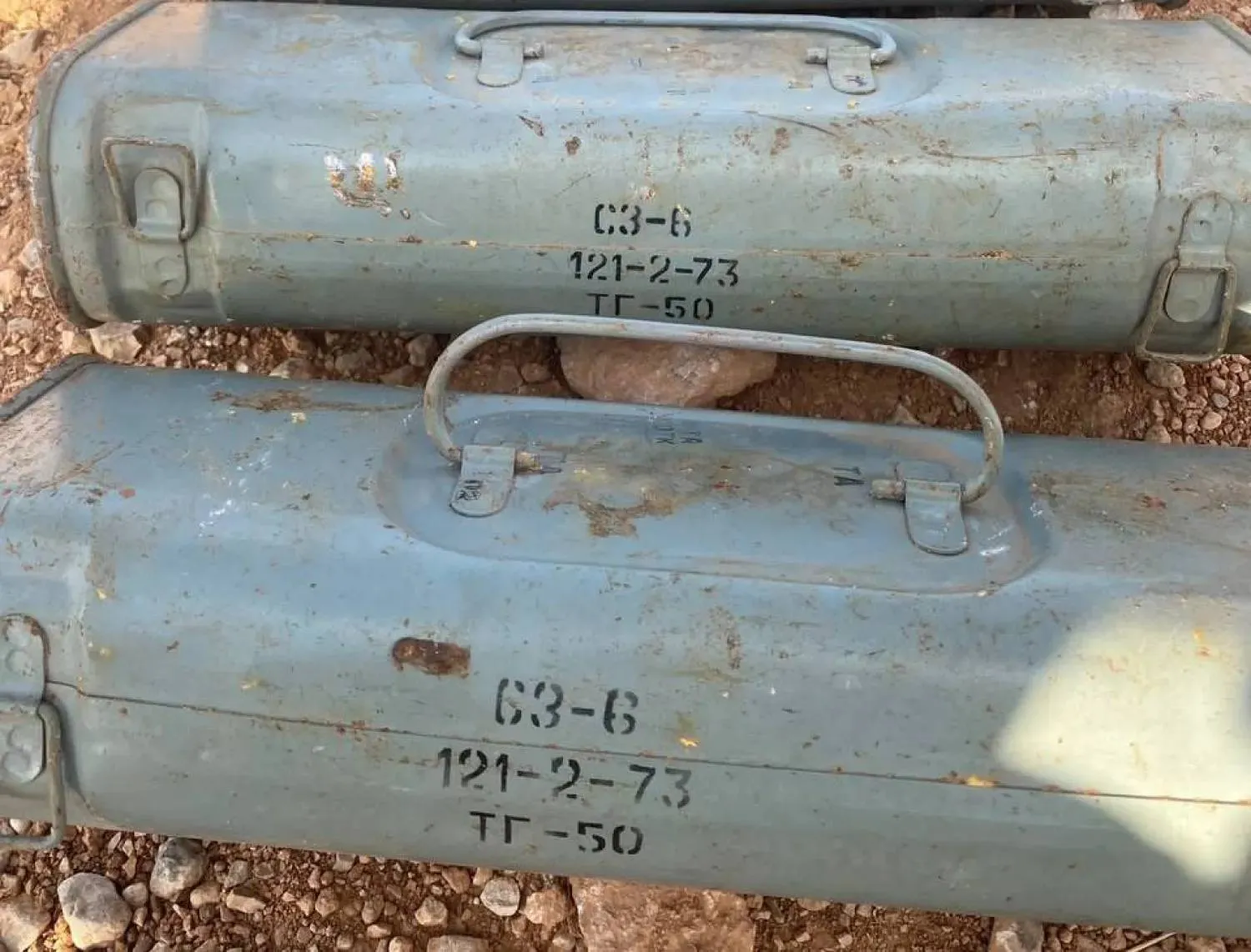
Syrian authorities said they had thwarted an attempt to smuggle a large shipment of military-grade detonators from the Nabk area in the Qalamoun region of rural Damascus into Lebanon.

They also uncovered a cross-border tunnel and seized weapons depots prepared for smuggling, state media reported on Wednesday.

The Internal Security Directorate in Nabk said it dismantled a plan to move a large quantity of explosive detonators used in making improvised explosive devices, adding the shipment was bound for Lebanon.

In a statement, it said the operation was carried out with “high professionalism” after precise technical and field surveillance, preventing the materials from reaching their destination.

Authorities said about 6,000 detonators were seized, without identifying the smugglers or the intended recipients in Lebanon.

The announcement came as internal security forces in Homs reported discovering a tunnel linking Syrian and Lebanese territory in the border town of Housh al-Sayyed Ali, in the Qusayr area of southern Homs province.

Weapons and ammunition depots prepared for smuggling were also seized, according to the Syrian Al-Ikhbariya channel, which gave no details on who dug the tunnel.

Earlier this month, Syria’s defense ministry said it had uncovered a network of tunnels in the Qusayr area used to smuggle drugs and weapons, adding that Hezbollah had used them.

Qusayr has been one of Hezbollah’s main areas of influence in Syria since 2013, until the fall of its ally Bashar al-Assad. The area served as a key supply route from Albu Kamal on the Iraqi border in Deir al-Zor, through Palmyra and Homs, to the Lebanese border.

Media reports say tunnels are widespread along the Qusayr border, alongside informal crossings used by residents to move between the two countries. For many, smuggling has become a source of income amid worsening economic conditions, poverty, and security instability, complicating efforts to secure the border.

The developments come amid fears Syria could be drawn into a wider conflict through Lebanon and efforts to disarm Hezbollah, with backing from the United States and Israel.

On April 11, Syria’s interior ministry said its counterterrorism department, working with internal security in rural Damascus, arrested five people in a cell linked to Hezbollah after tracking suspicious activity in the capital.

Authorities said a woman in the cell was caught attempting to carry out an attack by planting an explosive device near the home of a religious figure in Bab Touma, close to the Mariamite Cathedral. Media reports identified the target as Rabbi Michael Houri.

Earlier this month, the defense ministry allowed a photographer from Agence France-Presse to document the army’s deployment along the border for the first time since reinforcements were sent about a month earlier, including several cross-border tunnels that had recently been uncovered.

Mohammad Hammoud, a Syrian-Lebanese border official, told AFP the army had discovered “a network of tunnels linking the two countries” used to smuggle weapons and drugs. A Syrian army field commander also said Hezbollah had used the tunnels.

Hezbollah fought alongside Assad’s forces in the conflict that began in 2011 as a peaceful uprising before escalating into war.

An AFP photographer saw at least five tunnels crossing the border, including one that started in a house basement and led via concrete steps into narrow, dark passageways used for transit.

On March 28, Syrian authorities said they found a tunnel near a village west of Homs linking Syria to Lebanon, adding that “Lebanese militias” had used it for smuggling before it was closed.

In February, the interior ministry said it dismantled a cell behind attacks in the Mezzeh district of Damascus, adding the weapons used had come from Hezbollah, which denied involvement.