


Lebanon Says Israel Talks Set for Tuesday in US, Israel Won’t Discuss Hezbollah Ceasefire

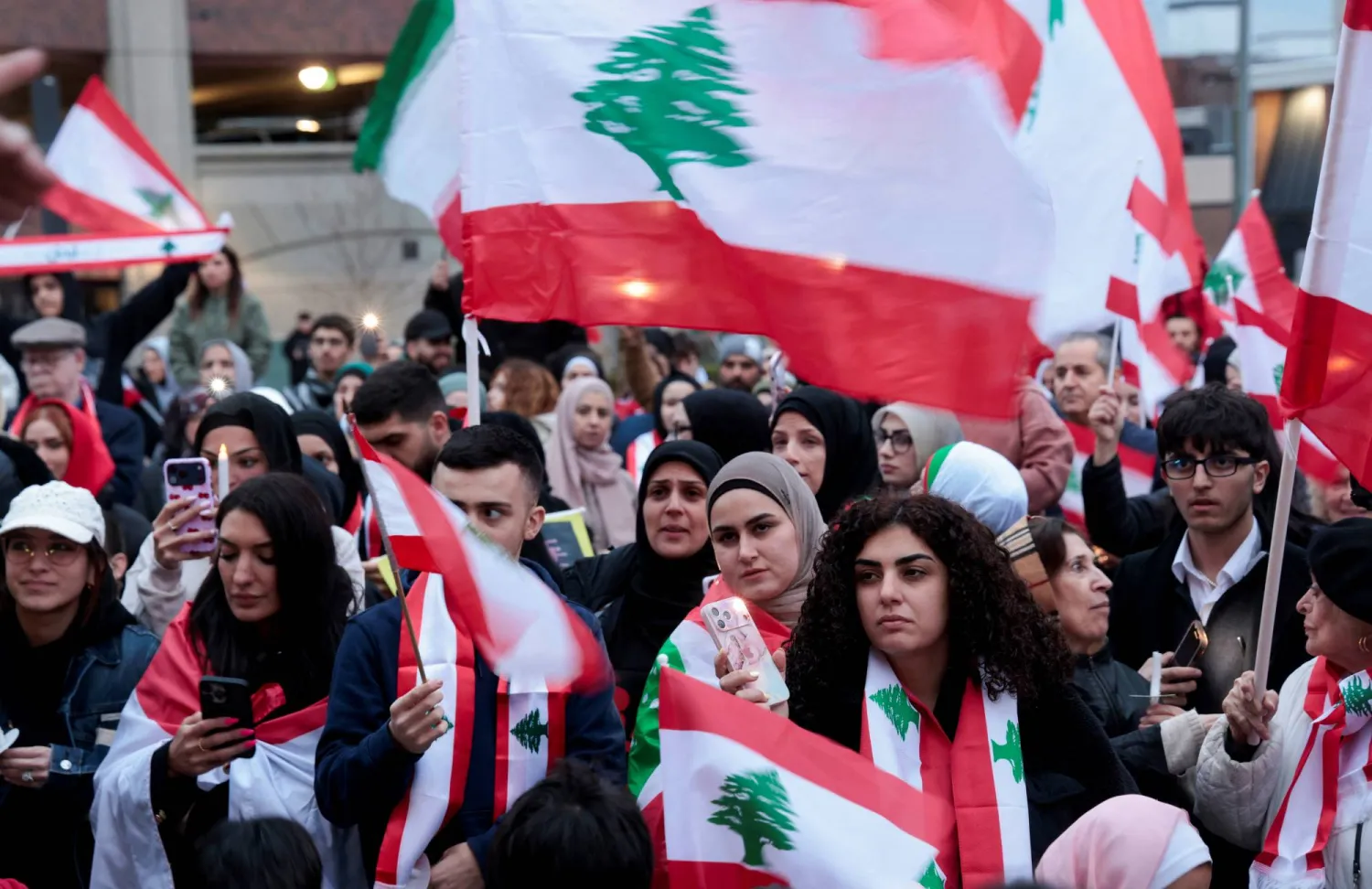
 Lebanese Americans and supporters gather in support of Lebanon during a vigil in Dearborn, Michigan, US, April 10, 2026. (Reuters)
Lebanese Americans and supporters gather in support of Lebanon during a vigil in Dearborn, Michigan, US, April 10, 2026. (Reuters)
TT

Lebanon Says Israel Talks Set for Tuesday in US, Israel Won’t Discuss Hezbollah Ceasefire

 Lebanese Americans and supporters gather in support of Lebanon during a vigil in Dearborn, Michigan, US, April 10, 2026. (Reuters)
Lebanese Americans and supporters gather in support of Lebanon during a vigil in Dearborn, Michigan, US, April 10, 2026. (Reuters)

Lebanon's presidency said Friday that a meeting would be held with Israel in Washington next week to discuss a ceasefire in the Israel-Hezbollah war and the start of negotiations between the neighbors.

Lebanese President Joseph Aoun has repeatedly expressed readiness for direct talks with Israel since Hezbollah drew Lebanon into the Middle East war on March 2 with rocket fire at Israel in support of its backer Iran, sparking massive Israeli strikes and a ground invasion.

After a ceasefire was announced between the United States and Iran this week, Washington and Tehran have been at odds over whether it also applies to Lebanon, as Israel has kept up heavy strikes on the country and Hezbollah has responded with its own attacks.

A statement from Aoun's office said that a first telephone call was held on Friday between the Lebanese and Israeli ambassadors to Washington and the US ambassador to Lebanon, who was also in the American city.

"During the call, it was agreed to hold the first meeting next Tuesday at the State Department to discuss declaring a ceasefire and the start date for negotiations between Lebanon and Israel under US auspices," the presidency statement said.

A Lebanese government official told AFP on Thursday that Lebanon wants a ceasefire before starting any negotiations with Israel.

But Israel said Friday it will not discuss a ceasefire with Hezbollah.

Meeting with his Lebanese counterpart to set up the talks, Israeli Ambassador to Washington Yechiel Leiter "refused to discuss a ceasefire with the Hezbollah terrorist organization," he said in a statement afterward.

Israel "agreed to begin formal peace negotiations" with the Lebanese government, with which it has no diplomatic relations, said Leiter.

Hezbollah “continues to attack Israel and is the main obstacle to peace between the two countries," he said in a statement.

- Security forces killed -

Earlier Friday, Hezbollah chief Naim Qassem urged the Lebanese government to stop giving "free concessions" to Israel and vowed that "the resistance will continue until the last breath".

Hezbollah has rejected direct talks between the two countries, instead calling for Israel's army to withdraw from Lebanon.

Late Friday near Beirut's seaside promenade, an AFP photographer saw dozens of people, some riding mopeds or brandishing Hezbollah or Iranian flags, protesting against the authorities and negotiations with Israel, after a similar gatherings elsewhere in the capital earlier in the evening.

Lebanese authorities say the weeks of hostilities have killed more than 1,950 people, while the provisional toll of massive Israeli strikes across the country on Wednesday alone has risen to 357 dead.

Israel's military said it "eliminated more than 180 militants" from Hezbollah in Wednesday's strikes, which came hours after the US-Iran ceasefire was announced, adding that "the count is still ongoing".

It also said it had "dismantled" more than 4,300 Hezbollah sites in Lebanon and killed "more than 1,400" Hezbollah fighters since the war erupted.

Lebanon's state-run National News Agency (NNA) reported strikes on south Lebanon on Friday, saying that "enemy warplanes launched a series of heavy strikes" on Nabatiyeh, hitting a State Security office near the government headquarters in the city.

An AFP photographer saw extensive damage and a fire still raging at the site, where State Security said 13 of its personnel were killed.

- Beirut threat -

Prime Minister Nawaf Salam said the "painful loss only strengthens our determination to achieve a ceasefire", while Aoun urged the international community to "assume its responsibilities in putting an end to the repeated Israeli aggressions".

Hezbollah also claimed dozens of attacks on Israeli targets, including cross-border rocket barrages in retaliation for the Nabatiyeh strikes, and a missile attack on a naval base in the southern Israeli city of Ashdod, far from the border.

On Thursday afternoon, the Israeli military issued a warning of incoming strikes for large, densely populated areas of southern Beirut home to major hospitals and the road to the airport, so far without carrying out the threat.

A Western diplomat told AFP on condition of anonymity that "there is ongoing diplomatic pressure... to prevent renewed Israeli airstrikes on Beirut after 'Black Wednesday'".

Transport Minister Fayez Rasamny has said he had "received assurances" from foreign diplomats that the airport and the road there would be spared.

Mohammad Zaatari, director of the country's largest public medical facility, Rafic Hariri Hospital, told AFP: "We have received assurances, including from the International Committee of the Red Cross that the hospital would not be targeted."



Palestinians Say Israeli Settlers Kill Man in Raid on Village

A damaged car in the Wadi Al-Lubban Al-Shamali area, south of Nablus, 06 April 2026. Israeli settlers burned a house, two tents, and three vehicles, and assaulted Palestinians in the town of Al-Lubban Ash-Sharqiya earlier in the day. (EPA)
TT

Palestinians Say Israeli Settlers Kill Man in Raid on Village

A damaged car in the Wadi Al-Lubban Al-Shamali area, south of Nablus, 06 April 2026. Israeli settlers burned a house, two tents, and three vehicles, and assaulted Palestinians in the town of Al-Lubban Ash-Sharqiya earlier in the day. (EPA)

The Palestinian health ministry said Israeli settlers shot dead a Palestinian man in the West Bank on Saturday, in the latest deadly attack on the occupied territory.

Ali Majed Hamadneh, 23, died after settlers opened fire during a raid on the village of Deir Jarir, northeast of Ramallah, the ministry said.

"He was brought to the Palestine Medical Complex in a critical condition" and later succumbed to his wounds, the ministry said on Telegram.

Palestinian official news agency Wafa also reported the incident.

"Armed colonists, under the protection of Israeli forces, attacked Deir Jarir from its western entrance and opened fire toward residents in the area," Wafa reported.

There was no immediate response from the Israeli police or military.

Violence in the West Bank, which Israel has occupied since 1967, has risen sharply since the October 7, 2023 Hamas attack on Israel triggered the Gaza war.

There has also been a spike in deadly attacks by Israeli settlers in the West Bank since the start of the Iran war on February 28, Palestinian authorities and the United Nations have said.

Prior to Saturday's attack, at least six Palestinians were killed since then in settler attacks, according to an AFP tally based on Palestinian health ministry figures.

Settler assaults on Palestinians have persisted for years, often to the indifference of mainstream Israeli society.

But the recent surge has prompted criticism from influential rabbis, settler leaders, and even Israel's military chief Lieutenant General Eyal Zamir, who called the attacks "morally and ethically unacceptable".


Iraqi Parliament Elects Nizar Amedi as Country’s New President

 The entrance of the Iraqi parliament building during a parliamentary session in Baghdad, Iraq, April 11, 2026. (Reuters)
The entrance of the Iraqi parliament building during a parliamentary session in Baghdad, Iraq, April 11, 2026. (Reuters)
TT

Iraqi Parliament Elects Nizar Amedi as Country’s New President

 The entrance of the Iraqi parliament building during a parliamentary session in Baghdad, Iraq, April 11, 2026. (Reuters)
The entrance of the Iraqi parliament building during a parliamentary session in Baghdad, Iraq, April 11, 2026. (Reuters)

The Iraqi parliament on Saturday elected Kurdish politician Nizar Amedi as the country's new president, a largely ceremonial role, following a parliamentary election last November.

Amedi, 58, is a former environment minister and has headed the political office of the Patriotic Union of Kurdistan (PUK) in Baghdad since 2024.

Iraq is now ‌due to ‌choose a prime minister, ‌a closely-watched ⁠and sensitive pick.

US ⁠President Donald Trump threatened in January to withdraw Washington's support for Iraq, a major oil producer, if former Prime Minister Nouri al-Maliki was designated to form a cabinet.

The pro-Iran Coordination Framework coalition that holds a parliamentary majority has ‌nominated Iran-backed Maliki, alarming Washington, which along ‌with Israel waged a six-week war with ‌Iran until a ceasefire was announced on Tuesday.

Senior US and Iranian officials were meeting in Islamabad on Saturday in ‌the highest-level talks between Washington and Tehran in half a century ⁠in ⁠an effort to end the war.

In Iraq, which has long trodden a tightrope between Iran and the US, its closest allies, the prime minister wields significant power.

Under Iraq's sectarian power-sharing system, the prime minister must be a Shiite, the parliamentary speaker a Sunni, and the president a Kurd.


Syria Says Busts Hezbollah-Linked Cell Planning Attack on ‘Religious Figure’

This handout picture released by the official Syrian Arab News Agency (SANA) on March 8, 2025, shows Syrian forces manning a checkpoint in the coastal city of Latakia. (SANA/AFP)
TT

Syria Says Busts Hezbollah-Linked Cell Planning Attack on ‘Religious Figure’

This handout picture released by the official Syrian Arab News Agency (SANA) on March 8, 2025, shows Syrian forces manning a checkpoint in the coastal city of Latakia. (SANA/AFP)

Syria's interior ministry said Saturday that five people had been arrested over a plot to attack an unidentified religious figure in Damascus, alleging the cell was linked to the Lebanese armed group Hezbollah.

In a statement, the ministry said security forces observed a woman as she attempted to "plant an explosive device in front of the house of a religious figure" near a church in Damascus's Bab Touma area.

Security forces intervened and dismantled the device, arresting all five members of the cell, the statement said.

"Preliminary investigations revealed the cell's link to Lebanon's Hezbollah, and that its members received specialized military training abroad," the statement added.

Since March 2, Hezbollah has been battling Israel after drawing Lebanon into the Middle East war with rocket fire at Israel in support of its backer Iran.

The group played a key role in Syria's civil war, fighting alongside the forces of now ousted leader Bashar al-Assad.

Under Assad, Syria was part of Iran's "axis of resistance" against Israel and enabled the transfer of weapons and money from Iran to Hezbollah.

Syria's new authorities have rejected Iranian influence and are hostile to the Lebanese group and its sponsor.

In February, Syria said it had dismantled a cell responsible for recent attacks targeting Damascus's Mazzeh district, saying the weapons came from Hezbollah, which denied any involvement.