


Lebanon Asserts Itself at Israel Negotiations, Undermining Hezbollah and Iran

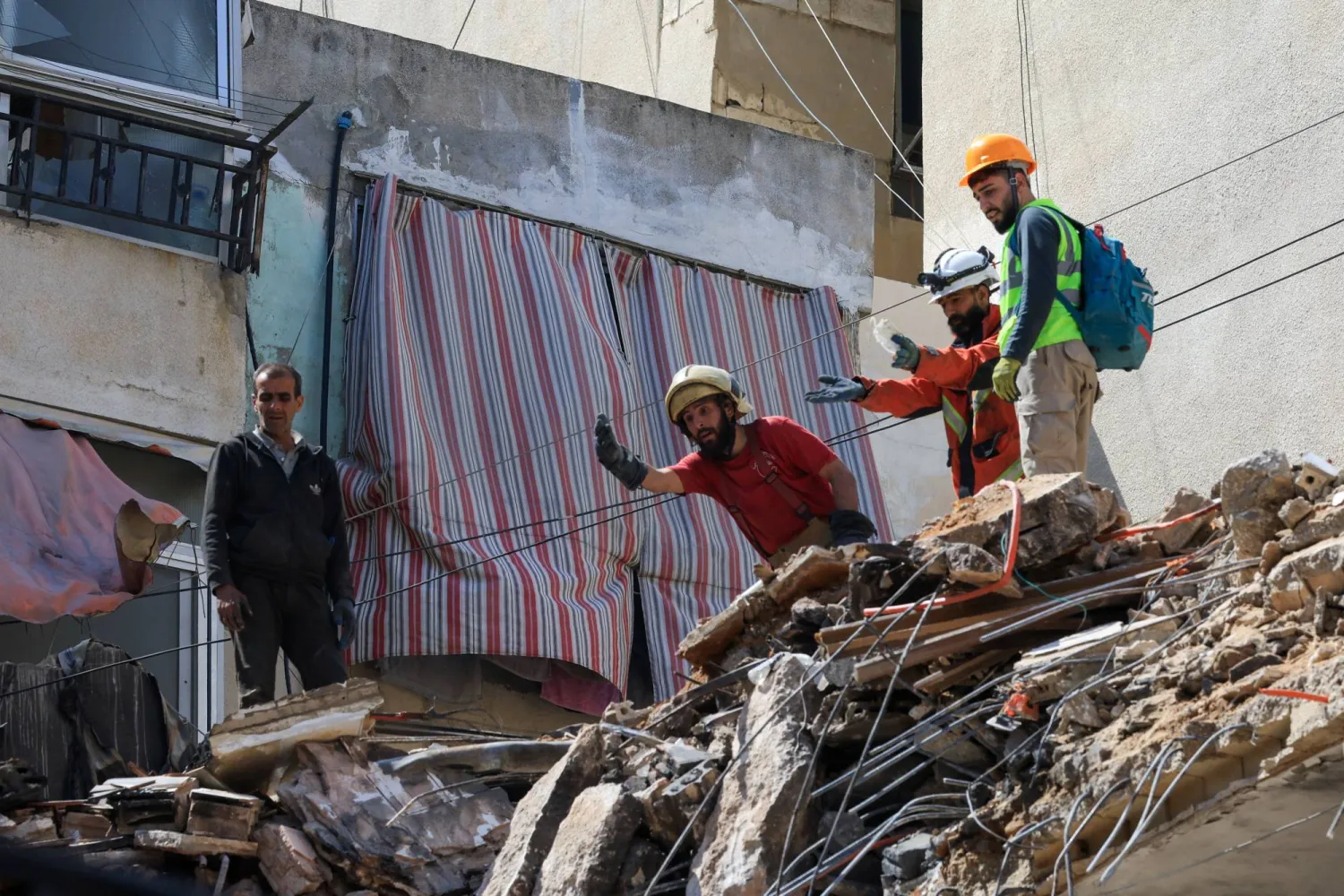
Rescuers work at the site of an Israeli strike carried out on Wednesday, in the southern suburbs of Beirut, Lebanon, April 10, 2026. (Reuters)
TT

Lebanon Asserts Itself at Israel Negotiations, Undermining Hezbollah and Iran

Rescuers work at the site of an Israeli strike carried out on Wednesday, in the southern suburbs of Beirut, Lebanon, April 10, 2026. (Reuters)

Lebanon is set to enter direct negotiations with Israel for the first time, marking a fundamental shift in how the state manages the conflict and underscoring its insistence on sovereign decision-making free of external tutelage.

The shift follows Iranian attempts to preserve what is known as the “unity arenas” in talks due to be held in Pakistan, against firm Lebanese insistence, voiced by President Joseph Aoun and Prime Minister Nawaf Salam, that the Lebanese state alone is authorized to negotiate on Lebanon’s behalf.

The talks carry added weight as they come after a series of pivotal state decisions, most notably banning Hezbollah’s military wing and operations and restricting weapons in Beirut to legitimate forces. They also follow steps rejecting Iranian interference in Lebanon, the latest being the expulsion of the Iranian ambassador.

These moves intersect directly with calls to disarm Hezbollah, an issue set to dominate the negotiations, especially as Israel moves to link any withdrawal from southern Lebanon to tangible progress on that front.

The developments have angered Hezbollah. Officials and supporters have sharply criticized the move, going so far as to accuse Prime Minister Nawaf Salam of treason.

Hezbollah supporters also staged a protest against Salam on Thursday and Friday after the government decided to make Beirut a demilitarized city.

Blow to Hezbollah

Lebanese Forces MP Razi El Hage said Hezbollah had bet on Lebanon being included in a ceasefire deal between the United States and Iran, allowing it to declare what he described as a false victory and use it to pressure the government to reverse its decisions.

He said the state is now more serious than ever about imposing monopoly over arms.
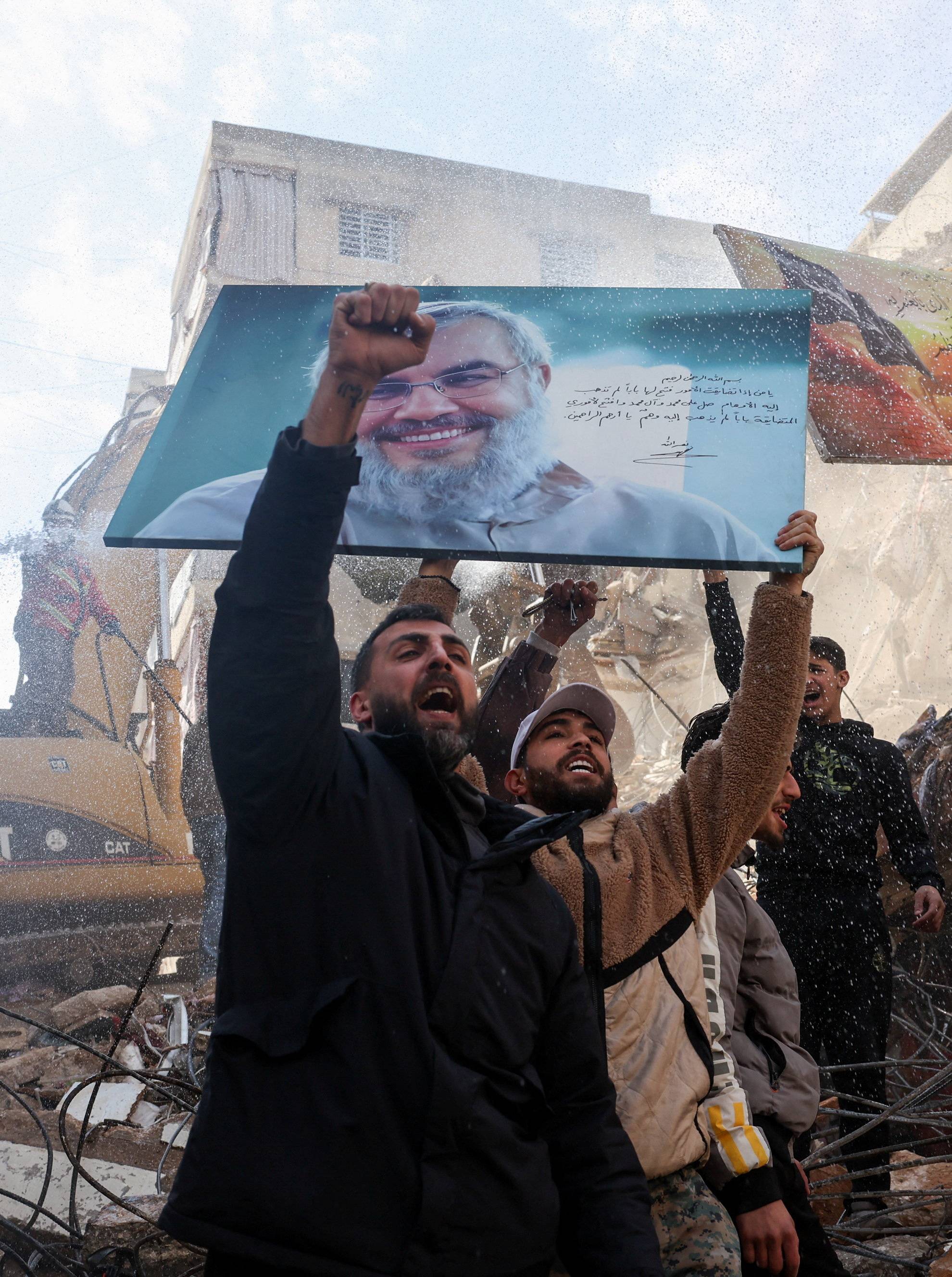
People with an image of slain Hezbollah leader Hassan Nasrallah gather as rescuers with heavy machinery work at the site of an Israeli strike carried out on Wednesday, in the southern suburbs of Beirut, Lebanon, April 10, 2026. (Reuters)

Political analyst Ali al-Amine said Hezbollah has long sought to turn political and military developments into what appears to be victory, even if illusory, relying on an organized propaganda machine and its influence over its support base.

“Had a ceasefire in Lebanon coincided with a truce involving Iran, the party would have rushed to declare a divine victory and stage celebrations,” he told Asharq Al-Awsat.

But recent developments have undercut that approach, he added. Continued Israeli strikes coincided with the Lebanese state taking action, weakening Hezbollah’s ability to exploit developments in its favor, he explained.

He pointed to Salam’s initiative and Aoun’s efforts to cement the principle that the Lebanese state alone negotiates on behalf of Lebanon, a shift that has angered Hezbollah.

Hezbollah’s problem is exclusion

Al-Amine said Hezbollah’s core problem is not with the negotiations themselves. The party has long taken part in them through Parliament Speaker Nabih Berri, including during maritime border talks.

“The issue now is that it no longer leads or monopolizes this track, nor does Iran behind it,” he said.

He added that Salam’s clear statement that Lebanon negotiates for itself, followed by Aoun’s backing, marked a turning point. Hezbollah responded with a political campaign that went as far as accusing Salam of being “Zionist.”

Israel’s announcement that it is ready to negotiate deepened the shock, he said, not because of the talks themselves but because the initiative had slipped from Hezbollah’s hands.
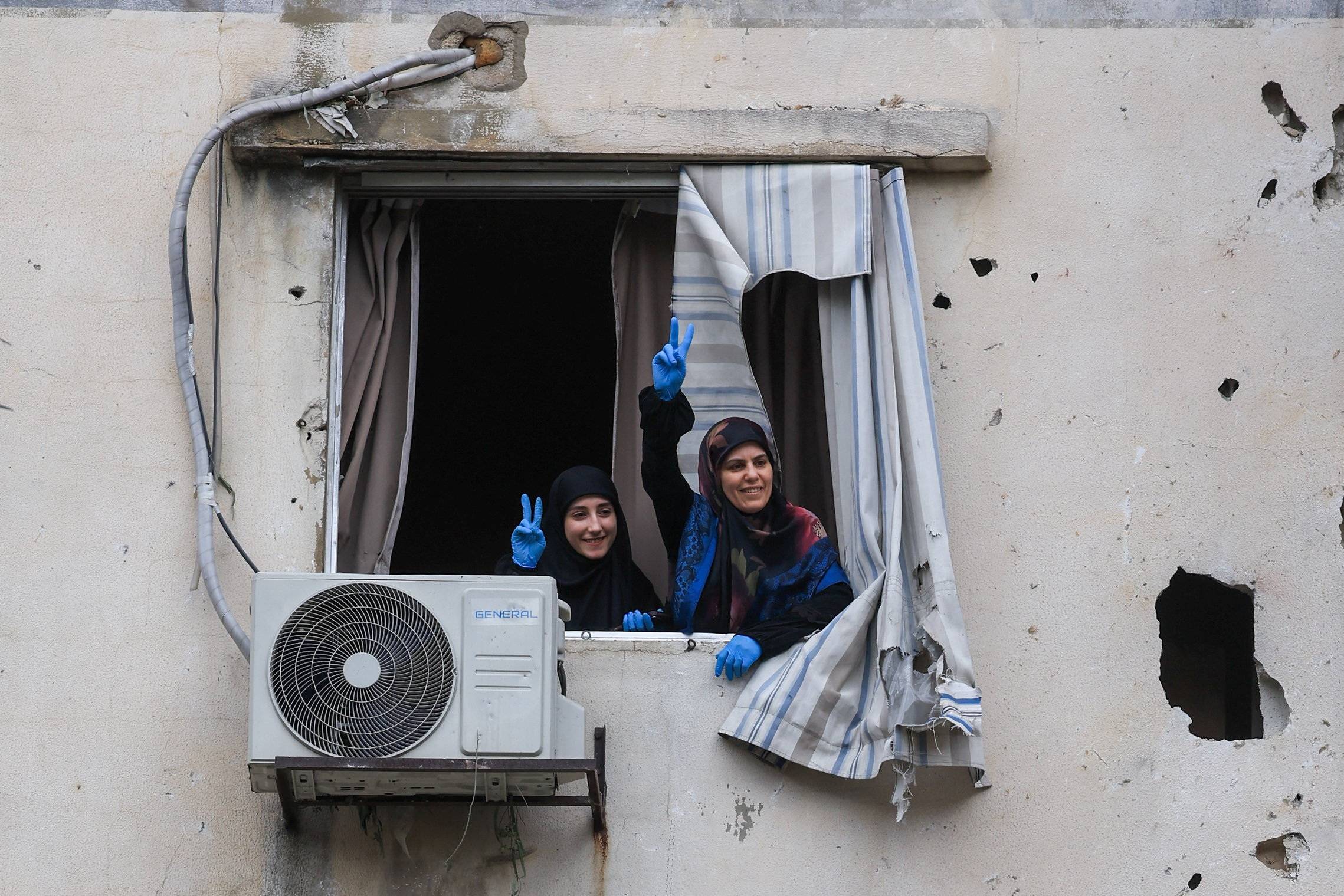
Women gesture while looking out from a window of a damaged building at the site of an Israeli strike carried out on Wednesday, in the southern suburbs of Beirut, Lebanon, April 10, 2026. (Reuters)

Al-Amine also pointed to a shift in the US approach, with no back channels opened with Hezbollah and clear support instead for the Lebanese government as the sole negotiating party.

Test for the state

As the outcome of the talks remains uncertain, al-Amine said the next phase hinges on the Lebanese state, particularly Salam and Aoun, taking practical steps to strengthen its position.

Chief among these is implementing the decision to make Beirut a demilitarized city, a key step toward restoring state authority and institutions, he said, noting that success will require serious Arab and international backing.

Hage said the negotiations mark a step forward and will focus on one central issue, the state’s ability to guarantee exclusive control over arms.

He added that Lebanese Forces ministers had submitted a memorandum to the Cabinet outlining a clear legal and political path to exit the current crisis, hold those responsible to account, and pursue Iran in international forums over the losses caused by Hezbollah dragging Lebanon to the war.



Trump Warns Israel and Iran Not to 'Blow It' after New Strikes Threaten Emerging Ceasefire Deal

US President Donald Trump speaks to reporters aboard Air Force One on a flight back to Washington March 15, 2026. REUTERS/Kevin Lamarque/File Photo
TT

Trump Warns Israel and Iran Not to 'Blow It' after New Strikes Threaten Emerging Ceasefire Deal

US President Donald Trump speaks to reporters aboard Air Force One on a flight back to Washington March 15, 2026. REUTERS/Kevin Lamarque/File Photo

US President Donald Trump on Sunday urged no further attacks by anyone after Israel's military said it launched strikes on Hezbollah targets in Beirut's southern suburbs, potentially complicating efforts to finalize a deal to end the US-Iran war.

The Public Health Emergency Operations Center said three people, including two women, were killed, and 16 were wounded.

Trump reacted on social media and said Israeli strikes on Beirut "should not have happened" as he vowed a regional peace deal was at hand, though he did not confirm reports it would be signed during the day.

"We are very close to a Deal that will bring peace to the region, including to Lebanon, and all sides should stand down," Trump said on social media.

"This could be the beginning of a long and beautiful peace -- Let's not blow it!"

The deal in its current form is a deep disappointment to Israel's government, which has been sidelined in negotiations led by Pakistan and others. The last time Israel struck the Beirut suburbs a week ago, it set off the most serious escalation of fighting between Iran and Israel since the tenuous ceasefire took hold April 7.

Trump, who had said the deal could be signed Sunday, has pressed Israeli Prime Minister Benjamin Netanyahu to stop hitting Lebanon hard while a deal is near, but the prime minister has defied him.

Netanyahu's office said the strikes were in response to Hezbollah attacks on northern Israel. Israel’s military said Hezbollah launched three projectiles, releasing footage where an audible boom was followed by rising smoke. There was no immediate comment from the Iranian-backed Hezbollah.


Trump to Meet Sisi at G7 Summit in France

US President Donald Trump holds a meeting with Egypt's President Abdel Fattah al-Sisi during a summit on Gaza in Sharm el-Sheikh on October 13, 2025. (AFP)
TT

Trump to Meet Sisi at G7 Summit in France

US President Donald Trump holds a meeting with Egypt's President Abdel Fattah al-Sisi during a summit on Gaza in Sharm el-Sheikh on October 13, 2025. (AFP)

US President Donald Trump is set to hold talks with Egypt's President Abdel Fattah al-Sisi on the sidelines of the G7 summit in France this month, the Egyptian presidency said on Sunday.

In a statement, the presidency said Sisi is expected to hold a series of meetings with world leaders during the summit, "including a bilateral meeting with US President Donald Trump".

It added that Sisi's meetings would focus on "discussing ways to resolve international geopolitical crises and address their repercussions on trade, energy and supply chains".

The G7 summit will be one of the first major international gatherings since the United States and Israel launched a war against Iran in late February, upending the Middle East and widening transatlantic tensions.

French President Emmanuel Macron, who is hosting the summit in the city of Evian on June 15-17, said that leaders from Egypt, Saudi Arabia, Qatar and the United Arab Emirates had been invited to discuss the Middle East war, according to the French presidency.

Saudi Crown Prince Mohammed bin Salman said he would not attend the summit due to "prior commitments", the Saudi Press Agency (SPA) reported on Thursday.

The G7 brings together the leaders of Britain, Canada, France, Germany, Italy, Japan and the United States, along with invited leaders from several other countries, including Brazil and India.

Macron is due to arrive in Evian on Sunday evening, with other leaders, including Trump, expected on Monday.

Leaders are set to have a packed agenda of potentially explosive issues, including efforts to end the war in Iran and re-open the key Strait of Hormuz shipping bottleneck.


Arab League Warns of Devastating Effects of Attacking Education in Occupied Territories

Arab League headquarters in Cairo (The League's official Facebook page)
TT

Arab League Warns of Devastating Effects of Attacking Education in Occupied Territories

Arab League headquarters in Cairo (The League's official Facebook page)

Assistant Secretary-General and Head of the Palestine and Occupied Arab Territories Sector at the Arab League Ambassador Dr. Faed Mustafa stressed that targeting education in the occupied Palestinian territories, particularly in the Gaza Strip, cannot be regarded as merely a side effect of war.

He asserted that it represents part of a systematic plan aimed at erasing the Palestinian national identity and depriving future generations of their awareness, culture, and sense of belonging. He warned that what he described as educational genocide would have devastating consequences extending to generations to come, SPA reported.

He made the remarks during his speech at the opening of the 111th Session of the Committee on Educational Programs for Arab Students in Occupied Arab Territories, which kicked off today at the headquarters of the General Secretariat of the Arab League in Cairo.

Mustafa noted that Palestinian efforts to resume the educational process, particularly in the Gaza Strip, face major challenges due to the blockade, Israeli restrictions, and shortages of educational supplies. These circumstances have compelled the concerned authorities to resume classes in partially damaged schools, as well as in tents and temporary educational centers with limited resources.

He called on the international community and relevant institutions to fulfill their obligations toward rebuilding the Palestinian educational system, ensuring sustainable funding for United Nations Relief and Works Agency for Palestine Refugees in the Near East (UNRWA), and supporting psychological and educational recovery programs.

Mustafa stressed that saving Palestinian education is a national, humanitarian, and moral duty that requires concerted local, regional, and international efforts.