
Lebanese Army Warns Hezbollah Supporters against Undermining Civil Peace

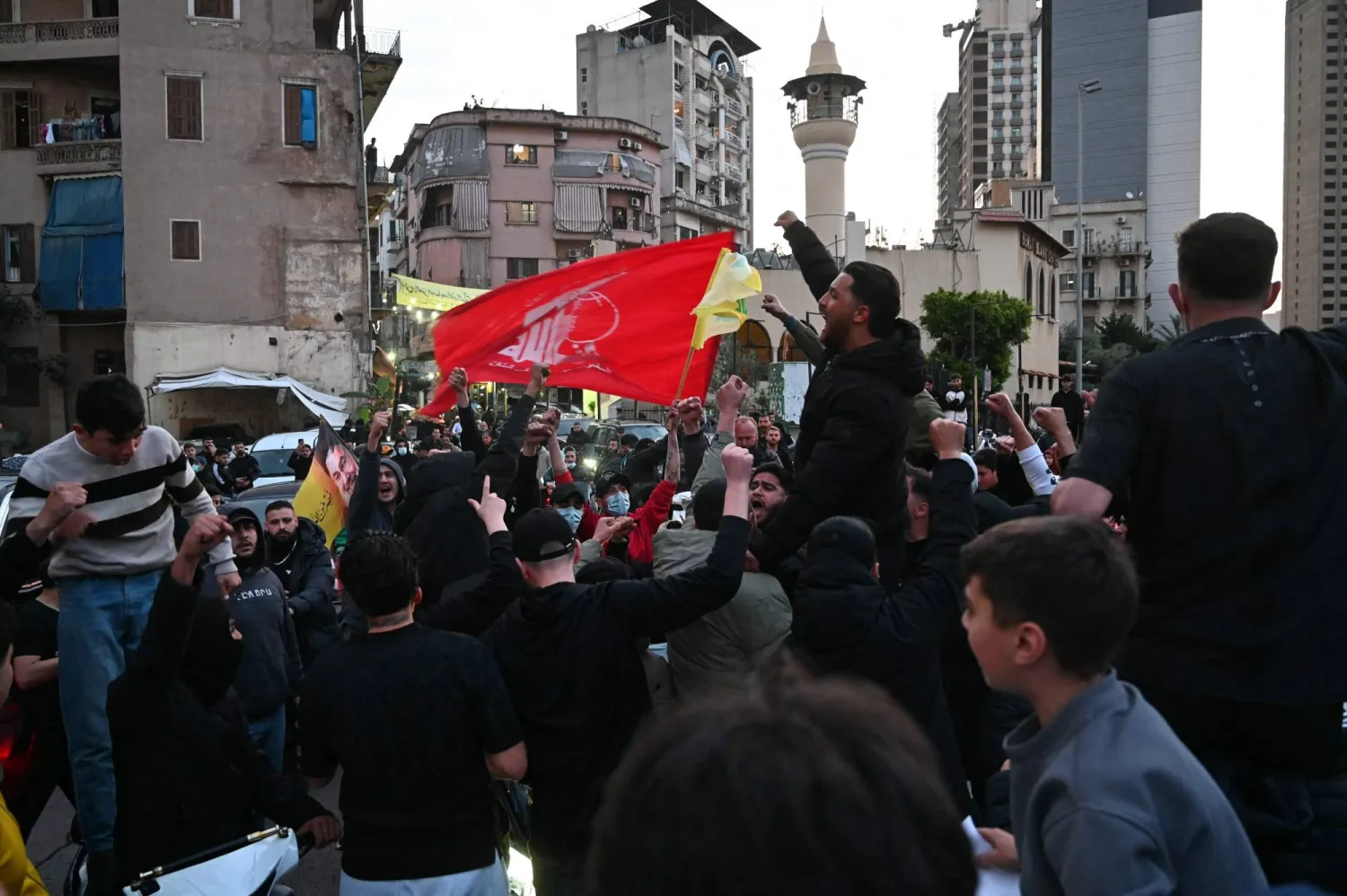
Hezbollah supporters demonstrate in Beirut to protest the Lebanese authorities’ decision to engage in direct negotiations with Israel, on April 10, 2026. (Photo by FADEL itani / AFP)
TT

Lebanese Army Warns Hezbollah Supporters against Undermining Civil Peace

Hezbollah supporters demonstrate in Beirut to protest the Lebanese authorities’ decision to engage in direct negotiations with Israel, on April 10, 2026. (Photo by FADEL itani / AFP)

The Lebanese army warned supporters of Hezbollah against actions that could undermine civil peace, as protests in Beirut over government policy entered a second day, raising tensions in the capital.

Demonstrations involving hundreds of Hezbollah and Amal Movement supporters have taken place in central Beirut, including near government headquarters in Riad al-Solh Square, with protesters blocking roads and moving through areas such as Hamra, Raouche, Sakiet al-Janzir and the so-called Ring Bridge. The protests are aimed at pressuring the government over its decision to launch direct negotiations with Israel and to restrict weapons to state control in Beirut.

Prime Minister Nawaf Salam postponed a planned trip to the United States following the unrest.

“In light of the current domestic situation, and in order to fully carry out my duty to safeguard the security and unity of the Lebanese people, I have decided to postpone my trip to the United Nations and the United States to continue the government’s work from Beirut,” Salam said in a post on X.

The Lebanese army said in a statement it respects the right to peaceful expression but warned strongly against any actions that could endanger stability or civil peace.

“Any movement that could threaten stability, civil peace or lead to attacks on public or private property will not be tolerated,” the army said, adding it would act decisively to prevent any disruption to internal stability.

Protesters raised party flags and slogans rejecting what they described as “concessions and normalization with Israel,” insisting that “the resistance’s weapons are what liberate the land.”

Security coordination

Amid fears of escalation, President Joseph Aoun convened a security meeting at Baabda Palace attended by Defense Minister Maj. Gen. Michel Menassa and Interior Minister Ahmad al-Hajjar to review measures aimed at maintaining stability.

Salam also chaired a meeting at the Grand Serail with the defense and interior ministers, Lebanese Armed Forces Commander Gen. Rodolphe Haykal and Internal Security Forces chief Maj. Gen. Raed Abdallah to discuss the implementation of cabinet decisions to maintain security in Beirut.

The army and Internal Security Forces deployed heavily across central Beirut, including elite units, and set up checkpoints at key entry points including Hamra and Spears. Patrols were also conducted near displacement centers and in mixed sectarian neighborhoods.

Al-Hajjar said peaceful protest is permitted under the law but stressed that security forces have taken all necessary measures to protect state institutions and ensure the safety of Beirut and its residents. He called for “responsibility, awareness and national unity at this delicate stage.”

Ahead of a second rally on Saturday afternoon near the Grand Serail, security forces expanded their deployment across Beirut.

A security source said there would be “no tolerance for any attempt to undermine security or threaten civil peace,” describing stability as a “red line” and warning that any destabilization would be met with a firm response.


PM Says Lebanon Facing Dangerous Israeli Escalation

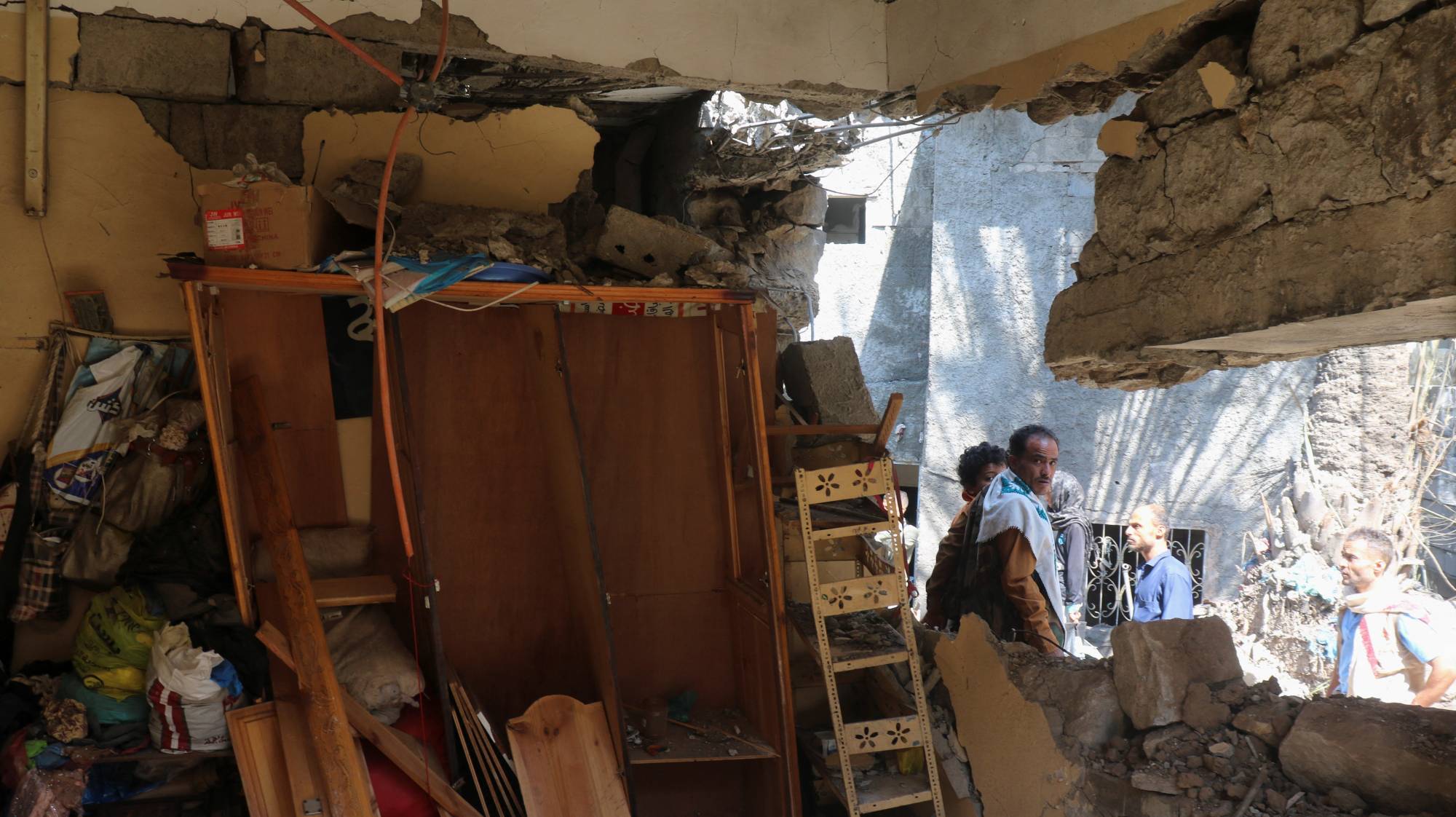
Destroyed buildings are pictured in the village of Kfar Kila in southern Lebanon as seen from across the border in the Upper Galilee region of northern Israel on May 29, 2026. (AFP)
TT

PM Says Lebanon Facing Dangerous Israeli Escalation

Destroyed buildings are pictured in the village of Kfar Kila in southern Lebanon as seen from across the border in the Upper Galilee region of northern Israel on May 29, 2026. (AFP)

Lebanese Prime Minister Nawaf Salam denounced on Saturday what he called a dangerous Israeli escalation in the south, urging an immediate ceasefire and insisting that a "scorched-earth policy" would not ensure Israel's security.

In a televised address, Salam also defended his government's direct negotiations with Israel -- which Iran-backed Hezbollah opposes -- saying that the talks were the "least costly path" for Lebanon.

"In light of the dangerous and unprecedented Israeli escalation over the past few days, it is necessary to step up political and diplomatic efforts to achieve a swift and real ceasefire," Salam said.

He accused Israel of "pursuing a scorched-earth policy and collective punishment" by "destroying towns and villages, and forcing their inhabitants into exile".

This will bring "neither security nor stability" to Israel, he said.

Salam's broadcast came after Israel's military issued new evacuation warnings for residents of more south Lebanon villages, and a day after military delegations from both countries held landmark security talks in Washington.

Those talks took place ahead of US-brokered negotiations early next week -- the fourth round since the latest Israel-Hezbollah conflict erupted in March.

Salam said the outcome of the direct negotiations with Israel was "not guaranteed", but that they "are the least costly path for our country and our people".

A US statement after Friday's talks made no mention of a ceasefire, and Israel has recently intensified its air and ground operations against Hezbollah.

A truce to halt the fighting officially took effect on April 17, but has never been observed.


Kataib Hezbollah Vows to Keep Arms as Iraq Faces US Pressure to Disarm Groups

Fighters carry flags of Iraq and paramilitary groups, including Kataib Hezbollah, during a funeral in Baghdad for five militants killed in a US strike in northern Iraq, on Dec. 4, 2023. (AFP via Getty Images)
TT

Kataib Hezbollah Vows to Keep Arms as Iraq Faces US Pressure to Disarm Groups

Fighters carry flags of Iraq and paramilitary groups, including Kataib Hezbollah, during a funeral in Baghdad for five militants killed in a US strike in northern Iraq, on Dec. 4, 2023. (AFP via Getty Images)

The influential Iraqi armed group Kataib Hezbollah pledged on Saturday to keep up its "action", as Baghdad faces mounting US pressure to disarm factions backed by Iran.

Following the outbreak of the US-Israeli war on Iran at the end of February, groups operating under the banner of the "Islamic Resistance in Iraq" carried out repeated drone and rocket attacks on US interests in the country.

Washington, in turn, bombed facilities and bases belonging to the groups, including Kataib Hezbollah, killing dozens of their members.

Since taking office in mid-May, Iraqi Prime Minister Ali al-Zaidi has pledged to restrict weapons to the hands of the state.

But in a statement on Saturday, Kataib Hezbollah security chief Abu Mujahid al-Assaf said "action is today a collective duty, and we will carry it out on behalf of the brothers who have decided to abandon it".

While some factions have shown willingness to operate under state institutions, others, like Kataib Hezbollah, refuse to discuss disarmament under US pressure.

Assaf suggested that Kataib Hezbollah was willing to work with those other groups, and was "also prepared to pay for" weapons they no longer needed.

He said his group was ready "to cooperate and play a constructive role" by supervising the transfer and storage of weapons, and receiving specialized weapons such as cruise missiles, for which "there are no experts within state agencies".

Kataib Hezbollah insists it will not discuss its weapons so long as foreign forces remain deployed in Iraq's northern Kurdistan region as part of a US-led international coalition formed in 2014 to fight the extremist ISIS group.

The coalition is scheduled to end its mission in the Kurdistan region by September.

Earlier this month, a senior US State Department official had demanded Iraq take "concrete actions" on pro-Iran armed groups, preconditioning renewed support on "expelling terrorist militias from any state institution" and cutting off payments to them.


Israeli Strike Kills Nurse in Gaza

 Mourners take the last look at the body of Jamal Abu Aoun, who was killed in an Israeli airstrike, during his funeral at al-Aqsa Hospital in Deir al-Balah, central Gaza Strip, Saturday May 30, 2026. (AP)
Mourners take the last look at the body of Jamal Abu Aoun, who was killed in an Israeli airstrike, during his funeral at al-Aqsa Hospital in Deir al-Balah, central Gaza Strip, Saturday May 30, 2026. (AP)
TT

Israeli Strike Kills Nurse in Gaza

 Mourners take the last look at the body of Jamal Abu Aoun, who was killed in an Israeli airstrike, during his funeral at al-Aqsa Hospital in Deir al-Balah, central Gaza Strip, Saturday May 30, 2026. (AP)
Mourners take the last look at the body of Jamal Abu Aoun, who was killed in an Israeli airstrike, during his funeral at al-Aqsa Hospital in Deir al-Balah, central Gaza Strip, Saturday May 30, 2026. (AP)

A Palestinian nurse was killed in an Israeli strike on Gaza Saturday, hospital authorities said, the latest death by Israeli fire since a shaky ceasefire halted major fighting in the enclave last year.

The strike late Saturday morning hit a Hamas-manned police point in the central city of Deir al-Balah. At least three other people were wounded, according to the city’s Al-Aqsa Martyrs hospital, which received the casualties.

The Israeli military didn’t immediately respond to a request for comment.

The dead nurse was identified as Jamal Abu Aoun, who worked at Yafa Hospital in Deir al-Balah. His funeral was held at noon in the Al-Aqsa Martyrs hospital’s courtyard.

He was the latest fatality among Palestinians in the coastal enclave since a fragile October ceasefire deal attempted to halt a more than two-year war between Israel and Hamas in Gaza.

While the heaviest fighting has subsided, the shaky ceasefire has seen almost daily Israeli fire. Israeli forces have carried out repeated airstrikes and frequently fire on Palestinians near military-held zones, killing at least 929 Palestinians, according to Gaza’s health ministry.

The ministry, which is part of the Hamas-led government, maintains detailed casualty records that are seen as generally reliable by United Nations agencies and independent experts. But it does not give a breakdown of civilians and militants.

Fighters have carried out shooting attacks on troops, and Israel says its strikes are in response to that and other violations. Four Israeli soldiers have been killed since the ceasefire.