



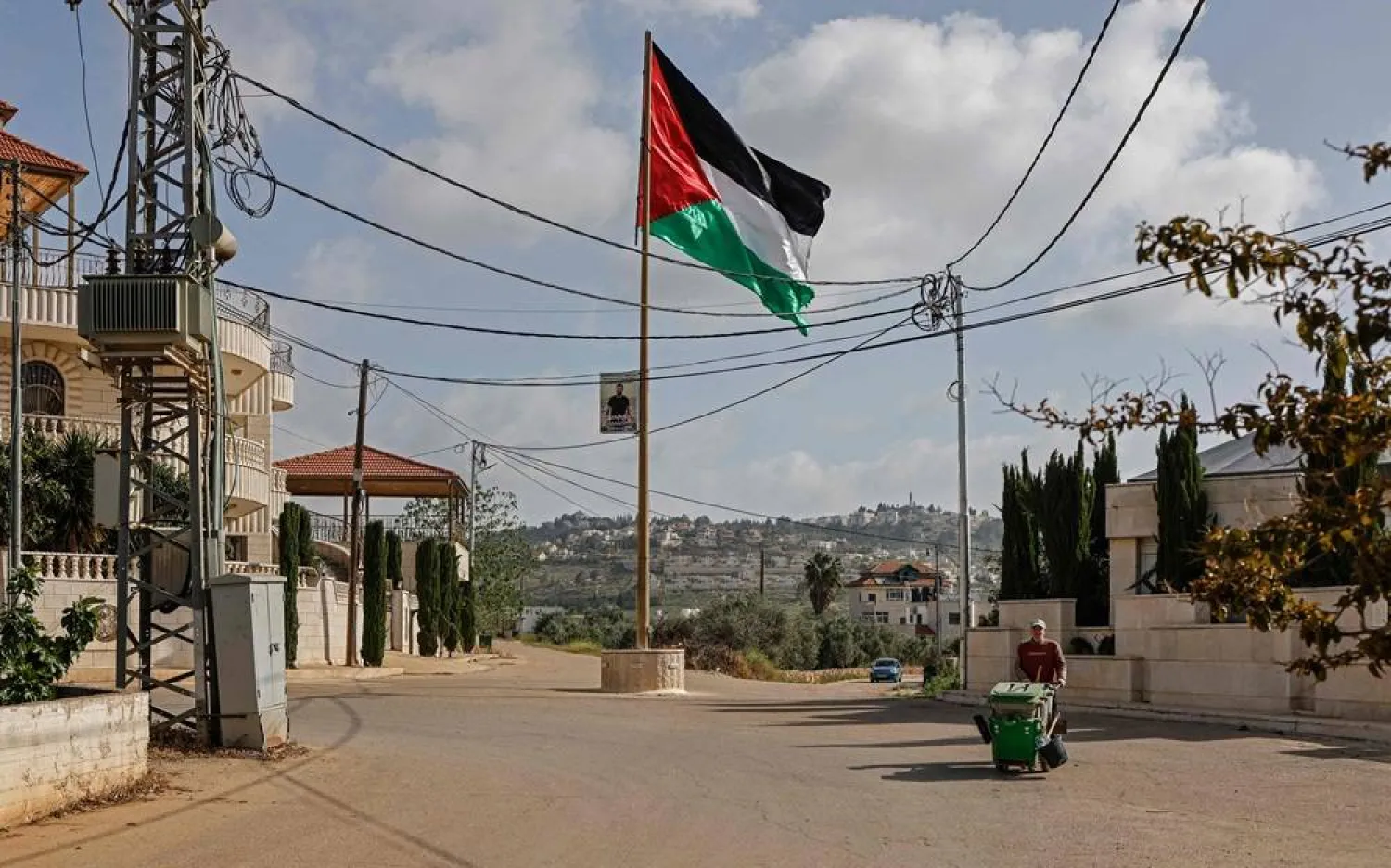

Two Palestinians, including a 14-year-old boy, were killed in the Israeli-occupied West Bank on Tuesday after Israeli settlers and soldiers opened fire, witnesses said, while in Gaza health officials said two Palestinians were killed in Israeli strikes.
The Palestinian Red Crescent Society said two Palestinians were killed and four others were wounded by Israeli settler gunfire in al-Mughayyir village near Ramallah. The Palestinian health ministry said the two killed were aged 14 and 32.
Amin Abu Ulaya, head of the local council, told Reuters that settlers and soldiers had entered the village and opened fire at a school, first against the students and later others who arrived at the scene.
The Israeli military said forces were deployed to the al-Mughayyir area after reports that stones were thrown at an Israeli vehicle carrying civilians and a reserve soldier, who exited the car and opened fire at "suspects" in the area.
Upon arrival, soldiers worked to disperse what the military described as a violent confrontation.
The military said it was aware of claims that two Palestinians were killed and others were wounded, adding that the incident was under review.
"This led to the killing of a student and another person," said Abu Ulaya, describing scenes of panic in the village as parents raced to the school in search of their children.
The shooting in al-Mughayyir, about 25 kilometers (16 miles) north of Ramallah, is the latest in what human rights groups have described as a surge in violence against Palestinians waged by Israeli settlers and soldiers.
Kathem Al-Haj-Ahmed, 57, an al-Mughayyir resident, said the settlers arrived first, attacking the village school. Palestinians in the West Bank are frequently subjected to unprovoked attacks perpetrated by Israeli Jewish settlers.
"This is our reality in al-Mughayyer village; they aim to displace us, and both the army and the settlers are exchanging roles among them," he told Reuters.
Some Israeli officials have condemned "Jewish rioters" in the West Bank while also saying that a fringe minority was behind the violence. Other officials have backed the settlers and called for expanding the settlements.
Israeli settlements in the West Bank are deemed illegal by the United Nations and most countries. Palestinians hope the West Bank will be part of a future independent state.
The expansion of West Bank settlements has surged under the current right-wing Israeli government, with some 700,000 Jewish settlers now living there, among some 2.7 million Palestinians.
TWO PALESTINIANS KILLED IN GAZA
Meanwhile, in the Gaza Strip, health officials said on Tuesday that Israeli forces killed at least two Palestinians.
Medics said a woman in northern Gaza's Beit Lahiya area was killed by gunfire from an Israeli naval boat. The Israeli military said they were not aware of the incident.
In another incident, a man was killed in an Israeli airstrike on the eastern side of Khan Younis in southern Gaza.
An Israeli military spokesperson said the military had struck "terrorists" in the Khan Younis area and that more information would be released later. Three other Palestinians were also killed in the Khan Younis area overnight.
On Tuesday, mourners arrived at hospitals in Gaza City and Khan Younis to pay farewell to those killed overnight, whose bodies were wrapped in white shrouds. Women wept and men performed prayers before the burials.
The deaths were the latest violence to overshadow a US-brokered ceasefire deal signed last October after two years of full-blown war between Israel and the Hamas group. Progress has stalled on parts of the deal, which include the disarmament of Hamas and an Israeli army pullout.
The ceasefire left Israeli troops in control of more than half of Gaza. Hamas controls a narrow coastal strip.
More than 750 Palestinians have been killed since the ceasefire deal took effect, according to local medics, while Israel says militants have killed four of its soldiers. Israel and Hamas have traded blame for ceasefire violations.
Israel says it aims to thwart attacks by Hamas and other armed factions.


