



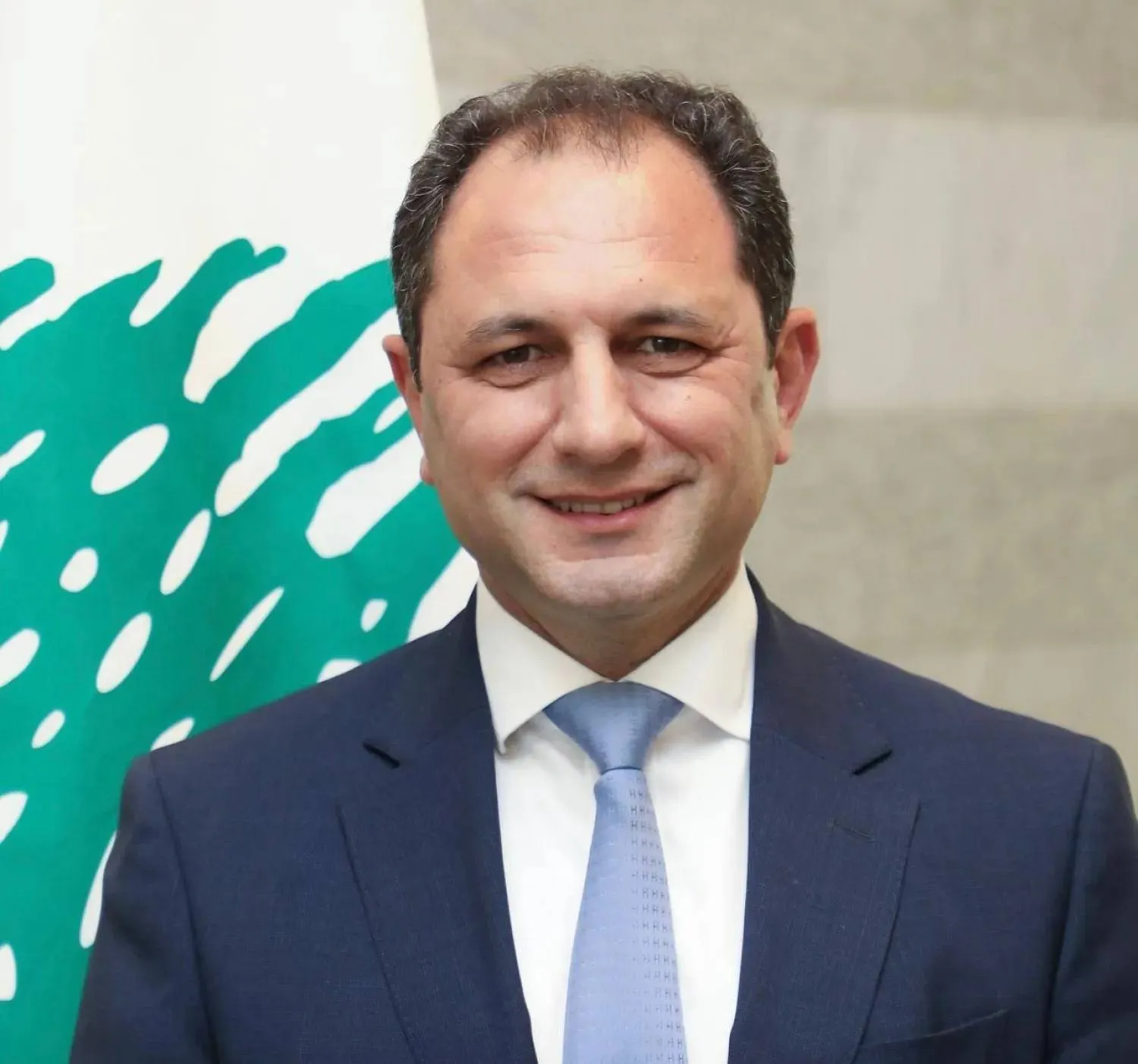

Lebanon’s ambassador to Saudi Arabia, Ali Karanouh, said a phone call on Tuesday between Lebanese President Joseph Aoun and Saudi Crown Prince and Prime Minister Mohammed bin Salman, along with a statement by Prime Minister Nawaf Salam, marked the culmination of Saudi efforts that drew on the kingdom’s regional and international weight to secure Lebanon’s inclusion in a temporary ceasefire agreement. He added that the Saudi crown prince affirmed the kingdom’s support for Lebanon in asserting its sovereignty and backing its efforts to preserve its resources and the safety and unity of its territory.
Karanouh, who took up his post in Saudi Arabia less than six months ago after serving as a diplomatic adviser to the prime minister, told Asharq Al-Awsat in an extended phone interview that the past days during the war had been difficult for Lebanon and the region, with a large number of casualties and widespread destruction.
He also referred to Lebanon’s position, which unequivocally condemns Iranian attacks on Gulf states, stressing his country’s need for all its friends, foremost among them Saudi Arabia, given its regional and international weight.
He said that reaching a ceasefire agreement is, in itself, an achievement, given the complexities of the regional situation and Lebanon’s internal challenges.
Karanouh said Lebanon’s position “aims to liberate its land, preserve its rights, and achieve sustainable security and stability,” expressing hope that the negotiations represent the only hope for Lebanon, given the difficult situation and the war it was drawn into, which it does not want and its people do not want, while paying a heavy price.
He added that Lebanon hopes the next phase, through the return of security and stability, will allow it to continue the path it had begun before the war, paving the way for rebuilding the state and extending its authority over all its territory.
On reports of recent visits by Lebanese politicians to Saudi Arabia, the ambassador said the kingdom maintains relations with all parties in Lebanon and calls for unity, security, stability, and the preservation of civil peace.
He noted that Saudi Arabia had previously sponsored the Taif Agreement and the reconstruction phase that followed, adding that these visits came within that framework.
He said this had been reflected domestically through a reduction in the intensity of rhetoric and a calming of internal tensions in recent periods, in favor of a unifying discourse and national unity, which has had a positive impact on Lebanon’s internal situation, where civil peace and a ceasefire are top priorities.
Karanouh said there is genuine seriousness today in addressing the issues that have affected Lebanon’s relations with Arab and Gulf states, with the aim of lifting the ban on Lebanese exports and rebuilding trust.
He added that the Lebanese side has held multiple meetings with Arab envoys, listened to their concerns, and is working to address many of them, noting that significant progress has been made and that many issues have already been resolved.
He added that there is a track of dialogue and cooperation with Saudi Arabia in this regard, noting that security concerns are troubling all parties at this stage.
Karanouh said the return of security and stability is a condition for the return of Gulf nationals to Lebanon, reiterating the current government’s seriousness in ensuring this, especially since the start of the current term under Aoun and Salam.
He cited cooperation in combating drug trafficking and tightening control over crossings and airports, adding that the outbreak of war had frozen these Lebanese efforts, with the priority shifting to preserving lives.
The ambassador said the Lebanese army has a responsibility to extend its authority over all Lebanese territory, expressing Lebanon’s aspiration for support from Saudi Arabia and Gulf states to help the army carry out its major responsibilities, alongside support for reconstruction, stability and economic recovery.
He said Gulf states are “the lifeblood of Lebanon,” adding that “the return of Gulf nationals to Lebanon is like the return of life to Lebanon and its economy.”
Karanouh concluded by thanking the Saudi Foreign Ministry for its cooperation with the Lebanese embassy in Saudi Arabia and Lebanese embassies in Gulf states in facilitating the entry of more than 1,500 Lebanese nationals stranded in Gulf countries during the war and the closure of most airports and flights in the region, by securing transit visas and facilitating their return home or onward travel to Saudi Arabia and other destinations.
On a symposium held by the Gulf Cooperation Council on Tuesday, attended by the council’s secretary general as well as a number of ambassadors and experts, Karanouh said the event itself was a message of attention to Lebanon and a reaffirmation of support.
He said GCC Secretary General Jasem Albudaiwi affirmed the council’s support for Lebanon, the implementation of international resolutions, the restriction of arms to the state, and the extension of state authority over all Lebanese territory.
He stressed that this position aligns with Lebanon’s demands and with the Taif Agreement, particularly regarding the extension of state authority over all its territory, adding that it is also a central element of the president’s inaugural address and a key part of the ministerial statement of Prime Minister Nawaf Salam’s government.
Karanouh expressed hope that the efforts of both sides would lead to the return of security and stability to Lebanon and the region, paving the way for the return of investments and Gulf tourists to Lebanon.
Over the past 48 hours, there have been a series of political consultations between the two countries. On Wednesday, Karanouh met Saudi Deputy Foreign Minister Saud Al-Sati to discuss issues of mutual interest.
On Thursday, the Lebanese presidency said President Joseph Aoun received Prince Yazid bin Farhan, adviser to the Saudi foreign minister, and discussed the current situation in light of recent developments and Saudi Arabia’s role in helping Lebanon overcome its difficult circumstances.
On the same day, Lebanese Parliament Speaker Nabih Berri, in a phone call with Saudi Foreign Minister Prince Faisal bin Farhan, thanked the kingdom for its efforts to help Lebanon and halt the aggression against it. He also discussed developments in Lebanon and the region with Prince Faisal.


