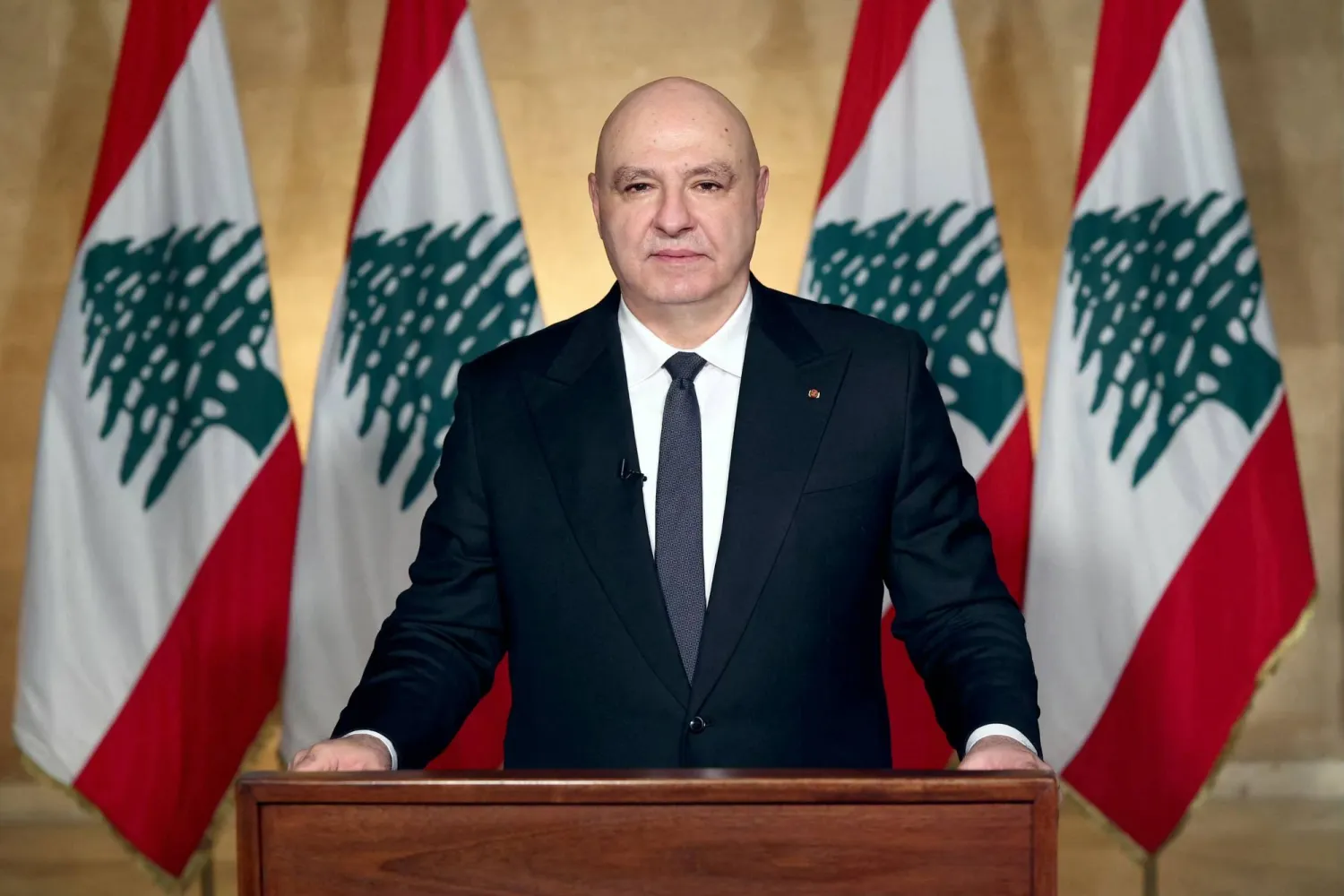

Lebanese President Joseph Aoun said Monday that direct negotiations with Israel were aimed at ending the conflict with Hezbollah, while accusing those who drew Lebanon into war of "treason" in an implicit rebuke to the Iran-backed armed group.
"My goal is to reach an end to the state of war with Israel, similar to the armistice agreement" of 1949, Aoun said in a statement, adding that "I assure you that I will not accept reaching a humiliating agreement".
"Those who dragged us into war in Lebanon are now holding us accountable because we made the decision to go to negotiations... What we are doing is not treason. Rather, treason is committed by those who take their country to war to achieve foreign interests," he said.
Earlier on Monday, Hezbollah Secretary-General Naim Qassem reaffirmed his party’s rejection of direct negotiations by the Lebanese authorities with Israel, describing them as a “grave sin,” and warning that such a step would plunge the country into a “cycle of instability.”
In a statement carried by the group’s media outlets, Qassem said: “We categorically reject direct negotiations. Those in power should know that their conduct will not benefit Lebanon, nor will it benefit them.”
He added that it is the authorities’ responsibility “to roll back their grave missteps that place Lebanon in a cycle of instability. They are responsible for halting direct negotiations with the Israeli enemy and adopting indirect ones.”
Qassem added: “These direct negotiations and their outcomes are, to us, as if they do not exist, and they do not concern us in any way.” He stressed: “We will continue our defensive resistance to protect Lebanon and its people... We will respond to Israeli aggression and confront it,” underscoring that “no matter how much the enemy threatens, we will not retreat, bow, or be defeated.”
Following the outbreak of the latest war between Israel and Hezbollah, which began on March 2, the Lebanese and Israeli ambassadors in Washington held two rounds of direct talks, the first between the two countries in decades. After the first round, US President Donald Trump announced a ceasefire that took effect on April 17 for a period of 10 days, before later announcing a three-week extension after the second round of talks.
Lebanese authorities have repeatedly stated that the US-sponsored negotiations aim to end the war, secure Israel’s withdrawal from southern Lebanon, and enable displaced residents to return to their areas, after the fighting displaced more than one million people.
Despite the ceasefire, Israel continues to carry out air and artillery strikes, particularly in southern Lebanon, while its forces conduct widespread demolition and blasting operations in many border towns, where it has announced the establishment of a “yellow line” separating dozens of villages from the rest of Lebanese territory.
At least 2,509 people have been killed and 7,755 injured in Lebanon as a result of Israeli attacks since the start of the war on March 2, according to the Health Ministry.