
Iraqi President Nominates Ali Al-Zaidi as PM-Designate

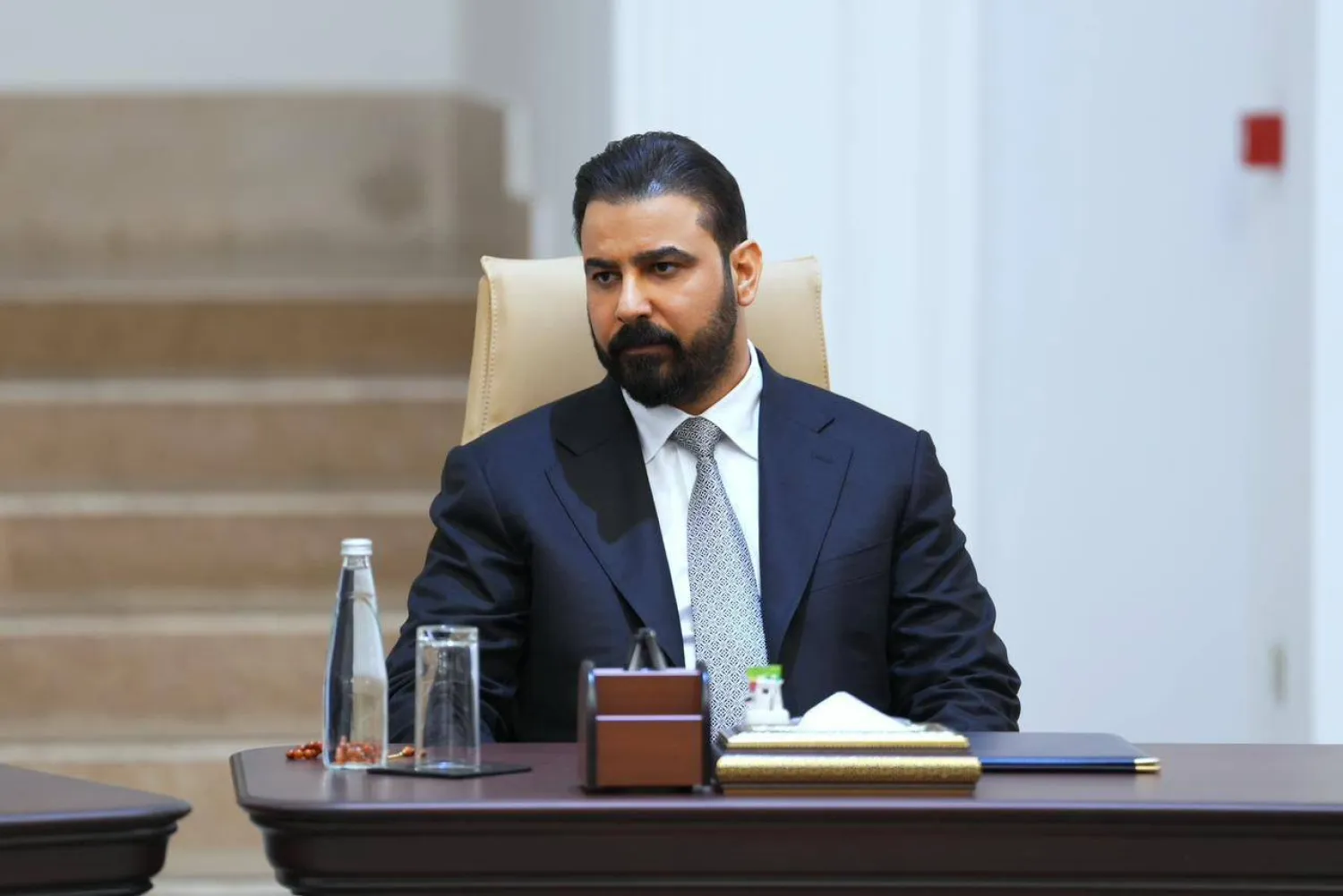
 Iraqi Prime Minister-designate Ali al-Zaidi attends the meeting of the Coordination Framework political bloc in Baghdad, Iraq, Monday, April 27, 2026. (Iraqi Presidency Office via AP)
Iraqi Prime Minister-designate Ali al-Zaidi attends the meeting of the Coordination Framework political bloc in Baghdad, Iraq, Monday, April 27, 2026. (Iraqi Presidency Office via AP)
TT

Iraqi President Nominates Ali Al-Zaidi as PM-Designate

 Iraqi Prime Minister-designate Ali al-Zaidi attends the meeting of the Coordination Framework political bloc in Baghdad, Iraq, Monday, April 27, 2026. (Iraqi Presidency Office via AP)
Iraqi Prime Minister-designate Ali al-Zaidi attends the meeting of the Coordination Framework political bloc in Baghdad, Iraq, Monday, April 27, 2026. (Iraqi Presidency Office via AP)

Iraq's newly elected president nominated businessman Ali al-Zaidi as the country's prime minister-designate on Monday, after the country's leaders yielded to US pressure not to support the bid of a former premier close to Iran.

The Coordination Framework, an alliance of Shiite factions with varying links to Iran, had initially backed powerbroker Nouri al-Maliki to become the country's next premier, but an ultimatum by US President Donald Trump left Iraqi leaders looking elsewhere.

For weeks, they were locked in intense discussions to settle the question and avoid punitive measures after Trump threatened in January to cut all support for Iraq if two-time ex-premier Maliki, who has close ties to Iran, returned to power.

"President Nizar Amedi has tasked Ali al-Zaidi, the candidate of the largest parliamentary bloc, with forming the new government," the presidency said in a statement.

Zaidi will now have 30 days to form a government -- a daunting task in a country where constitutional deadlines are rarely respected.

The announcement came shortly after the Coordination Framework endorsed Zaidi as its candidate.

The alliance also praised "the historic and responsible stance" of Maliki and caretaker Prime Minister Mohammed Shia al-Sudani "for withdrawing" their candidacies.

Yasser al-Maliki, the head of Maliki's parliamentary bloc, congratulated the PM-designate and said "we will support him" in his mission to form a government.

Following the 2003 invasion that overthrew former ruler Saddam Hussein, the US has held major sway in Iraq.

But the invasion has also paved the way for the US' archenemy Iran in the country's halls of power.

Since then, the country's leaders have struggled to balance relations between Washington and Tehran.

- 'Has the tools' -

By convention, a Shiite holds the powerful post of prime minister, the parliament speaker is a Sunni, and the largely ceremonial presidency goes to a Kurd.

Seen as a compromise figure, Zaidi is little known in political circles.

He is a businessman, banker and owner of a television channel, and has never held a government post.

If he succeeds in forming a government, Zaidi will become Iraq's youngest prime minister at the age of 40.

Political analyst Hamzeh Hadad said it appeared that Zaidi "has the tools" as a banker and TV channel owner "to help him sway people and politicians".

His nomination also "allows the Coordination Framework to claim they are abiding by the constitutional timeline," whether he ends up forming a government or not.

In recent years, and after decades of conflicts, oil-rich Iraq has begun to enjoy some stability, yet its politics remain volatile, shaped not only by internal disputes but also by regional dynamics.

- Regional war -

The new nomination came against the backdrop of a regional war ignited by a joint US-Israeli attack on Iran.

Iraq was dragged into the Middle East conflict, with strikes targeting both US interests and Tehran-backed groups in the country.

During the war, Iraqi leaders scaled back their talks to settle the premiership question, and only resumed them intensively a few days after a fragile US-Iran ceasefire took effect on April 8.

Iraq's new premier will be expected to address Washington's longstanding demand that Baghdad disarm Iran-backed groups, which the US has designated as terrorist organizations.

From the onset of the war, these groups targeted US interests in Iraq and the broader region.

The new PM will also need to repair Iraq's relations with Gulf countries, which have protested attacks by Tehran-backed groups on their territory during the war.

Zaidi will have to address Iraq's many economic woes, particularly after the sharp drop of income caused by disruption in the Strait of Hormuz, given that oil exports make up some 90 percent of the country's budget revenues.


Israel Military Issues Evacuation Warning for Area of South Lebanon

 Smoke rises following an explosion in southern Lebanon, near the Israel-Lebanon border, as seen from northern Israel, April 28, 2026. (Reuters)
Smoke rises following an explosion in southern Lebanon, near the Israel-Lebanon border, as seen from northern Israel, April 28, 2026. (Reuters)
TT

Israel Military Issues Evacuation Warning for Area of South Lebanon

 Smoke rises following an explosion in southern Lebanon, near the Israel-Lebanon border, as seen from northern Israel, April 28, 2026. (Reuters)
Smoke rises following an explosion in southern Lebanon, near the Israel-Lebanon border, as seen from northern Israel, April 28, 2026. (Reuters)

Israel's military on Tuesday warned residents of more than a dozen villages and towns in southern Lebanon to immediately evacuate and head northwards, saying it would respond to Hezbollah's "violation of the ceasefire" there.

The military "does not intend to harm you, and out of concern for your safety, you are required to evacuate your homes immediately and move away from the specified area towards the Sidon District", Arabic-language spokesman Avichay Adraee posted on X.

"Anyone present near Hezbollah elements, their facilities or their weapons is endangering their life," he added.

All the areas listed in the post appear to be outside or on the border of the so-called "Yellow Line" -- a strip of Lebanese territory around 10 kilometers (six miles) deep along the border within which Israeli troops are operating.

Israel and Iran-backed Hezbollah have traded blame over violations of the fragile ceasefire in Lebanon agreed earlier this month, and attacks by both sides have continued.

In two incidents on Tuesday morning, the Israeli military said an interceptor was launched "toward a suspicious aerial target that was identified in an area where Israeli forces are operating in southern Lebanon".

On both occasions, it said the target did not cross into Israeli territory.

The military also announced on Tuesday morning that one soldier had been severely injured and another lightly injured a day earlier "as a result of an explosive drone impact during operational activity in southern Lebanon".

"This incident constitutes a violation of the ceasefire understandings by the Hezbollah terrorist organization," it said.

Israeli Prime Minister Benjamin Netanyahu said Monday that Hezbollah's rockets and drones remained a key threat requiring action by the Israeli military, adding that Israel was continuing to carry out strikes.

Hezbollah drew Lebanon into the Middle East war on March 2 by firing rockets towards Israel to avenge the killing of Iranian supreme leader Ali Khamenei.


Dozens of Gaza Children Arrive in Jordan for Medical Care

A wounded Palestinian girl, evacuated from Gaza for medical treatment, arrives in an ambulance at the King Hussein Bridge in Jordan, April 27, 2026. (Reuters)
TT

Dozens of Gaza Children Arrive in Jordan for Medical Care

A wounded Palestinian girl, evacuated from Gaza for medical treatment, arrives in an ambulance at the King Hussein Bridge in Jordan, April 27, 2026. (Reuters)

A new group of wounded or ill Palestinian children from Gaza have arrived in Jordan to receive medical care, the kingdom's army said on Tuesday.

They are the 26th group of children transported to Jordan since the start of the war in Gaza in October 2023.

The 81 children, accompanied by 108 family members, arrived through the King Hussein, or Allenby, border crossing between the occupied West Bank and Jordan, the army said in a statement.

It is part of the "Jordanian medical corridor" initiative that King Abdullah II agreed to following a meeting with US President Donald Trump in February 2025.

Under the initiative, around 2,000 children will be transported to Jordan to receive medical care.

Since March last year, more than 716 children have been transferred in cooperation with the World Health Organization, the majority of them suffering from fractures, major wounds or cancer.

"The children will be treated in a number of Jordanian hospitals, as part of the kingdom's ongoing medical and humanitarian efforts to provide healthcare and medical support to our brothers and sisters in the Gaza Strip," the army said.

A ceasefire has largely held in Gaza since last October, but some violence has persisted.


Iraqi Leaders to Begin Thorny Talks on Forming Cabinet

 Iraqi Prime Minister Mohammed Shia al-Sudani meets with Ali al-Zaidi, the Coordination Framework’s nominee for prime minister, in Baghdad, Iraq, April 28, 2026. (Iraqi Prime Minister’s Media Office/Handout via Reuters)
Iraqi Prime Minister Mohammed Shia al-Sudani meets with Ali al-Zaidi, the Coordination Framework’s nominee for prime minister, in Baghdad, Iraq, April 28, 2026. (Iraqi Prime Minister’s Media Office/Handout via Reuters)
TT

Iraqi Leaders to Begin Thorny Talks on Forming Cabinet

 Iraqi Prime Minister Mohammed Shia al-Sudani meets with Ali al-Zaidi, the Coordination Framework’s nominee for prime minister, in Baghdad, Iraq, April 28, 2026. (Iraqi Prime Minister’s Media Office/Handout via Reuters)
Iraqi Prime Minister Mohammed Shia al-Sudani meets with Ali al-Zaidi, the Coordination Framework’s nominee for prime minister, in Baghdad, Iraq, April 28, 2026. (Iraqi Prime Minister’s Media Office/Handout via Reuters)

Iraqi leaders are expected to begin complex talks on Tuesday over forming a government and allocating cabinet portfolios under new prime minister-designate Ali al-Zaidi.

Five months on from elections, Iraq remains deadlocked in negotiations over a new administration, after US pressure scuppered the choice for prime minister of the majority bloc in parliament.

Two-time ex-premier Nouri al-Maliki, who has close ties to Iran, had been endorsed by the bloc but was forced to step back after an ultimatum from US President Donald Trump.

Since the 2003 invasion of Iraq led by the United States, the country has walked a tightrope between the competing influences of Washington and Tehran.

On Monday, Iraq's new President Nizar Amedi nominated businessman Zaidi as prime minister-designate, giving him the daunting task of putting a cabinet together in the next 30 days amid fierce political wrangling.

The Coordination Framework -- the majority bloc in parliament and an alliance of Shiite groups with varying ties to Iran, had backed Maliki but appears to have yielded to the US pressure.

The framework has now endorsed Zaidi and thanked Maliki, a key member of their alliance, for dropping out.

Iraq's state-run INA news agency quoted a framework official late Monday as saying the alliance would meet on Tuesday with Zaidi to discuss the cabinet.

Zaidi said he is determined to work "with all political forces", INA reported.

Seen as a compromise figure, Zaidi, 40, is little known in political circles, and has never held a government post.

A businessman and owner of a television channel, he once headed one of the many Iraqi banks that are banned from conducting dollar transactions under US anti-money laundering regulations.

If Zaidi succeeds in forming a government, he will replace Mohammed Shia al-Sudani, who until recently enjoyed smooth relations with the US.

Sudani's hopes for a second term as prime minister faded after he failed to stop Iran-backed groups from targeting US interests during the Middle East war.

A political source told AFP that the Coordination Framework endorsed Zaidi "after checking" with US representatives.

Victoria J. Taylor, director of the Iraq Initiative at the Atlantic Council think tank, said on X that "the framework would not have nominated him without some sense that the US would accept his nomination".

Trump's "public opposition to Maliki was deeply embarrassing and the framework doesn't want to go down that road again," added Taylor, who is a former US deputy assistant secretary for Iraq.

Zaidi's nomination also emerged 10 days after an Iranian commander visited Iraq and met with political leaders.