

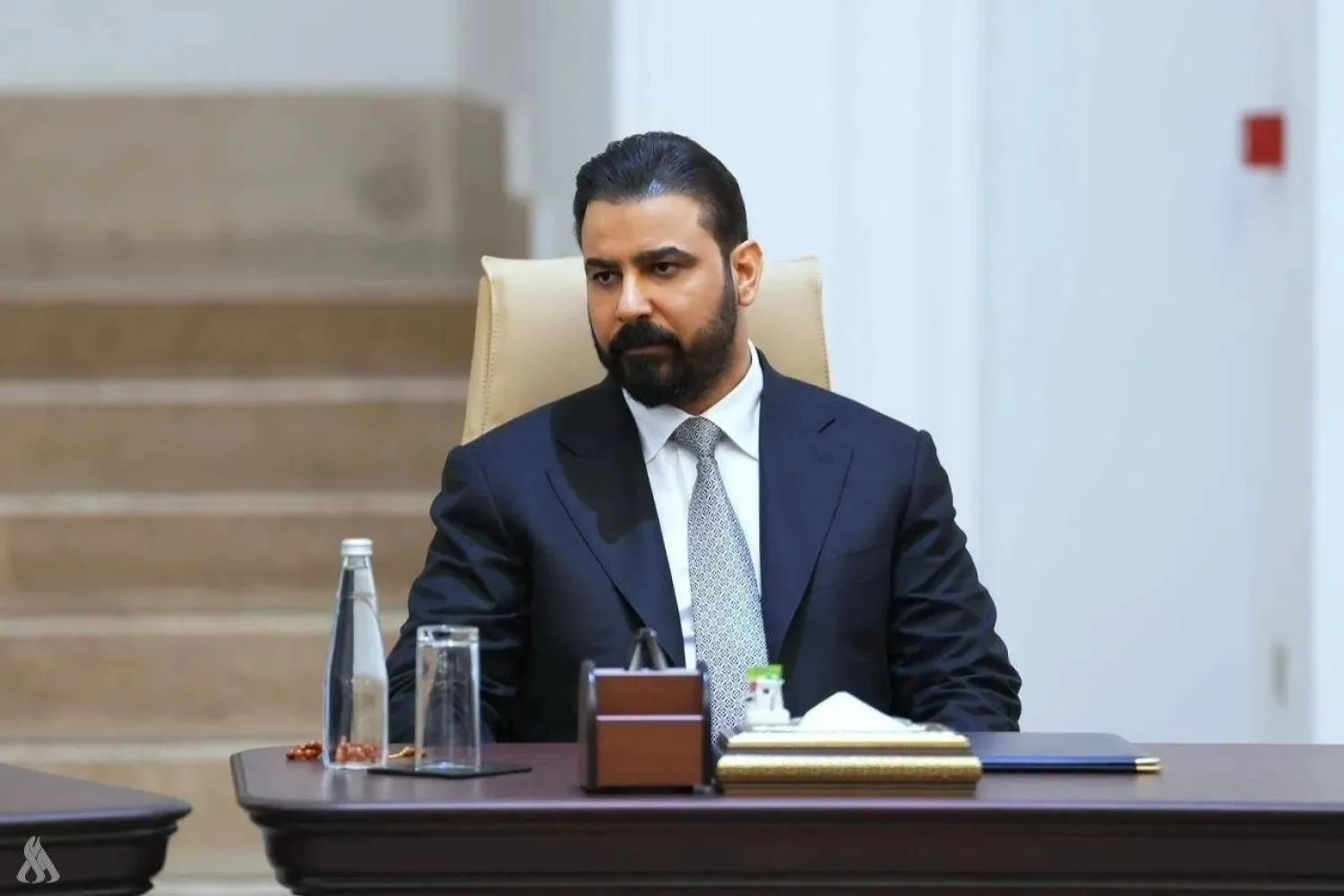

Who Is Iraq’s PM-Designate Al-Zaidi?


Iraq PM-designate Ali al-Zaidi (INA)
TT

Who Is Iraq’s PM-Designate Al-Zaidi?


Iraq PM-designate Ali al-Zaidi (INA)

Despite his close ties to Shiite party leaders in Baghdad and his extensive financial investments, premiership nominee Ali Faleh Kazem al-Zaidi remains largely unknown to most Iraqis outside political circles.

Informed sources say al-Zaidi has multiple financial partnerships with political and business figures both inside and outside the government.

Those familiar with his affairs describe him as “a young man who joined the ranks of the wealthy over the past decade,” noting that he spends generously on social aid and assistance.

Born in Baghdad in 1986, Al-Zaidi holds a law degree and is not known for seeking public attention.

This is despite the fact that he owns Dijlah TV, which he acquired from Jamal and Mohammed al-Karboli, two brothers who are leaders of a Sunni party that competed in elections between 2010 and 2014.

If al-Zaidi succeeds in forming a government, he would become the youngest prime minister to hold the post since 2004.

The Coordination Framework surprised most Iraqis by naming him its candidate for prime minister, even though his name had not appeared among those circulated during the roughly five-month political crisis and government-formation talks.

Financial activities

Asharq Al-Awsat has learned that al-Zaidi is the owner and chairman of Al-Janoob Islamic Bank for investment and finance, a publicly listed company on the Iraq Stock Exchange established in 2016 and operating in the banking sector.

He later stepped down as chairman, handing the role to one of his brothers, after the US State Department placed the bank on its sanctions list in February 2024 for money laundering, prompting the Central Bank of Iraq to block its access to US dollars, according to informed sources.

Al-Zaidi also owns Al-Oweis Group, which, according to its website, includes 15 companies operating across food trade, agricultural and livestock production, contracting, printing, security services, electronics and oil, though it does not disclose its owner or founding date.

Property registration data indicates the company was established in 2007, later dissolved and converted into a private joint stock company with capital of 99 billion Iraqi dinars, about $75 million. An oil services company was also established in 2018 with a capital of 2 billion dinars.

The Iraq Stock Exchange website lists 2016 as the founding year of Al-Janoob Islamic Bank alongside a financial transfer company with capital of 250 billion dinars, about $191 million, meaning the bank’s total capital is less than the cost of a single “food basket.”

The company’s website says its total investments amount to $500 million and that it is responsible for contracts to supply the Trade Ministry’s food basket, as well as contracts with the Defense Ministry to provide food for 300,000 soldiers daily.

It also opened a private university last year named Al-Shaab.

Sources close to al-Zaidi say he holds further investments in education and media, including Al-Shaab University, Ishtar Medical Institute and Dijlah TV.

Sources say the Trade Ministry contracted Al-Oweis, owned by al-Zaidi, to supply food basket items to around 40 million Iraqis, a program inherited from Saddam Hussein’s government under the oil-for-food agreement during the 1990s sanctions period.

Citizens often complain about poor food quality and delivery delays.

However, the sources say the program has been scaled down in recent years to cover 18 million people, citing the exclusion of higher-income groups.

Group of companies

According to additional data, company registration records show that al-Zaidi owns 15 companies registered in his name, with an initial capital exceeding 282 billion Iraqi dinars.

These companies operate across key sectors including general contracting and construction, real estate and tourism investment, oil, gas and electricity, food and glass industries, agricultural and livestock production, as well as higher education, medical and financial services.

Among the most prominent is Al-Oweis, which holds contracts to feed the Iraqi army and import food basket items, alongside Al-Shaab University.

Through Al-Oweis Trading, General Contracting, Food Supply and Food Industries Ltd., al-Zaidi implements multiple projects, including feeding the Iraqi army.

The company signed a partnership contract with the State Company for Foodstuff Trading to supply both dry and fresh rations, covering 41 items for a total of 300,000 personnel.

Another project is the food basket program, under which Al-Oweis signed a partnership contract with the State Company for Foodstuff Trading to supply seven food items to support around 40 million people.



Hezbollah Says Clashed with Israeli Troops North of Litani River

Smoke billows from southern Lebanon following strikes, as seen from Marjayoun, southern Lebanon, May 27, 2026. REUTERS/Stringer
TT

Hezbollah Says Clashed with Israeli Troops North of Litani River

Smoke billows from southern Lebanon following strikes, as seen from Marjayoun, southern Lebanon, May 27, 2026. REUTERS/Stringer

Hezbollah said its fighters clashed with Israeli forces in a town north of the Litani river on Wednesday, a day after Israel's military said it was expanding its ground operations in the country's south.

In a statement, the group said its fighters "clashed with the enemy forces at point-blank range" in the town of Zawtar al-Sharqiyah, located at the edge of an Israeli-declared "yellow line" in south Lebanon where its soldiers have been operating.

Israeli strikes killed 31 people on Tuesday, four of them children, according to the Lebanese health ministry.

Israeli Prime Minister Benjamin Netanyahu on Monday vowed to "crush" Hezbollah.


Israel Says it Killed Hamas' New Armed Wing Chief in Gaza

From right: Mohammad Odeh, alongside three "Brigades" leaders assassinated by Israel in separate attacks: Rafa Salama, Abu Obaida, and Mohammed Deif (Photo released by the Israeli army)
TT

Israel Says it Killed Hamas' New Armed Wing Chief in Gaza

From right: Mohammad Odeh, alongside three "Brigades" leaders assassinated by Israel in separate attacks: Rafa Salama, Abu Obaida, and Mohammed Deif (Photo released by the Israeli army)

Israel said on Wednesday it had killed Hamas's newly appointed armed wing chief in Gaza, days after it killed his predecessor.

The Israeli military said Mohammad Odeh was killed in an operation in Gaza on Tuesday.

A relative of Odeh confirmed his death to Reuters and said the funeral would take place after noon prayers in Gaza City. Hamas has yet to issue an official statement, but a statement from his family said he was killed along with his wife and son.

Gaza health officials said six people, including at least one woman, were killed and more than 20 others were wounded in the same Israeli strike that destroyed an upper floor of an apartment building in the Rimal neighborhood in Gaza City. Rescue workers were still at ⁠the scene looking ⁠for more possible casualties.

Israeli Prime Minister Benjamin Netanyahu said on Tuesday that Odeh had headed Hamas' intelligence division at the time of the October 7, 2023 cross-border attack into Israel that triggered the Gaza war and was appointed about a week ago to replace Izz al-Din al-Haddad, the group's chief armed commander, who was killed by Israel on May 15.

Sources close to Hamas did not confirm Odeh's appointment as the new military chief but agreed he was seen as Haddad's possible successor, as the ⁠group's chief of military intelligence and possibly the last remaining living member of the armed wing's higher leadership council.


British Ambassador to Baghdad: Iranian Interference is Extensive, Illegitimate

British Ambassador to Iraq Irfan Siddiq (X)
TT

British Ambassador to Baghdad: Iranian Interference is Extensive, Illegitimate

British Ambassador to Iraq Irfan Siddiq (X)

British Ambassador to Iraq Irfan Siddiq sharply criticized Iran-backed armed factions, accusing them of operating through intimidation and extortion in a mafia-like manner. He also revealed that one such group had taken control of a contract originally awarded to a British company operating in Iraq.

Siddiq’s connection to Iraq dates back to the aftermath of the 2003 US-led invasion, when he served as a political affairs official with the Coalition Provisional Authority in Baghdad. During that time, he was involved in rebuilding Iraqi institutions and participated in the constitutional drafting process.

He later returned to Baghdad as Britain’s deputy ambassador between 2010 and 2011, during the drawdown of US forces. In 2025, he was appointed British ambassador to Iraq, with a focus on political and economic cooperation and regional stability.

British Company Loses Contract

In a televised interview aired Monday evening, Siddiq said an armed faction had pressured authorities and ultimately taken over a project from a British company holding a government services contract. He added that the Iraqi government’s silence over the incident had enabled armed groups to tighten their grip on the country’s economy.

The ambassador did not identify the British company involved. However, several major British firms have operated in Iraq in recent years, particularly in security and aviation services linked to Baghdad International Airport.

British security company G4S was responsible for airport protection and security services from 2010 until its contract expired in late 2022.

In December 2020, Tehran’s prosecutor accused G4S of involvement in the killing of Qassem Soleimani, the former commander of the Iranian Revolutionary Guard Corps’ Quds Force. Iranian authorities claimed the company had provided the US military in Iraq with information regarding the arrival time of the aircraft carrying Soleimani to Baghdad in January of that year.

Distinguishing the PMF from Armed Factions

The British diplomat sought to distinguish between the Popular Mobilization Forces (PMF) as a formal state institution and certain affiliated factions that, according to him, have not fully complied with directives issued by the PMF leadership and Iraq’s commander-in-chief.

He referred in particular to recent months, during which hundreds of rocket attacks targeted Iraqi, Gulf, and American sites.

Speaking about his discussions with PMF chairman Falih al-Fayadh, Siddiq said he told him the organization faced serious internal problems requiring reform and accountability. According to the ambassador, al-Fayadh agreed on the need to distance the PMF from armed factions operating within it.

There are rising concerns in Iraq that the PMF’s official structure effectively provides cover for factions engaged in violent activities under the umbrella of the so-called “Axis of Resistance.”

Siddiq said the United Kingdom has no objection to dealing with the PMF as a legitimate security institution, provided it remains fully under government control. He added that London would be willing to support reforms within the organization if requested, drawing on Britain’s experience in Northern Ireland.

At the same time, the ambassador argued that the original justification for maintaining the PMF in its current form had largely vanished following the defeat of ISIS. He questioned why international coalition forces that fought alongside the PMF against terrorism are now being portrayed as occupation forces, describing such claims as illogical.

He stressed that decisions concerning war and peace should remain exclusively in the hands of legitimate state institutions, emphasizing that only Iraq’s elected government has the authority to manage such matters.

“No Relations with Armed Factions”

During the interview, Siddiq repeatedly criticized armed factions and rejected describing them as the “Iraqi resistance.” He questioned whom these groups were resisting, who controlled the territories where they operated, and why they continued to exist.

Regarding the participation of militia-linked groups in government, Siddiq said Britain does not engage with what he described as “militia parties.” However, he noted that London respects Iraq’s political decisions regarding government formation and could reconsider its position in the future if those groups abandon their weapons and transition fully into political activity.

The ambassador also criticized what he described as extensive and illegitimate Iranian interference in Iraqi affairs. He called on the new government, led by Ali al-Zaidi, to strengthen state sovereignty and ensure that all weapons remain under state control.

Siddiq said Iran exerts significant influence over Iraqi affairs and accused Tehran of failing to respect Iraq’s sovereignty, describing the interference as both inappropriate and unlawful. He expressed hope that Iraq’s new government would address the issue.