

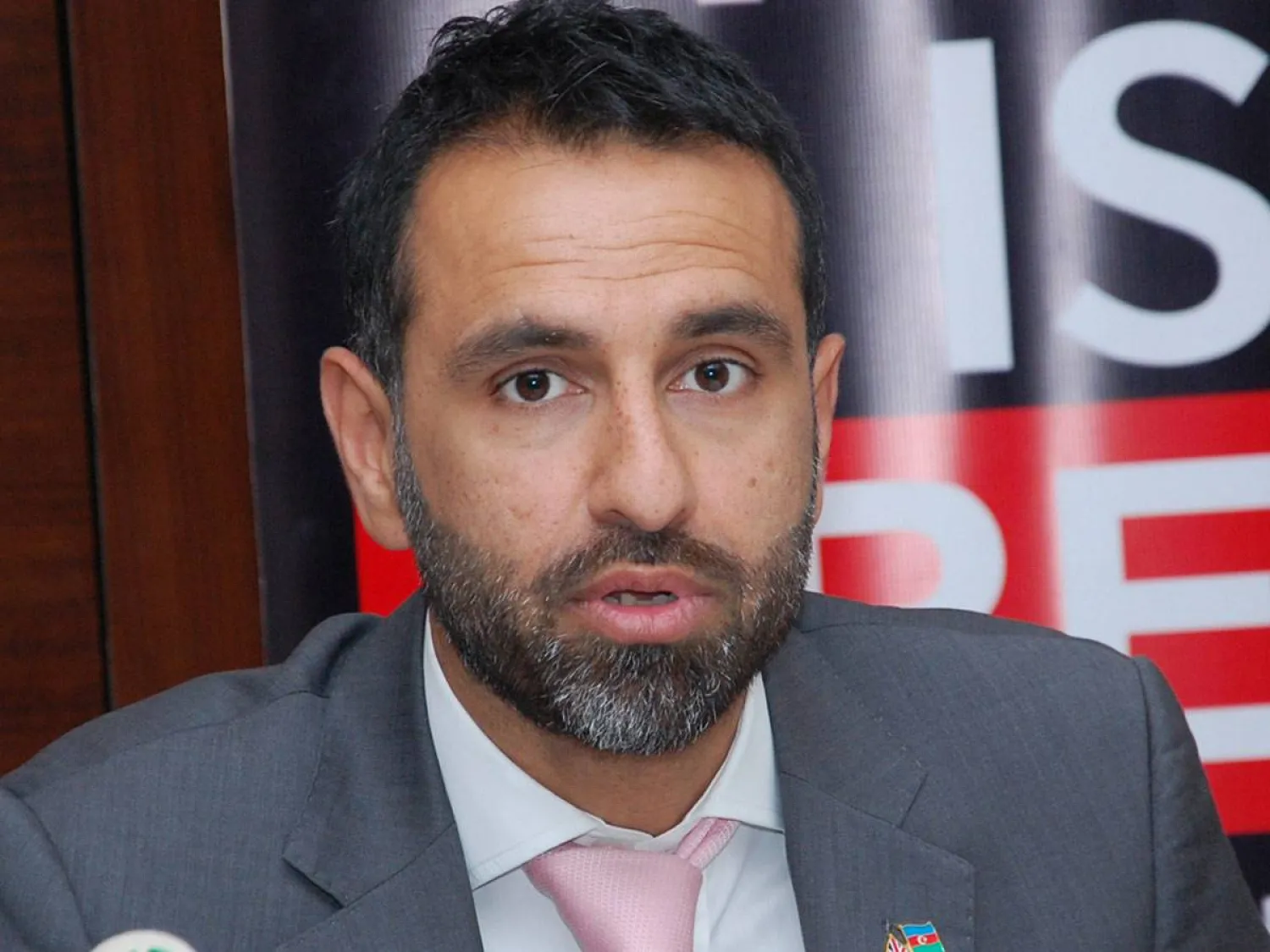

British Ambassador to Baghdad: Iranian Interference is Extensive, Illegitimate

British Ambassador to Iraq Irfan Siddiq (X)
TT

British Ambassador to Baghdad: Iranian Interference is Extensive, Illegitimate

British Ambassador to Iraq Irfan Siddiq (X)

British Ambassador to Iraq Irfan Siddiq sharply criticized Iran-backed armed factions, accusing them of operating through intimidation and extortion in a mafia-like manner. He also revealed that one such group had taken control of a contract originally awarded to a British company operating in Iraq.

Siddiq’s connection to Iraq dates back to the aftermath of the 2003 US-led invasion, when he served as a political affairs official with the Coalition Provisional Authority in Baghdad. During that time, he was involved in rebuilding Iraqi institutions and participated in the constitutional drafting process.

He later returned to Baghdad as Britain’s deputy ambassador between 2010 and 2011, during the drawdown of US forces. In 2025, he was appointed British ambassador to Iraq, with a focus on political and economic cooperation and regional stability.

British Company Loses Contract

In a televised interview aired Monday evening, Siddiq said an armed faction had pressured authorities and ultimately taken over a project from a British company holding a government services contract. He added that the Iraqi government’s silence over the incident had enabled armed groups to tighten their grip on the country’s economy.

The ambassador did not identify the British company involved. However, several major British firms have operated in Iraq in recent years, particularly in security and aviation services linked to Baghdad International Airport.

British security company G4S was responsible for airport protection and security services from 2010 until its contract expired in late 2022.

In December 2020, Tehran’s prosecutor accused G4S of involvement in the killing of Qassem Soleimani, the former commander of the Iranian Revolutionary Guard Corps’ Quds Force. Iranian authorities claimed the company had provided the US military in Iraq with information regarding the arrival time of the aircraft carrying Soleimani to Baghdad in January of that year.

Distinguishing the PMF from Armed Factions

The British diplomat sought to distinguish between the Popular Mobilization Forces (PMF) as a formal state institution and certain affiliated factions that, according to him, have not fully complied with directives issued by the PMF leadership and Iraq’s commander-in-chief.

He referred in particular to recent months, during which hundreds of rocket attacks targeted Iraqi, Gulf, and American sites.

Speaking about his discussions with PMF chairman Falih al-Fayadh, Siddiq said he told him the organization faced serious internal problems requiring reform and accountability. According to the ambassador, al-Fayadh agreed on the need to distance the PMF from armed factions operating within it.

There are rising concerns in Iraq that the PMF’s official structure effectively provides cover for factions engaged in violent activities under the umbrella of the so-called “Axis of Resistance.”

Siddiq said the United Kingdom has no objection to dealing with the PMF as a legitimate security institution, provided it remains fully under government control. He added that London would be willing to support reforms within the organization if requested, drawing on Britain’s experience in Northern Ireland.

At the same time, the ambassador argued that the original justification for maintaining the PMF in its current form had largely vanished following the defeat of ISIS. He questioned why international coalition forces that fought alongside the PMF against terrorism are now being portrayed as occupation forces, describing such claims as illogical.

He stressed that decisions concerning war and peace should remain exclusively in the hands of legitimate state institutions, emphasizing that only Iraq’s elected government has the authority to manage such matters.

“No Relations with Armed Factions”

During the interview, Siddiq repeatedly criticized armed factions and rejected describing them as the “Iraqi resistance.” He questioned whom these groups were resisting, who controlled the territories where they operated, and why they continued to exist.

Regarding the participation of militia-linked groups in government, Siddiq said Britain does not engage with what he described as “militia parties.” However, he noted that London respects Iraq’s political decisions regarding government formation and could reconsider its position in the future if those groups abandon their weapons and transition fully into political activity.

The ambassador also criticized what he described as extensive and illegitimate Iranian interference in Iraqi affairs. He called on the new government, led by Ali al-Zaidi, to strengthen state sovereignty and ensure that all weapons remain under state control.

Siddiq said Iran exerts significant influence over Iraqi affairs and accused Tehran of failing to respect Iraq’s sovereignty, describing the interference as both inappropriate and unlawful. He expressed hope that Iraq’s new government would address the issue.

Trump Criticizes Israel’s Tactics in Lebanon, Says It Is Killing Civilians

US President Donald Trump points his finger towards Israeli Prime Minister Benjamin Netanyahu as they shake hands during a press conference after meeting at Trump’s Mar-a-Lago club in Palm Beach, Florida, US, December 29, 2025. (Reuters)
TT

Trump Criticizes Israel’s Tactics in Lebanon, Says It Is Killing Civilians

US President Donald Trump points his finger towards Israeli Prime Minister Benjamin Netanyahu as they shake hands during a press conference after meeting at Trump’s Mar-a-Lago club in Palm Beach, Florida, US, December 29, 2025. (Reuters)

US President Donald Trump on Tuesday issued a rare public rebuke of Israel's military tactics in Lebanon targeting Hezbollah, saying it was unnecessary to bomb entire apartment buildings to hunt fighters.

Trump, who in recent days had expressed his displeasure over Israeli attacks in Beirut that he said could have endangered his peace deal with Iran, said Israel has been fighting Hezbollah, the Iran-aligned Lebanese group, for "too long".

"Too many people have been killed. You don't have to knock down an apartment house every time you're looking for somebody, because there are a lot of people ‌in those apartment ‌houses, and they're not all Hezbollah," Trump said at the G7 ‌summit ⁠in France.

His complaint comes ⁠at a moment of rising tensions with Israeli Prime Minister Benjamin Netanyahu, who has remained a key political ally despite occasional ups and downs between the two leaders over the years.

Recently, tensions have been more prominent. Israeli officials are quietly expressing frustration about the Iran deal that the Republican president struck while Trump is growing impatient with Netanyahu over Israeli strikes of Beirut, which triggered Iranian attacks just when he was working to finalize the peace deal.

Trump said he has ⁠a "great relationship" with Netanyahu but in the same breath added that he ‌should be "more responsible" with Lebanon.

"Without us, without the United ‌States, there would be no Israel. Without me, there would be no Israel, because no other president ‌was willing to do what I did."

The two leaders have repeatedly clashed over ‌Israel's refusal to constrain its pursuit of Hezbollah in Lebanon, where a cessation of hostilities is a key Iranian demand. Trump and other US presidents do not often criticize Israel's military tactics.

Shortly after he made his comments, an official White House social media account that typically shares clips of his public comments posted ‌a video of those specific remarks.

The White House did not say why the official account chose to post those Trump remarks ⁠but said the ⁠president has a strong relationship with Netanyahu and that the Israel Defense Forces were "incredible partners".

"There has been no greater friend to Israel and a fighter for peace than President Trump... Americans and our allies around the world are already safer for the United States and Israel’s bold actions to deny the Iranian regime the ability to develop a nuclear weapon," a White House official said.

There is no indication that Trump's comments would translate into meaningful policy that would force Israel to rethink its military tactics in a way to ensure greater protection for civilians.

Israel has faced sharp criticism from other countries, particularly during its assault on Gaza that has killed 73,000 people, most of them civilians, according to the Gaza health ministry.

Israel says it never targets non-combatants and says armed groups such as Palestinian Hamas and Hezbollah regularly use civilians as human shields.

A spokesperson for the Israeli embassy in Washington did not have any comment for this story.


Schneider to Asharq Al-Awsat: Marib Offers Ideal Model for International Cooperation in Yemen

German Ambassador to Yemen Thomas Schneider speaks during an interview at the Belqis Hotel in Marib. (Asharq Al-Awsat)
TT

Schneider to Asharq Al-Awsat: Marib Offers Ideal Model for International Cooperation in Yemen

German Ambassador to Yemen Thomas Schneider speaks during an interview at the Belqis Hotel in Marib. (Asharq Al-Awsat)

Hours before leaving Marib, German Ambassador to Yemen Thomas Schneider was still taking in the scenes from his first visit to the governorate: camps for displaced people, humanitarian project sites, meetings with officials and tribal sheikhs.

At every stop, one image seemed to follow him: the smile.

In a governorate that has taken in millions of displaced people and spent years on the front line of Yemen’s war, Schneider found a reality different from the one suggested by headlines of conflict and humanitarian crisis. Here, hardship was unmistakable, but so was optimism and a stubborn insistence on life.

Inside the Sabaean-style Belqis Hotel, built in the 1980s in central Marib, Schneider spoke to Asharq Al-Awsat shortly before leaving the governorate about a visit that appeared, at first, humanitarian and developmental. But it also revealed to him a political and social dimension he sees as important to Yemen’s future.

The German ambassador said the visit was meant to express solidarity with the people of Marib and with Yemenis more broadly as the country endures difficult conditions. The German delegation, he said, wanted to visit humanitarian projects and camps for displaced people and refugees, see residents’ needs firsthand and assess the impact of programs supported by Germany and its international partners.

Yet what struck him most, he said, was the relationship that has taken shape in Marib between local authorities, international organizations and UN agencies.

“We saw a positive model of cooperation between the Yemeni government and donor countries, and, more importantly, close cooperation between the local authorities in the governorate and UN agencies and organizations,” he said.

For Schneider, the importance of that experience lies not only in the number or scale of projects carried out, but in the partnership it has created among those working on the ground. That, he said, has made Marib a model that could be useful elsewhere.

“This partnership is an extremely important point, and we sensed that Marib’s experience represents a successful model that can be followed by all parties involved in humanitarian and development work,” he said.

Over the years of war, Marib has become Yemen’s largest hub for displaced people, absorbing successive waves of families fleeing the fighting. Schneider said the way the governorate’s people have handled that burden stands out as one of Yemen’s most important success stories during the conflict.

“Marib has received large numbers of displaced people from across Yemen, as well as refugees from other countries, and this reflects the generosity of its people and their humanitarian spirit. We saw very positive examples of how these challenges are being handled,” he said.

During the visit, the German delegation met displaced people and listened to their stories and needs. It also held meetings with UN representatives and local authorities, reinforcing Schneider’s belief that coordination and continuous communication among the various parties remain the most important factors in responding to complex humanitarian challenges.

But perhaps the most distinctive stop was the meeting with tribal sheikhs in Marib. In a country where tribes are often viewed through a security or traditional lens, Schneider came away with a different impression. He saw Yemen’s tribes as a wide social network whose role goes beyond local customs, helping preserve social cohesion, stability and the future of the country as a whole.

“Sitting with the tribal sheikhs was a very important experience. I felt that they do not only play a social role, but also have a clear political awareness of the challenges facing Yemen,” he said.

He said the discussions revealed important visions and ideas about the country’s future, stressing that tribes would be an essential party in any serious political process aimed at achieving peace.

“I believe the tribes will play a central role in any path leading to peace in Yemen. I came away from this visit with a firm conviction that they represent a real national asset and an important element that can be built upon to strengthen stability,” he said.

Between the political and humanitarian messages, Schneider’s strongest personal impression remained tied to the people of Marib themselves. Despite years of war, economic pressure and the burden of displacement, he said he found, everywhere he went, an optimistic spirit and a positive view of the future.

“I saw a smile everywhere in Marib despite the difficult conditions people are living through. This optimistic spirit and warm welcome made the visit a very important experience for me,” he said.

He said he would carry that image back to his children and family, to his ministry in Berlin, and to his partners in the European Union and international organizations. What he saw in Marib, he said, offers an important lesson in resilience and overcoming crises.

At the end of the interview, I asked the ambassador to sum up Marib in just three words. He did not hesitate long before smiling and answering: “The smile, coffee and welcome.”

The words seemed to capture a city standing on the edge of war, yet still determined to greet its guests with a smile, serve coffee and believe Yemen’s future can be better.


Iran Races against Lebanese Negotiators to Secure Israeli Withdrawal from South

A woman flashes the victory sign next to destroyed buildings following Israeli strikes on the historic old market in the town of Nabatieh, southern Lebanon, 15 June 2026, after the announcement of a US-Iran mediated preliminary framework to end regional military hostilities and lift the naval blockade on the Strait of Hormuz. (EPA)
TT

Iran Races against Lebanese Negotiators to Secure Israeli Withdrawal from South

A woman flashes the victory sign next to destroyed buildings following Israeli strikes on the historic old market in the town of Nabatieh, southern Lebanon, 15 June 2026, after the announcement of a US-Iran mediated preliminary framework to end regional military hostilities and lift the naval blockade on the Strait of Hormuz. (EPA)

Two tracks are moving in parallel to secure Israel’s withdrawal from occupied Lebanese territory. The first is Lebanon’s direct negotiations with Israel, which are scheduled for their fifth session next Monday in Washington.

The second is Iranian pressure to complete the withdrawal before Tehran reaches a nuclear agreement with Washington within a 60-day window.

Iran has told Hezbollah it will not sign the agreement before Israel fully withdraws from Lebanese territory, a source from the “Shiite duo” in Lebanon told Asharq Al-Awsat. The duo is comprised of Hezbollah and its ally the Amal movement headed by parliament Speaker Nabih Berri.

Lebanon has insisted from the start that direct talks with Israel address a package of demands, led by the full withdrawal of Israeli forces from Lebanese territory they occupied during the war.

The declared understanding between Washington and Tehran made no mention of the issue, according to leaks. But Iranian Foreign Minister Abbas Araghchi said on Tuesday that ending the war would not be complete “without the withdrawal of Israeli forces from the territories they occupied in this war.”

“Any military attack by the Zionist entity against Lebanon from now on, and any continued occupation of Lebanese territory from now on, will be considered, from our point of view, a violation of the memorandum of understanding,” he told a meeting with foreign diplomats broadcast by state television.

A displaced woman holds an Iranian flag as she makes her way back to her home in southern Lebanon, on the highway of Sidon, Lebanon, June 16, 2026. (Reuters)

Lebanon’s negotiation track

The Lebanese state, meanwhile, is pressing ahead with a new round of negotiations due to open next Monday in Washington and run until Wednesday, with developments to be discussed in security and diplomatic sessions.

The Lebanese presidency said President Joseph Aoun and Prime Minister Nawaf Salam discussed the preparations on Tuesday.

Aoun and Salam described the US-Iranian understanding as “a positive factor” in easing regional tensions and pushing toward peaceful solutions and an end to the war.

At the same time, they reaffirmed “Lebanon’s firm position in the Washington negotiations” on a final ceasefire, the withdrawal of Israeli forces, the deployment of the Lebanese army up to the international border, the release of Lebanese prisoners and the start of reconstruction.

Gradual withdrawal within 60 days

Iran and Hezbollah are pursuing a parallel track.

A source, who requested anonymity, told Asharq Al-Awsat that the agreement between Iran and the United States “stipulates a ceasefire, a halt to Israeli attacks and a guarantee of Lebanon’s territorial integrity.”

The source said this would require Israeli commitment, “guaranteed by the United States.”

“Hezbollah was informed by the Iranian side that Israel, after the agreement is signed next Friday, must begin a gradual withdrawal from inside occupied Lebanese territory and complete the withdrawal before the date of signing the nuclear agreement with Iran,” the source said, referring to the 60-day deadline.

“The party was informed that Tehran will not sign the nuclear agreement with Washington before Israel’s full withdrawal,” the source added.

Hezbollah Secretary-General Naim Qassem on Tuesday sent a message of thanks to Iranian parliament Speaker Mohammad Baqer Ghalibaf “for obliging the Israeli entity to immediately and permanently halt military operations on all fronts, including Lebanon, in connection with the end of the war on Iran, as the first and fundamental clause of the agreement between Iran and America.”

Lebanese Speaker Nabih Berri and Ghalibaf discussed, in a phone call, field and political developments linked to the deal between the United States and Iran, especially the clause on ending Israel’s war on Lebanon.

A statement from the Lebanese parliament said Ghalibaf and Berri “stressed the need for the United States, the guarantors of the memorandum of understanding and the international community to assume their responsibility to compel Israel to end its war, stop demolishing villages, respect Lebanon’s sovereignty and withdraw immediately from the territories it occupied.”

Vehicles line up on the Rmeileh highway as displaced Lebanese return to their villages in southern Lebanon, 15 June 2026, after the announcement of a US-Iran mediated preliminary framework to end regional military hostilities and lift the naval blockade on the Strait of Hormuz. (EPA)

Hezbollah’s opponents doubtful

Inside Lebanon, Hezbollah’s opponents questioned Iran’s ability to force an Israeli withdrawal from Lebanon.

Members of the Strong Republic parliamentary bloc and the executive body of the Lebanese Forces party said after an extraordinary meeting that any agreement between the United States and Iran “remains a matter concerning the two states involved.”

“The ceasefire mentioned in the agreement is general and concerns the Middle East region. It has no practical repercussions for Lebanon because the party fighting in Lebanon is Israel, not the US,” they said in a statement.

They accused Tehran of “providing verbal services to Hezbollah so that it can continue fighting to achieve Iran’s objectives.”

They said that “what is required after all the suffering endured by the Lebanese people is not merely a ceasefire while keeping the old order in place, with Iran and Hezbollah forming an essential part of that old order, but a complete end to the successive wars that have torn Lebanon apart and impoverished it.”

They said the time had come to achieve that by dissolving illegal military organizations, “foremost among them Hezbollah.”

They also backed the direct negotiation track with Israel, describing it as “the only gateway to ending the wars in Lebanon and reaching an actual state that restores Lebanon’s Arab and international relations.”

The Kataeb Party stressed that Lebanon “is not concerned with any agreement involving Lebanon except one in which the Lebanese state and its legitimate institutions elected by the Lebanese people are involved, through the parties officially authorized to negotiate on their behalf in Washington.”

The party said those representatives were carrying out their role to restore Lebanon’s sovereignty and free decision-making, secure the Israeli withdrawal, halt attacks and complete government decisions to confine arms to the state and restore security decision-making to the official authorities.
