


Syrian Authorities Hold Onto Campaign to Root Out Illegal Enrichment

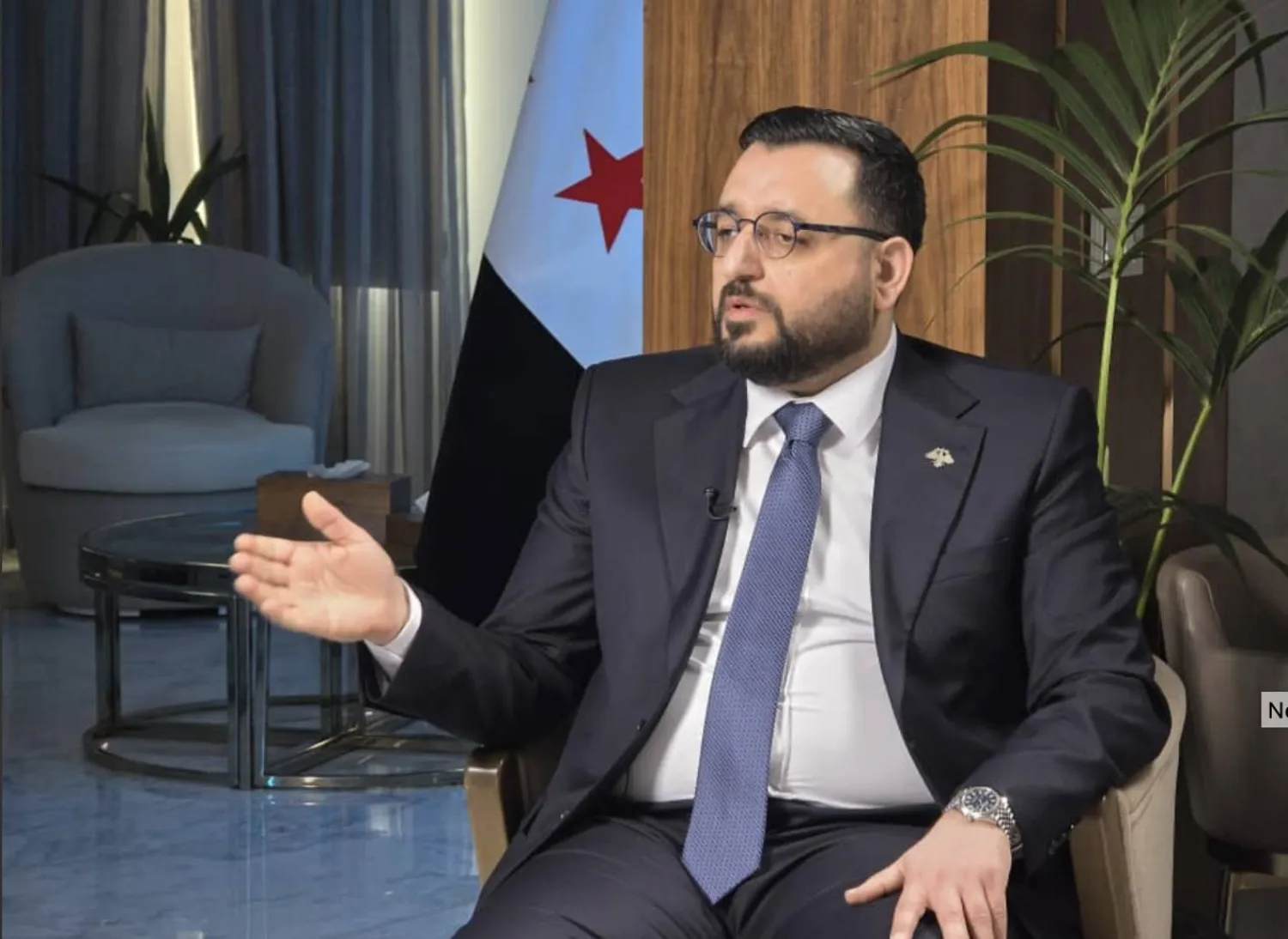
The head of Syria's committee for combating illicit enrichment, Basel Al-Suwaidan (Asharq Al-Awsat)
TT

Syrian Authorities Hold Onto Campaign to Root Out Illegal Enrichment

The head of Syria's committee for combating illicit enrichment, Basel Al-Suwaidan (Asharq Al-Awsat)

The head of Syria's committee for combating illicit enrichment, Basel Al-Suwaidan, has revealed that settlements reached with prominent businessmen accused of ties with former president Bashar Al-Assad had returned to the state treasury as assets belonging to the Syrian people.

In remarks to Asharq Al-Awsat, Al-Suwaidan said that the committee had received hundreds of voluntary disclosure requests, leading to many settlements, while others were rejected for not meeting the criteria.

"How does the committee define the limits of illicit gains?" Asharq Al-Awsat asked him. He explained that illicit enrichment is "a legal concept inherently tied to individuals, defined as any unjustified increase in financial wealth that is disproportionate to the owner's known legitimate resources, and for which they are unable to provide a legal and convincing explanation of its source."

This includes companies, real estate and stocks.

Al-Suwaidan said that despite the committee's work being linked to individuals, it adopts objective criteria for selecting cases. He stressed that accountability is based on financial evidence, not on position or status.

Syrian President Ahmed Al-Sharaa issued Presidential Decree No. 13 on May 4, 2025, concerning the formation of the committee to protect public funds, combat illicit gains in all its forms, and recover illegal funds.

On December 28, 2025, the committee launched the voluntary disclosure program for a period of six months, along with its official website, which includes services for reporting, voluntary disclosure, inquiries, and communication with the committee.

Al-Suwaidan clarified that the program represents one of the main tools adopted by the committee within its internal operating system, and it is an integral part of legal work, not an exceptional measure.

The program is defined as "a mechanism that allows individuals whose funds are linked to suspicions of illicit gains to voluntarily disclose them, subjecting them to comprehensive financial and legal scrutiny, leading to an organized settlement through which funds or assets to be recovered for the state are determined."

He noted that the adoption of this mechanism was based on UN recommendations.

According to Al-Suwaidan, past experiences have shown that relying exclusively on traditional judicial paths can be time-consuming, leading to asset freezes or loss, whereas voluntary disclosure allows for faster and more efficient recovery.

Syrian authorities reached in mid-April a settlement with Wassim Qattan and his brothers, as well as Naim Al-Jarrah, as part of the voluntary disclosure requests submitted to the committee.

A settlement has also been reached with businessman Samer Al-Foz. Another settlement involved businessman Tarif Al-Akhras, in line with adopted official procedures.

However, Mohammad Hamsho, who was a prominent businessman accused of ties to Assad's rule and of profiting from the country's war, was the first to reach a formal settlement with the Syrian authorities.

Al-Suwaidan stressed, however, that the voluntary disclosure program does not exonerate suspects. It rather works in parallel with the judicial path.

He explained to Asharq Al-Awsat that the primary goal is to reduce the time taken by litigation procedures and alleviate the burden on the Syrian judiciary.

Al-Suwaidan revealed that the number of cases undergoing examination is estimated in the thousands.



UN Rights Chief Demands Houthis Return Body of Yemeni Staff Member

UN High Commissioner for Human Rights Volker Turk delivers a statement at the United Nations Offices in Geneva, on September 16, 2025. (AFP)
TT

UN Rights Chief Demands Houthis Return Body of Yemeni Staff Member

UN High Commissioner for Human Rights Volker Turk delivers a statement at the United Nations Offices in Geneva, on September 16, 2025. (AFP)

The UN's ‌human rights chief on Friday demanded the return of the body of a Yemeni staff member of his office who died of unknown causes weeks ago after being held in Houthi custody for more than two years.

Mohammad el-Shami's family learned of his death on October 30, more than a month after it occurred, but ‌they have received no ‌explanation of the cause ‌or ⁠circumstances. El-Shami ⁠had been held by the Houthi militia since June 6, 2024.

"Our colleague must be laid to rest in a dignified manner, in accordance with the wishes of his family – which was denied contact with him ⁠for two years while he ‌was in detention," ‌said United Nations High Commissioner for Human Rights Volker ‌Turk.

His family said the Houthis had ‌agreed in principle to an investigation in a statement earlier this week. "Do not allow Mohamed to die twice: once when he was taken from ‌his family and disappeared, and again when the truth about his ⁠fate ⁠is allowed to disappear from the world."

There was no immediate comment from the Houthis, who have previously alleged those detained were part of a spy network working for the United States and Israel.

More than 70 UN employees and dozens of humanitarian workers remain in detention in Yemen. A video circulating this week appeared to show one of them "confessing", Turk's office said, voicing fears that the group may be subject to torture or ill-treatment.


Palestinian Teen Reunites with Family After Month in Israeli Jail

The mother of Ezzedine al-Lahalia, a 15-year-old Palestinian teenager, kisses him as they reunite in the village of Al-Jib in the Israeli-occupied West Bank, late on November 12, 2026, after his release from an Israeli prison where he had spent a month in detention. (AFP)
TT

Palestinian Teen Reunites with Family After Month in Israeli Jail

The mother of Ezzedine al-Lahalia, a 15-year-old Palestinian teenager, kisses him as they reunite in the village of Al-Jib in the Israeli-occupied West Bank, late on November 12, 2026, after his release from an Israeli prison where he had spent a month in detention. (AFP)

Looking tiny in his adult-size grey prison jumpsuit, 15-year-old Palestinian Ezzedine al-Lahalia appeared stunned as his mother embraced him after a month in an Israeli jail.

His first request was a child's wish for his favorite food: stuffed cabbage and shawarma.

The teenager, who had been charged with throwing stones, was reunited with his family Thursday night in an emotional scene witnessed by an AFP photographer.

Ezzedine's mother held back tears as she kissed his cheeks, while the older men released alongside him greeted their wives and children.

Then Israeli troops fired tear gas, interrupting the families' reunions.

Lahalia, from the West Bank city of Sair, reunited with his family in the village of Al-Jib near Jerusalem, where Israeli authorities typically release Palestinian prisoners on Thursdays.

"After the Israelis brought the prisoners out, after we had received them, they fired tear gas," Ezzedine's mother, Rania Jaradat told AFP, adding that the scene was reminiscent of when soldiers took the boy from the family home on October 14, 2026.

"They were afraid that the families would assemble near the gate and celebrate," she said.

After Lahalia's release, she said, "the first thing he asked for was stuffed cabbage and shawarma". She happily complied.

He was released after the family paid 5,000-shekels (around $1,500) in bail.

As the eldest of five, his absence was particularly felt by his younger siblings.

"They're happy that I've returned, but they were very distressed while I wasn't with them," Ezzedine told AFP.

According to the Addameer Prisoner Support and Human Rights Association, 9,300 Palestinians are currently held in Israeli jails, including 350 minors.

Earlier this week, the military said it had shot a 14-year-old in a group of boys it suspected of throwing stones at a passing car in the north of the West Bank.

The Israeli human rights group B'Tselem noted an increase in deaths of Palestinians after the easing of open-fire rules in 2022 for stone throwers.


Lebanon Hands Over Al-Alwani’s Body to Iraq without Autopsy

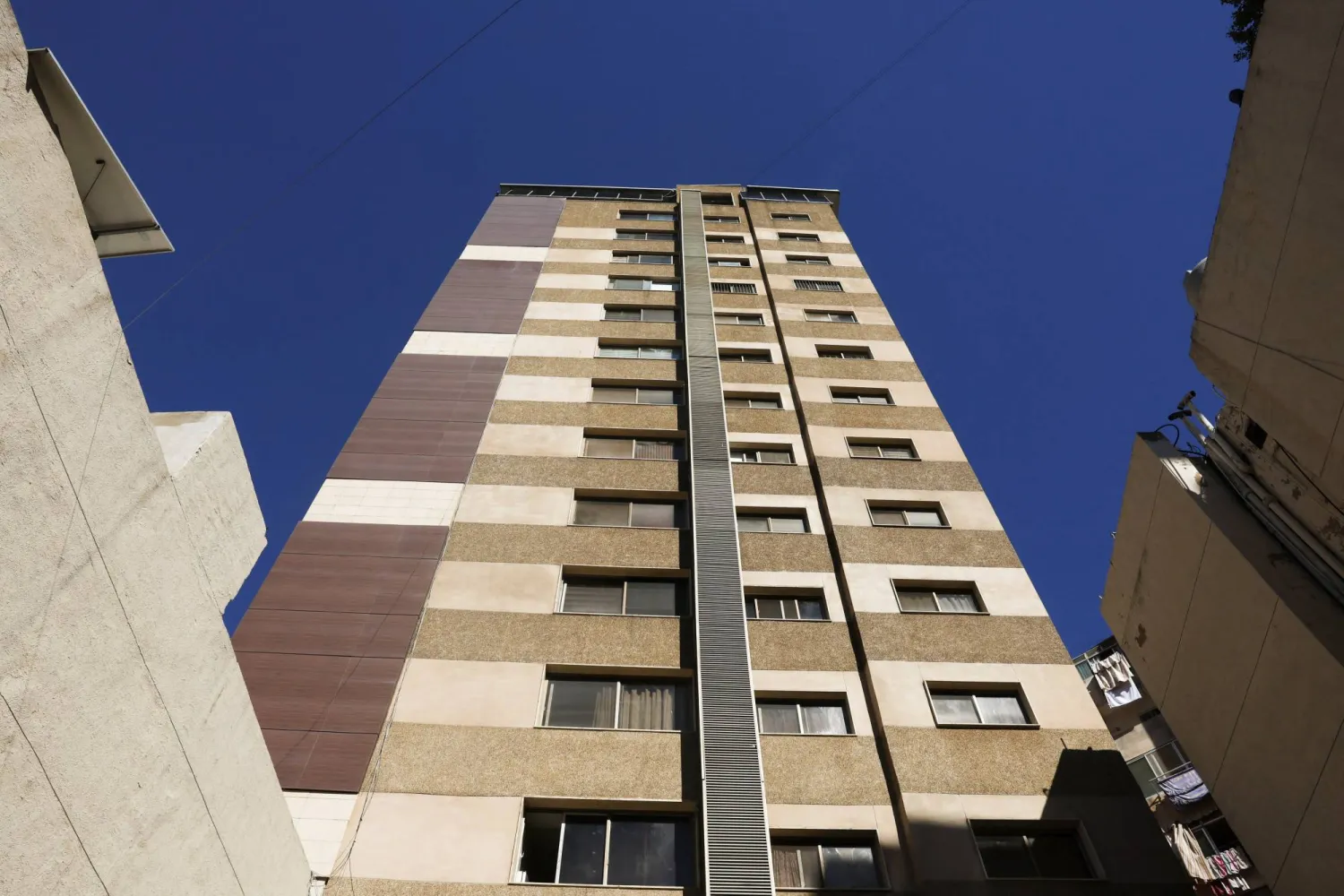
The building where former Iraqi MP Ahmed al-Alwani was found strangled to death in Beirut, Lebanon, November 11, 2026. (Reuters)
TT

Lebanon Hands Over Al-Alwani’s Body to Iraq without Autopsy

The building where former Iraqi MP Ahmed al-Alwani was found strangled to death in Beirut, Lebanon, November 11, 2026. (Reuters)

Lebanon's Public Prosecutor at the Court of Cassation Judge Ahmad Rami al-Hajj ordered the handover of the body of former Iraqi MP Ahmed al-Alwani to the Iraqi Embassy in Beirut for transfer to Baghdad, at the request of his family.

A judicial source explained that X-rays conducted Thursday on al-Alwani’s body revealed a quantity of fluid in the victim's lower abdomen and pelvis.

It said the judiciary had ordered an autopsy to determine the nature of the fluid and whether it was blood, which could indicate that he had been beaten and suffered internal bleeding.

However, the Iraqi Embassy asked the judiciary to forego the autopsy and transfer the body to Baghdad so that those procedures could be carried out there. The request was granted.

The judicial source said that determining the causes of death can be accomplished once the suspects or those accused in the crime are arrested and through their confessions.

The source also revealed that two individuals who sold phone lines to the perpetrators in the Tariq al-Jdideh area in Beirut have been placed under investigation, with no decision made yet on whether to detain or release them.

The judicial source further noted that Lebanon has so far received no response from Damascus about the arrest and extradition of the two Syrian suspects who fled into Syrian territory.