


‘Freshly Dug Graves’ as Hezbollah Pays Steep Price in Battle to Reverse its Fortunes

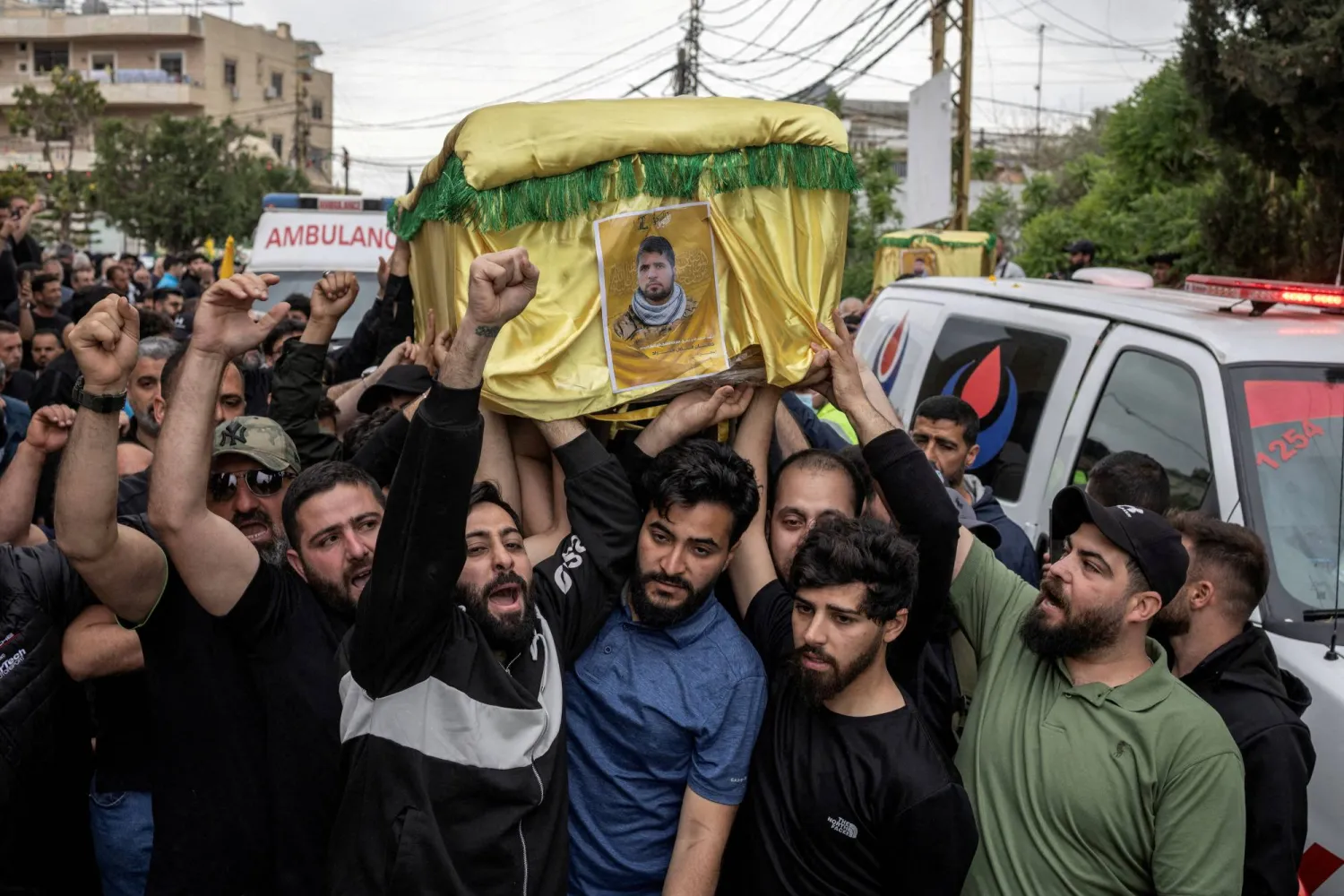
FILE PHOTO: Mourners carry coffins during the funeral of four Hezbollah fighters and two civilians, amid a temporary ceasefire between Lebanon and Israel, in the village of Maaroub, southern Lebanon, April 26, 2026. REUTERS/Marko Djurica/File Photo
TT

‘Freshly Dug Graves’ as Hezbollah Pays Steep Price in Battle to Reverse its Fortunes

FILE PHOTO: Mourners carry coffins during the funeral of four Hezbollah fighters and two civilians, amid a temporary ceasefire between Lebanon and Israel, in the village of Maaroub, southern Lebanon, April 26, 2026. REUTERS/Marko Djurica/File Photo

Hezbollah has paid a heavy price for going to war with Israel on March 2: Israel has occupied a chunk of southern Lebanon, displaced hundreds of thousands of its Shiite constituents and killed as many as several thousand of its fighters, according to previously unreported casualty estimates from within the group.

The move has brought severe political consequences, too. In Beirut, opposition has hardened to its status as an armed group, which domestic rivals see as exposing Lebanon to repeated wars with Israel.

In April, Lebanon's government held face-to-face talks with Israel for the first time in decades, a decision Hezbollah firmly opposed. However, more than a dozen Hezbollah officials told Reuters they see a chance to reverse deteriorating fortunes by aligning with Tehran in its war with Israel and the United States.

The group, founded by Iran's Revolutionary Guard Corps in 1982, opened fire two days into the conflict, which began with US and Israeli strikes on Iran on February 28.

The group's calculations are based on the assessment that its participation would force Lebanon onto the agenda of US-Iranian negotiations, and that Iranian pressure can secure a more robust ceasefire than one that took effect in November 2024 following a conflict sparked by the war in Gaza, the officials said.

Hezbollah was mauled in the last war, which killed its leader, Hassan Nasrallah, along with some 5,000 fighters, and weakened its long-dominant hold over the Lebanese state.

Rearmed with Iranian help, it has used new tactics and drones, surprising many with its capabilities after a fragile 15-month truce during which Hezbollah held fire, even as Israel continued to kill its members.

Hezbollah lawmaker Ibrahim al-Moussawi denied the group was acting on Iran's behalf when it resumed hostilities, as alleged by opponents. He told Reuters Hezbollah saw a window to "break this vicious cycle ... where the Israelis can target, assassinate, bombard, kill, without any revenge."

He acknowledged losses and damage in southern ⁠Lebanon but said "you don't ⁠go into making calculations of how many are going to be killed" when "pride and sovereignty and independence" are at stake.

Hezbollah’s media office said the figure of several thousand fighters killed in the present war was false.
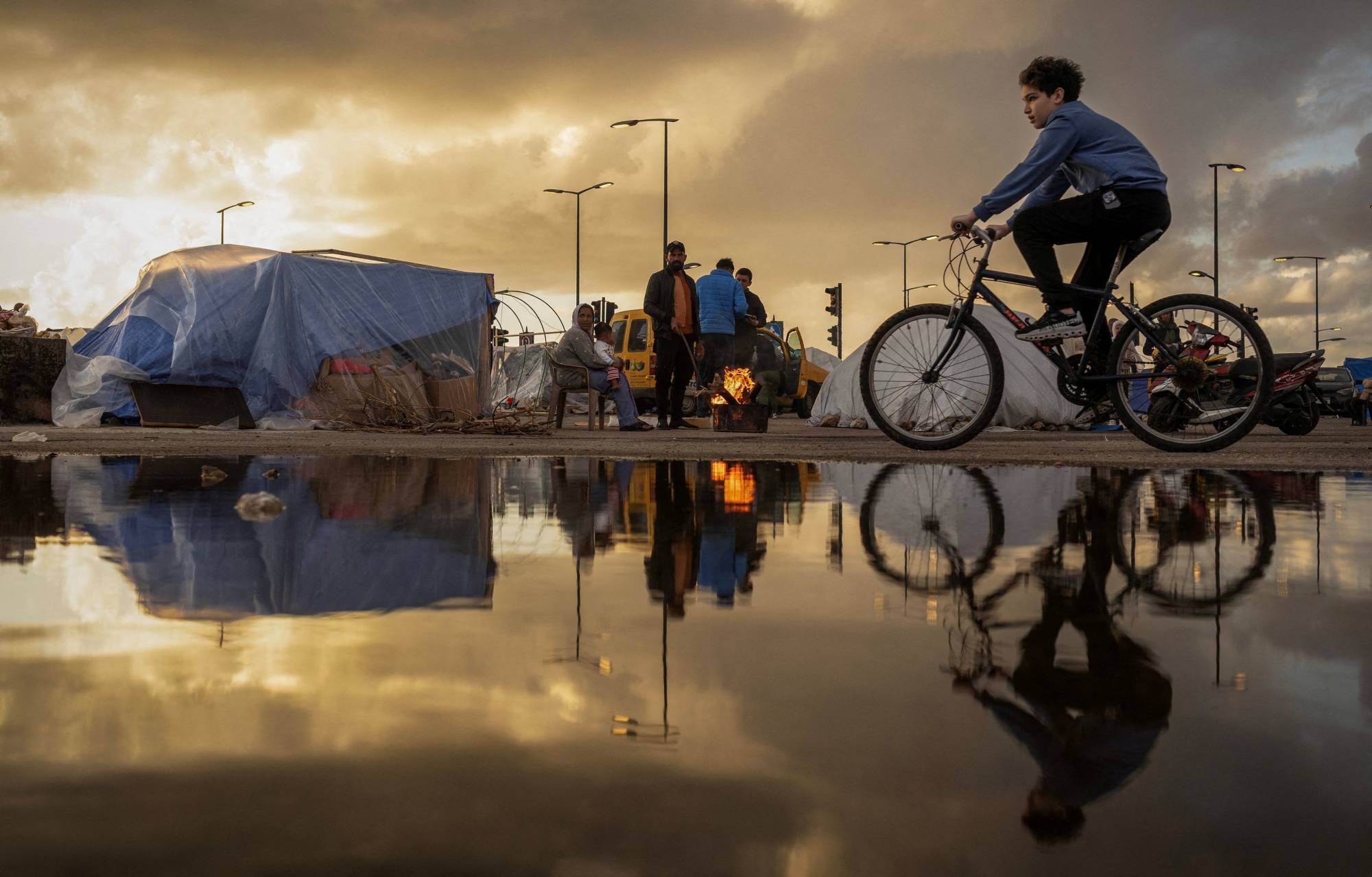
FILE PHOTO: A family stand next to a fire outside their tent at a temporary encampment for displaced people, amid escalating hostilities between Israel and Hezbollah, in Beirut, Lebanon, March 30, 2026. REUTERS/Adnan Abidi/File Photo

While a US-mediated ceasefire that took effect on April 16 has led to a significant reduction in hostilities, Israel and Hezbollah have continued to trade blows in the south, where Israel maintains troops in a self-declared "buffer zone".

Yezid Sayigh, a senior fellow at the Carnegie Middle East Center in Beirut, said Hezbollah had "shown more resilience than many thought possible, but that was not a strategic gain in itself".

"The only thing that will contain Israel is a comprehensive US-Iran deal," he said. "Without a deal, there's going to be a lot of pain for everyone. At best, a hurting stalemate."

More than 2,600 people have been killed since March 2, around a fifth of them women, children and medics, Lebanon's health ministry has reported. Its toll does not distinguish between civilians and combatants.

Three sources, two of them Hezbollah officials, said the ministry's figures do not include many of the group's casualties. They said several thousand Hezbollah fighters have been killed, though the group does not have the ⁠full picture yet.

In a statement to Reuters, Hezbollah’s media office denied the figures cited by the sources, and that the numbers published by Lebanon’s health ministry included its members killed in Israeli strikes.

One source, a Hezbollah commander, said scores of fighters had gone to the frontline towns of Bint Jbeil and Khiyam intending to fight to the death. Their bodies have yet to be recovered.

In the Hezbollah-controlled southern suburbs of Beirut, more than two dozen freshly dug graves were quickly filled with fighters' bodies in the days after the ceasefire took hold. Simple marble tombstones identify some as commanders, others as fighters.

In one southern village alone, Yater, the council recorded the deaths of 34 Hezbollah fighters.

Lebanon's Shiite community has borne the brunt of Israel's attacks, forced to flee into Christian, Druze and other areas, where many blame Hezbollah for starting the war.
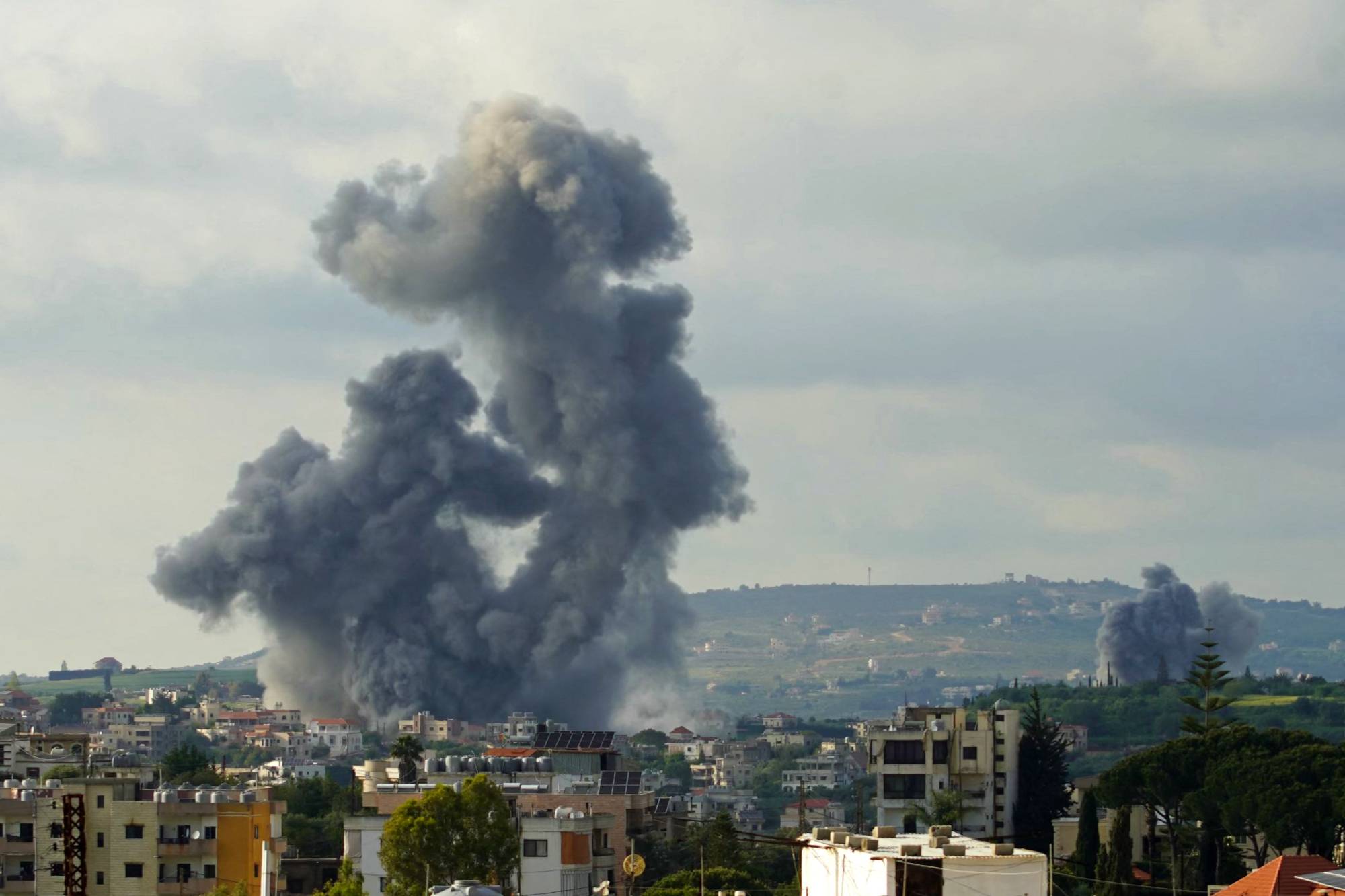
Smoke rises from the site of Israeli airstrikes that targeted the southern Lebanese village of Habbouch on May 1, 2026. (Photo by Abbas FAKIH / AFP)

Israel has been entrenching its hold over a security zone stretching as far as 10 km (6 miles) into Lebanon and demolishing villages, saying it aims to shield northern Israel from attacks by Hezbollah militants embedded in civilian areas.

An Israeli government official said Hezbollah had abrogated the November 2024 ceasefire by firing on Israeli citizens on March 2. The threat to northern Israel would be eradicated, the official said, adding thousands of Hezbollah militants had been killed, and Israel was steadily destroying the group's infrastructure.

The Israeli military says Hezbollah has fired hundreds of rockets and drones at Israel since March 2. Israel has announced 17 soldiers killed in southern Lebanon, along with two civilians in northern Israel.

Citing ongoing Israeli strikes, Hezbollah has called the April ceasefire meaningless and continued to attack.

A diplomat who has contact with Hezbollah described its decision to enter the war as a big gamble and a survival strategy, saying it felt it needed to be part of the ⁠problem so it could be part of an eventual regional ⁠solution.

It has yet to be seen if the gamble will pay off.

Tehran has demanded that Israel's campaign against Hezbollah be included in any deal on the wider war. But US President Donald Trump said last month that any deal Washington reaches with Tehran "is in no way subject to Lebanon".

A spokesperson for Pakistan's Foreign Ministry, Tahir Andrabi, referred Reuters to an April 16 statement in which he said peace in Lebanon was essential to the talks it is mediating between the US and Iran.

A Western official said they saw a possibility the US and Iran might eventually reach a settlement that does not address the war in Lebanon.

Asked about this, the US State Department, Iran's mission to the United Nations in Geneva and Lebanon's government did not immediately comment.

Hezbollah's Moussawi said a ceasefire in Lebanon continues to be a top priority for Iran, adding Tehran shares Lebanon's objectives, including that Israel halt attacks and withdraw from Lebanon. Hezbollah has "full trust in Iran - that the Iranians will not sell their own friends", he said.

The State Department referred Reuters to an April 27 interview Secretary of State Marco Rubio did with Fox News, in which he said Israel had a right to defend itself against Hezbollah's attacks, and that he didn't think Israel wanted to maintain its buffer zone in Lebanon indefinitely.

The United States has urged Israel "to make sure their responses are proportional and targeted," he said.

When the April 16 ceasefire was announced, Israeli Prime Minister Benjamin Netanyahu said Hezbollah's disarmament would be a fundamental demand in peace talks with Lebanon.

Hezbollah has ruled out disarmament, saying the matter of its weapons is a topic for a national dialogue. Any move by Lebanon to disarm the group by force would risk igniting conflict in a country shattered by civil war from 1975 to 1990.

Lebanon's President Joseph Aoun and Prime Minister Nawaf Salam have sought Hezbollah's peaceful disarmament since last year. On March 2, the government banned the group's military activities.

Hezbollah has demanded the government cancel that decision and end its direct talks with Israel.

Lebanese officials have told Reuters they believe direct talks with Israel under the auspices of the US are the best way to secure a lasting ceasefire and the withdrawal of Israeli troops, as only Washington has enough leverage with Israel to achieve those aims.



Iraq Opens Special Account for Recovered Illicit Funds as Anti-Corruption Drive Expands

Iraqi police personnel patrol in their vehicle along a street in Baghdad on June 28, 2026. (AFP)
TT

Iraq Opens Special Account for Recovered Illicit Funds as Anti-Corruption Drive Expands

Iraqi police personnel patrol in their vehicle along a street in Baghdad on June 28, 2026. (AFP)

Iraqi Prime Minister Ali al-Zaidi ordered on Monday the Finance Ministry to open a dedicated account for money recovered from illicit enrichment cases, as the government pressed ahead with its anti-corruption campaign. Meanwhile, the Federal Commission of Integrity said a draft law on asset recovery will soon be submitted to parliament.

Government spokesman Haider al-Aboudi revealed that the new account would hold funds recovered from people convicted of illicit enrichment, stressing that the government remains committed to protecting public money and strengthening state institutions.

In remarks to the state-run Iraqi News Agency (INA), al-Aboudi said the government had adopted a comprehensive approach to institutional reform and combating corruption.

He added that Operation Dawn had resulted in the arrest of 21 suspects, while others remain at large.

Investigators are using suspects’ confessions to uncover broader corruption networks involving additional individuals and assets, he revealed.

Separately, Abbas Mutib, director general of the Integrity Commission’s asset recovery department and deputy chairman of the Iraq Asset Recovery Fund, said the commission had made significant progress in digital transformation, enabling it to freeze substantial assets abroad and prevent those accused of corruption from disposing of them.

Mutib noted that the commission is coordinating with the Justice Ministry to pursue civil lawsuits aimed at recovering frozen assets overseas, adding that authorities have already succeeded in recovering sizable sums.

Former tax chief sentenced

The Federal Commission of Integrity also announced prison sentences against former General Commission for Taxes Director General Osama Hossam Jawdat and his wife after their conviction on money laundering charges.

According to the commission, the Central Criminal Court for Combating Corruption sentenced Jawdat to 10 years in prison and his wife to five years and one month under Iraq’s 2015 Anti-Money Laundering and Counter-Terrorism Financing Law.

The court ordered the couple to pay a fine of IQD 32.496 billion (about $25 million), confiscated 10 properties in Baghdad and 12 properties in Türkiye registered in the wife’s name, as well as seized cash, rental income, gold jewelry, and funds deposited in Kuwaiti and Turkish banks. It also ordered the freezing of their movable and immovable assets.

Broad public backing

An Iraqi security personnel stands guard along a street in Baghdad on June 28, 2026. (AFP)

The government’s sweeping arrests on Sunday have drawn strong political and public support after targeting senior officials, lawmakers, and government directors, raising hopes that Iraq may finally curb corruption, which unofficial estimates say has cost the country more than $500 billion.

More than 50 suspects have been arrested so far, while some estimates suggest the number of wanted individuals could eventually exceed 1,000.

Dozens of activists gathered Sunday evening in Baghdad’s Tahrir Square to express support for the campaign.

Influential Shiite cleric Moqtada al-Sadr praised the “heroic reform measures,” saying the arrests had restored hope among Iraqis after years of entrenched corruption.

He commended the judiciary and security forces, particularly the Counter Terrorism Service, for carrying out the arrests.

More arrests expected

Ghalib al-Daami, a lecturer at the Iraqi Academy for Combating Corruption, told Asharq Al-Awsat that more than 50 prominent figures had already been detained and predicted the campaign could ultimately target more than 1,000 individuals.

While many observers doubt the crackdown will reach Iraq’s most powerful political leaders, al-Daami said he expects the “downfall” of three senior political figures in the coming days.

He also claimed the campaign has received direct US backing, particularly following the arrest of former Deputy Oil Minister Adnan al-Jumaili and another deputy minister, Ali Maarij al-Bahadli, who has been sanctioned by the US for allegedly facilitating Iranian oil sales.

Political scientist Firas Elias of the University of Mosul said the campaign represents “a real test of the state’s authority.”

Its success should be measured not by the number of arrests but by its ability to secure fair convictions and recover stolen assets, he added.

If the law is applied equally to everyone, the campaign could mark a turning point in relations between the state and Iraq’s political class, he remarked. But if it stops with selected figures or becomes a tool for settling political scores, it will quickly lose credibility and allow corruption to reemerge in new forms.


Gazans Turn to Clay, Rubble to Build New Homes

A Palestinian boy makes his way across rubble near a displacement camp in Nuseirat, in the central Gaza Strip, on Sunday. Credit: AFP/EYAD BABA
TT

Gazans Turn to Clay, Rubble to Build New Homes

A Palestinian boy makes his way across rubble near a displacement camp in Nuseirat, in the central Gaza Strip, on Sunday. Credit: AFP/EYAD BABA

While Gaza’s housing crisis remains catastrophic with cement and steel blocked by Israel from entering the Strip, some Palestinians are turning to improvised methods and other workarounds in a bid to make their shelters safer or more habitable.

Among those Palestinians is Jaafar Atallah, a potter in Gaza, who decided to build a home from the earth. It was to be like the bread ovens his family had been making for generations, but big enough for his parents to live in, according to the Financial Times.

Atallah gathered clay from an area of Gaza a few kilometers from his tent and — with the help of about 15 people, including his father, also a potter — he set about making mud bricks.

For months, they learned as they built. Finally, they completed a domed hut, “so solid you could stand on top of it”, said Atallah, whose project was backed by pottery groups around the world after he shared videos online.

The clay structure was a relief after the flimsy protection of the tent: “You can keep your food in this room. In a tent, tomatoes and cucumbers won’t last a day and will rot. Life in the tents is so hard. There is such heat in the summer, it is torture,” Atallah said.

Atallah’s experience reflects the reality of thousands of families looking for alternatives after almost all buildings in Gaza have been destroyed by two years of bombardment amid Israel’s ban on concrete and steel imports.

Several Gazans are reusing steel reinforcing bars and concrete from the debris of buildings, scavenging for cement lying underwater in the port and resorting to mud to make bricks and mortar.

“We already have clay in our land, we don’t have to manufacture it, we don’t need things that we have to get from the crossing [with Israel], which is at the whim of the occupation,” said Atallah, who even designed a waterproof glaze for the bricks. “The occupation does not control this. It’s from our land, our soil.”

According to the UN, 1.9 million Gazans are displaced or live in tents, which lack sanitation or other utilities.

Reconstruction of Gaza remains a distant dream for its people. Israel bans building materials from entering Gaza on the grounds that the materials may be used for military purposes such as tunnel construction.

In May, teenage sisters Tala, 17, and Farah Moussa, 15, won a youth-focused award from the Swiss-based Earth Foundation for recycling cement debris into bricks.

Displaced with their family five times since the start of the war, they now live in a tent in Nuseirat in the center of the Gaza Strip. “We got the idea when our house was bombed,” said Tala. “We thought we had to do something and find a solution that comes from the problem itself, so we are using the rubble.”

Tala said, “We made five or six prototypes before we got it right. We researched on the internet and in books. Now we want to use the [$12,500] prize money to set up workshops to teach others how to make bricks.”

Using mud and stones, Gaza residents rebuild homes destroyed in months of conflict, as lack of access to construction material leaves families with few options.

Their efforts reflect the ability to adapt to the most extreme conditions to restore a normal life, even within walls built from the earth and the debris of buildings.


Yemen Seeks Resumption of US Investments in Energy Sector

Al-Alimi during his meeting with the delegation from Hunt Oil Company (Saba)
TT

Yemen Seeks Resumption of US Investments in Energy Sector

Al-Alimi during his meeting with the delegation from Hunt Oil Company (Saba)

The head of Yemen’s Presidential Leadership Council (PLC), Rashad Al-Alimi, has met with a delegation from the American Hunt Oil Company, headed by the company’s Chief Executive Officer, Hunter Hunt.

The meeting on Sunday reviewed opportunities for partnership between the Yemeni government and Hunt Oil in the exploration, production, and export of oil and gas. It also discussed prospects for the company to resume its investments in Yemen in support of the country’s economic recovery and energy security.

Al-Alimi was briefed by the delegation on the company’s current operations, future plans, and promising investment opportunities in Yemen’s oil sector, building on its long-standing partnership with the Yemeni government.

The PLC President praised Hunt Oil’s pioneering role in establishing Yemen’s petroleum sector, including the discovery of the country’s first commercially viable oil reserves, its contributions to developing oil infrastructure, training national personnel, and its role as a key partner in the Yemen LNG project.

He said these contributions would remain a source of appreciation for both the government and the Yemeni people.

Al-Alimi also outlined the economic, financial, and administrative reforms being implemented by the government, particularly in the oil and gas sector.

He highlighted efforts to improve the investment climate, strengthen transparency and governance, and provide the necessary guarantees for the return of foreign companies across various sectors.

He commended Saudi support to Yemen’s economy, describing it as a key pillar for enhancing stability, advancing economic reform, and restoring investor confidence.

The PLC President reaffirmed the state’s commitment to providing all necessary support and facilities for investors. He said the government would work with regional and international partners to secure vital infrastructure and create conditions for the resumption of production activities.

He added that improving living standards and security across the country remains a top priority for the Yemeni government.