


Syria Says Arrested Assad-Era General Over Chemical Attack

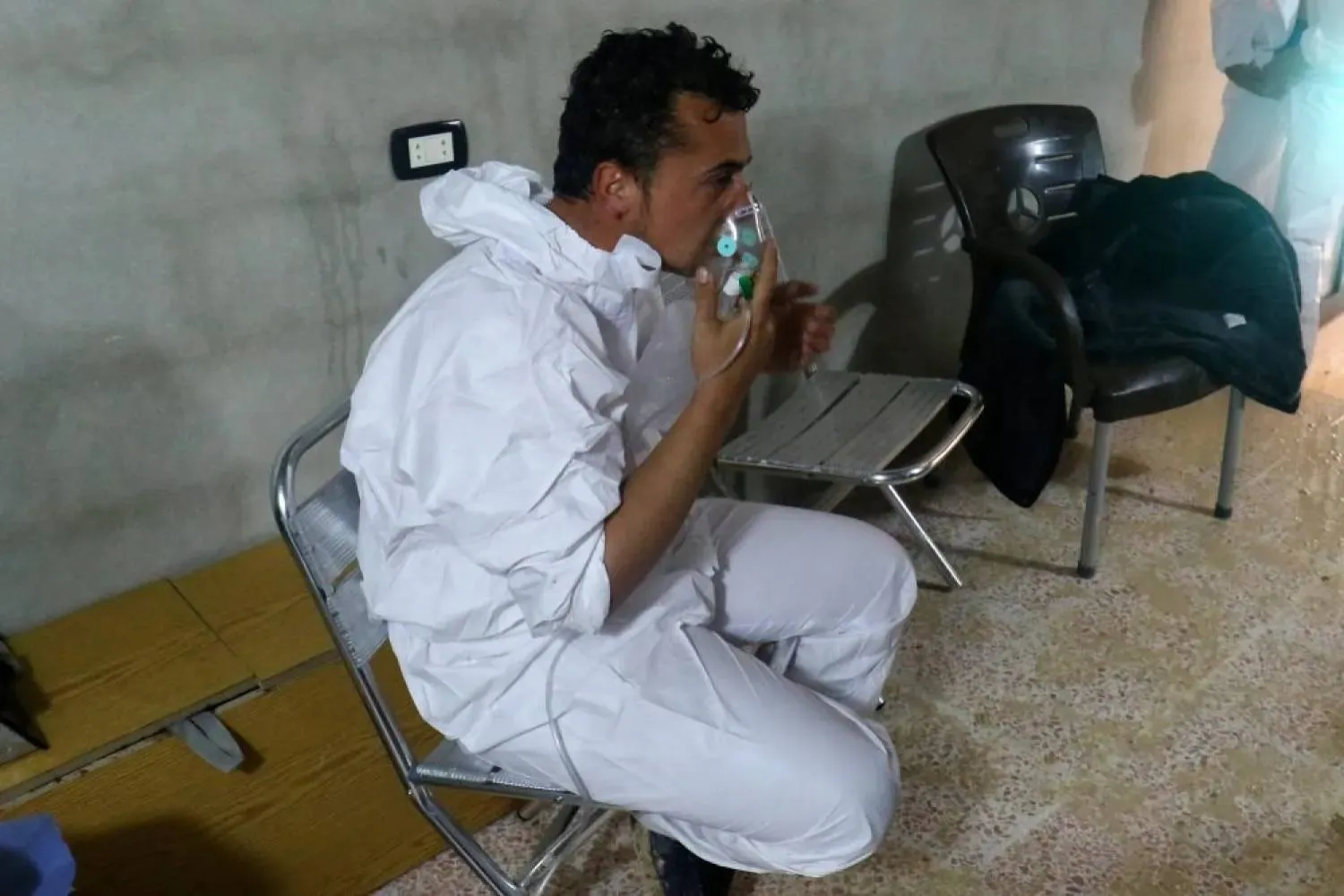
In August 2013, the army under Assad's rule was accused of using chemical weapons to target areas then under opposition control, killing more than 1,400 men, women and children, according to US intelligence and rights groups. (Reuters file)
TT

Syria Says Arrested Assad-Era General Over Chemical Attack

In August 2013, the army under Assad's rule was accused of using chemical weapons to target areas then under opposition control, killing more than 1,400 men, women and children, according to US intelligence and rights groups. (Reuters file)

Syria's interior ministry on Friday announced the arrest of a general from ousted president Bashar al-Assad's era, accusing him of involvement in a 2013 chemical attack on a suburb of the capital, Damascus.

In August 2013, the army under Assad's rule was accused of using chemical weapons to target areas then under opposition control, killing more than 1,400 men, women and children, according to US intelligence and rights groups.

With Syria at the height of its civil war, the Assad government denied responsibility, but agreed to hand over its chemical arsenal in order to avert US strikes.

Assad went on to remain in power for more than a decade, only to be ousted in 2024 by opposition forces led by now President Ahmed al-Sharaa.

On Friday, the ministry said it arrested "Khardal Ahmed Dayoub, a former brigadier general in the forces of the ousted regime and former head of the Air Force Intelligence branch in Daraa, for his direct involvement in systematic violations against civilians".

The ministry accused Dayoub of being "implicated in chemical attacks during his service in the Damascus branch and his presence in the Harasta area" where "he oversaw repressive operations and contributed to the logistical coordination for the bombing of Eastern Ghouta with internationally prohibited chemical weapons".

Dayoub, the latest in a string of Assad-era officials detained in recent months, is also accused of extrajudicial killings and coordination with Iran and Lebanon’s Iran-backed Hezbollah, both of which were backing the ousted government.

Survivors of the attacks, including medics, at the time risked their lives by posting dozens of videos online, and spoke to journalists including AFP reporters about the horror they had witnessed.

The footage showed dozens of corpses, many of them children, outstretched on the ground.

Other images showed unconscious children, people foaming at the mouth and doctors trying to help them breathe.

- Global condemnation -

The scenes provoked revulsion and condemnation around the globe.

A United Nations report later said there was clear evidence sarin gas had been used.

Syria agreed that year to join the Organization for the Prohibition of Chemical Weapons (OPCW) and disclose and hand over its toxic stockpile under Russian and US pressure, averting the threat of strikes by Washington and its allies.

But that was not the last of the chemical attacks: the OPCW went on to blame Assad's forces for others later in the civil war.

Syria's civil war had begun in 2011, with a brutal crackdown on peaceful anti-regime protesters that yielded an armed uprising. More than half a million people ended up being killed, and millions more forced into exile.

Last month, Interior Minister Anas Khattab announced the arrest of Adnan Abboud Hilweh, one of the Syrian generals internationally sanctioned over involvement in the Ghouta attack.

Syria's new authorities have vowed to provide justice and accountability for Assad-era atrocities, while activists and foreign governments have emphasized the importance of transitional justice to ensure the country moves forward.

Last month, a Syrian court conducted the first hearing in an in absentia trial of Assad himself, alongside several senior members of his government.

Assad fled to Moscow as his country fell to opposition hands in December 2024, bringing to a stunning end decades of rule by his clan.



Yemen’s Economy Pays Heavy Price of Houthi War

Houthi supporters rally in Sanaa in solidarity with Iran and Lebanon’s Hezbollah (AFP)
TT

Yemen’s Economy Pays Heavy Price of Houthi War

Houthi supporters rally in Sanaa in solidarity with Iran and Lebanon’s Hezbollah (AFP)

Yemeni government data has revealed the scale of the unprecedented economic and humanitarian deterioration the country has suffered because of a war that has dragged on for more than a decade, saying the conflict ignited by the Houthis caused cumulative losses to the national economy estimated at about $126 billion by 2021.

The figures come as poverty and unemployment widen and prospects for economic recovery decline at an alarming pace.

Data issued by the Ministry of Planning and International Cooperation showed that Yemen’s economy continued to contract under the weight of the war and its impact across productive and service sectors, amid stalled oil exports, weaker trade activity and growing pressure on the local currency.

This has directly affected living standards and people’s ability to secure their basic needs.

According to the report on economic, development and humanitarian indicators in Yemen for 2024 and 2025, real gross domestic product shrank by 43% between 2015 and 2024. It had contracted by about 50% between 2011 and 2021, reflecting, according to the report’s authors, the depth of the economic crisis and the continuing cumulative impact on all parts of the national economy.

The war has caused a decline in the activity of Yemeni ports and raised insurance fees, government media said.

Yemeni data shows that per capita GDP fell to just $471 in 2024, compared with $1,430 in 2014, a sharp decline that reveals the scale of the collapse in purchasing power and individual income levels during the war years.

The report attributes part of this decline to the repercussions of the war and Houthi attacks on oil export ports, which halted oil exports, the country’s main source of foreign currency. This has worsened public finance imbalances and weakened the government’s ability to fund basic services and development spending.

Unemployment exceeds average rates

In the labor market, Yemeni government data painted a bleak picture of employment conditions. Youth unemployment reached 32.4%, exceeding the global average of 13.6% and the Arab average of 25.9%, in a clear sign of the widening gap between education outcomes and labor market needs, as well as the weakened economy’s limited ability to generate new jobs.

The report said the continued decline in education, health and living standards has deepened the crisis, with human capital eroding and economic and social fragility expanding, especially among young people, who have become the most affected by the lack of job opportunities and weak training and rehabilitation programs.

Human development indicators also showed a sharp decline in Yemen’s global ranking. The country scored 0.470 on the Human Development Index, compared with an Arab average of 0.719, ranking 184th out of 193 countries in the 2025 Human Development Report. Yemen ranked 160th in 2014, reflecting the scale of the decline in education, health and income indicators.

Poverty widens

On the humanitarian front, the Yemeni report’s data showed a striking expansion in needs. The number of people requiring humanitarian assistance rose this year to about 23.1 million, compared with 19.5 million last year and 18.2 million the year before, as humanitarian funding falls sharply.

According to Yemeni government data, actual funding coverage for humanitarian needs last year did not exceed 28% of total needs, compared with an average of 64% between 2016 and 2024. This leaves millions of Yemenis facing a widening gap between rising needs and the resources available for humanitarian response.

The data also confirmed that 50.3% of Yemeni families suffer from multidimensional poverty, with a clear divide between rural and urban areas. The rate rises to 51.1% in rural areas, compared with 44.3% in urban areas, reflecting widening deprivation in income, education, health and basic services.

The report warned that the continuation of this trend would have long-term consequences for human capital and the prospects for economic recovery, given the close link between declining growth, rising poverty and unemployment, and the widening vulnerability of Yemeni families.

Food is available, but out of reach

On food security, Yemen’s Planning Ministry said that despite the availability of food commodities in markets in February, access to them remains the biggest challenge for Yemeni families because of the continued rise in prices, the falling value of the local currency and the sharp decline in humanitarian assistance.

According to a report by the Food Security Technical Secretariat at the Ministry of Planning and International Cooperation, supported by the Food Security and Nutrition Information Systems program of the Food and Agriculture Organization of the United Nations and funded by the World Bank, total imports of basic food commodities in February reached about 194,517 tons, including 84,000 tons of wheat, representing 43% of total food imports.

But this relative availability of supply did not prevent prices from continuing to rise. The price of one food basket reached about 232,000 Yemeni rials in February, up 3% from the start of this year, while food basket prices rose by 575% compared with levels recorded in 2016.

The crisis has been worsened by a sharp decline in food aid distribution. Food assistance reached only 2% of total beneficiaries, while those benefiting from nutrition assistance accounted for about 6%, low levels that reflect the limited response compared with the scale of rising needs.

The report’s authors called for an urgent package of policies, foremost among them supporting a comprehensive and sustainable peace process, ending the Houthi coup, stimulating economic growth, strengthening labor-intensive sectors, improving the business environment and increasing investment in infrastructure and human capital.

They also called for expanding youth employment programs and vocational training, describing this as the most realistic path to reducing poverty and achieving sustainable recovery.


US Aims to Consolidate Lebanon-Israel Ceasefire Before Negotiations

This handout photograph released by the Lebanese Presidency's press office shows European Commissioner for Equality, Preparedness and Crisis Management Hadja Lahbib (L) being received by Lebanon's President Joseph Aoun (R) at the presidential palace in Baabda, east of Beirut, on May 8, 2026. (Lebanese Presidency Press Office / AFP)
TT

US Aims to Consolidate Lebanon-Israel Ceasefire Before Negotiations

This handout photograph released by the Lebanese Presidency's press office shows European Commissioner for Equality, Preparedness and Crisis Management Hadja Lahbib (L) being received by Lebanon's President Joseph Aoun (R) at the presidential palace in Baabda, east of Beirut, on May 8, 2026. (Lebanese Presidency Press Office / AFP)

A Lebanese official source told Asharq Al-Awsat there were “serious US efforts” to secure the ceasefire between Lebanon and Israel before the launch of direct negotiations between the two countries under US sponsorship next Thursday.

The source said that if the efforts fail, Lebanon will take part in the meetings but “will refuse to discuss any further details before the ceasefire is secured.”

The source said President Joseph Aoun was satisfied with the progress of the negotiation efforts and with Lebanon’s preparations for the talks.

The Lebanese military would be represented in the negotiations by Oliver Hakme, the military attaché at the Lebanese embassy in Washington, he added.

The source said the negotiations would be “a continuation of the two rounds of talks held in Naqoura on the Lebanese border, headed by Ambassador Simon Karam for the Lebanese delegation, with the positive addition of a higher level of US representation in these negotiations.”

The first meeting would focus on “general discussions, with no specific agenda,” continued the source, reiterating Lebanon’s position that “there will be no progress on any other point before the ceasefire is secured.”

Aoun was in “full and close” coordination with Prime Minister Nawaf Salam on the negotiations, he added. Aoun was also satisfied with parliament Speaker Nabih Berri’s recent positions on the strength of his relationship with the president, who agrees with him that any agreement needs guarantees because Israel is known for breaking its commitments.

Separately, an official statement said Aoun received former ambassador Simon Karam, the head of the Lebanese delegation to the Lebanese-Israeli negotiations, and gave him his instructions before he traveled to Washington.

Aoun also received a phone call from British National Security Adviser Jonathan Powell, during which they discussed the situation in Lebanon and the region in light of recent developments and continued Israeli attacks on Lebanon.

Aoun asked Powell to press Israel to abide by the ceasefire and stop demolition and bulldozing work in the southern villages and towns it occupies.

Aoun met with EU Commissioner for Equality, Preparedness and Crisis Management Hadja Lahbib. He told her that support provided by EU states to Lebanon should be directed toward pressure to force Israel to abide by the ceasefire, refrain from blowing up and bulldozing homes in villages in the south, and stop targeting paramedics, journalists and civil defense workers.

Aoun said Lebanon was committed to a ceasefire and to ending all military action as a starting point for negotiations that would end the unstable situation in the south, paving the way for the army to redeploy up to the international border, for Lebanese prisoners to be released, and for displaced people to return to their towns and villages.

Aoun briefed Lahbib on the large human losses caused by Israeli attacks on Lebanon, the rise in the number of displaced people to about one million, and the severe material damage to homes, property and crops.

Meanwhile, PM Salam received Army Commander General Rodolphe Haykal. They discussed the situation in the south, efforts to secure the ceasefire, and the security situation in Beirut.


New Gaza Police Force Faces Uncertainty over Composition, Representation

Members of the Hamas police force in Gaza. (Reuters file)
TT

New Gaza Police Force Faces Uncertainty over Composition, Representation

Members of the Hamas police force in Gaza. (Reuters file)

The issue of allowing the National Committee for the Administration of Gaza into the enclave to begin its work remains unresolved. Israel continues to refuse its entry, while other complications persist over the conditions under which it would operate, including the creation of a police force under its authority instead of Hamas police and its government security agencies.

One of the 15 clauses in the “roadmap” presented to Hamas and other Palestinian factions during Cairo negotiations, specifically on April 19, clearly states that Hamas, the factions, clans, and individuals must hand over their weapons to the committee that would run the enclave.

The committee would have a security force to enforce the law.

The fate of Hamas employees was one of the unresolved issues in the negotiations that preceded and followed the latest roadmap. Their number is estimated in the tens of thousands, and their future remains unclear.

Sources from Hamas and other factions told Asharq Al-Awsat that the issue had largely been resolved, that fair solutions had been found for all sides, and that only final agreement remained.

The sources said Hamas and the factions had agreed to allow a new police force to enter Gaza and operate under the authority of the Gaza administration committee.

The main obstacle was Israel, which has so far refused to allow the committee itself to enter the enclave and assume its duties, they stressed.

Under the proposed plan, prepared within the Board of Peace, particularly by its director-general Nickolay Mladenov in consultation with the Gaza Administration Committee and mediators, 12,000 police officers would initially work under the committee’s supervision. Of those, 5,000 would be deployed in the first phase.

According to the plan, as Asharq Al-Awsat learned from sources within the factions and others in contact with the committee, the first 5,000 officers were selected from Palestinians who had been receiving training at police colleges in several Arab countries after leaving Gaza, both before and during the war.

The sources said they would undergo Israeli security screening.

Many Palestinians receive training at police colleges in countries including Egypt, the United Arab Emirates, Algeria, Qatar, Türkiye, and others.

It remains unclear whether the remaining 7,000 officers would also be drawn from that pool, whose numbers appear to be far short of the required number. Israel is expected to reject students trained in Doha and Ankara.

It is also unclear whether the plan would include training for Gaza students at Al-Istiqlal University, which specializes in graduating police and military personnel. Officers from the Palestinian Authority inside the enclave had sent their sons there for education and training.

Many retired officers from the Palestinian Authority security services are now in Cairo. Some arrived from Gaza weeks ago as part of preparations for a comprehensive security plan led by Sami Nasman, the official in charge of security in the Gaza administration committee.

The same sources said there is a plan to use some Palestinian Authority security employees known as the “2005 enlistments,” along with police personnel from Hamas government employees who are under 45 and pass Israeli security screening.

They said this arrangement could be temporary until the recruitment of a new police force is completed. Former employees would be treated fairly through practical solutions that preserve their rights, while thousands of them would remain in police duties without weapons.

In February, the Gaza administration committee posted a registration link on its website for the new police force. More than 100,000 young Palestinians from inside Gaza registered for jobs. At the time, discussions focused on selecting only 2,000 of them as a first step, followed by another 3,000.

The Times of Israel on Friday quoted a US official and a Middle Eastern diplomat as saying the UAE had transferred $100 million to the Board of Peace to train the new police force.

The website said the transfer was the largest received by the Board of Peace to date, following pledges worth $17 billion announced at a donor conference hosted by US President Donald Trump in February.

The new Palestinian police force is viewed as a top priority for the Board of Peace, which seeks to create new civilian and security bodies to govern Gaza, with the aim of removing Hamas from power and pushing toward an Israeli withdrawal, the website said.